Artwork
Portrait of Hafiz Abd al-Rahim Khan
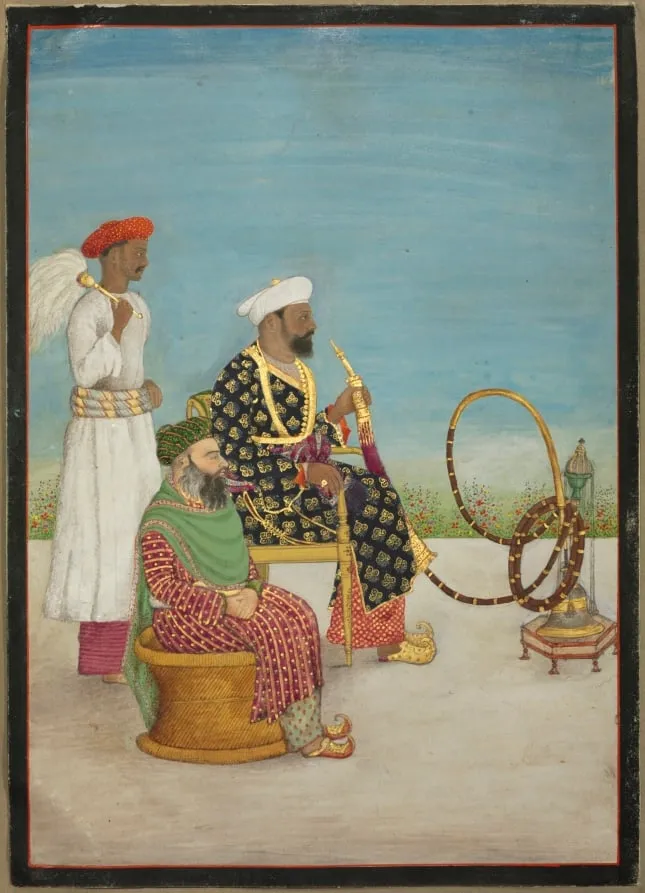
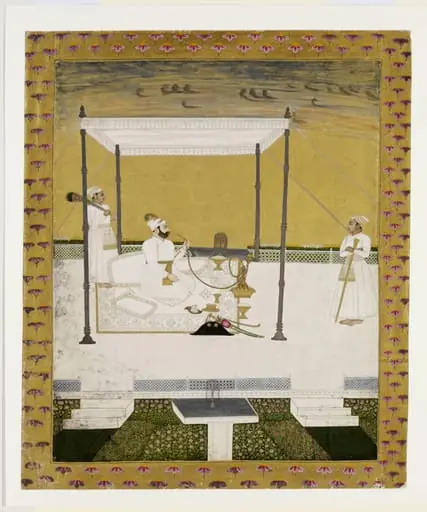
Portrait of Hafiz Abd al-Rahim Khan is an unspecified painting by the Patna School of Painting artist Unknown. It dates from 1818 and is held in the collection of the Cleveland Museum of Art. This painting portrays three men in a calm, outdoor setting, their postures and attire suggesting a moment of quiet repose.
- Accession no.
- 2007.220
- Credit line
- Gift of Robert and Amy Poster in honor of Stan Czuma
About this work
Overview
This painting portrays three men in a calm, outdoor setting, their postures and attire suggesting a moment of quiet repose.
This painting portrays three men in a calm, outdoor setting, their postures and attire suggesting a moment of quiet repose. The central figure, seated and adorned in a black robe with gold embroidery and a white turban, holds a hookah, while two attendants flank him, one standing with a ceremonial plume, the other seated nearby. The backdrop of a soft blue sky and muted green hills enhances the scene’s serenity, emphasizing stillness over action.
Subject & Meaning
The figures likely represent a nobleman and his attendants, engaged in the ritualized leisure of hookah smoking, a practice associated with elite social life in 18th- to 19th-century South Asia. The presence of the plume and rich textiles signals status and refinement. The composition avoids drama, instead conveying dignity through restraint, reflecting cultural values of composure and hierarchical order within domestic or courtly settings.
Technique & Style
The artist employs vivid, saturated hues, deep reds, emerald greens, and gold threadwork, to highlight textile detail and distinguish social roles. Brushwork is precise, particularly in the rendering of fabric patterns and facial features, suggesting a blend of local portraiture traditions with influences from Mughal and Persian miniature painting. The background is rendered with soft gradients, creating spatial depth without overwhelming the figures.
History & Provenance
The painting is attributed to an artist active in the Indian subcontinent during the late Mughal or early colonial period, possibly in a regional court such as Awadh or Delhi. It was likely commissioned to commemorate a dignitary, Hafiz Abd al-Rahim Khan, whose identity is preserved in the title. The work remained in private collections in South Asia before entering institutional holdings in the 20th century.
Context
During the 18th and early 19th centuries, as Mughal authority waned, regional courts maintained cultural traditions through patronage of the arts. Portraits like this one served both as personal commemoration and political statement, affirming the subject’s status amid shifting power structures. The hookah, a symbol of leisure and refinement, was a common motif in elite portraiture across Islamicate courts.
Legacy
This portrait contributes to the broader understanding of South Asian visual culture during a period of transition. It preserves the aesthetic language of courtly life before the full impact of British colonial aesthetics took hold. As such, it remains a valuable reference for scholars studying identity, status, and material culture in pre-colonial and early colonial India.
Artist & collection









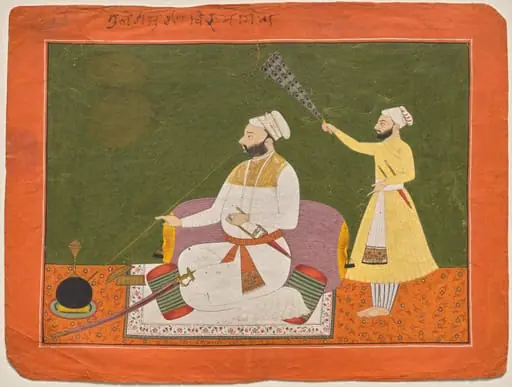
- Raja Bikram Singh of Guler smoking a hookah
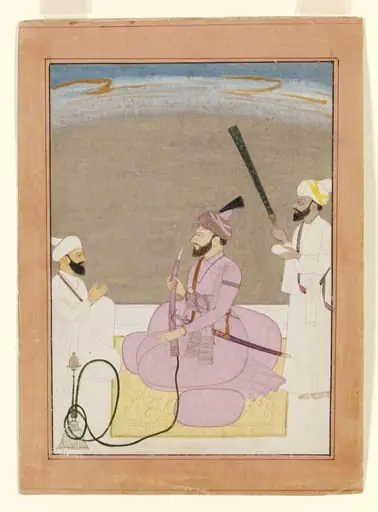 Raja Tegh Chand
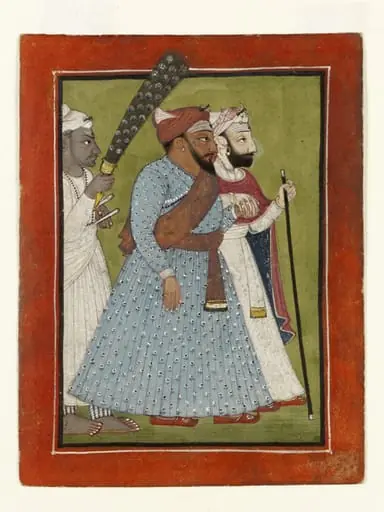 Raja Shamsher Sen and Dhurchatia Sen
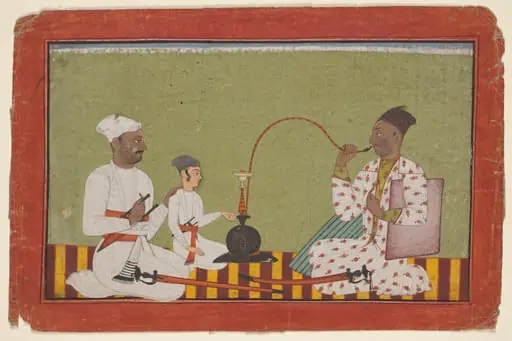 Posthumous portrait of Raja Chhatar Singh of Chamba smoking a hookah with his brother and son
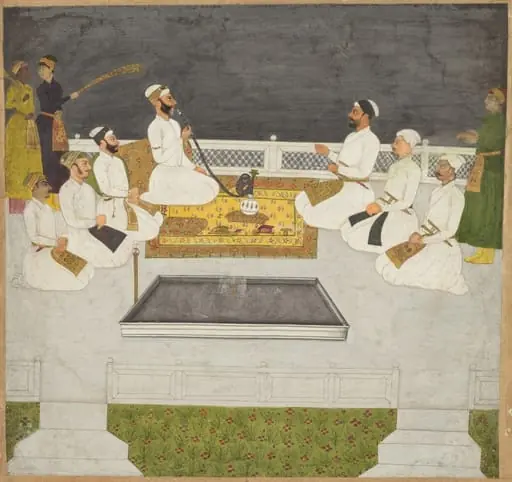 Husain Ali Khan Entertaining His Brothers (The Sayyid Brothers)
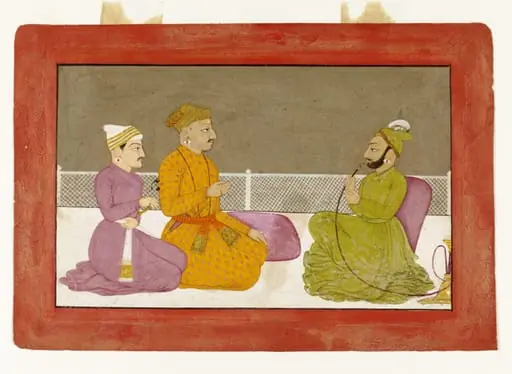 Raja Bhupal Dev of Jasrota, Raja Dalip Singh and Raja Daya Dhat
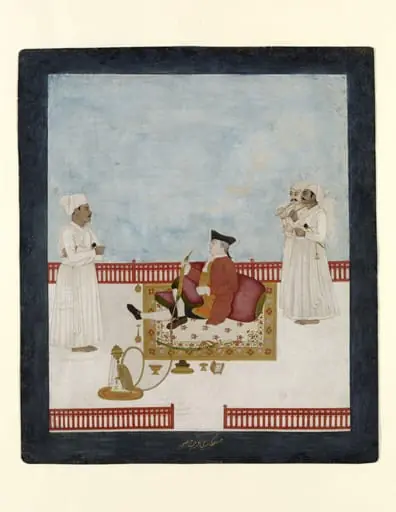 Untitled
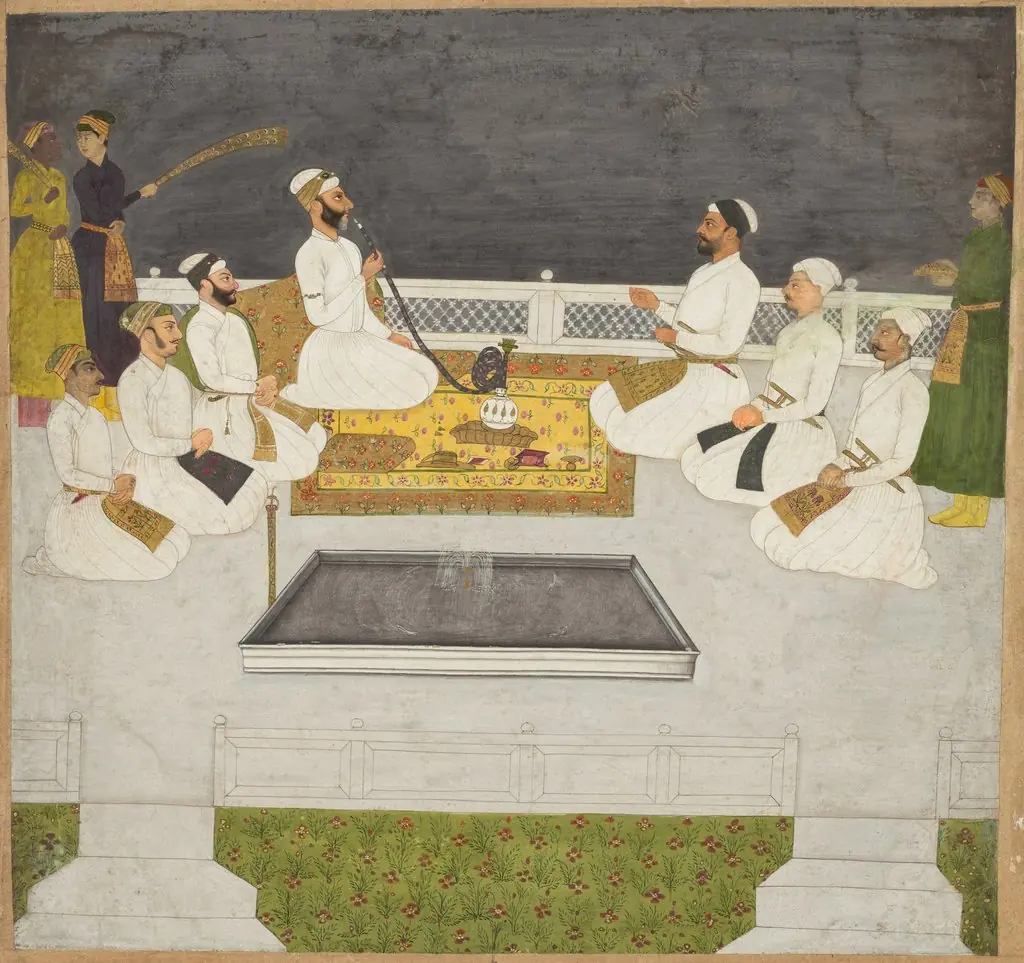 Husain Ali Khan Entertaining His Brothers (The Sayyid Brothers)
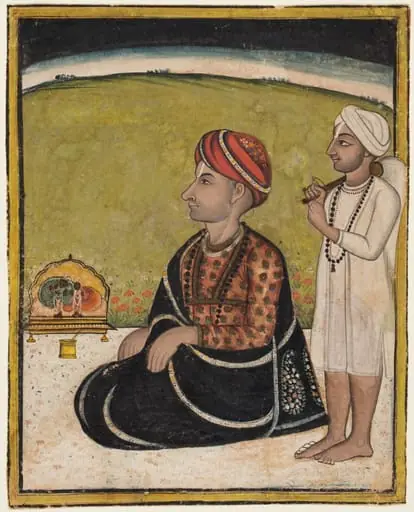 A Ruler Seated on a Terrace Worshipping at a Shrine of Radha and Krishna
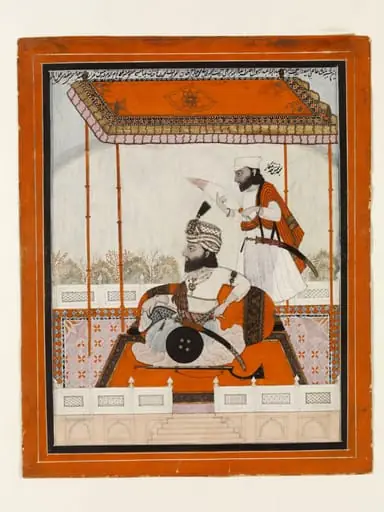 Muhammed Haji Khan
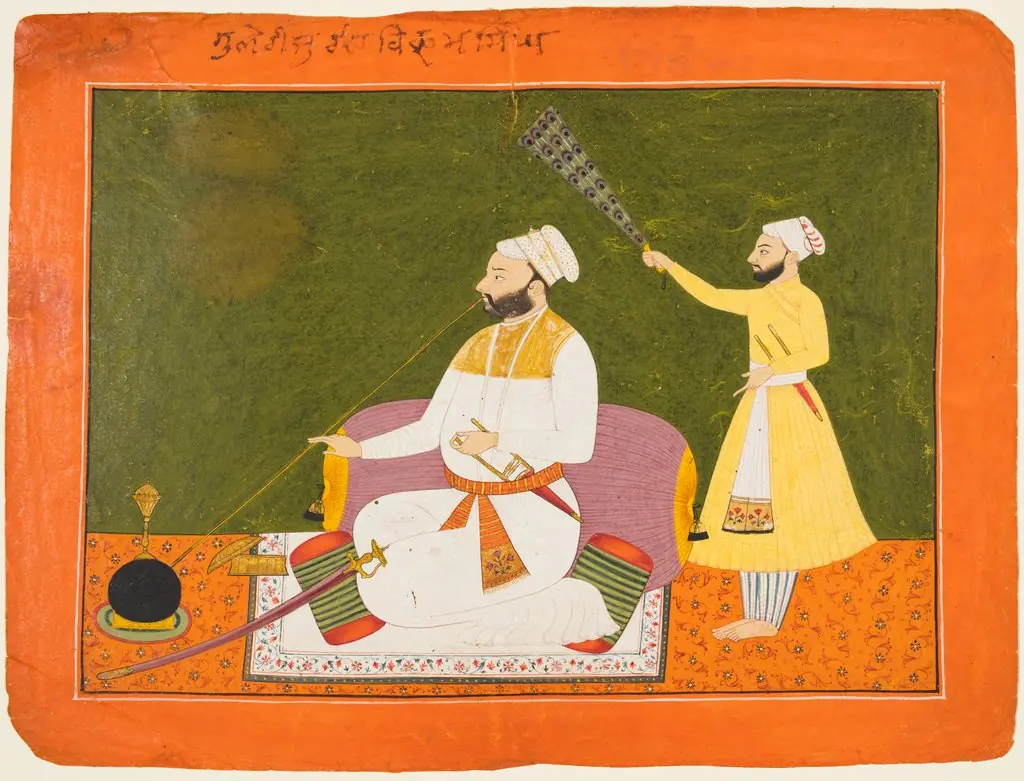 Raja Bikram Singh of Guler (r. 1661–75) Smoking a Hookah
 Untitled