Artwork
Portrait of Isabella of Bourbon
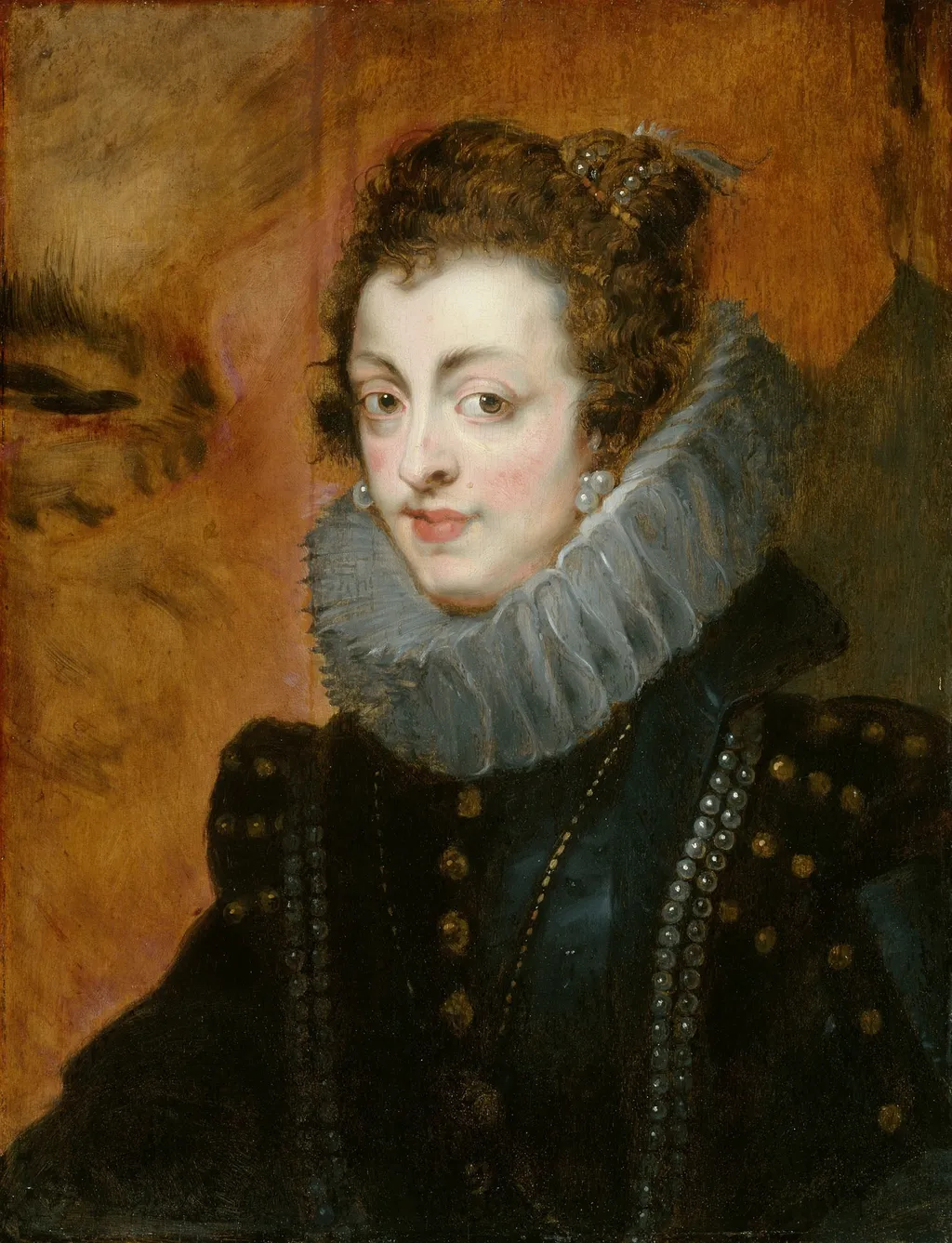
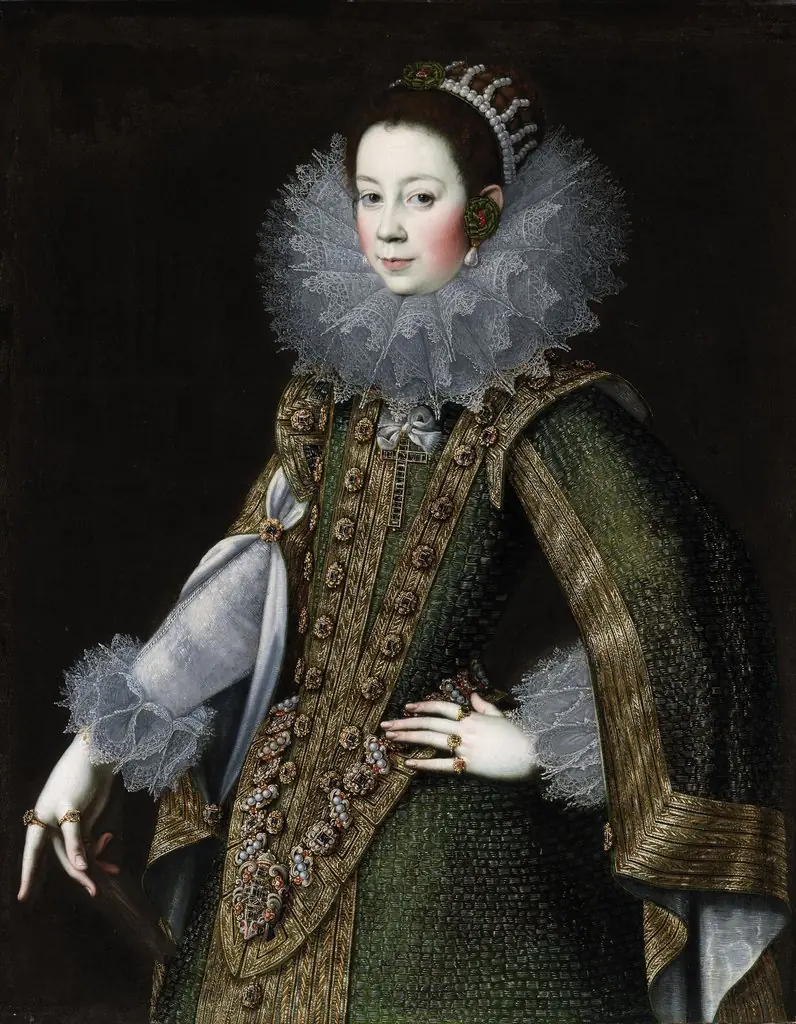
Portrait of Isabella of Bourbon is an oil painting by the Flemish Baroque painting artist Unknown. It dates from 1630 and is held in the collection of the Art Institute of Chicago. This oil painting from the early 17th century is a portrait of a woman.
About this work
Overview
The Portrait of Isabella of Bourbon is an oil painting on panel attributed to a follower of Peter Paul Rubens, dated circa 1630, and held in the collection of the Art Institute of Chicago. The bust-length portrait depicts Isabella of Bourbon (1602-1644), queen consort of Spain as the first wife of Philip IV, and exemplifies the diplomatic portrait tradition of the Habsburg era, in which official images of royalty were reproduced in multiple versions for distribution across European courts. Measuring 65 by 46 centimeters, the work occupies a significant place in the museum's Baroque holdings as a representative example of Rubens's portrait formula as transmitted through his workshop and followers.
Subject & Meaning
The sitter, Isabella of Bourbon, was the daughter of Henry IV of France and Marie de' Medici, and she married Philip IV of Spain in 1615, serving as queen consort until her death in 1644. She was notoriously reluctant to sit for artists, which made official portraits particularly valuable and necessitated the production of copies for diplomatic circulation. The portrait presents her in the formal regalia of her rank: a dark dress with gold buttons or studs, a large starched ruff collar in pale blue-gray, and abundant pearls including a long strand draped diagonally across the chest and matching earrings. These elements of dress functioned as clear markers of Habsburg royal status, with the pearls signifying wealth and purity, while the restrained palette of blacks, silvers, and golds conveyed the dignified sobriety expected of a Catholic queen. The composition follows the established pattern for diplomatic portrait copies, designed not merely for private contemplation but for wide distribution as a surrogate presence of the monarch in foreign courts.
Technique & Style
The painting is executed in oil on panel, a support that lends the surface a particular density and smoothness characteristic of workshop production.
The painting is executed in oil on panel, a support that lends the surface a particular density and smoothness characteristic of workshop production. The artist employs a warm palette dominated by browns, blacks, and silvery grays, with amber and ochre tones in the background. Light falls from the left, illuminating the sitter's complexion and the ruff while leaving the dress in deep shadow. The brushwork is fluid and visible, especially in the background and costume, with smoother blending in the face. While the execution is competent and follows Rubens's established portrait manner, with warm, luminous flesh tones and fluid rendering of elaborate court costume, it lacks the spontaneous energy and chromatic richness that distinguish Rubens's autograph works from workshop and follower productions. The slightly stiffer quality of the execution, the formulaic attention to the brocade and regal accessories, and the sketchy, indistinct forms suggesting drapery or a curtain in the background to the left all point to production within the Rubens circle rather than by the master himself.
History & Provenance
The painting's provenance traces back to Quincy Adams Shaw of Boston, who died in 1908; Wilhelm R. Valentiner knew the picture as early as 1931, when he wrote an expertise dated Detroit, April 25, 1931, on the back of a photo in the curatorial file. By 1946 it was with A. and E. Silberman Galleries in New York, and subsequently passed to Chester D. Tripp of Chicago, who gave it to the Art Institute of Chicago in 1962, where it entered the collection as object number 1962.958. The work has been discussed in significant scholarly literature, including W.R. Valentiner's 1946 article "Rubens Paintings in America," John Maxon's 1963 article "Three Baroque Portraits," and Frances Huemer's 1977 Corpus Rubenianum entry. Michael Jaffé addressed the subject directly in his 1992 article "Rubens's Portrait of Isabella de Bourbon, Queen of Spain." The painting was also included in the exhibition "El arte en la Corte de los Archiduques Alberto de Austria e Isabel Clara Eugenia: Un Reino Imaginado" at the Palacio Real, Madrid, from December 2, 1999 to February 27, 2000, catalogued as number 101.
Context
This portrait belongs to a broader phenomenon of Rubensian copies of royal portraits that proliferated in the seventeenth century, reflecting both the demand for such images and the efficiency of Rubens's Antwerp workshop. Rubens had met Isabella during his landmark diplomatic visit to the Spanish court in 1628-29, an experience that proved transformative for the artist, who encountered Philip IV's extraordinary art collection including Titian's mythological poesie. The Art Institute's holding can be read alongside Rubens's own hand and the work of his workshop collaborators within the museum's outstanding collection of Baroque painting. Scholarly opinion has long recognized the work as by a follower rather than by Rubens himself, with Valentiner, Maxon, Huemer, and Jaffé all contributing to its critical reception. The painting's attribution history reflects the broader challenges of distinguishing between Rubens's autograph works and the numerous versions and variants produced by his large and active workshop.
Legacy
The Portrait of Isabella of Bourbon remains an important document of Habsburg visual diplomacy and the international circulation of royal imagery in the seventeenth century. As a publicly held work in a major American museum, it serves as an accessible example of how Rubens's portrait formulas were transmitted, adapted, and disseminated across Europe. The painting's afterlife in scholarship illustrates the evolving methodologies of attribution studies, from the connoisseurship of Valentiner to the more systematic corpus-building of Huemer's Corpus Rubenianum project. Its inclusion in the major Madrid exhibition of 1999-2000 underscored its continued relevance to understanding the artistic culture of the Spanish Habsburg court. For contemporary viewers, the portrait offers concrete insight into the mechanics of power representation in early modern Europe, where the image of the queen served as a proxy for royal authority in an age of dynastic politics and limited personal mobility for female rulers.
Artist & collection









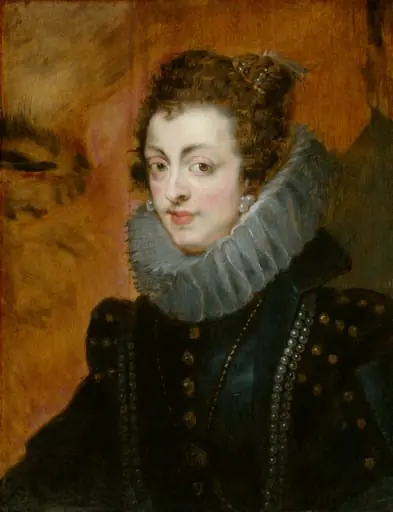
- Portrait of Isabella of Bourbon
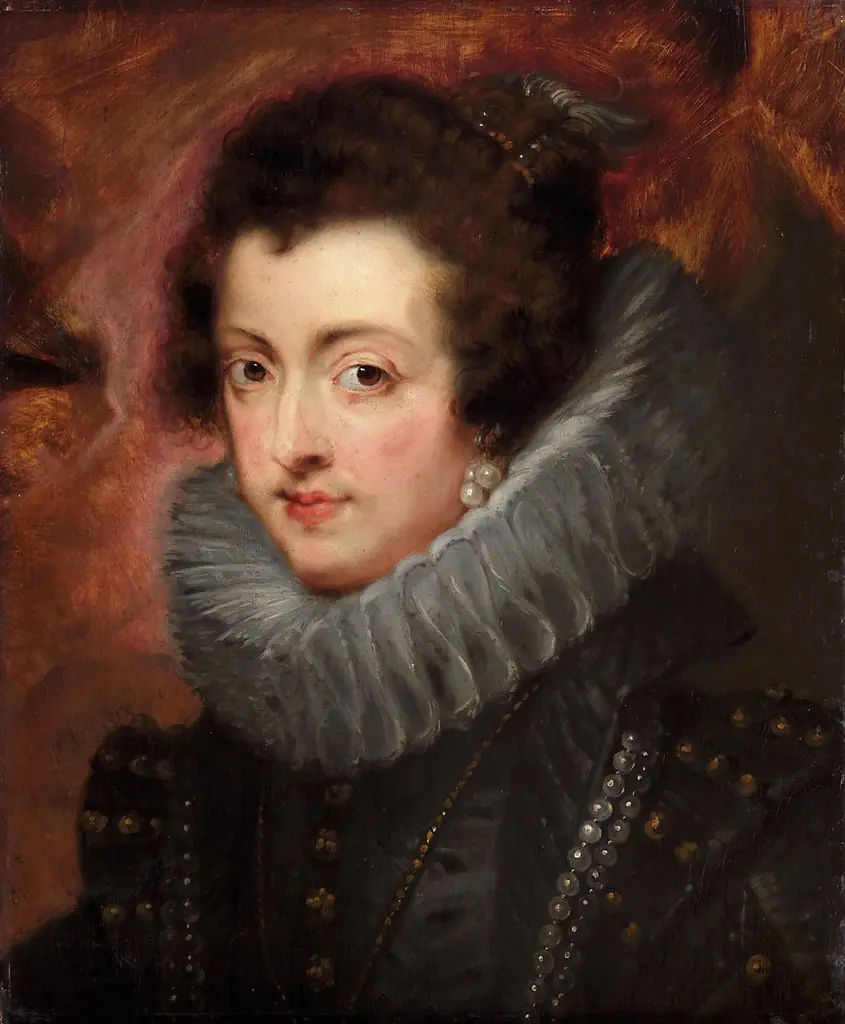 Isabella von Bourbon (1602-1644)
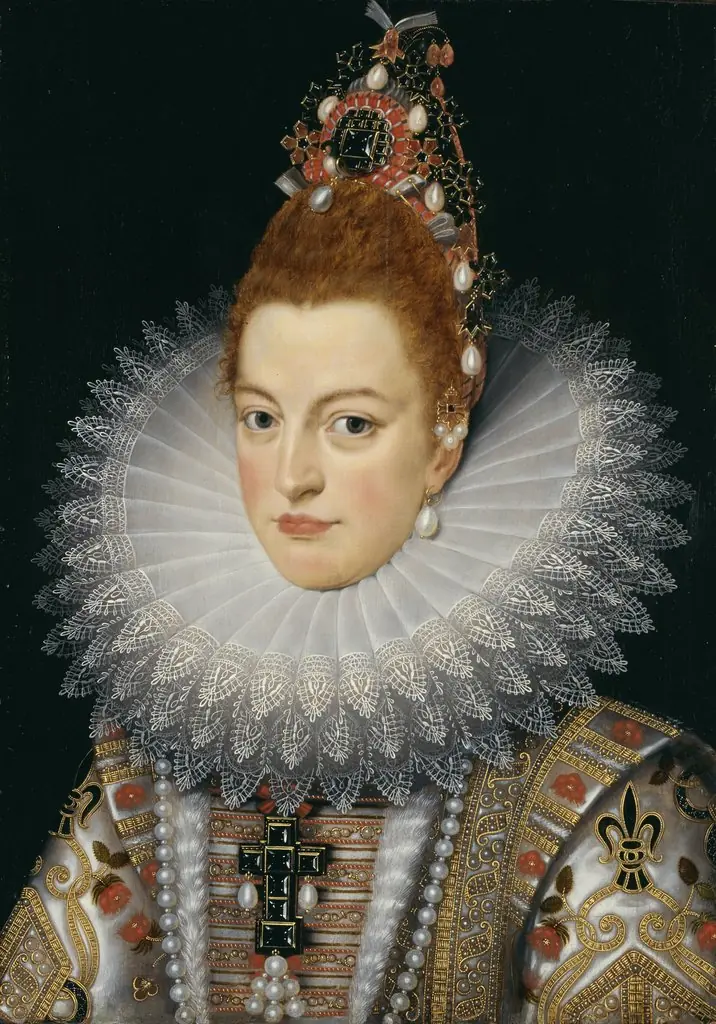 Portrait of Archduchess Isabella
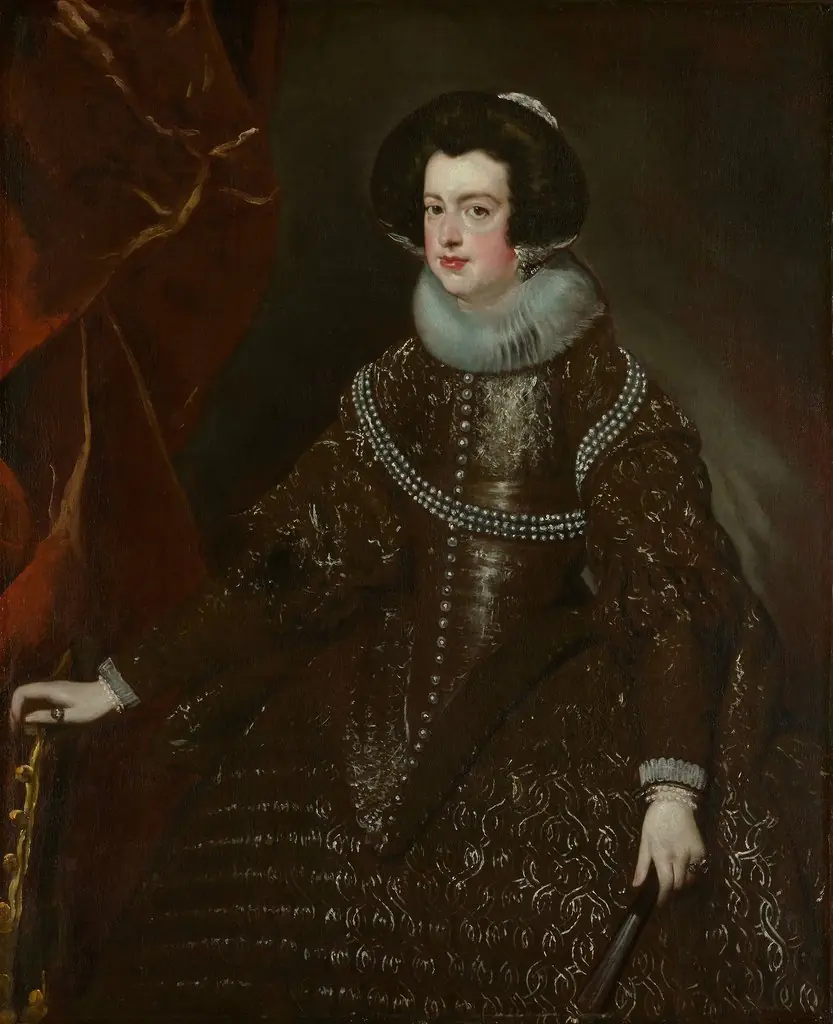 Isabella of Bourbon, Wife of Philip IV of Spain
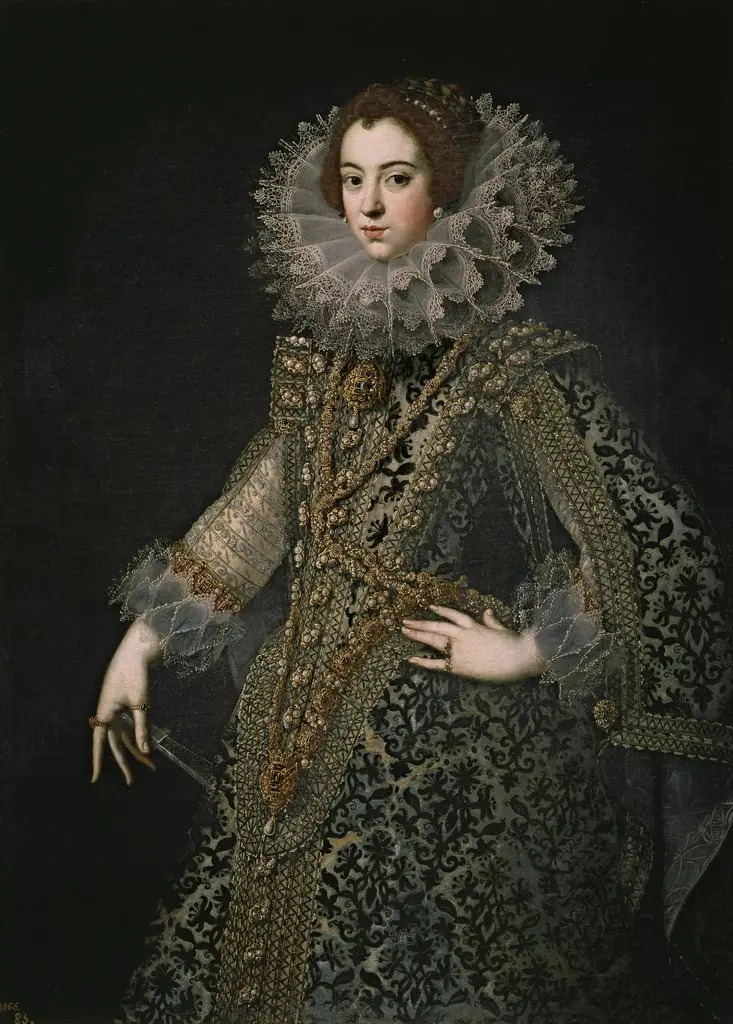 Portrait of Elisabeth of Bourbon, Queen of Spain
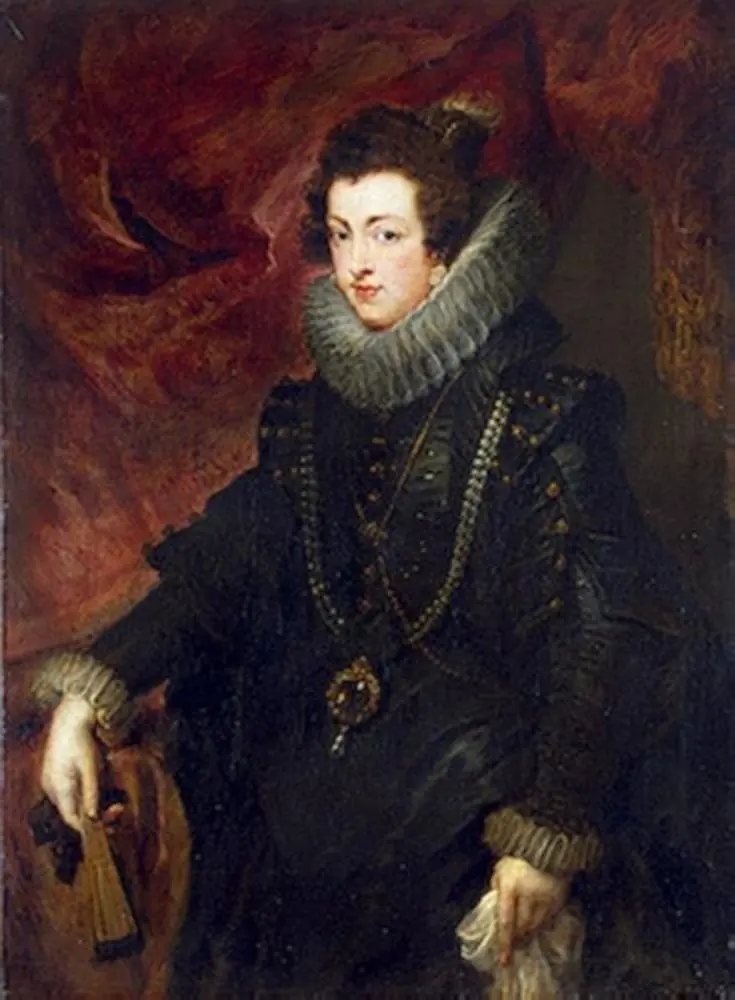 Portrait of Elizabeth of Bourbon, Queen of Spain
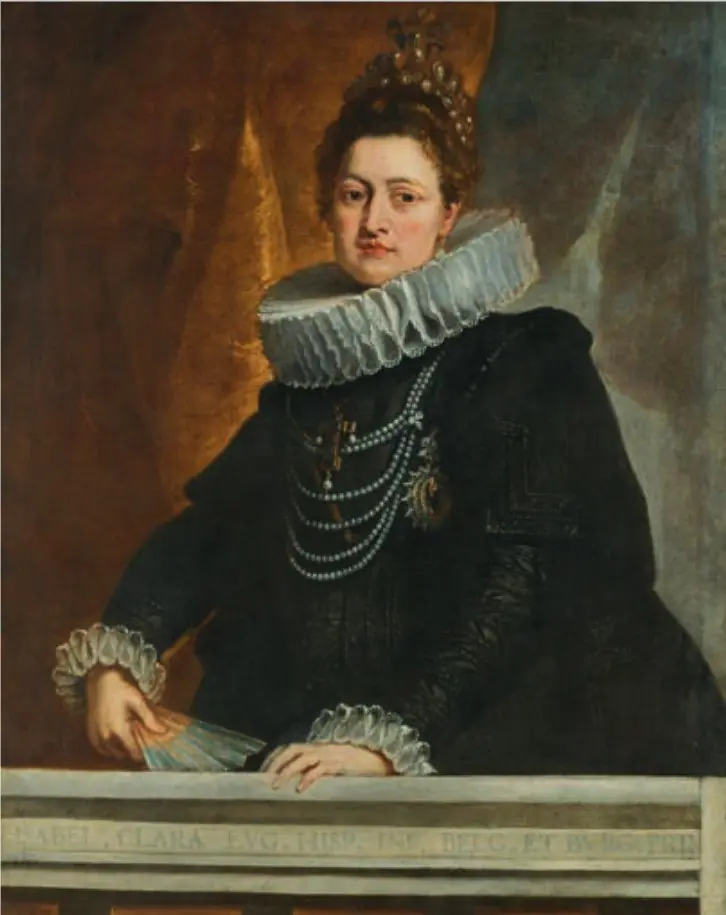 Portrait of Isabella Clara Eugenia
 Portrait of a Spanish Noblewoman