Artwork
Portrait of Elizabeth of Bourbon, Queen of Spain
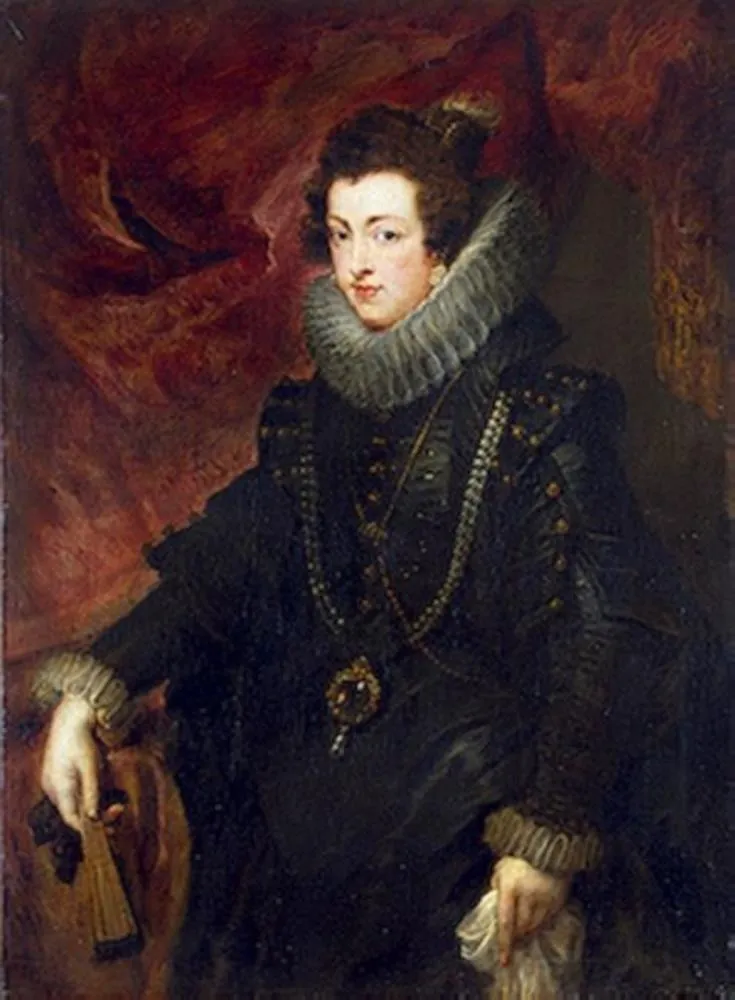
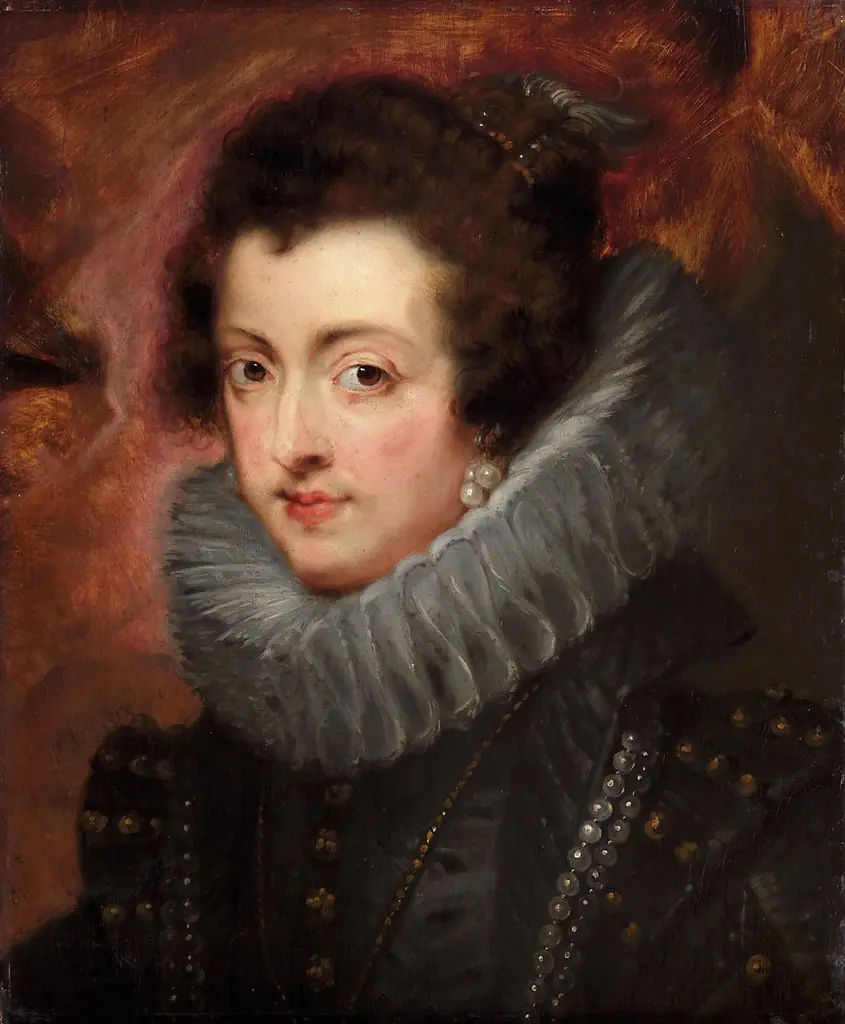
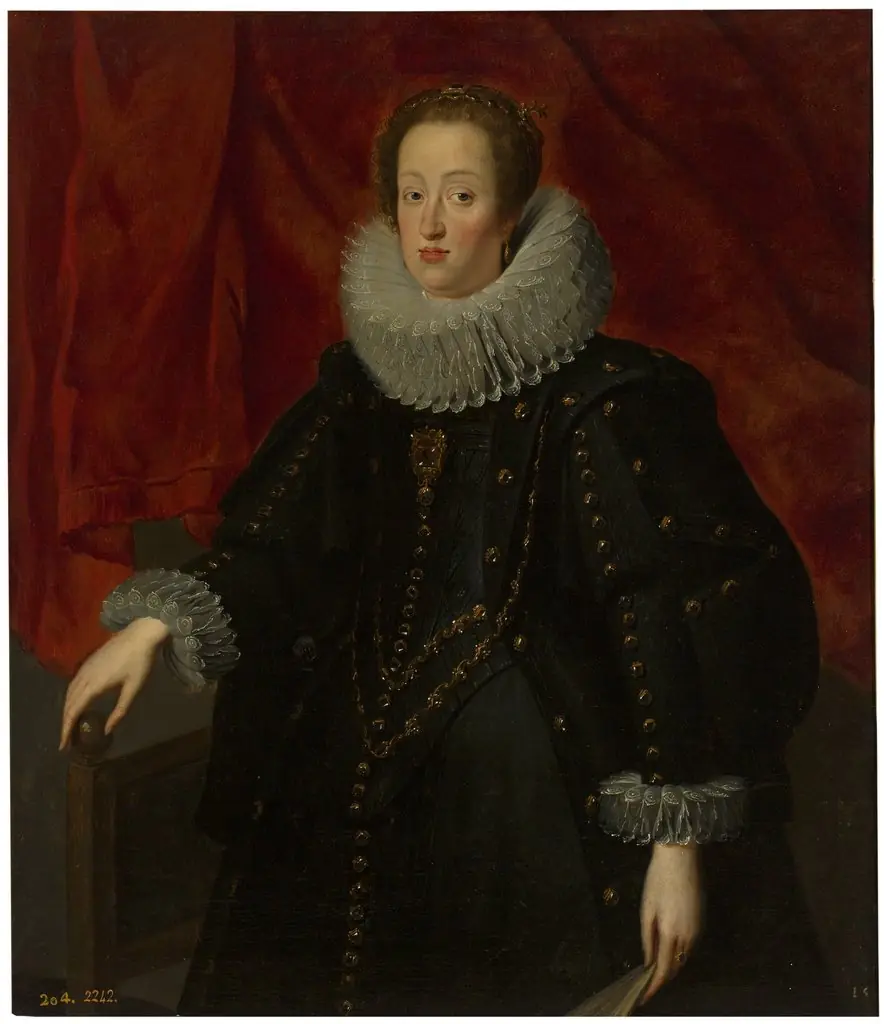
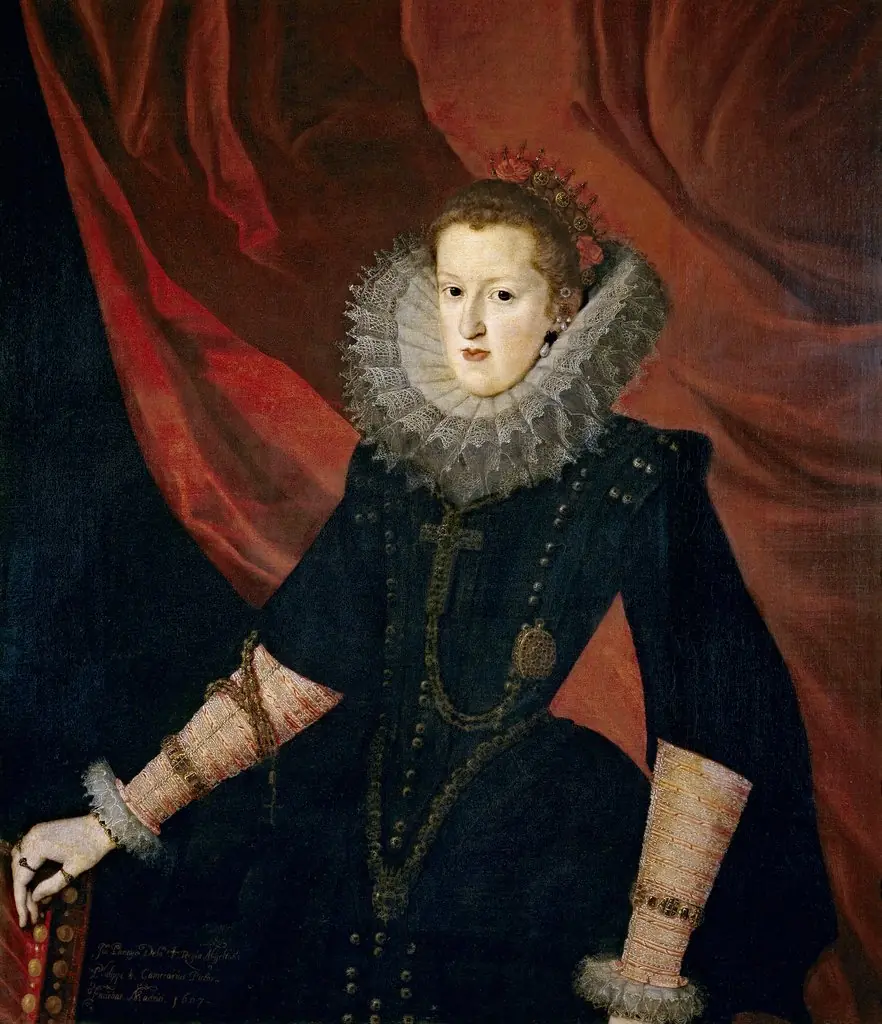
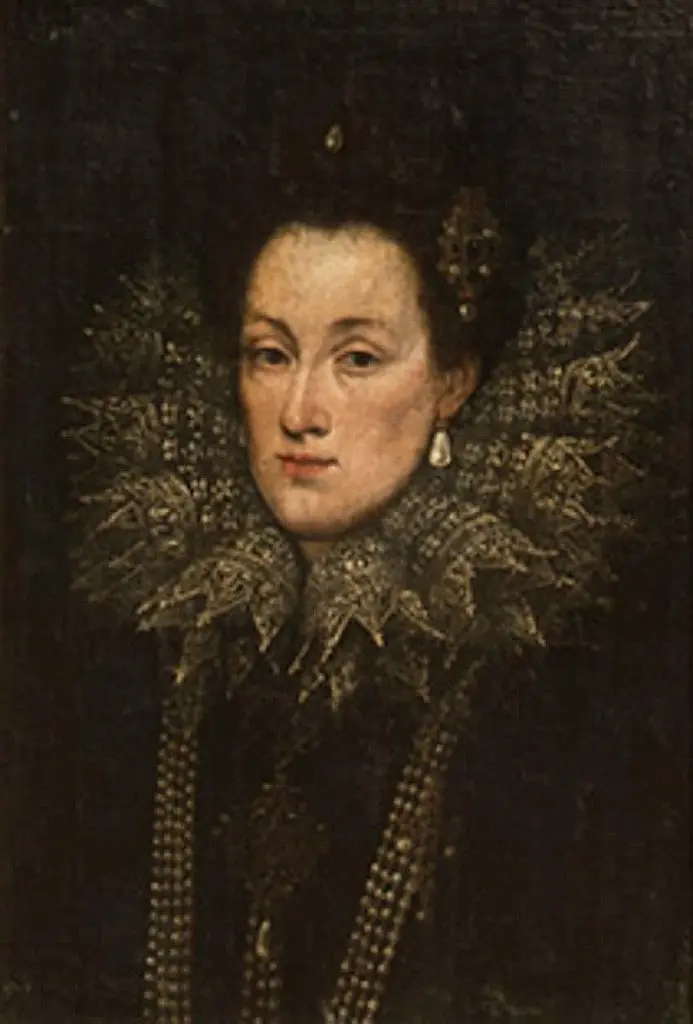
Portrait of Elizabeth of Bourbon, Queen of Spain is an oil painting by the Flemish Baroque painting artist Peter Paul Rubens. It dates from 1628 and is held in the collection of the Hermitage Museum.
About this work
Overview
While traditionally attributed to Peter Paul Rubens, some catalogues classify the painting as a product of the Rubens workshop.
Portrait of Elizabeth of Bourbon, Queen of Spain is an oil on canvas painting executed in Flanders around 1628. The work depicts Elisabeth of France, who was the Queen of Spain. While traditionally attributed to Peter Paul Rubens, some catalogues classify the painting as a product of the Rubens workshop. Measuring 112 by 83 centimeters, the portrait is currently held in the State Hermitage Museum in St. Petersburg, where it is catalogued under museum number GE-469.
Subject & Meaning
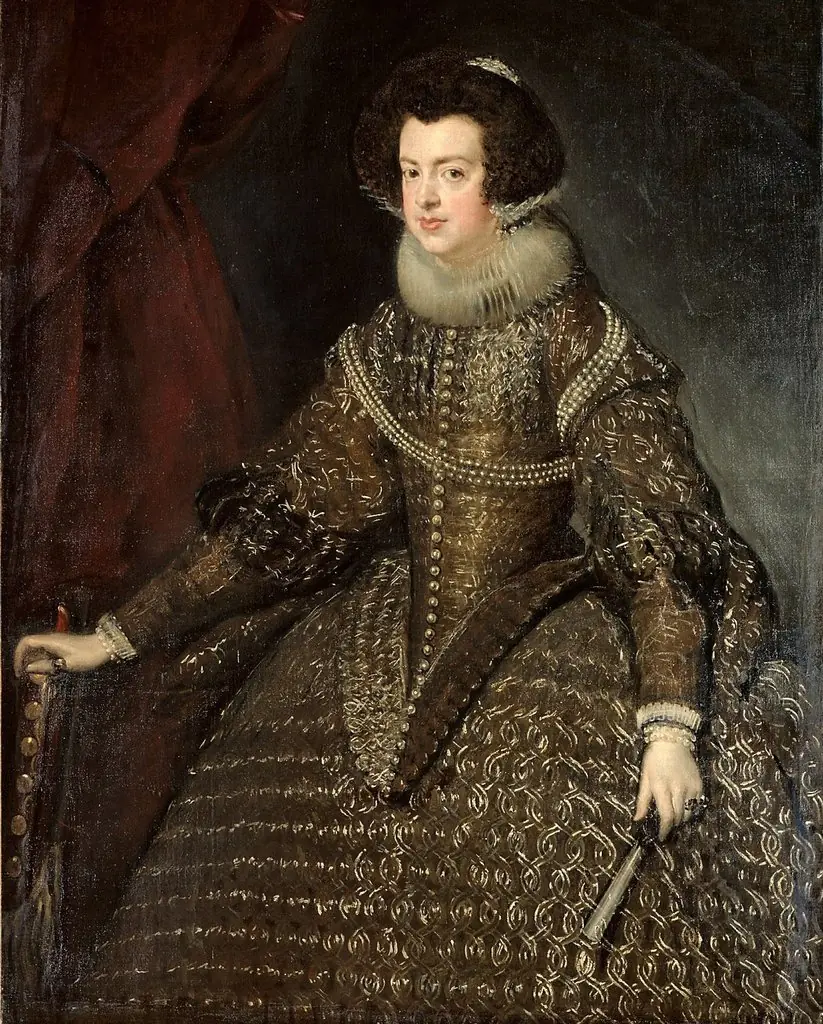
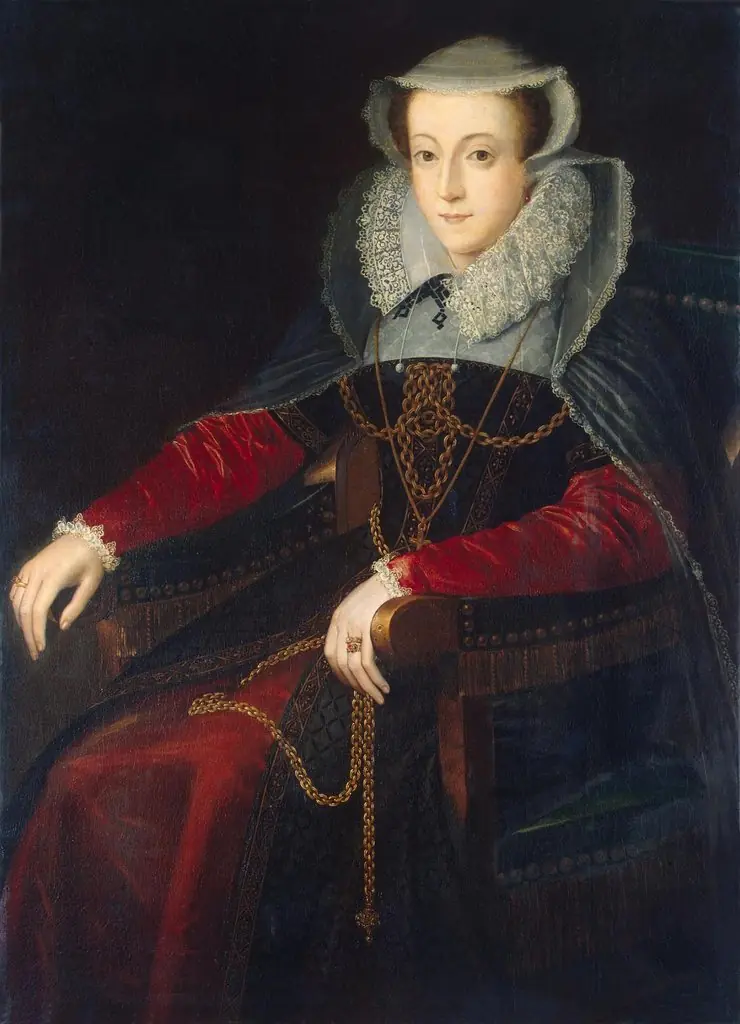
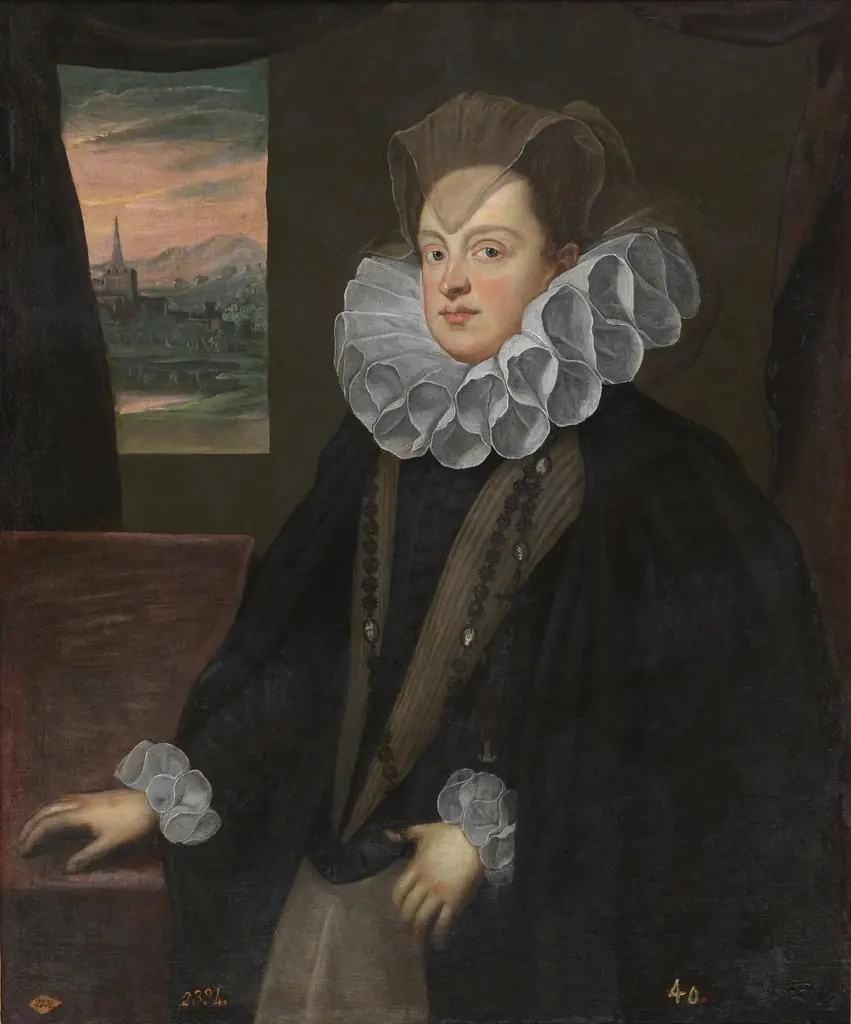
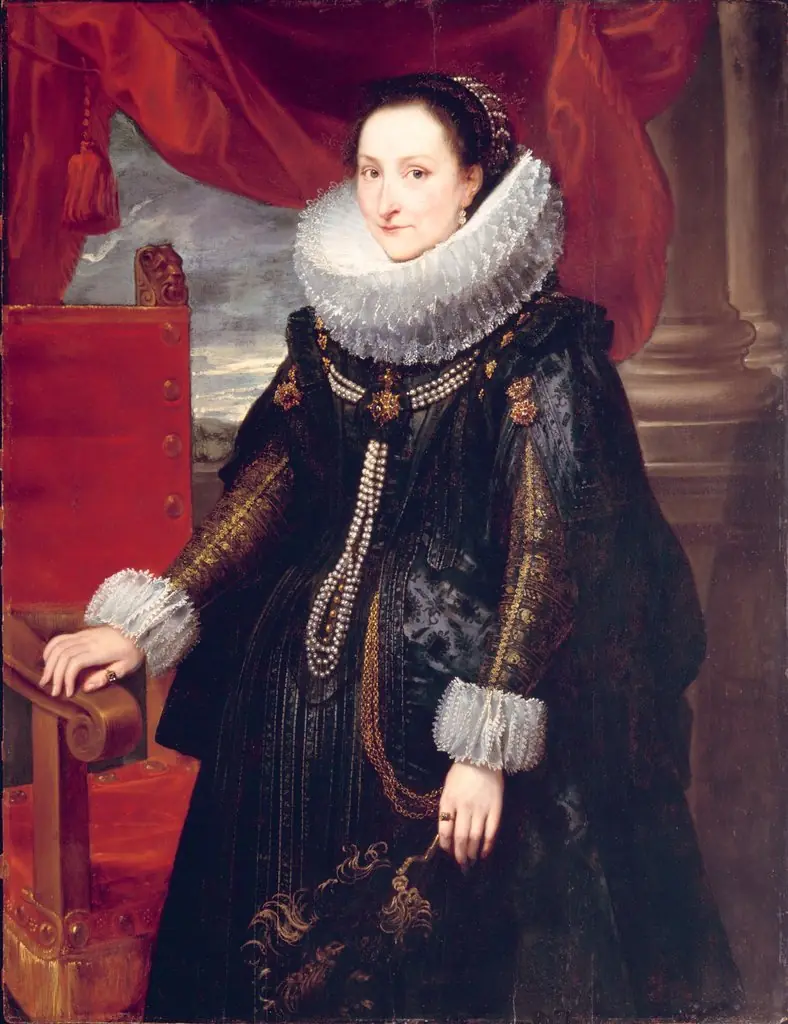
The painting portrays Elisabeth of France, also known as Isabella or Elizabeth of Bourbon, who lived from 1602 to 1644 and served as Queen of Spain. She is presented in a three-quarter pose against a backdrop of deep red draped fabric, conveying her royal status. Her attire reinforces this high rank, featuring a stiff, wide white ruff collar and a dark, elaborately decorated dress with slashed sleeves that reveal lighter fabric beneath. Multiple strands of pearls or beads drape across her chest, culminating in a large jeweled pendant at the center, while a feathered ornament rests in her dark hair. Her right hand rests on the back of a wooden chair, and her left hand holds a white handkerchief at her hip, common attributes of aristocratic portraiture meant to display elegance and station.
Technique & Style
Executed in oil on canvas, the portrait demonstrates a distinct division of labor in its handling. The face and hands of the sitter are rendered with a smoother finish, allowing for a clear, illuminated depiction of her features under warm light. In contrast, the brushwork in the drapery and costume details appears fluid and painterly. The overall palette is dominated by a striking contrast of blacks, deep reds, and whites, which emphasizes the luxurious textures of the fabrics and the stark geometry of the ruff collar against the dark, slashed sleeves.
History & Provenance
Created circa 1628 to 1629, the painting eventually entered the collection of Heinrich von Brühl in Dresden. In 1769, the artwork was acquired from the Brühl collection and entered the Hermitage Museum, where it has remained since. The composition achieved wider circulation in the following decades through reproductive prints. An anonymous engraving after the painting, published in Paris by Mariette, was produced sometime between 1650 and 1700, indicating the early reach of the portrait's design beyond the original canvas.
Context
The portrait emerged from the orbit of Peter Paul Rubens, a towering figure in Flemish Baroque art, though the exact extent of his personal hand in the work remains a point of scholarly distinction. While some records attribute the work directly to Rubens, others specify the Rubens workshop as the primary creator, reflecting the common studio practices of the period where masters oversaw the production of variants and replicas. The existence of later engravings, such as the one published by Mariette, underscores the broader European dissemination of Rubens's compositional models and the demand for representations of the Spanish Queen across the continent.
Artist & collection
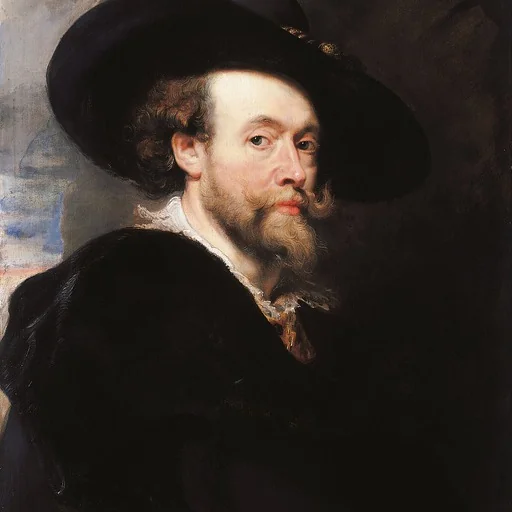
Artist
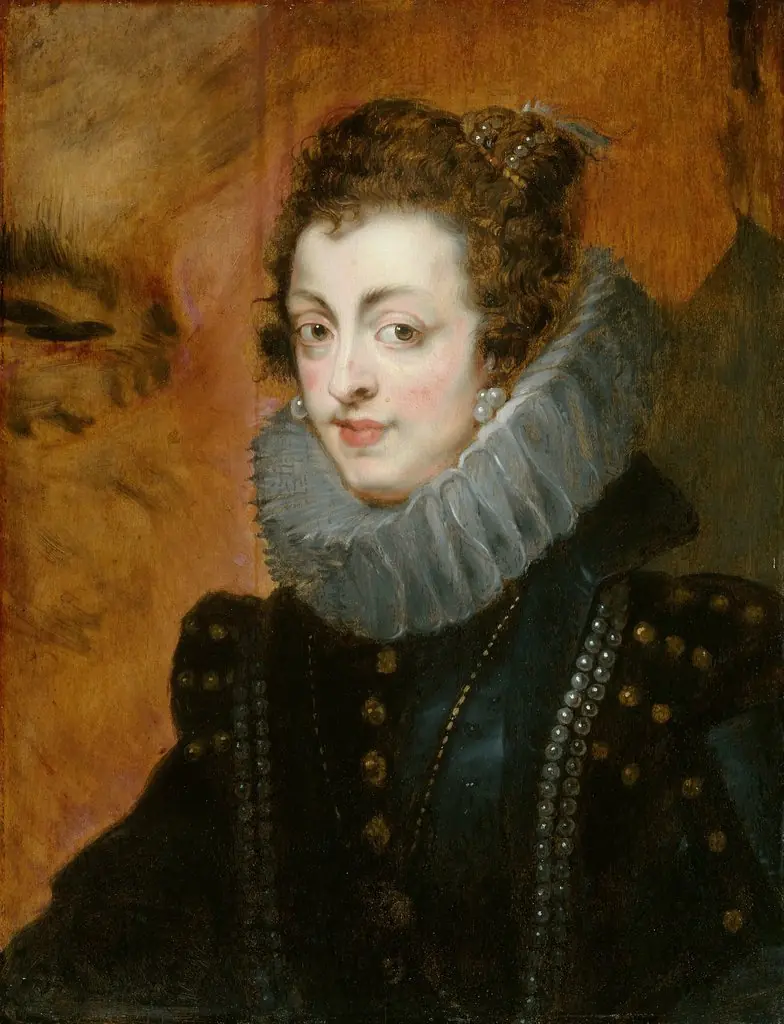
Sir Peter Paul Rubens ( ROO-bənz; Dutch:; 28 June 1577 – 30 May 1640) was a Flemish artist and diplomat.