Artwork
Portrait of Otto I. Buchholtz (1770- after 1820)
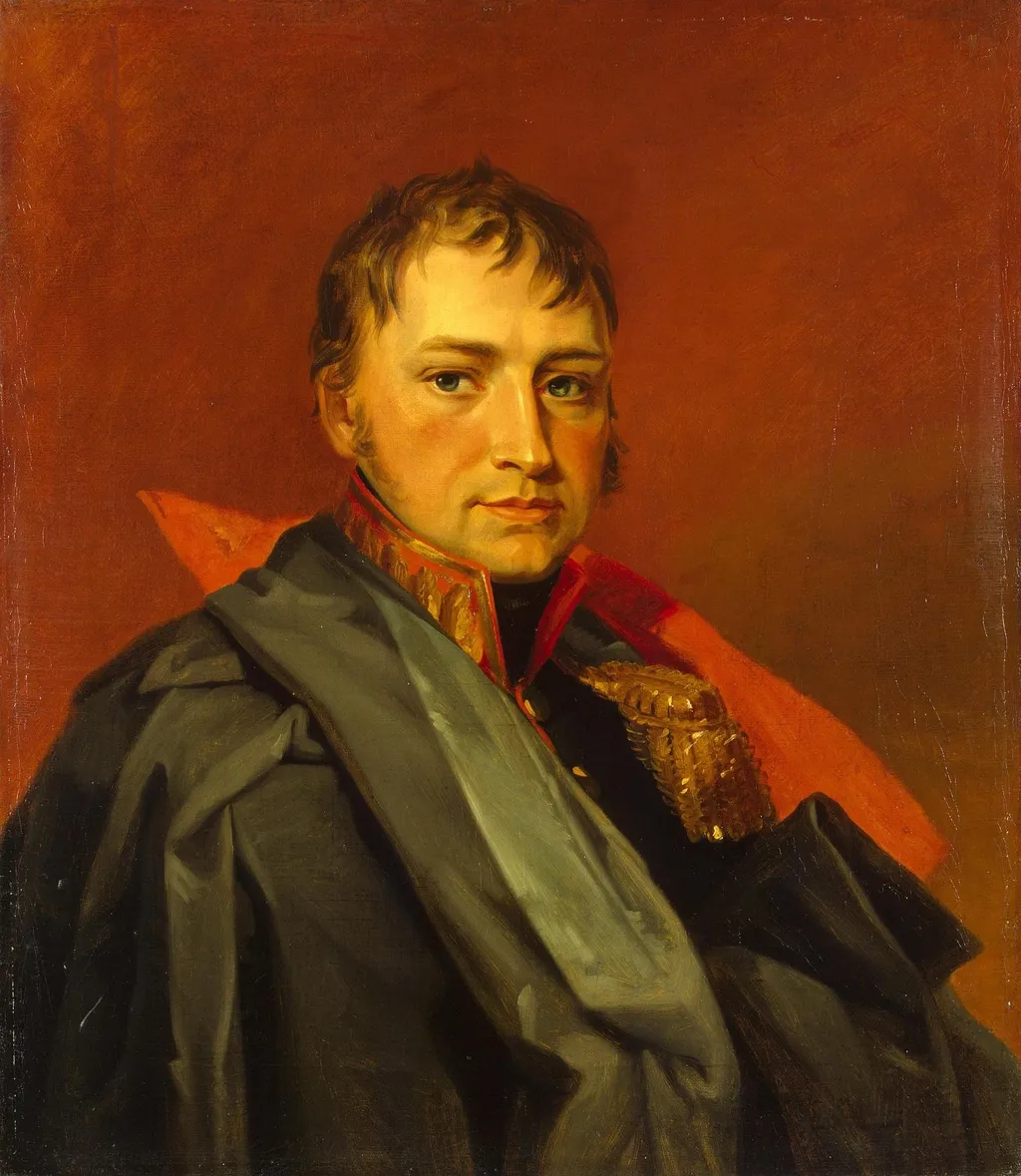
Portrait of Otto I. Buchholtz (1770- after 1820) is an oil painting by the German Romanticist artist Unknown. It dates from 1830 and is held in the collection of the Hermitage Museum. The Portrait of Otto I.
About this work
Overview
Created around 1830, the work is attributed to the workshop of the British painter George Dawe, with possible assistance from Thomas Wright.
The Portrait of Otto I. Buchholtz (1770-after 1820) is an oil-on-canvas painting measuring 70 by 62.5 centimeters, depicting a Russian military officer in half-length format. Created around 1830, the work is attributed to the workshop of the British painter George Dawe, with possible assistance from Thomas Wright. It is held in the collection of the State Hermitage Museum in Saint Petersburg, Russia, where it forms part of the celebrated Military Gallery of the Winter Palace. The portrait exemplifies the formal military portraiture produced for Tsar Nicholas I's ambitious gallery project, which commemorated the commanders of the Napoleonic Wars, and stands as a representative example of how British artistic expertise was employed to document Russian military history.
Subject & Meaning
Otto I. Buchholtz, the subject of this portrait, served as a lieutenant general in the Russian army during the era of the Napoleonic Wars. The painting presents him as a figure of military authority and social responsibility, his identity constructed through carefully chosen regalia rather than personal narrative. He wears a dark military coat with a high collar trimmed in red and gold embroidery, a prominent gold epaulette with dense fringing on his left shoulder, and a heavy gray or blue-gray cloak with a vivid red lining visible beneath. The absence of any background setting or ancillary objects focuses attention entirely on the man and his uniform, emphasizing his institutional role over his individuality. Scholarly interpretation has noted the tension in Buchholtz's expression, variously described as stern, faintly melancholic, or conveying controlled tension, suggesting a psychological complexity beneath the polished surface of formal portraiture. This duality between public representation and private interiority reflects broader themes in military portraiture of the period, where individual subjects served as embodiments of national power and historical trauma.
Technique & Style
The painting is executed in oil on canvas, a medium that allows for the smooth, blended finish characteristic of formal academic portraiture. The handling demonstrates a clear hierarchy of finish: the face is rendered with meticulous smoothness and polished blending, while broader, more visible brushstrokes animate the heavy folds of the cloak and the muted reddish-brown background. Light enters strongly from the left, illuminating the face, the gold epaulette, and the red lining of the cloak, while the right side of the figure recedes into shadow, creating a dramatic chiaroscuro effect that lends volume and presence to the sitter. The palette is dominated by warm earth tones, the gray of the cloak, and strategic accents of red and gold. This stylistic approach aligns with Neoclassical conventions, prioritizing clarity, order, and idealized representation over expressive spontaneity. The overall effect is one of restrained polish, with the material richness of the gold and fabrics providing textural contrast to the smoothness of the painted surface.
History & Provenance
The portrait was created between 1828 and 1832 as part of the Military Gallery of the Winter Palace, a monumental commission initiated by Tsar Nicholas I to honor the commanders who had served during the Napoleonic Wars. George Dawe, a British painter who had established his reputation in Russia, was engaged to produce numerous portraits for this gallery, working with his workshop to meet the demanding scale of the project. The painting entered the collection of the State Hermitage Museum in Saint Petersburg, where it remains today. Its accession details and precise ownership history prior to museum acquisition are not fully documented in available sources, though its place within the Military Gallery indicates direct imperial commission. The work has been exhibited as part of the permanent display of the Military Gallery, one of the Hermitage's most historically significant ensembles.
Context
George Dawe's involvement in Russian military portraiture represents a notable instance of British artistic influence in early nineteenth-century Russia. Dawe had gained recognition for his portrait work before receiving the imperial commission, and his workshop practice, including the probable participation of assistants such as Thomas Wright, was essential to completing the extensive gallery program. The Military Gallery of the Winter Palace itself constitutes a major documentary project of the era, transforming individual likenesses into a collective monument to Russian military achievement in the wake of the Napoleonic Wars. Within this context, the portrait of Buchholtz operates not merely as personal commemoration but as a component of national narrative construction. Critical and scholarly attention has focused on the tension between the gallery's representational conventions and the subtle indications of individual psychology that emerge in certain portraits, with Buchholtz's depiction inviting interpretation as both effigy and human document.
Legacy
The Portrait of Otto I. Buchholtz endures primarily as a representative work within one of Europe's most significant collections of military portraiture. Its ongoing display in the Military Gallery of the Winter Palace ensures continued public engagement with both the individual subject and the broader historical project he represents. The painting has entered digital circulation through museum databases and image platforms, extending its accessibility beyond the physical museum context. As a workshop production associated with George Dawe, it contributes to scholarly understanding of studio practice in large-scale commemorative programs, where the demands of quantity and consistency required collaborative execution. The portrait's afterlife in contemporary curatorial interpretation, including discussions of its psychological complexity and social significance, demonstrates how historical military portraiture continues to generate meaning beyond its original documentary function, prompting reflection on the relationship between individual experience and institutional representation.
Artist & collection









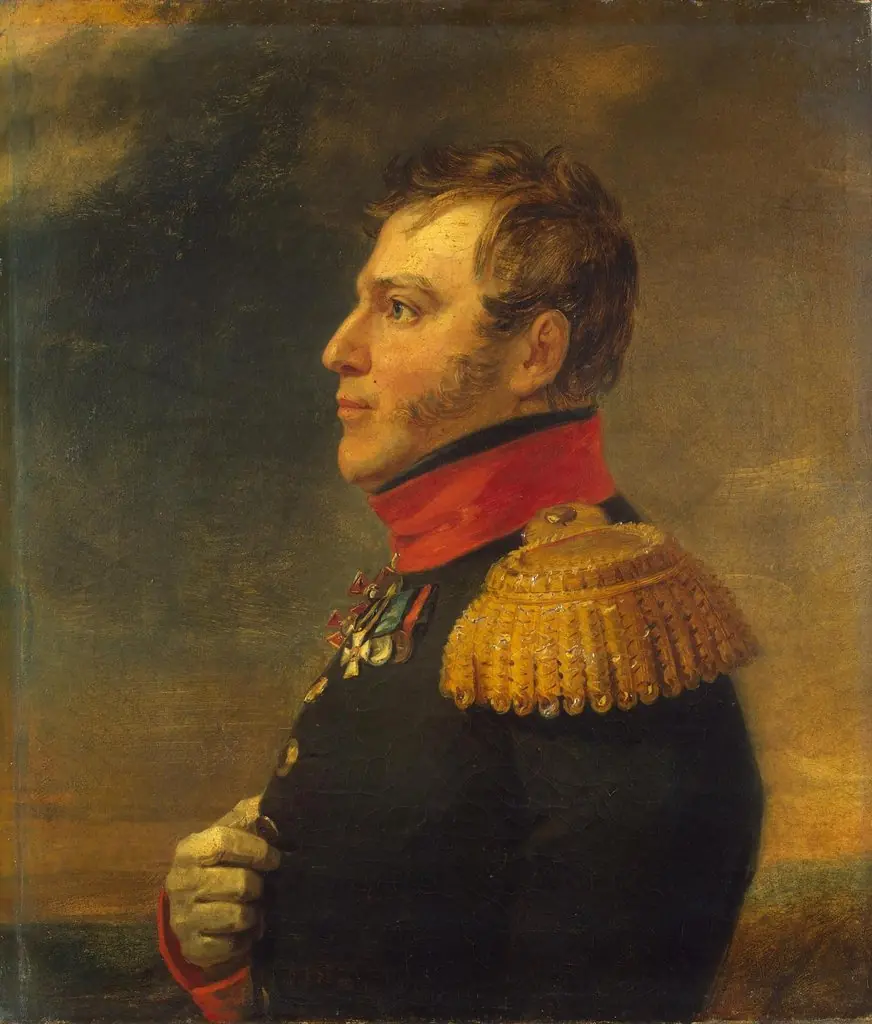 Portrait of Gustav Kh. Schele (1759/60-1820)
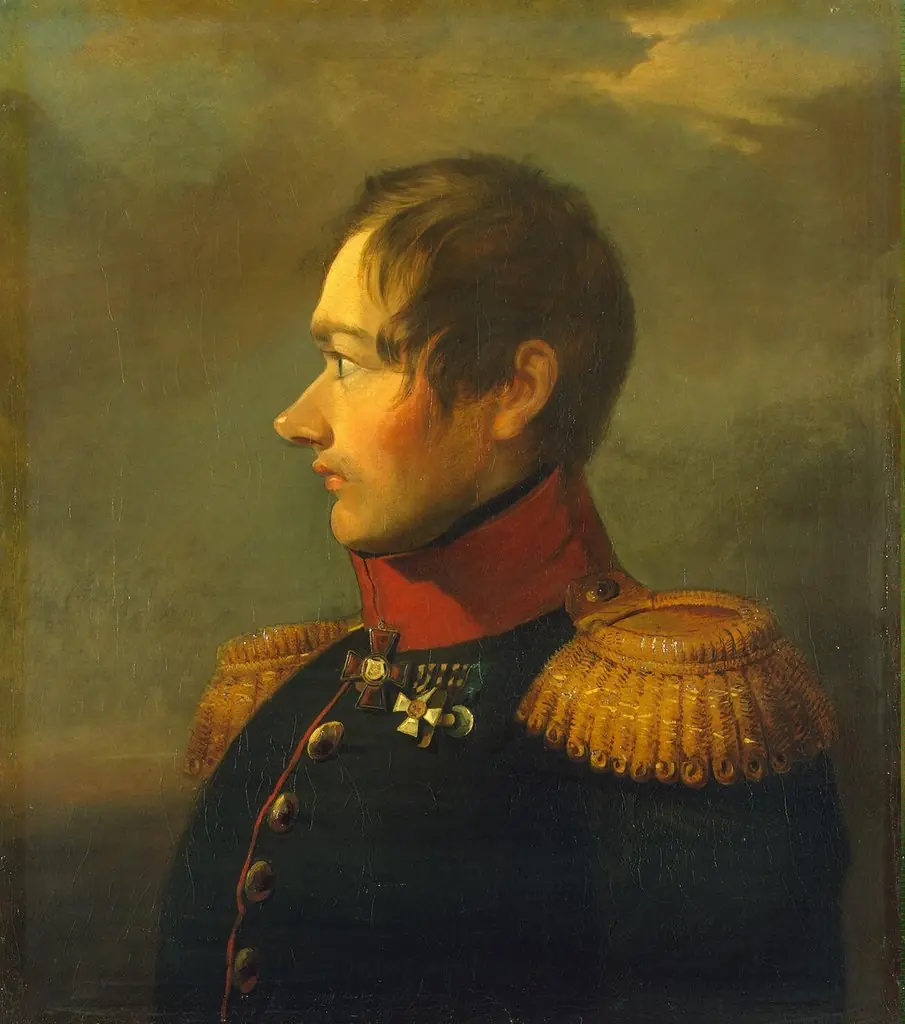 Portrait of Fyodor A. Lindfors (1760-1813)
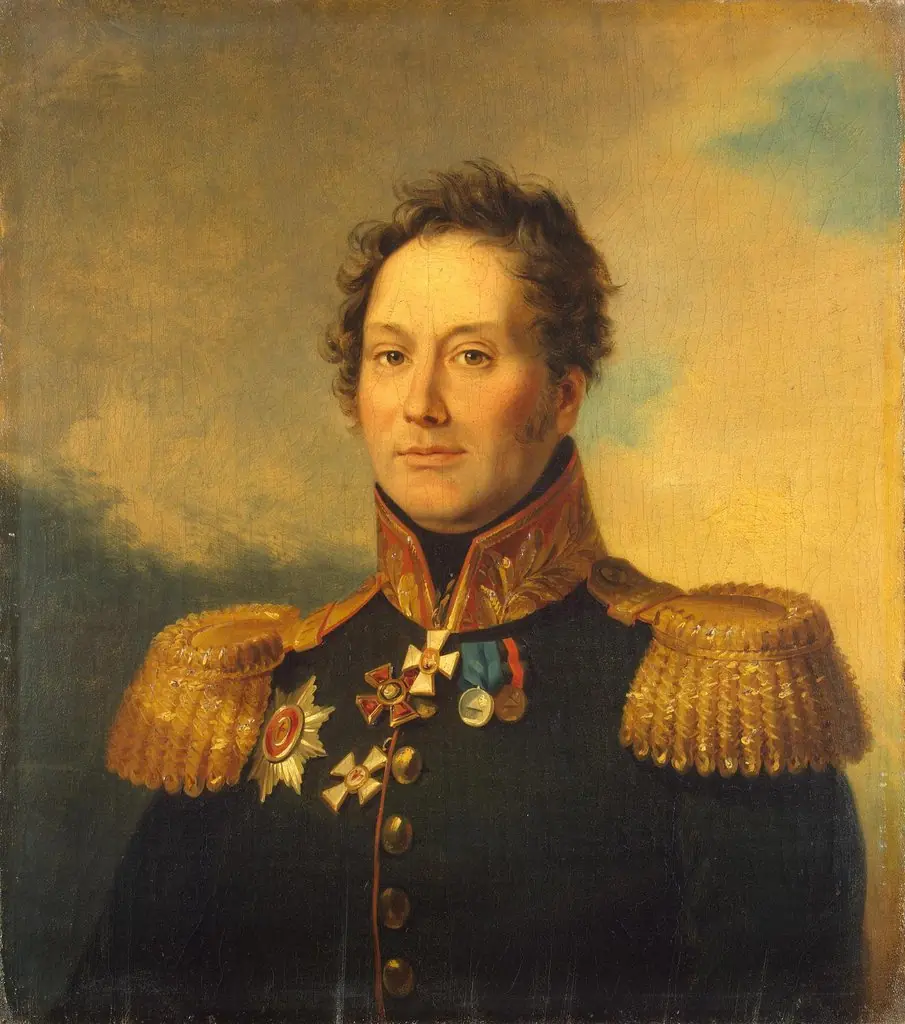 Portrait of Moisey I. Karpenko (1775-1854)
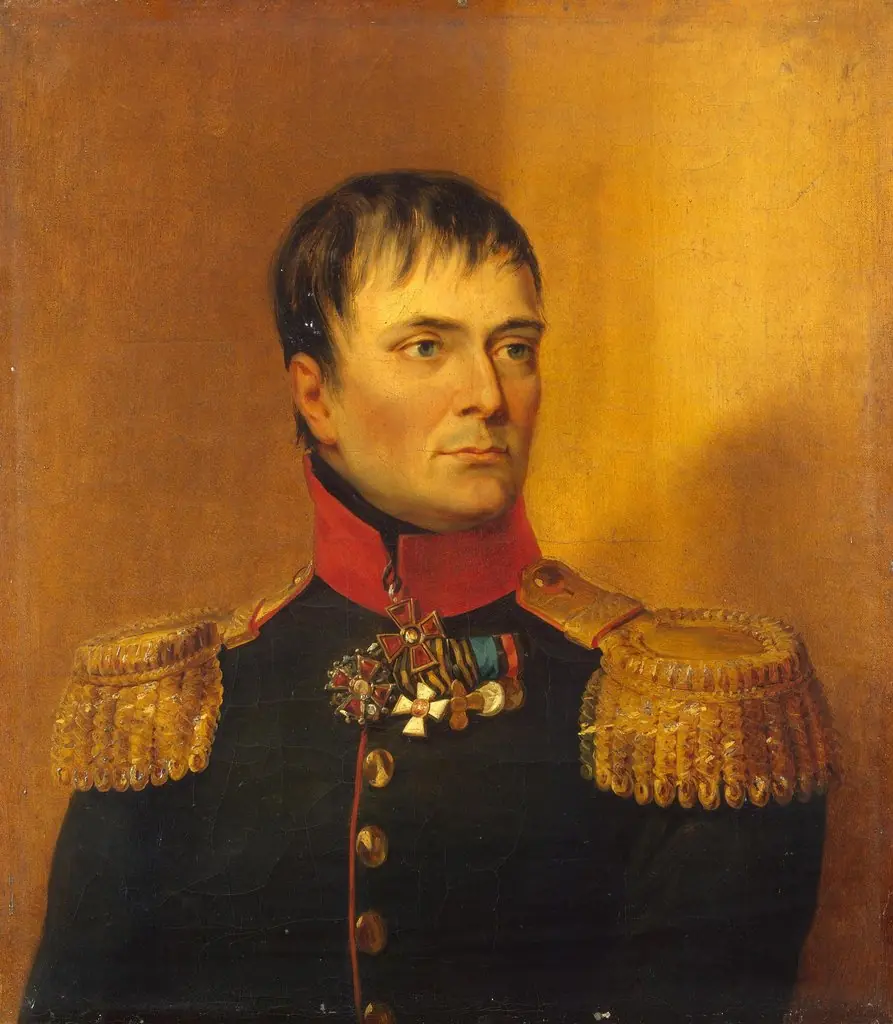 Portrait of Ivan I. Palitsyn (1763-1814)
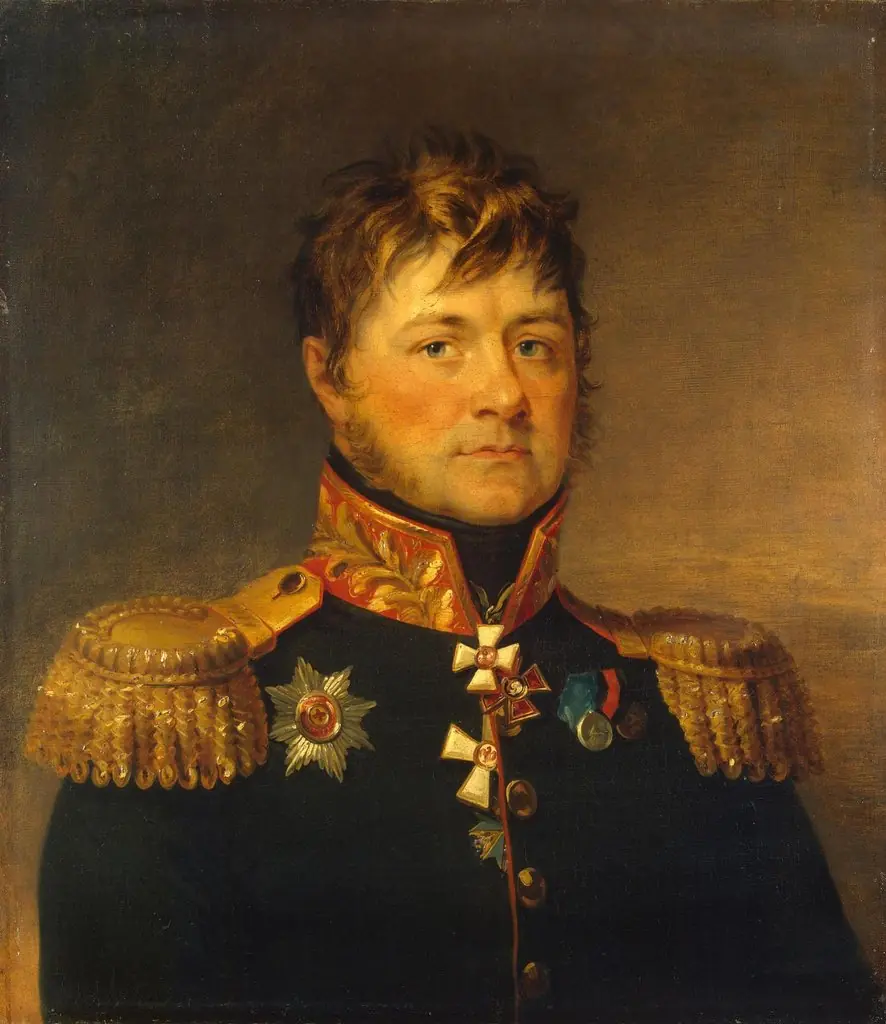 Portrait of Ivan L. Paul (1768-1840)
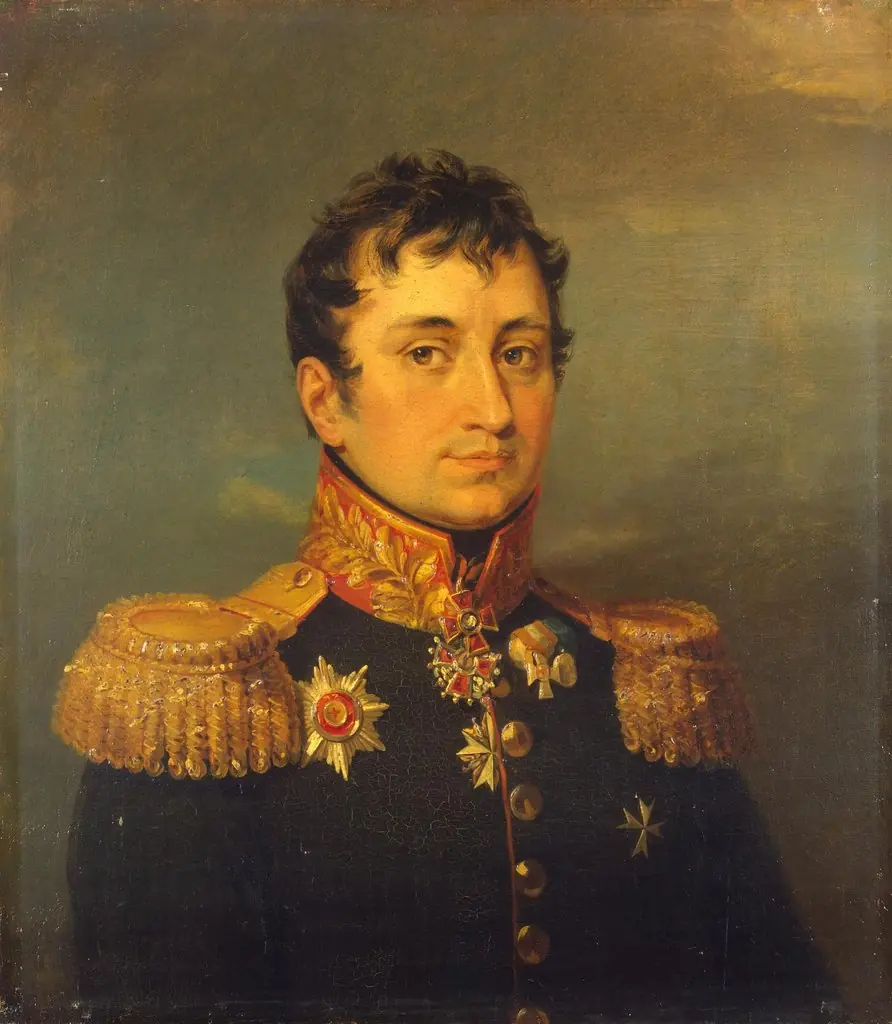 Portrait of Pavel A. Filisov (1769-1821)
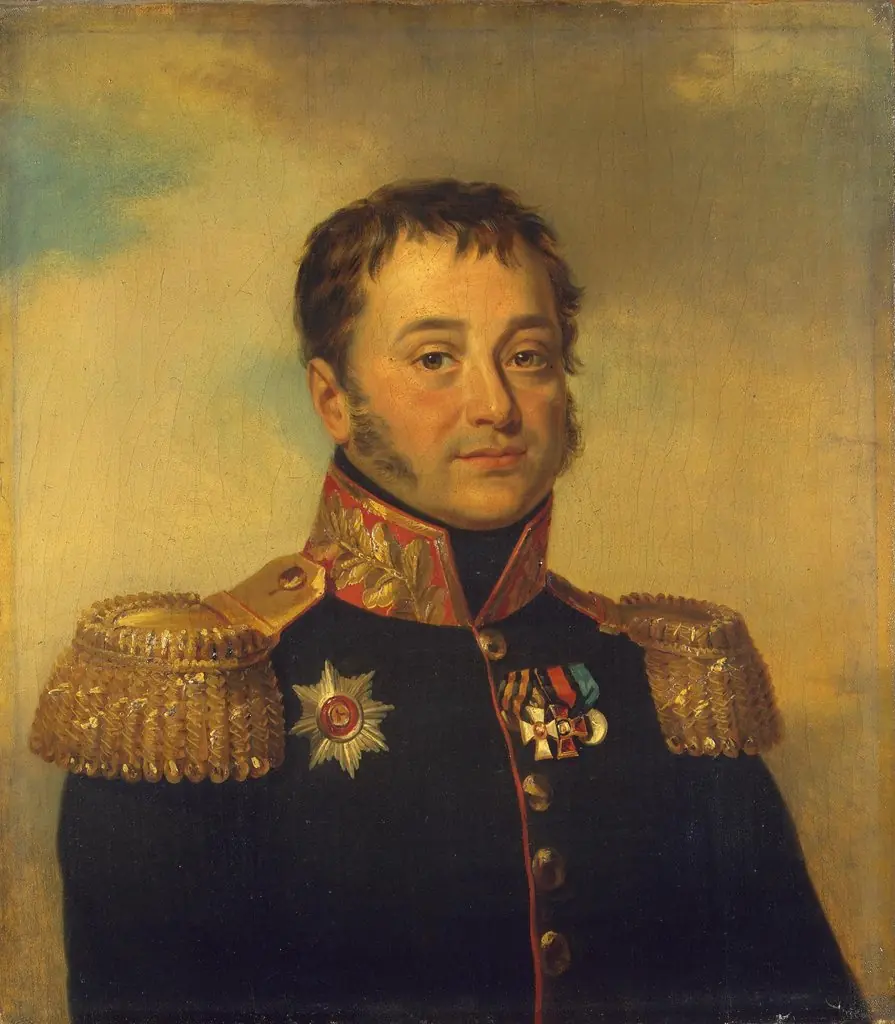 Portrait of Pyotr V. Denisyev (1766-1849)
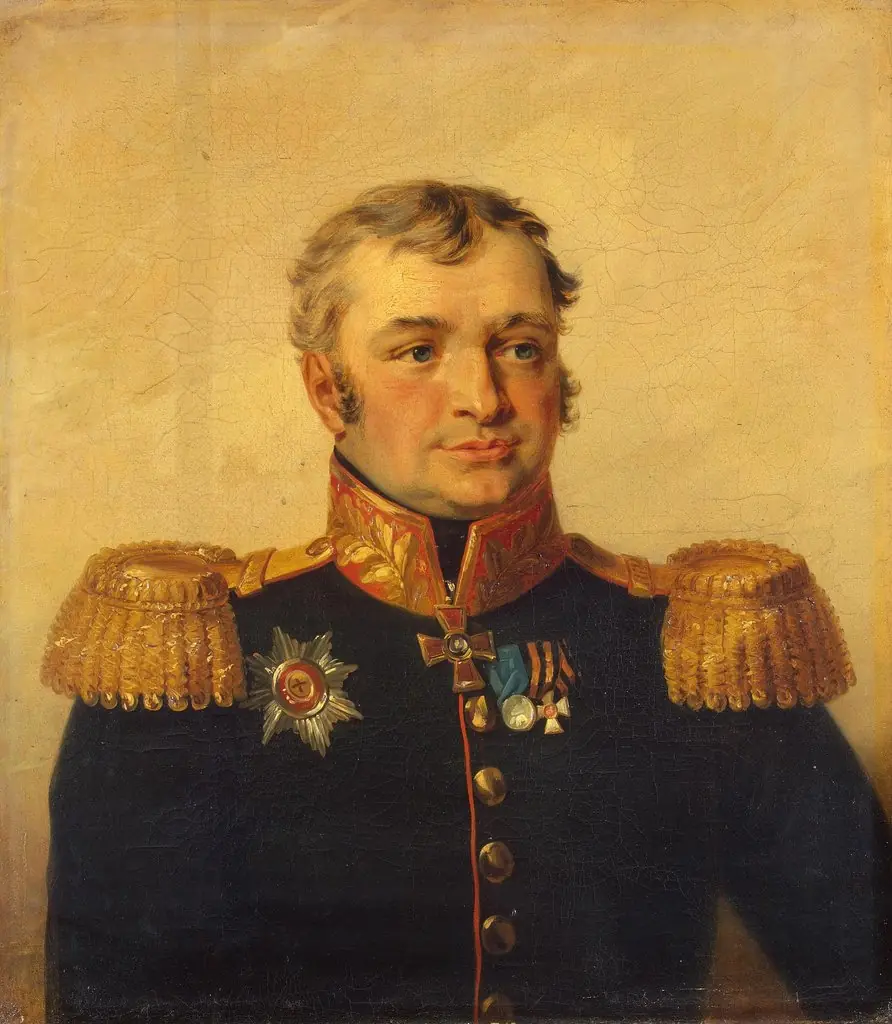 Portrait of Vasily S. Rakhmanov (1764-1816)
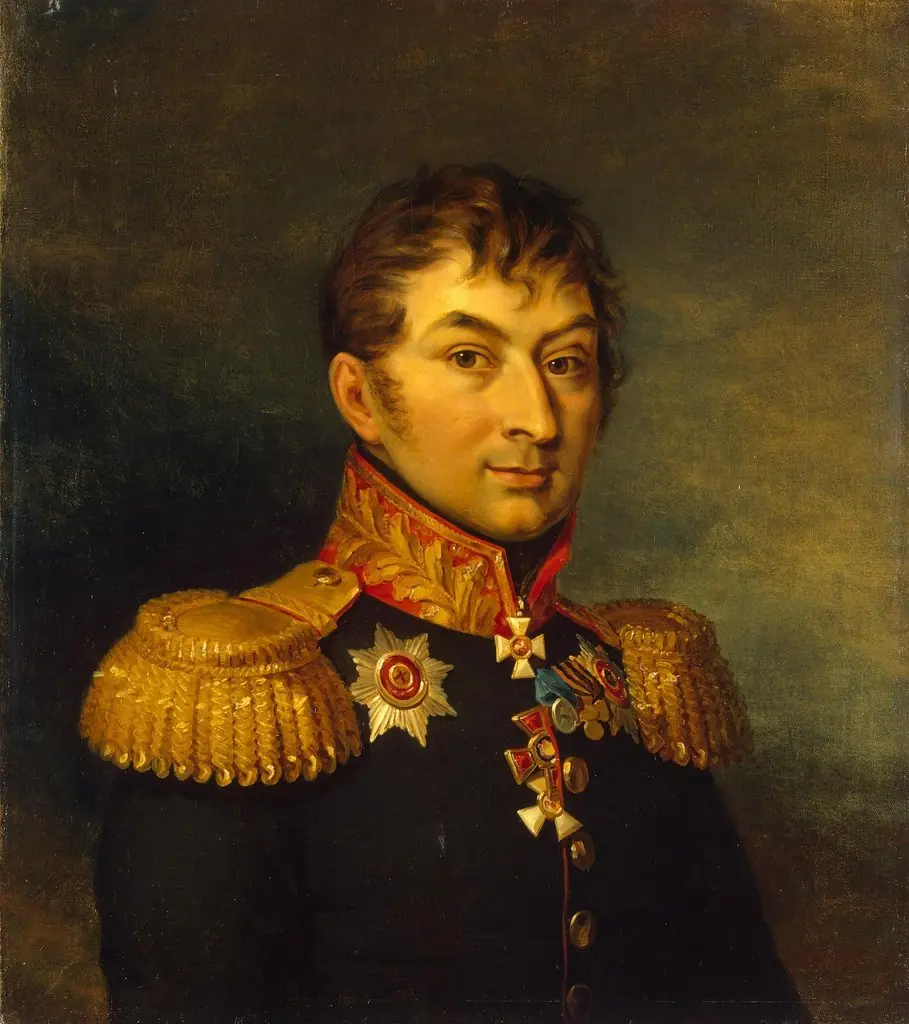 Portrait of Ivan D. Panchulidzev (1759-1815) (1st)
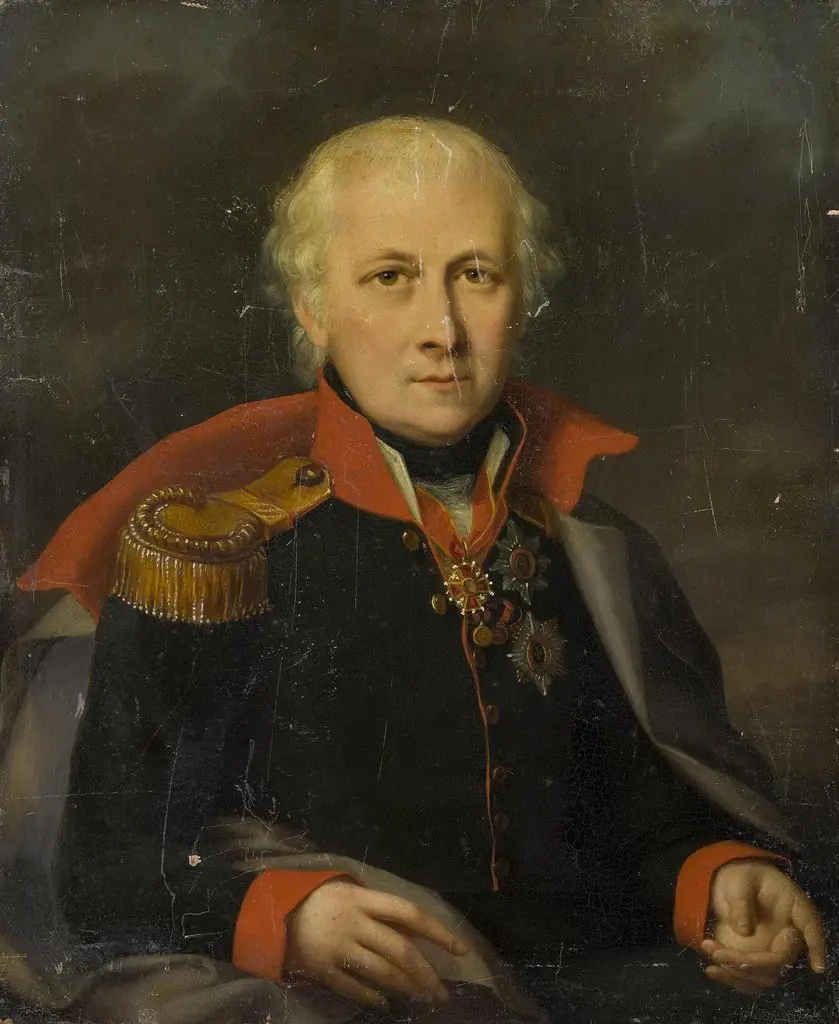 Portrait of Nikolai Mordvinov (?)