Artwork
Portrait of Philips (1566-95, Count of Nassau
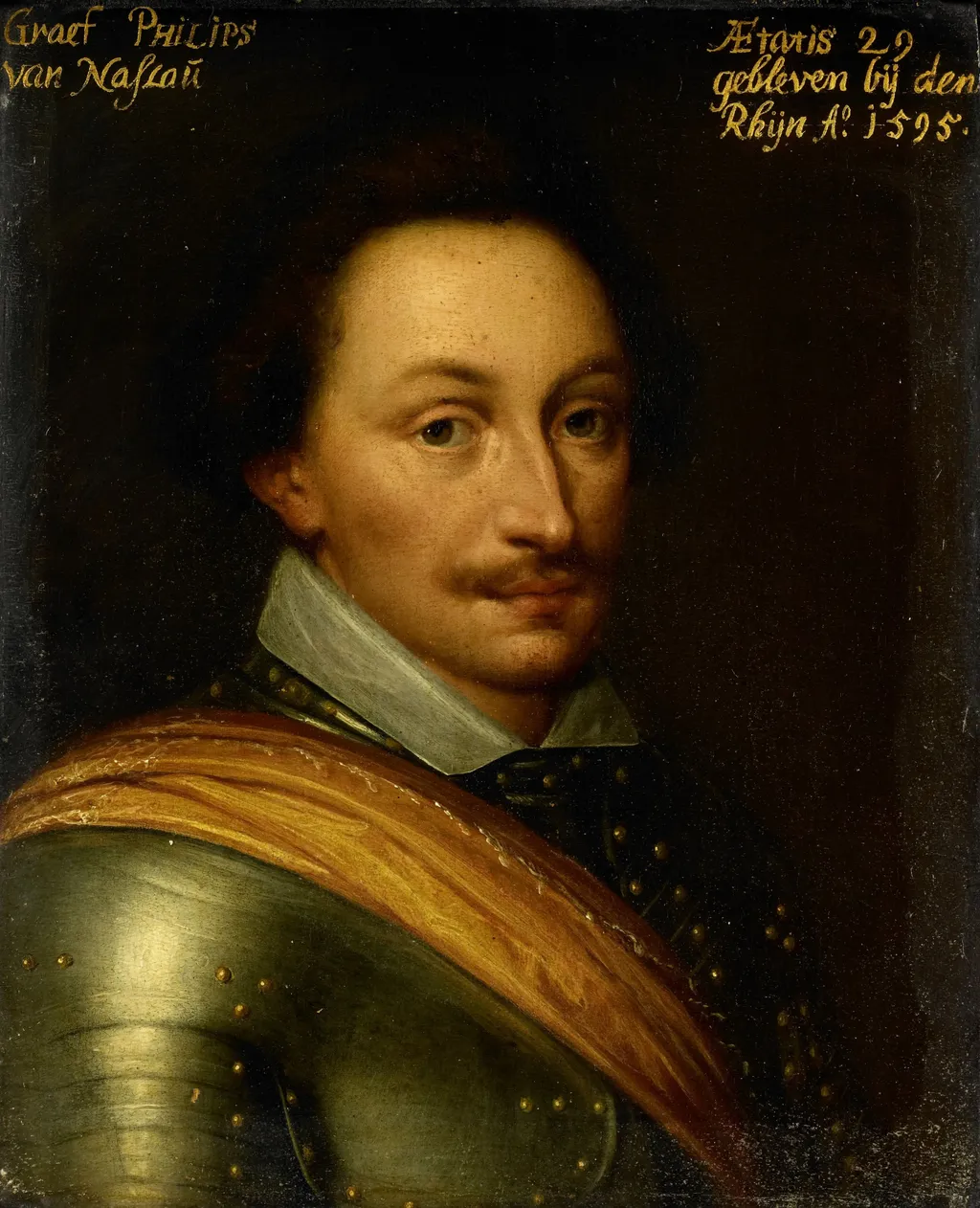
Portrait of Philips (1566-95, Count of Nassau is an oil painting. It dates from 1621 and is held in the collection of the Rijksmuseum. The work is an oil painting portraying a man against a dark backdrop.
About this work
Subject & Meaning
The painting shows Philip of Nassau, Count of Nassau-Dillenburg, depicted in a conventional portrait format that emphasizes his status as a member of a prominent Dutch noble family. The work is rendered in oil on panel and follows typical 17th‑century portrait conventions, presenting the sitter in formal attire without overt symbolic attributes, suggesting a focus on lineage rather than narrative allegory.
Technique & Style
Its formal qualities reflect a portrait genre rendered in oil on panel, maintaining the material and technical conventions of early Dutch painting.
The work is an oil painting executed on wooden panel, measuring 29.7 by 24.3 centimeters. It portrays Philip of Nassau and was created in Holland in 1621. The piece entered the collection of Maurice of Nassau and now resides in the Rijksmuseum within the Stadhouderlijk Hof.
Its formal qualities reflect a portrait genre rendered in oil on panel, maintaining the material and technical conventions of early Dutch painting.
History & Provenance
The portrait was created in 1621 in Holland, executed in oil paint on panel. It was owned by Maurice of Nassau, who held the work during his lifetime. The painting subsequently entered the collection of the Rijksmuseum, where it is housed at the Stadhouderlijk Hof location in the Netherlands.
The work is catalogued as an anonymous painting depicting Philip of Nassau, with no surviving record of a specific commission or attribution to a named artist.
The portrait is held by the Rijksmuseum, the National Art Gallery of the Netherlands, and is located at the Stadhouderlijk Hof. Prior to its current institutional custody, the painting was owned by Maurice of Nassau. The work was produced in Holland in 1621 and is executed in oil paint on panel, measuring 29.7 cm in height by 24.3 cm in width.
No specific exhibition history is documented in the available sources.
Context
The work entered the collection of Maurice of Nassau shortly after its creation and now resides in the Rijksmuseum, where it is displayed in the Stadhouderlijk Hof section.
Scholarship identifies the subject as Philip of Nassau, Count of Nassau, and places the painting firmly within the early Dutch portrait tradition of the 1620s.
Its formal qualities, oil on panel, modest dimensions of 29.7 cm by 24.3 cm, and restrained composition, reflect the influence of contemporary portraitists such as Gerrit van Honthorst, situating it alongside other courtly portraits from the period.
Overview
The work is an oil painting portraying a man against a dark backdrop. He is dressed in a black doublet with a white collar, a gold chain, and a brown leather shoulder piece that resembles armor. His hair is short and neatly trimmed, and his expression is serious, softened by a faint smile. The composition centers on his illuminated face.
Artist & collection

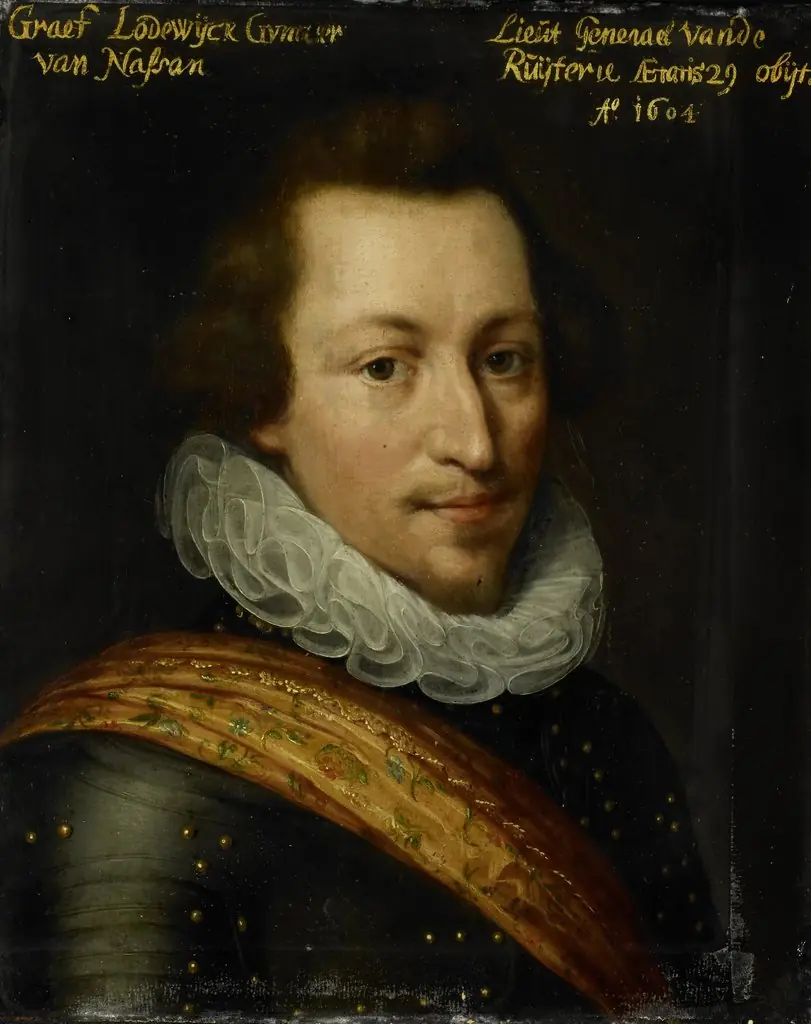
- Portrait of Lodewijk Günther (1575-1604), Count of Nassau
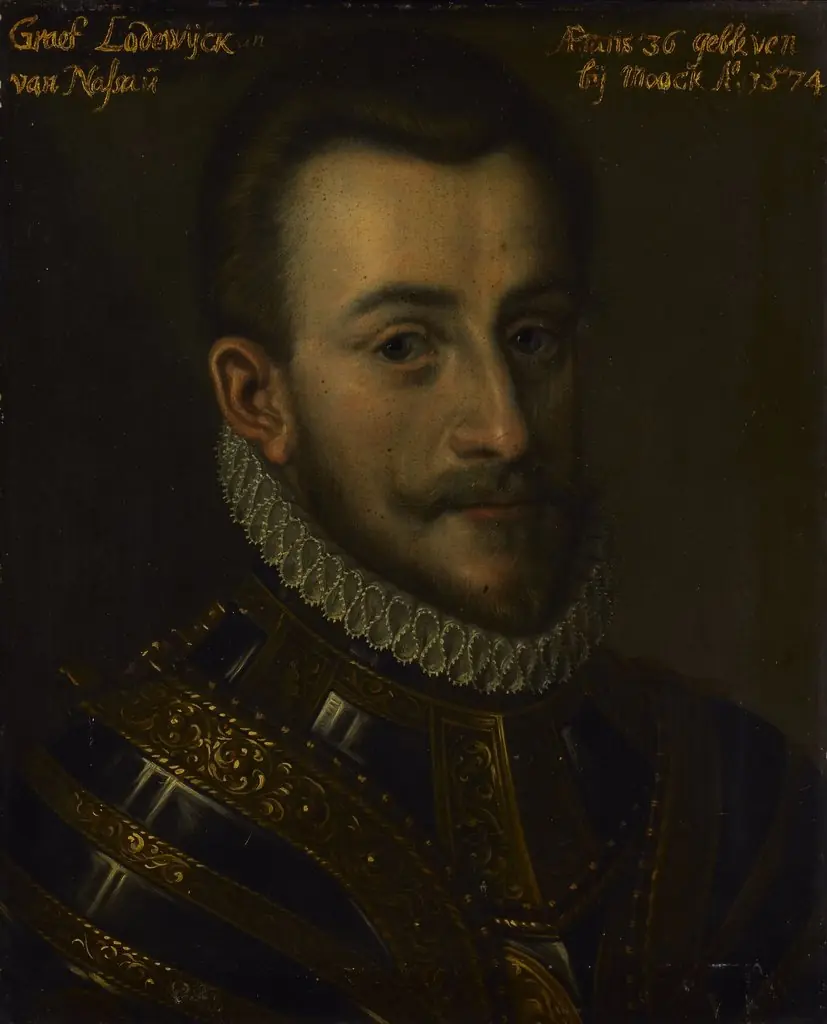 Portrait of Lodewijk (1538-74), Count of Nassau
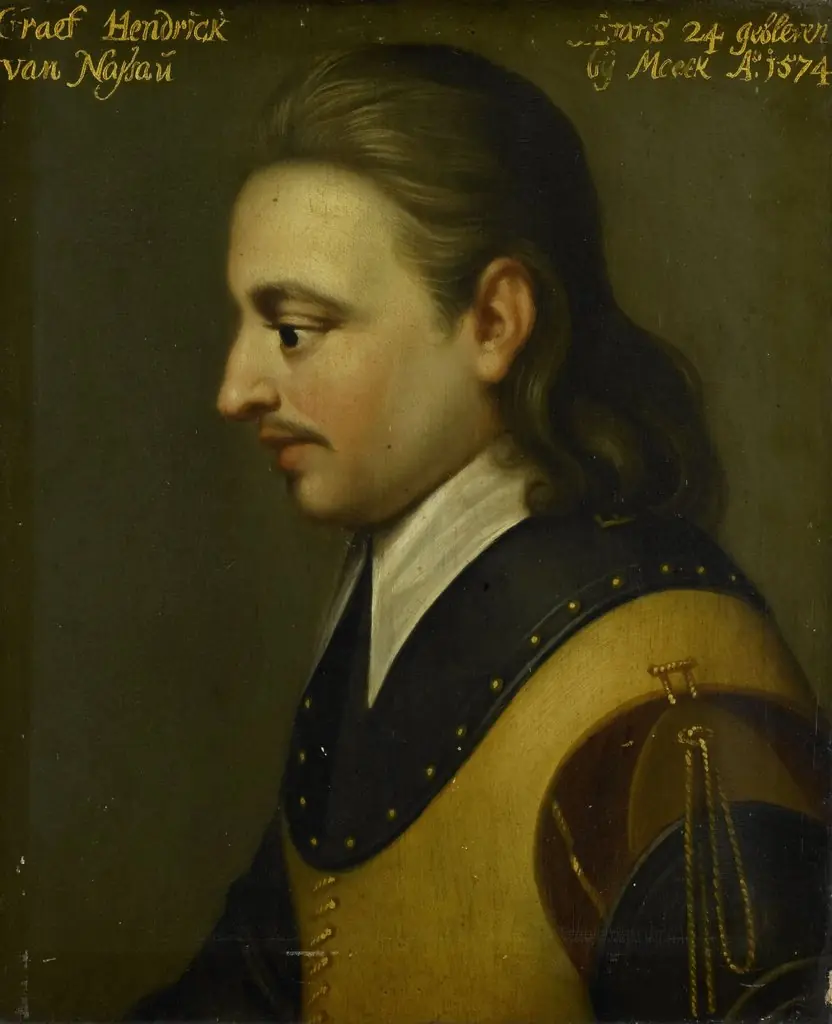 Portrait of Hendrik (1550-74), Count of Nassau
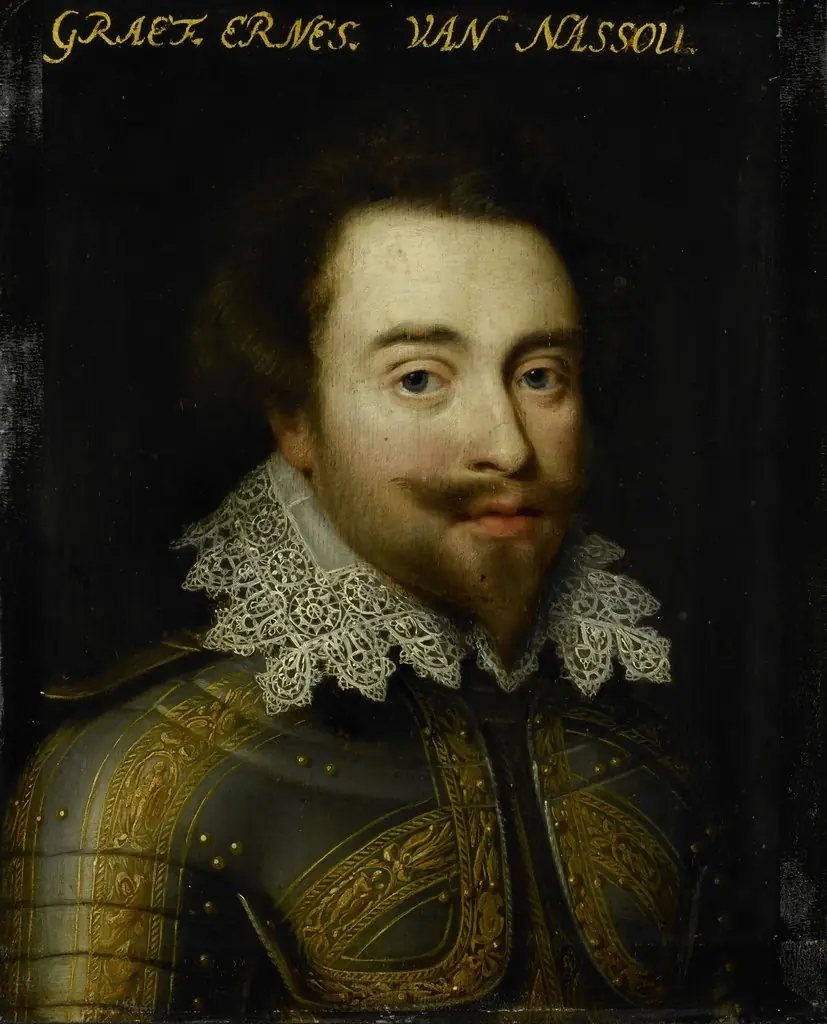 Portrait of Johan Ernst I (1582-1617), Count of Nassau-Siegen
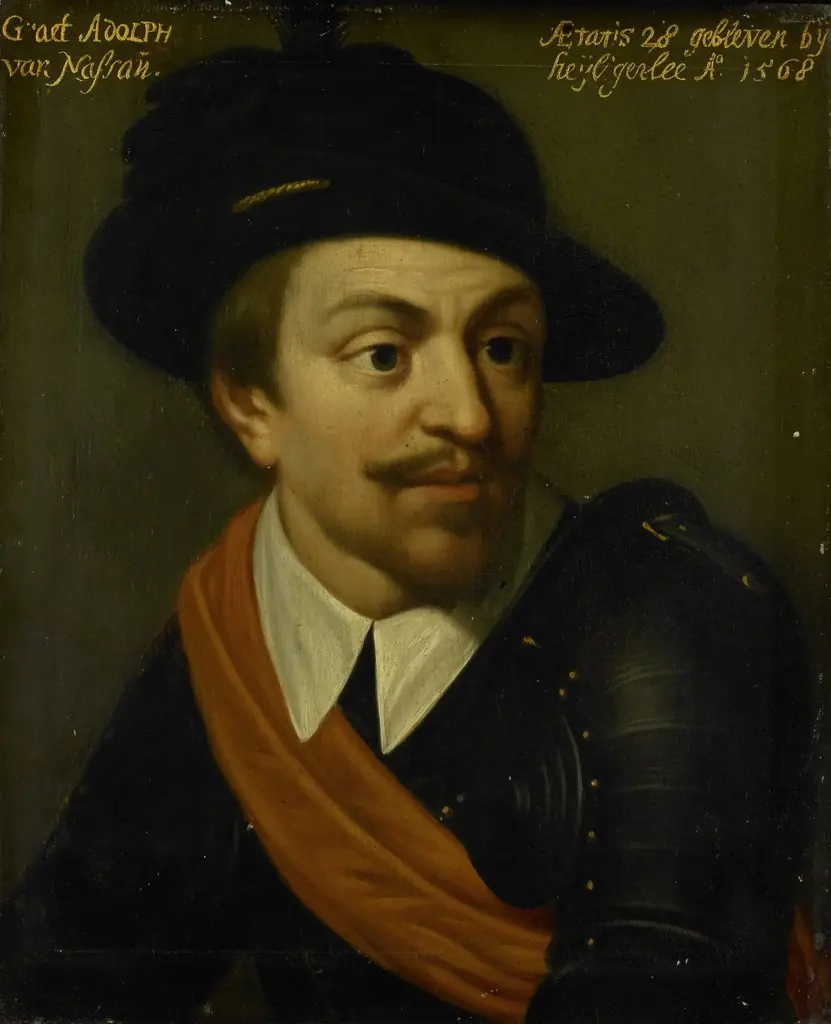 Portrait of Adolf (1540-68), Count of Nassau
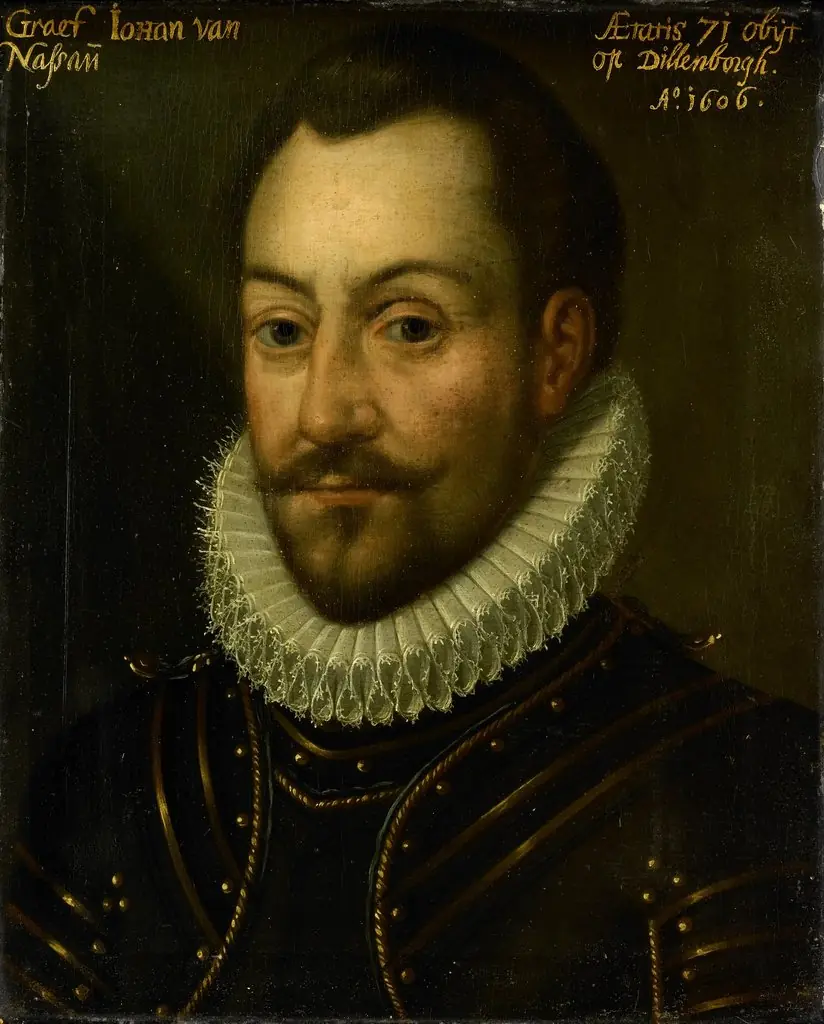 Portrait of an unknown count or officer, possibly Jan the Elder (1535-1606), Count of Nassau
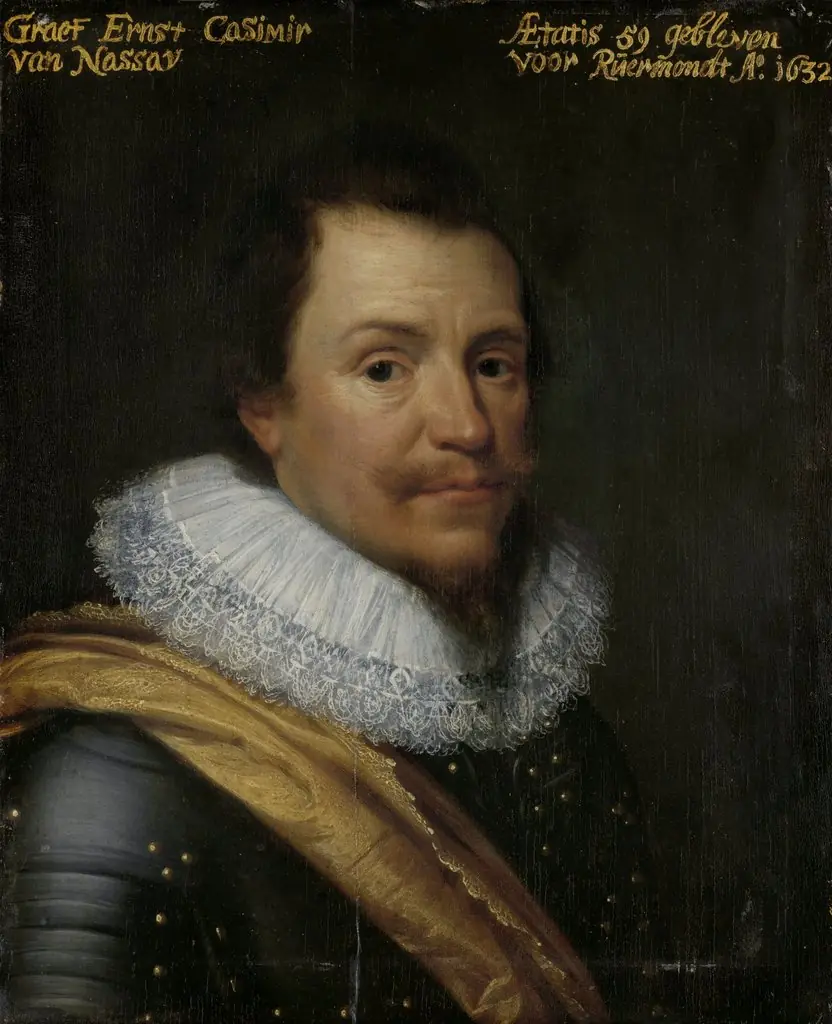 Portrait of Ernst Casimir (1573-1632), Count of Nassau-Dietz