Artwork
Portrait of Vasily V. Orlov-Denisov (1775-1843)
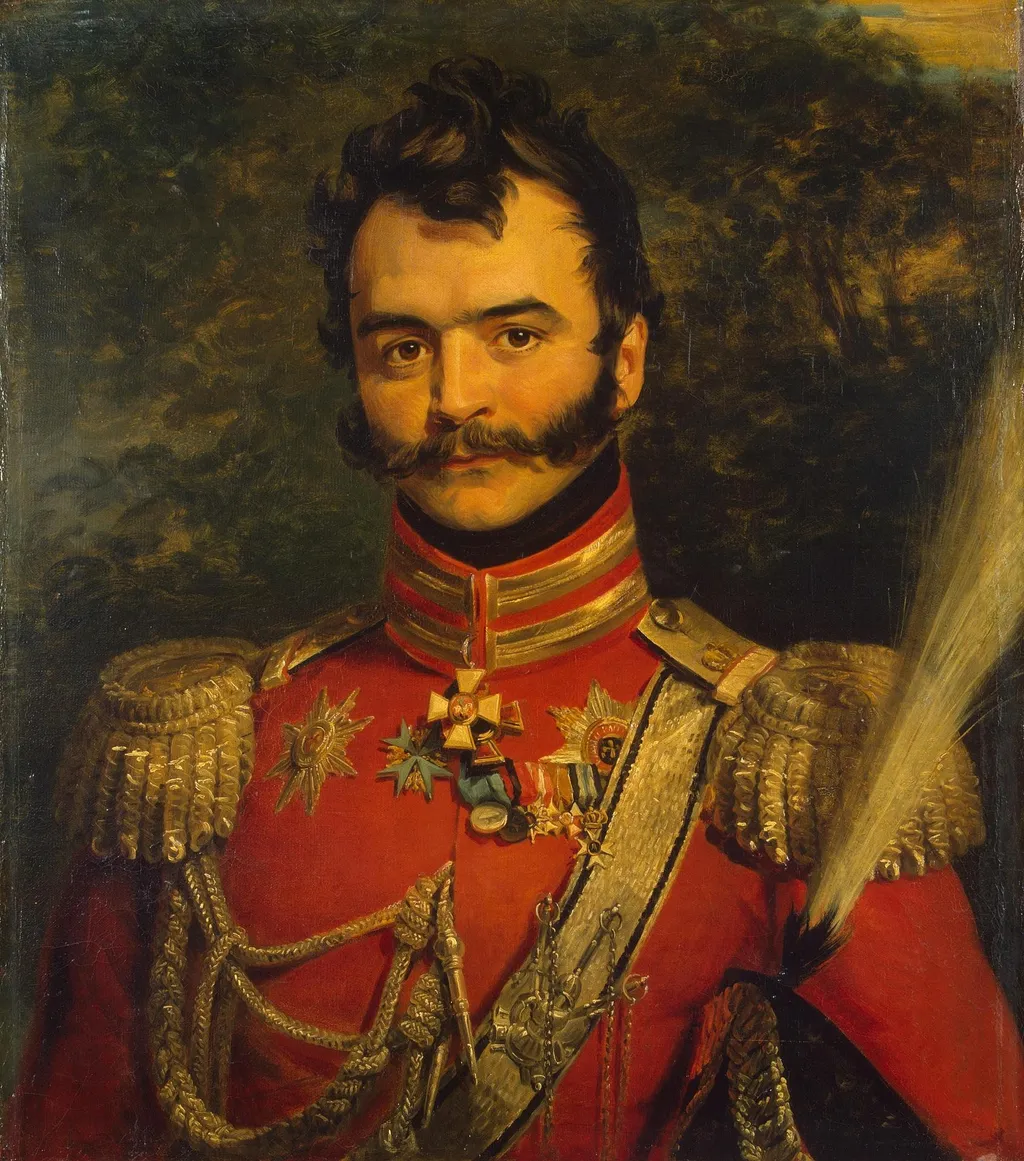
Portrait of Vasily V. Orlov-Denisov (1775-1843) is an oil painting by the Neoclassicist artist Unknown. It dates from 1822 and is held in the collection of the Hermitage Museum. The work is an oil portrait depicting a male figure dressed in a vivid red military uniform edged with gold trim.
About this work
Overview
Orlov-Denisov (1775-1843) is an oil-on-canvas portrait painted in 1822, now held in the collection of the Hermitage Museum in Saint Petersburg.
The Portrait of Vasily V. Orlov-Denisov (1775-1843) is an oil-on-canvas portrait painted in 1822, now held in the collection of the Hermitage Museum in Saint Petersburg. Measuring 70 by 62.5 centimetres, the work is attributed to the workshop of the British painter George Dawe (1781-1829), though it has also been listed simply as by an unknown artist. The portrait depicts Count Vasily Vasilyevich Orlov-Denisov, a celebrated Russian Cossack general who served in the Napoleonic Wars, and forms part of the celebrated Military Gallery of 1812 in the Winter Palace. Its significance lies in its role within one of the most important commemorative portrait projects in Russian art history, honouring the military leaders who defended Russia during the Patriotic War of 1812.
Subject & Meaning
The sitter, Count Vasily Vasilyevich Orlov-Denisov (1775-1843), was a General of the Cavalry in the Imperial Russian Army and the son of Vasily Petrovich Orlov, ataman of the Don Cossacks. He added his maternal grandfather's surname, Denisov, in 1801 to honour the first Cossack count, Fyodor Petrovich Denisov. In the portrait, Orlov-Denisov is shown half-length, facing forward with his head turned slightly left. He wears a bright red military coat with a high gold-trimmed collar, heavy gold epaulettes, and a pale sash crossing from right shoulder to left hip. Numerous medals and orders hang from his neck and are pinned to his chest, including a prominent cross and star-shaped badges that signify his distinguished service. The gold braiding and cords adorning the coat emphasise his high rank. The dark, atmospheric background with swirling brown and green tones and a glimpse of lighter sky serves to isolate and elevate the figure, directing attention to the decorated general as emblematic of Russian military virtue and the aristocratic officer class that triumphed over Napoleon.
Technique & Style
The portrait is executed in oil on canvas, measuring 70 by 62.5 centimetres. The handling of paint demonstrates a clear hierarchy of finish: the face is rendered with smooth, highly finished brushwork that models the features with precision, while the gold elements of the uniform and the background display more visible texture. Strong light falls from the left, illuminating the face and the rich red and gold of the military regalia, creating a dramatic chiaroscuro effect typical of early nineteenth-century formal portraiture. The technique aligns with the production methods of George Dawe's workshop, where assistants and collaborators would execute portraits based on established patterns, ensuring consistency across the large series while allowing for individualised facial features. The overall style balances the demands of accurate likeness with the ceremonial requirements of state portraiture, producing an image that is both personal and representative.
History & Provenance
The portrait was painted in 1822, though one source suggests a date of no later than 1825. It was created as part of the Military Gallery of 1812, a monumental project conceived by Tsar Alexander I to commemorate the commanders who had served in the Patriotic War against Napoleon. The gallery, located in the Winter Palace, was designed by the architect Carlo Rossi and eventually comprised hundreds of portraits. The painting bears the Hermitage inventory number GE-7894 and is currently held in the State Hermitage Museum in Saint Petersburg. An electronic reproduction was prepared in 2003 by photographers N.N. Antonova, Y.A. Molodkovets, and I.E. Regentova for the museum's digital collections. The portrait has been made available through the Hermitage's digital collection and was included in the Internet project '1812' and the collections 'Patriotic War of 1812' and 'Russia in Faces', though publication rights for other uses were restricted.
Context
George Dawe (1781-1829), the British artist in whose workshop this portrait was produced, was invited to Russia in 1819 by Tsar Alexander I specifically to paint the portraits for the Military Gallery. Dawe had established a reputation in London as a portraitist, and his appointment reflected the international prestige of the project. The workshop system he employed allowed for the rapid production of numerous portraits, with Dawe himself painting the faces while assistants handled costumes and backgrounds according to established templates. The portrait of Orlov-Denisov fits within this industrialised approach to commemorative art, yet it also participates in a broader Russian tradition of military portraiture that stretched back to the eighteenth century. The subject's distinguished career, including command of the Life Guards Cossack Regiment and participation in key battles such as Borodino, Valutina Gora, and Tarutino, made him a natural choice for inclusion. The portrait thus occupies a position at the intersection of British artistic practice and Russian imperial patronage, embodying the cosmopolitan nature of early nineteenth-century European court culture.
Legacy
The portrait's afterlife is inseparable from that of the Military Gallery itself, which remains one of the most visited and celebrated spaces in the Hermitage Museum. As a component of this larger ensemble, the portrait of Orlov-Denisov continues to serve its original commemorative function, preserving the memory of a military leader whose actual biography became partially obscured by literary history. Leo Tolstoy later acknowledged that the similarity between Orlov-Denisov's name and that of his fictional character Vasily 'Vas'ka' Denisov in War and Peace was an accidental mistake arising from what he called the 'specially typical character' of the real general, though he insisted that nothing in the novel resembled the actual facts of Orlov-Denisov's life. This literary confusion has, if anything, amplified interest in the historical figure and his visual representation. The portrait also circulates as a reproduction through commercial channels, including print-on-demand services that offer copies of the Hermitage's digital image, testament to its continued cultural currency nearly two centuries after its creation.
Artist & collection









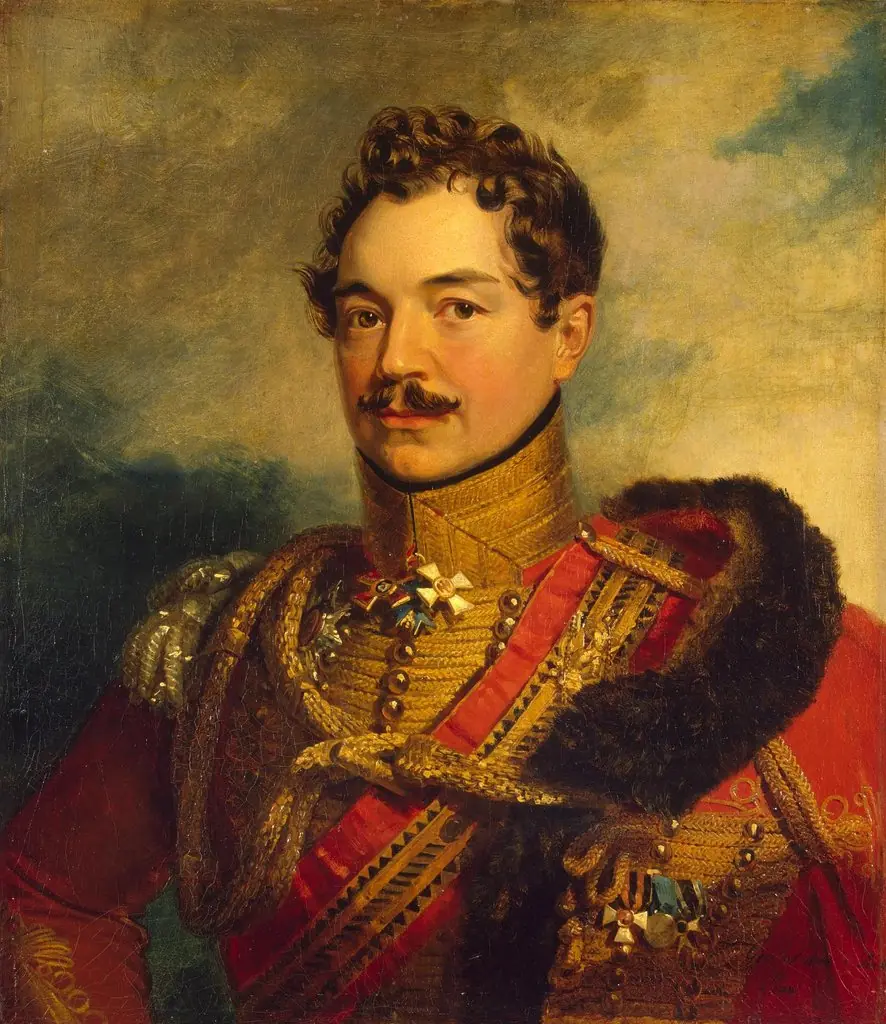
- Portrait of Vasily V. Levashov (1783-1848)
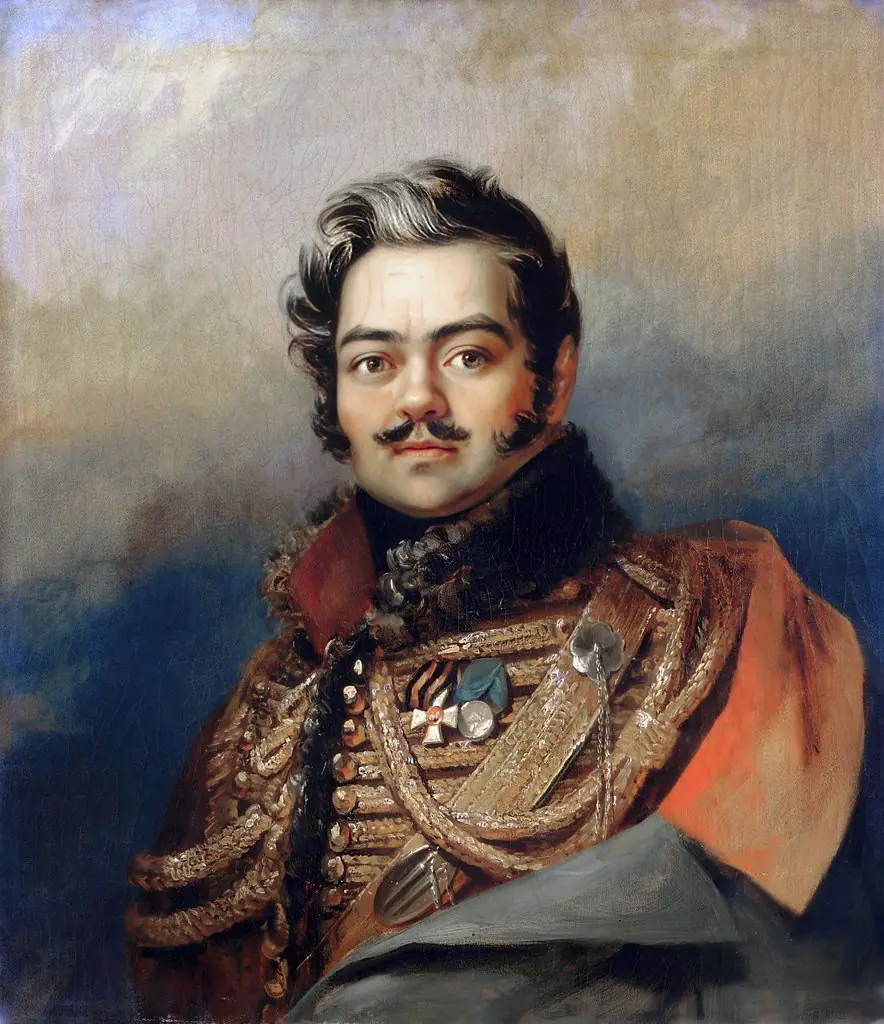 Portrait of Denis V. Davydov (1784-1839)
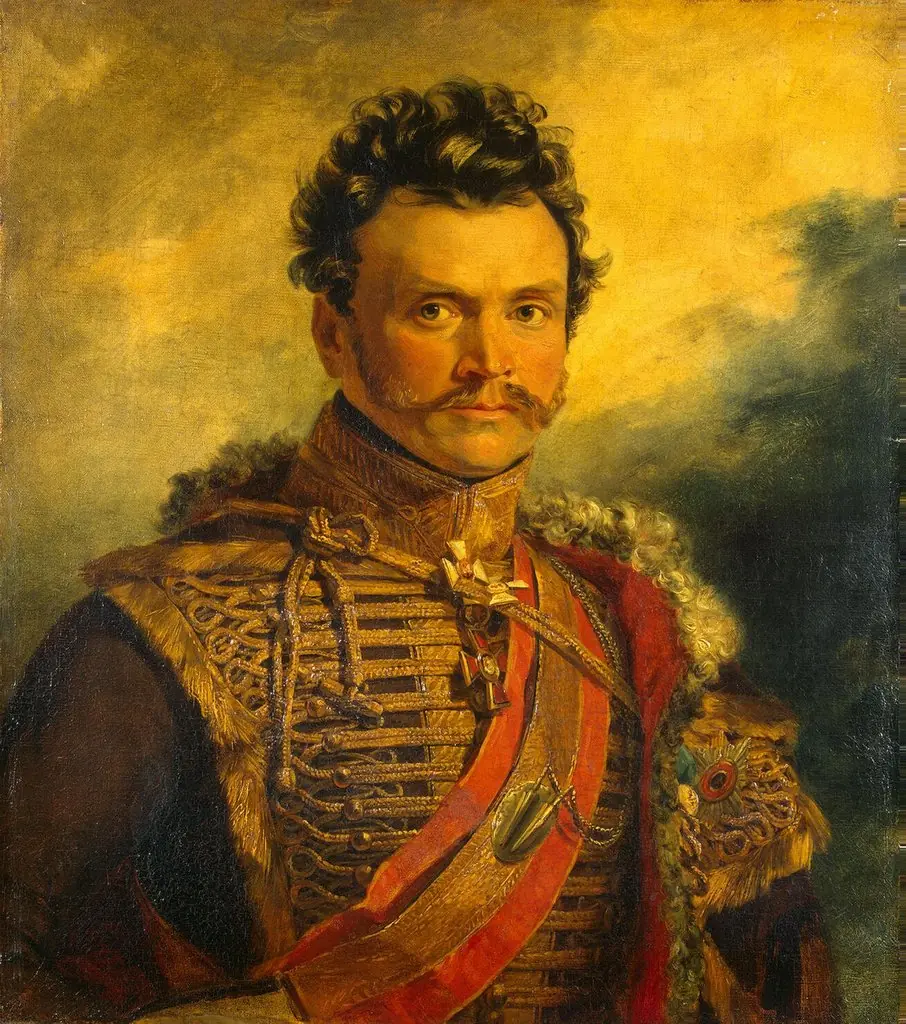 Portrait of Dmitry V. Vasilchikov (1778-1859) (2nd)
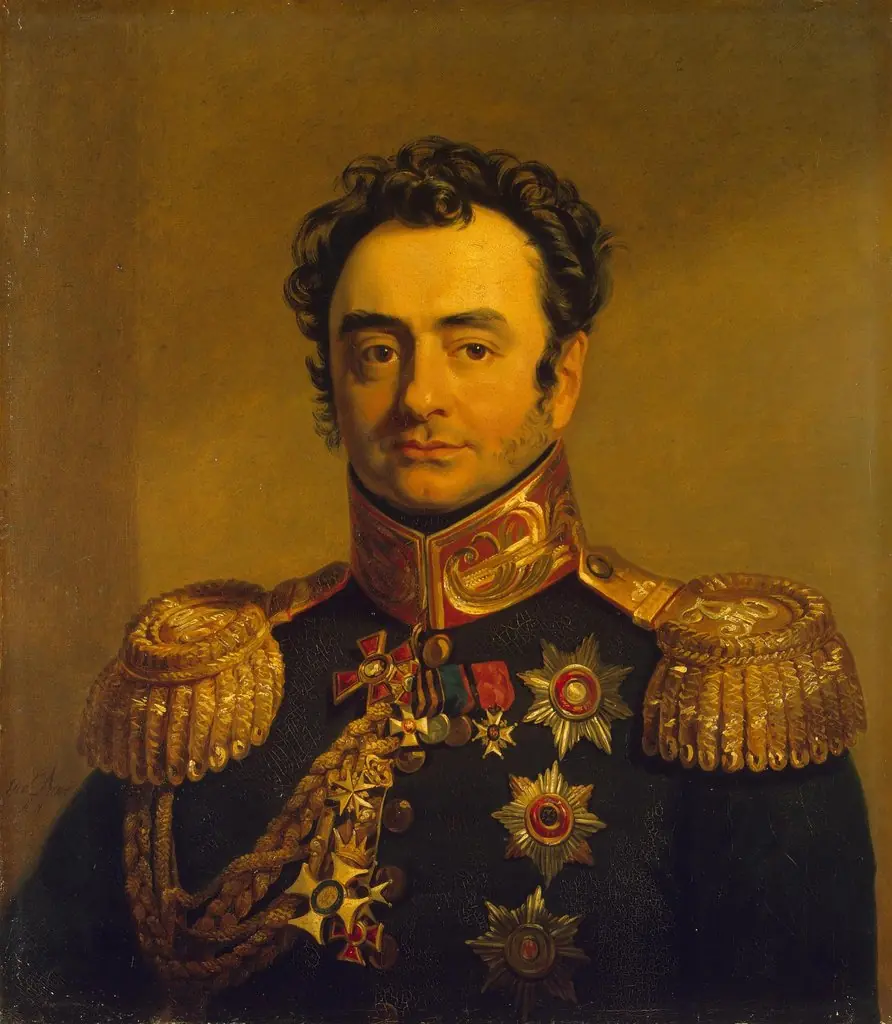 Portrait of Pavel A. Shuvalov (1776-1823)
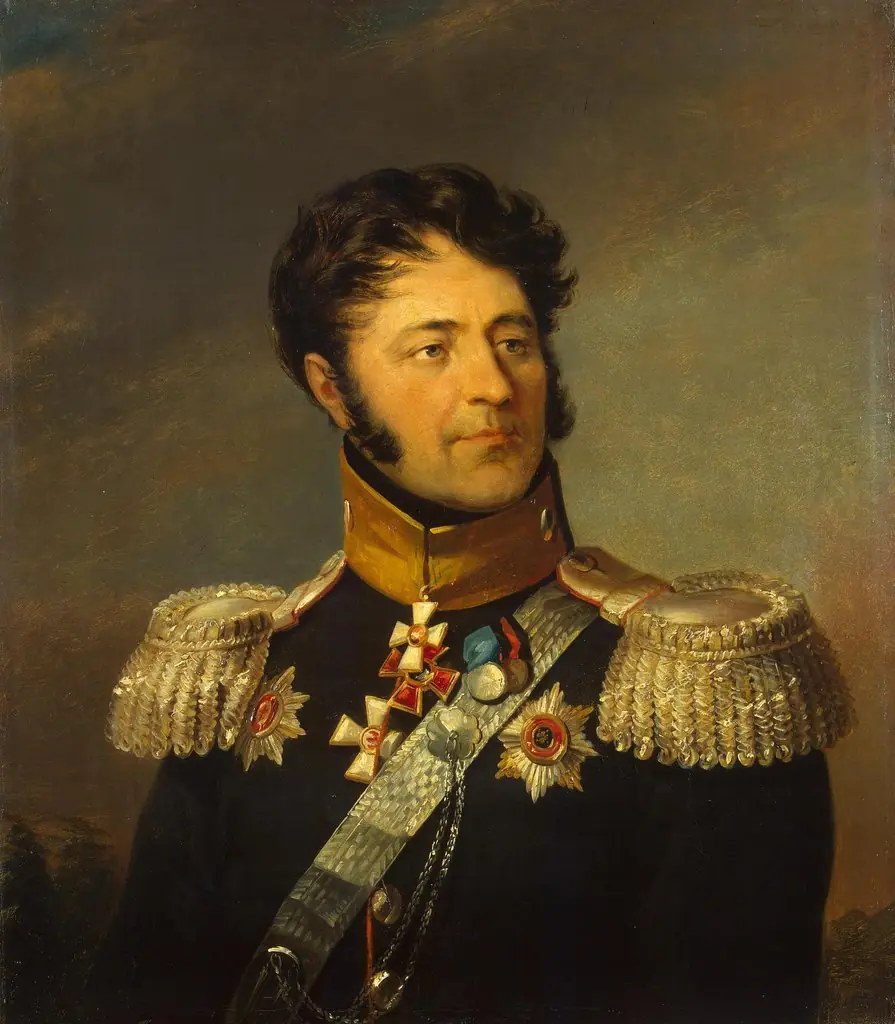 Portrait of Luka A. Denisyev (1762-1846)
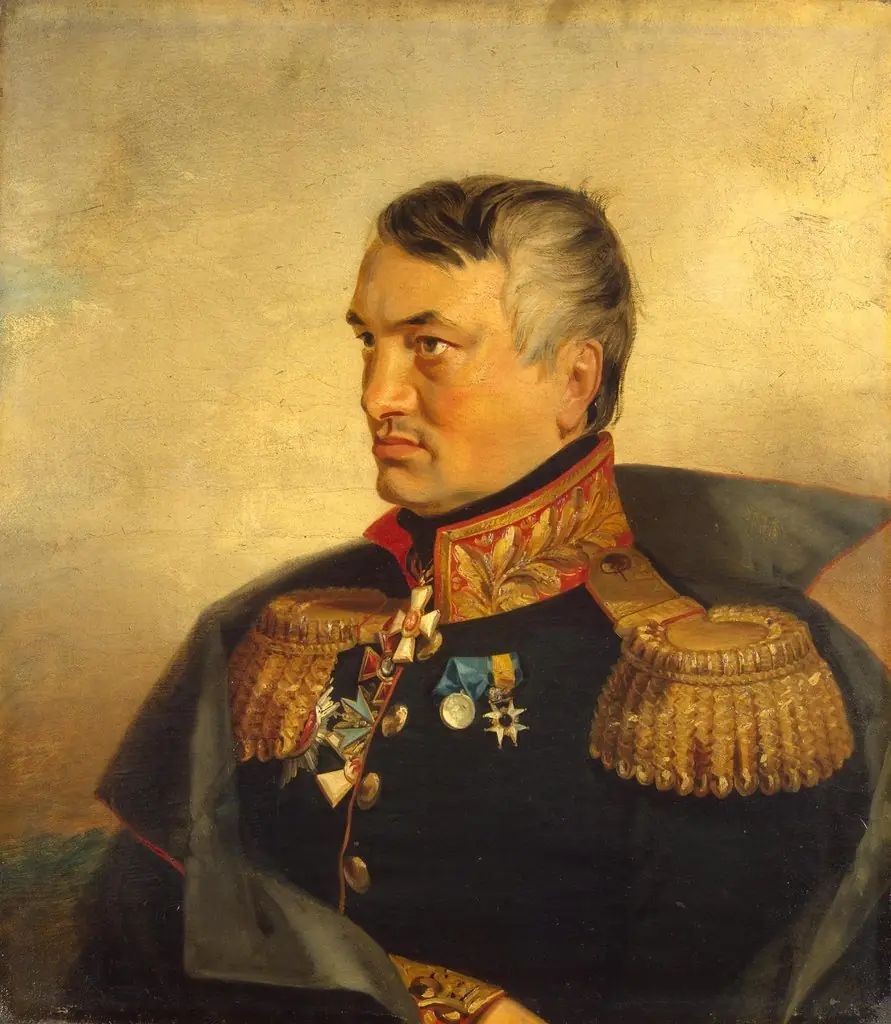 Portrait of Nikolai V. Vasilchikov (1781-1849) (3rd)
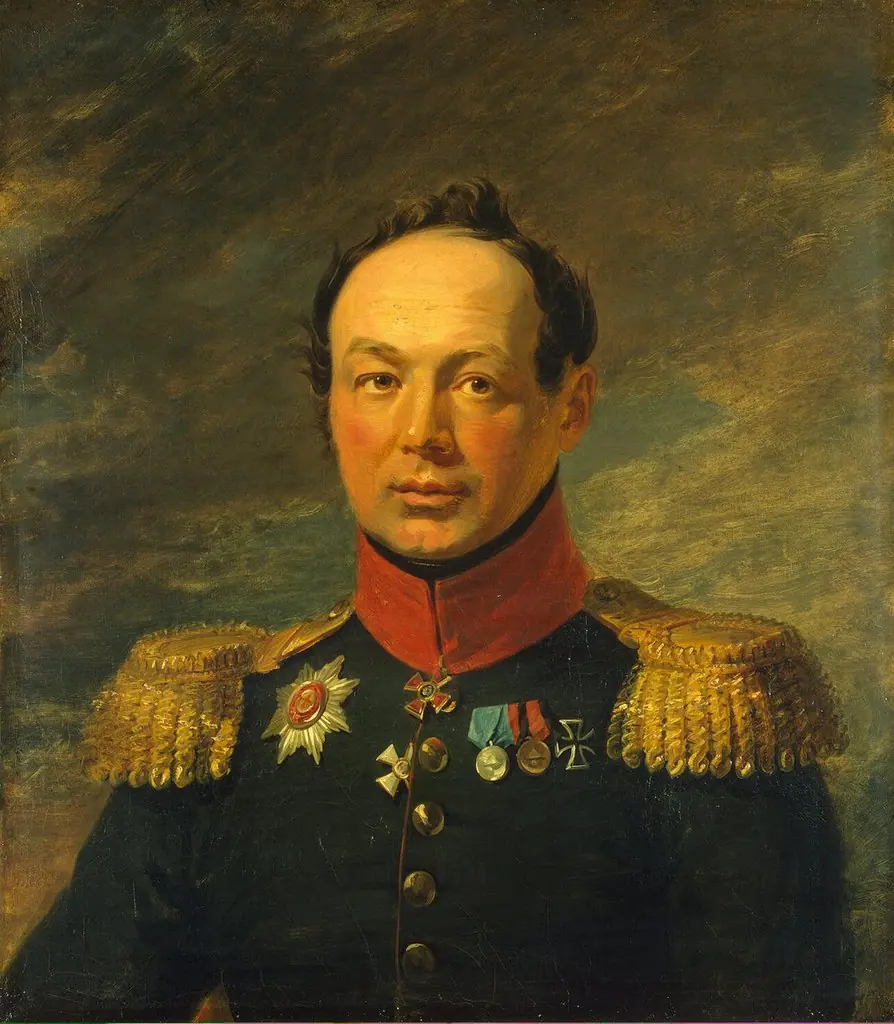 Portrait of Ivan A. Nabokov (1787-1852)