Artwork
Preaching of John the Baptist
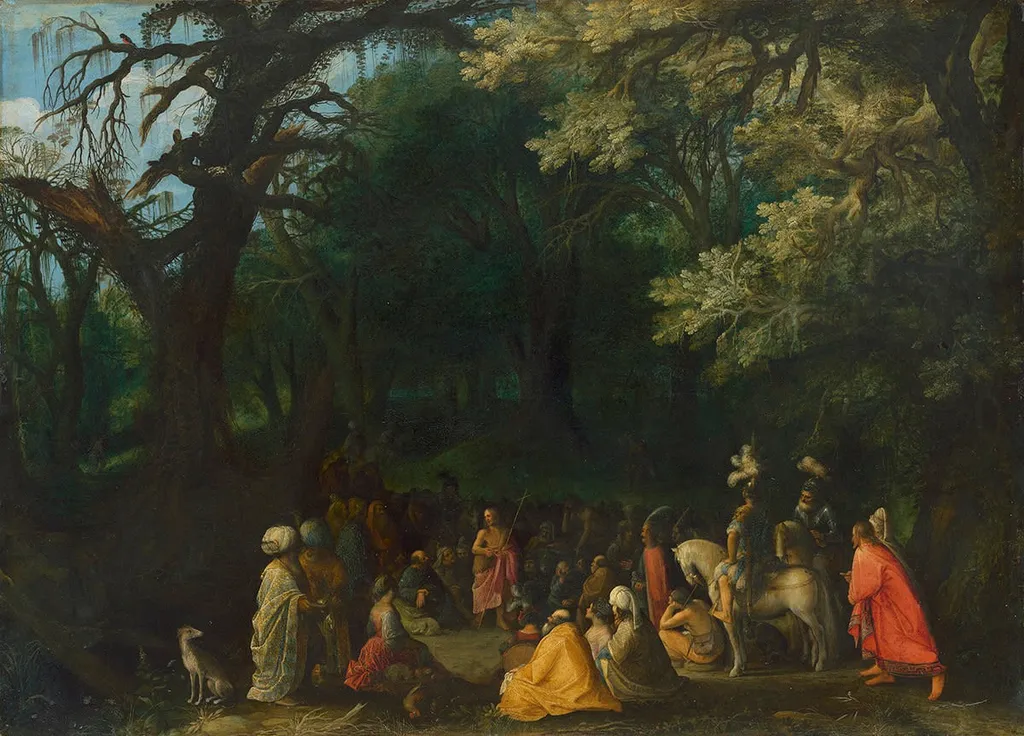
Preaching of John the Baptist is an oil painting by the Early Baroque Italian artist Unknown. It dates from 1602 and is held in the collection of the Bavarian State Painting Collections.
About this work
Subject & Meaning
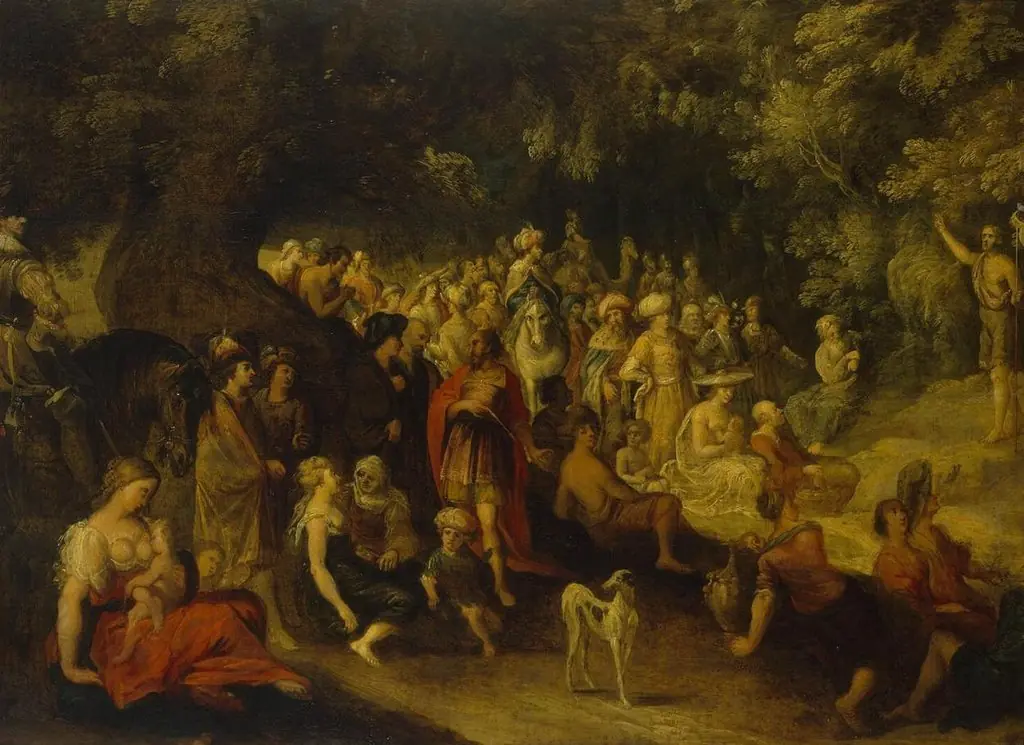
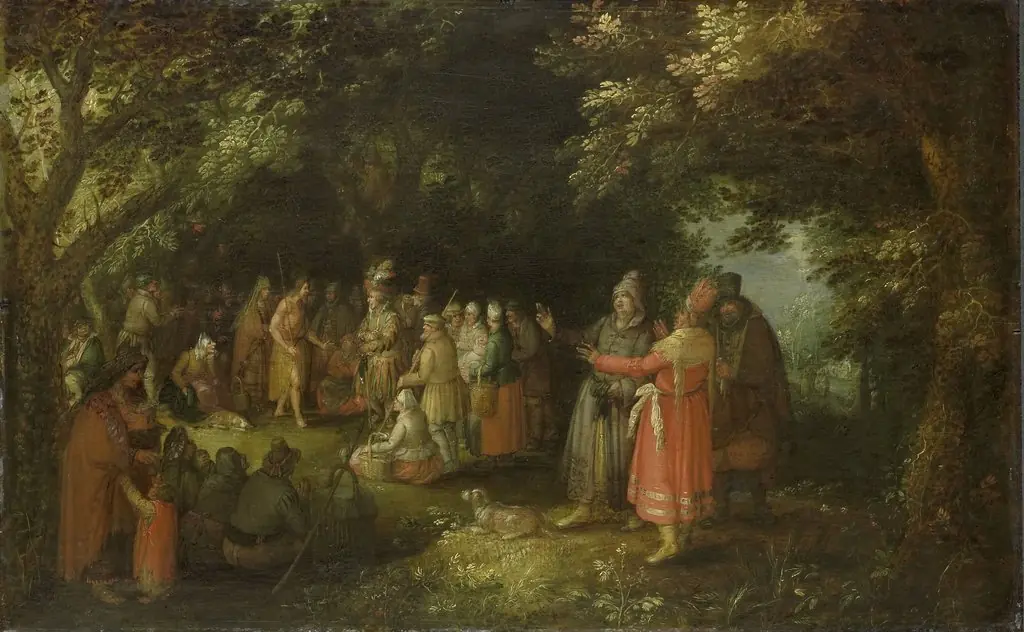
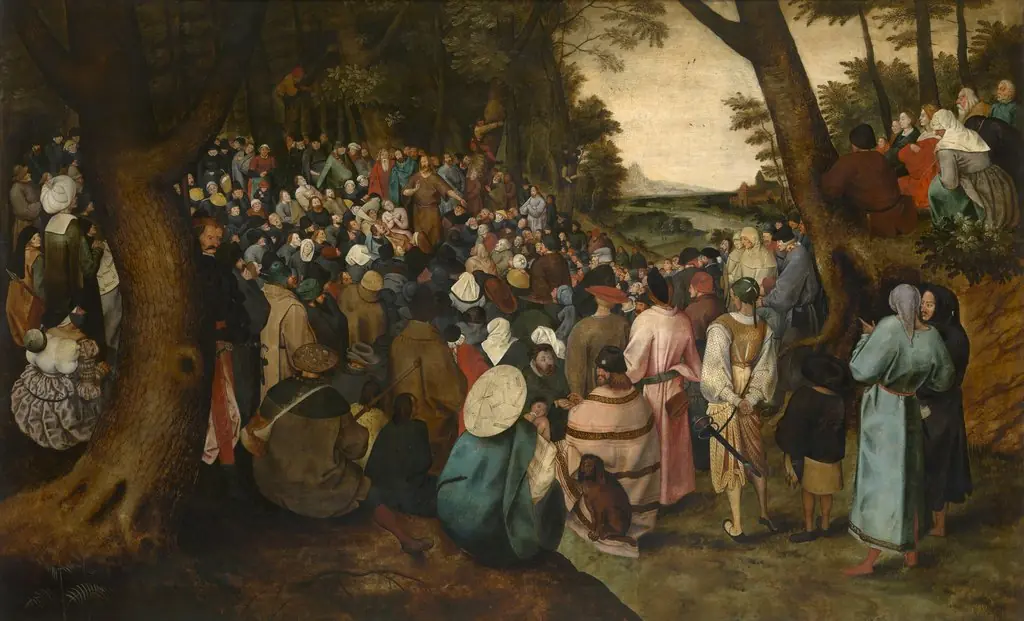
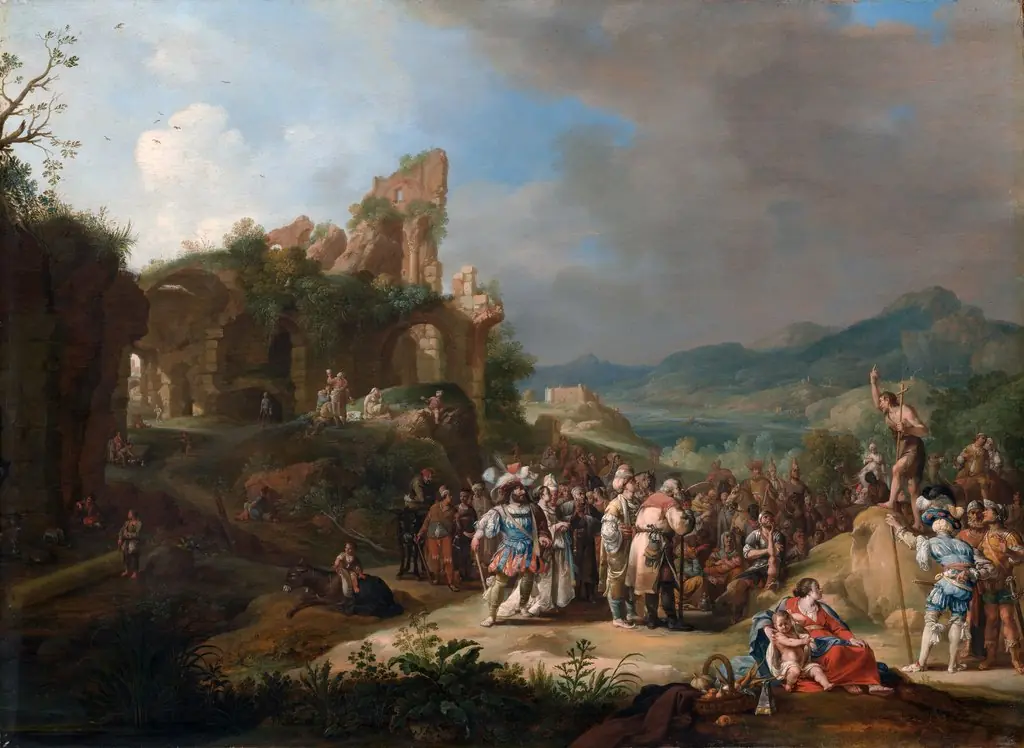
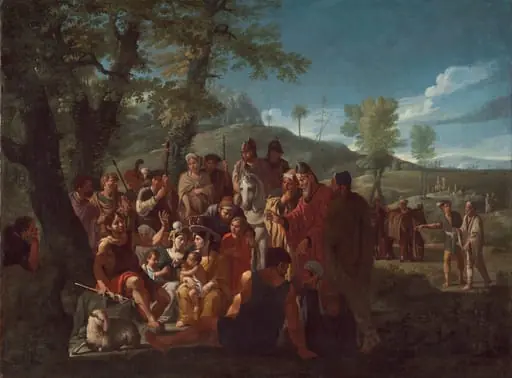
The painting shows John the Baptist in the act of preaching, a biblical moment drawn from the Gospel narrative in which he announces the coming of Christ.
The painting shows John the Baptist in the act of preaching, a biblical moment drawn from the Gospel narrative in which he announces the coming of Christ. John is identified by his traditional attributes, namely the lamb, a fur garment, and a staff, symbols that underscore his role as the forerunner of Jesus and his sacrificial mission. The composition emphasizes his dynamic gesture and direct gaze, reinforcing the spiritual urgency of his message.
This work belongs to the religious art genre and was created on copper in 1602, reflecting the material and technical practices of the period.
Technique & Style
The work is executed on a copper support using oil paint, a technique typical of early 17th-century panel painting. The surface retains the smoothness of the metal, allowing fine detail and luminous color modulation characteristic of the circle of Adam Elsheimer, whose style blends northern realism with Italianate lighting. The composition depicts John the Baptist in the act of preaching, rendered with a restrained palette and precise brushwork that emphasizes both narrative clarity and intimate atmospheric effect.
The painting measures 40 cm in height and 55 cm in width, dimensions recorded in the museum’s catalog and confirmed by the Alte Pinakothek’s documentation. Its condition is stable, with no significant losses or later interventions noted in the collection records.
History & Provenance
The painting was created in 1602, executed in oil on copper. It is attributed to the circle of Adam Elsheimer and depicts the Preaching of John the Baptist as its main subject.
The work is held by the Bavarian State Painting Collections and is on display at the Alte Pinakothek in Munich, where it has been catalogued as a religious painting. The sources do not provide details on the original commission, earlier owners, or the chain of custody preceding its acquisition by the Bavarian State Painting Collections.
The work is held in the collection of the Alte Pinakothek in Munich, accessioned as part of the Bavarian State Painting Collections. Measuring 40 cm in height and 55 cm in width, it is executed in oil on copper and dates to 1602.
No exhibition history is recorded in the provided sources.
Context
Created in 1602, the Preaching of John the Baptist is a small-scale religious painting executed in oil on copper, measuring 40 by 55 centimeters. Art historical scholarship attributes the work to the circle of Adam Elsheimer, situating it within the early 17th-century tradition of highly finished, intimate devotional images often produced on metal supports. The painting's attribution to Elsheimer's circle reflects the artist's significant influence on contemporaries who adopted his innovative handling of light and detailed naturalism in miniature formats.
Currently held by the Bavarian State Painting Collections at the Alte Pinakothek in Munich, the work serves as a key example of the dissemination of Elsheimer's stylistic approach among his followers.
Legacy
The painting influenced religious art through its depiction of John the Baptist, a subject that remained prominent in later devotional works. Its composition and use of copper support contributed to techniques adopted by artists in the early Baroque period. The work is held in the Bavarian State Painting Collections at the Alte Pinakothek in Munich, where it continues to be studied as an example of Counter-Reformation imagery.
Scholars note its role in shaping visual narratives of prophetic figures, particularly through the circle of Adam Elsheimer, whose style impacted religious painting in Southern Germany.
Overview
The work is a copper painting titled Preaching of John the Baptist. Executed on a metal support, the image places the biblical figure in a dimly lit forest clearing, surrounded by a varied assemblage of listeners. The composition is dominated by a central figure in simple attire, distinguished by a red skirt and a staff, who addresses the gathered crowd.
Artist & collection