Artwork
Quatrefoil Roundel with Arms and Secular Scenes
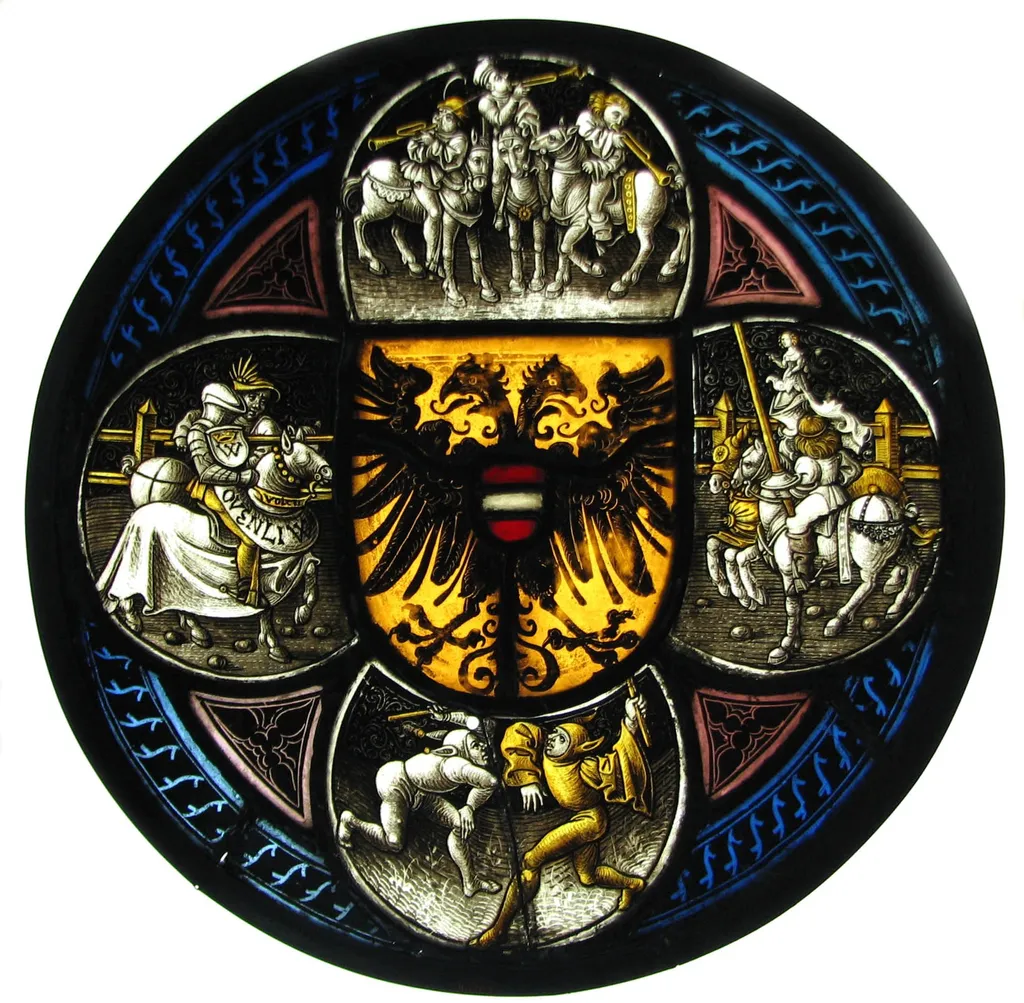
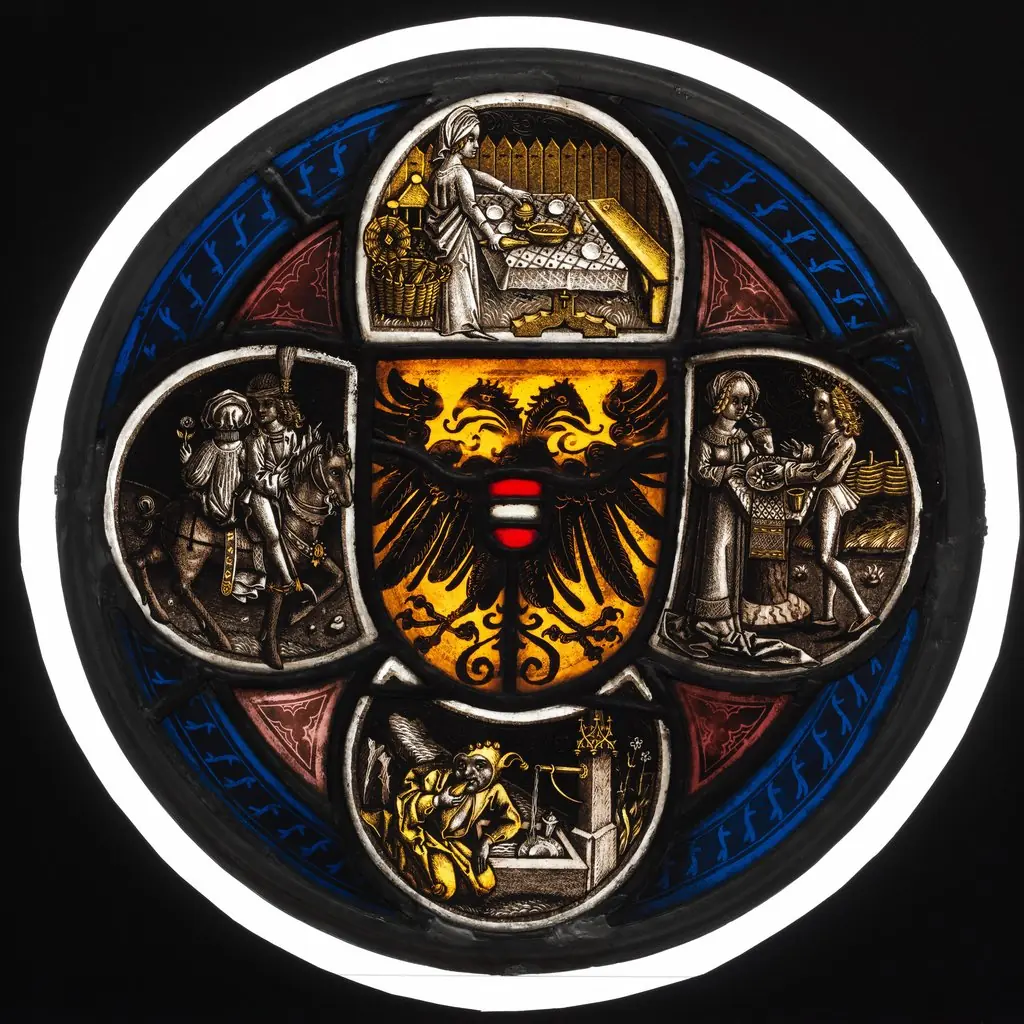
Quatrefoil Roundel with Arms and Secular Scenes is an unspecified painting. It dates from 1500 and is held in the collection of the Metropolitan Museum of Art. The work is a circular panel divided into four quadrants surrounding a central heraldic emblem.
About this work
Subject & Meaning
This combination reflects the period's interest in portraying individual status and worldly matters within a structured, decorative frame.
The work depicts a man, serving as the primary subject within the quatrefoil roundel format. Created around 1500, the painting is classified as an anonymous piece that combines secular imagery with heraldic elements, as indicated by its title referencing both arms and secular scenes. The presence of the male figure alongside these secular motifs suggests a focus on non-religious, contemporary life or identity rather than purely devotional themes.
This combination reflects the period's interest in portraying individual status and worldly matters within a structured, decorative frame.
Technique & Style
The work is an oil painting on wood panel created around 1500. It measures 63 cm in diameter and is executed using a tempera and oil mixture on a wooden round panel that functions as a decorative roundel. The composition features a quatrefoil frame enclosing secular narrative scenes within its four lobes, with stylized arms extending outward.
The handling of line and color reflects the late Gothic decorative sensibility combined with nascent naturalistic detail characteristic of early 16th-century Italian painting.
The formal qualities emphasize flattened spatial depth and rhythmic patterning, while the stylistic analysis identifies the influence of manuscript illumination techniques on the painting's decorative border and marginal figures.
History & Provenance
The Quatrefoil Roundel with Arms and Secular Scenes is an anonymous painting dated to circa 1500. Created during the early sixteenth century, the work is currently held in the collection of the Metropolitan Museum of Art. No further details regarding the specific commission, the original patron, or the precise chain of ownership prior to its arrival at the museum are provided in the available records.
Overview
The work is a circular panel divided into four quadrants surrounding a central heraldic emblem. At its heart lies a coat of arms displaying a black double‑headed eagle set against a yellow field. The surrounding sections portray equestrian figures, one of whom wears a white robe and holds a round object. The composition relies on a restrained palette of yellow, black and white, with fine decorative detailing throughout.
Context
Heraldic roundels such as this were commonly used as decorative elements in domestic interiors, on furniture, or as portable displays of family identity during the 14th–16th centuries. The inclusion of secular scenes alongside the coat of arms reflects a trend toward integrating narrative content with symbolic insignia in private commissions.
Artist & collection

- Quatrefoil Roundel with Arms and Secular Scenes
 Roundel with Angel Supporting a Heraldic Shield
 Roundel with Judgment or Allegorical Scene
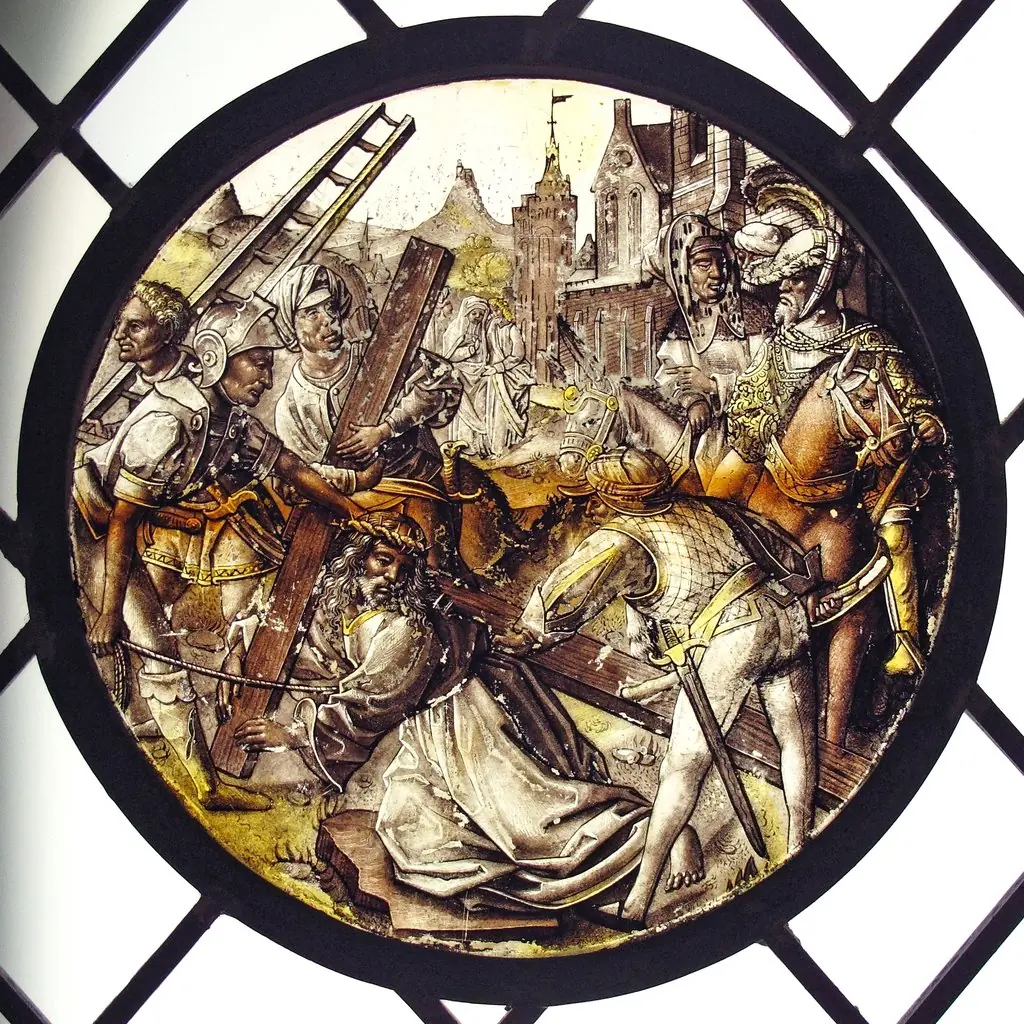 Roundel with Christ Bearing the Cross
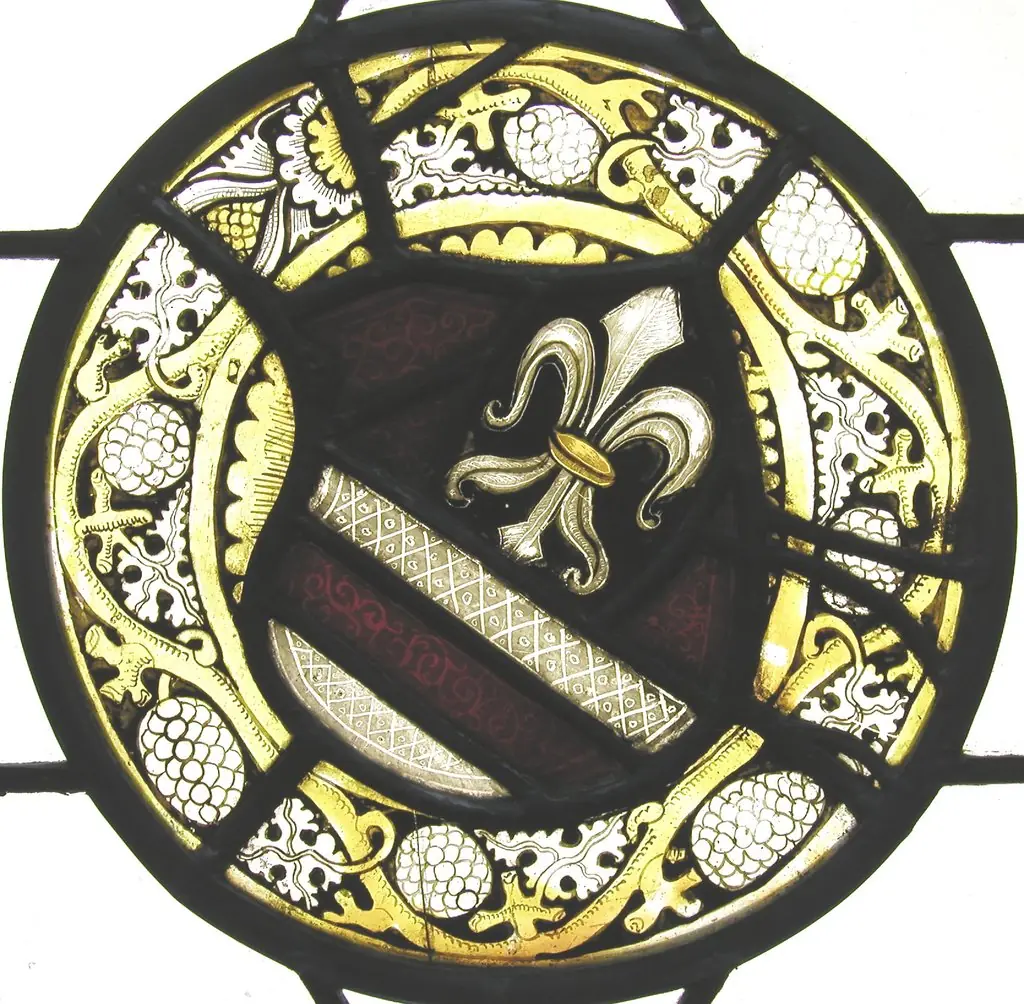 Armorial Roundel
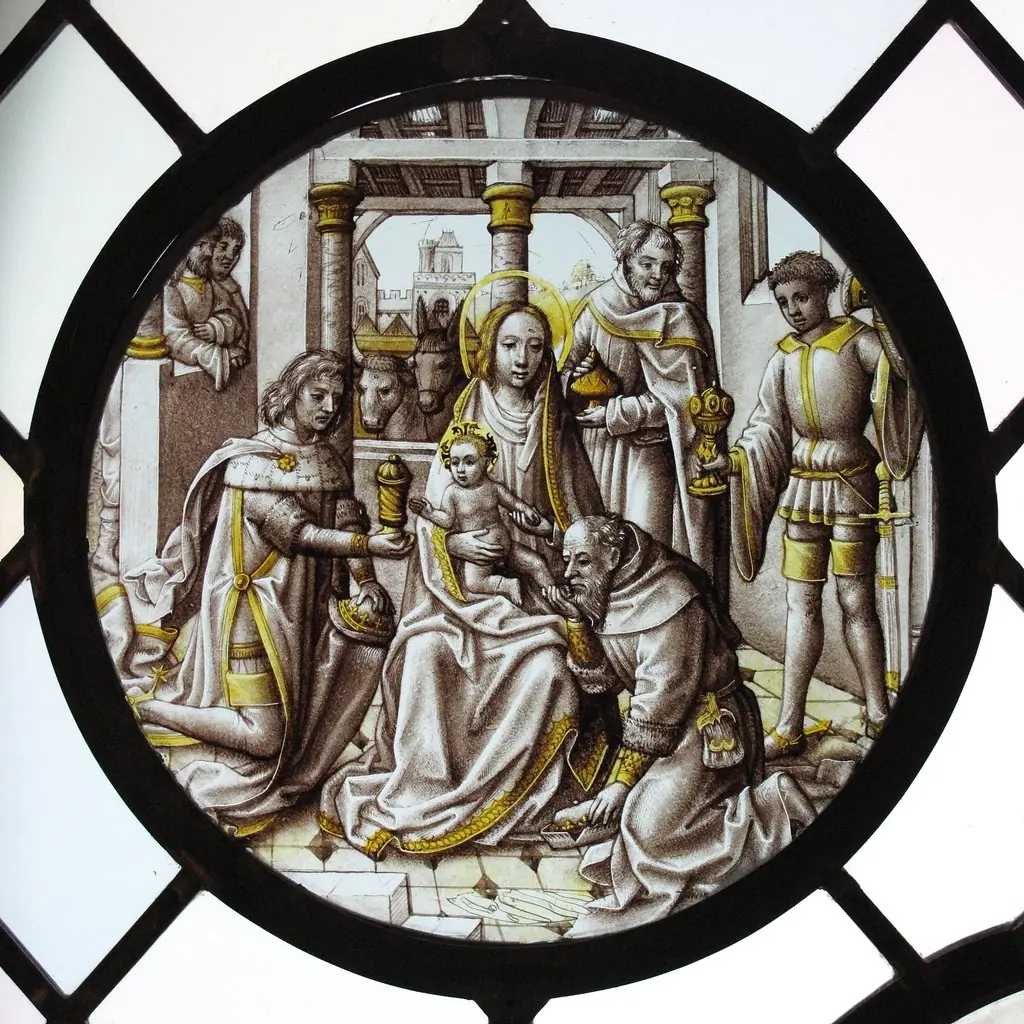 Roundel with the Adoration of the Magi
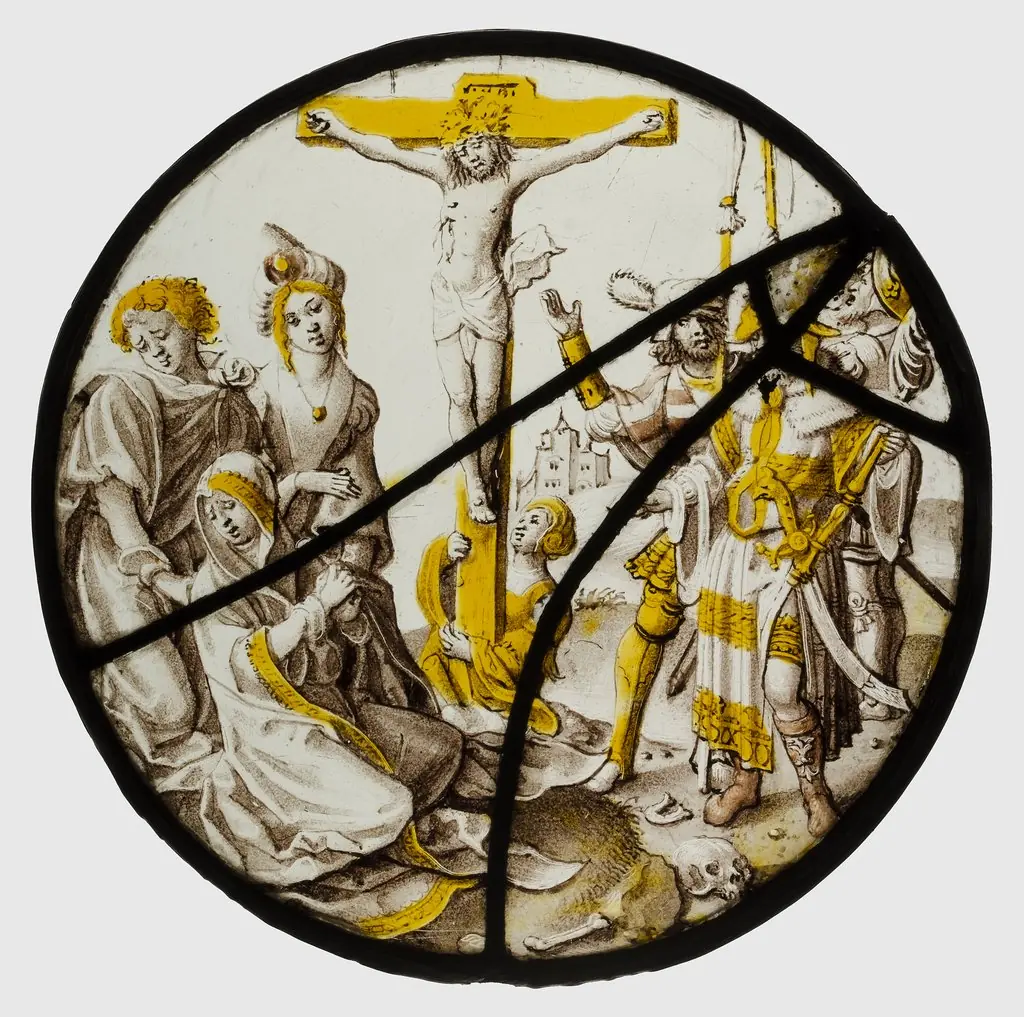 Roundel with the Crucifixion
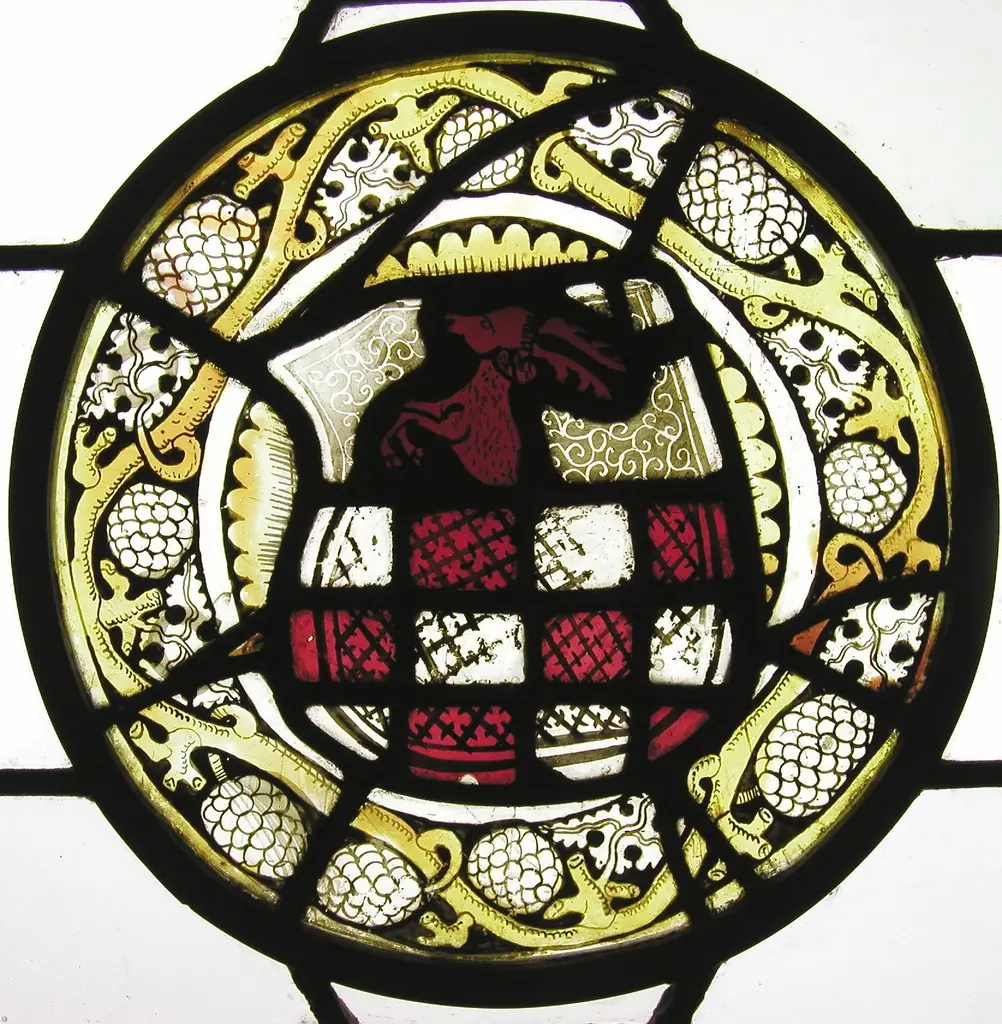 Armorial Roundel
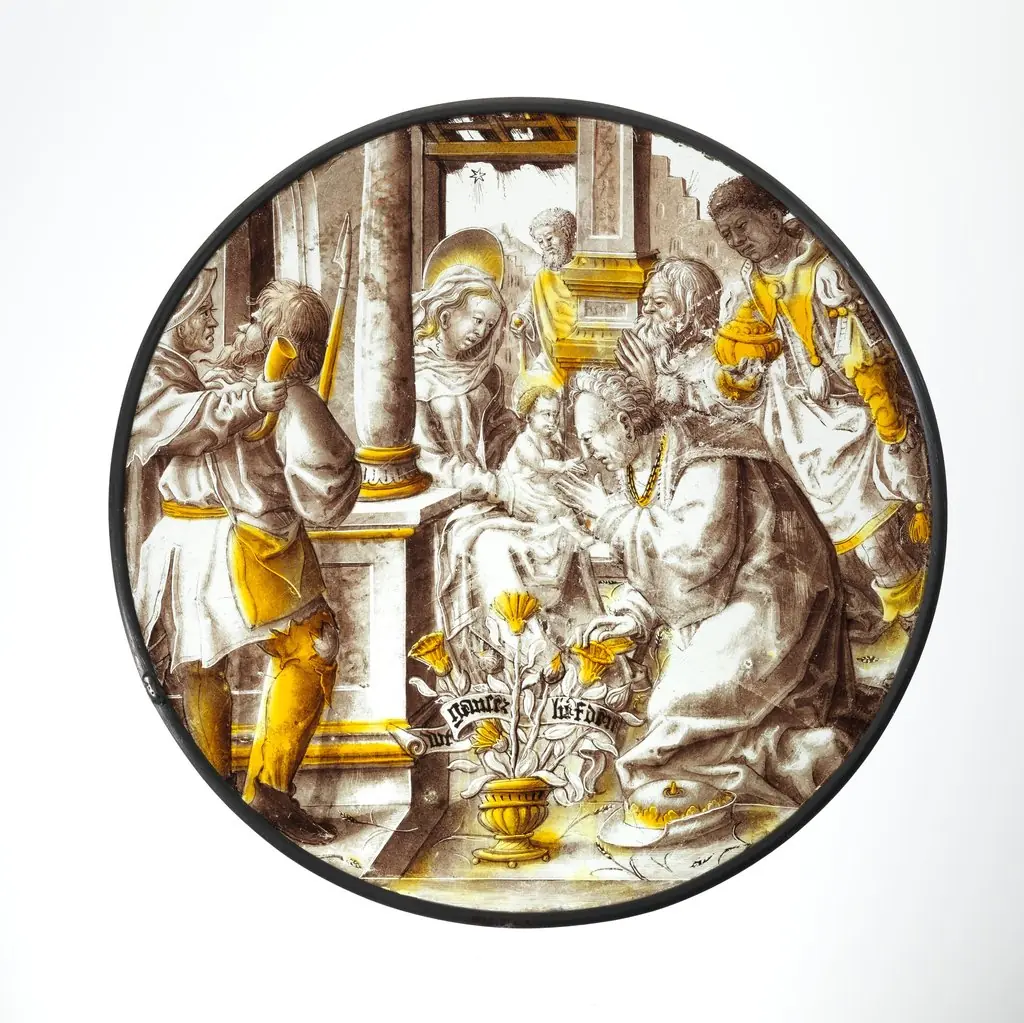 Roundel with Adoration of the Kings
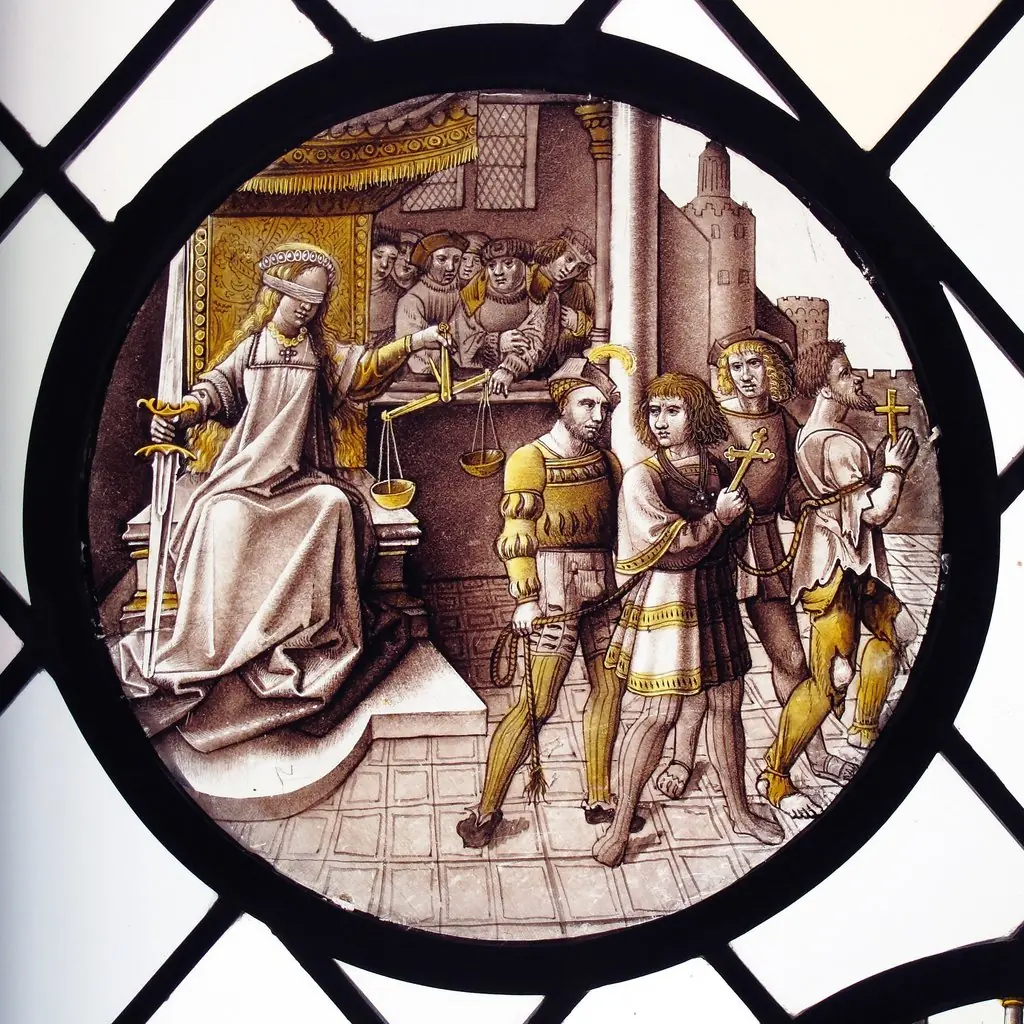 Roundel with Justice
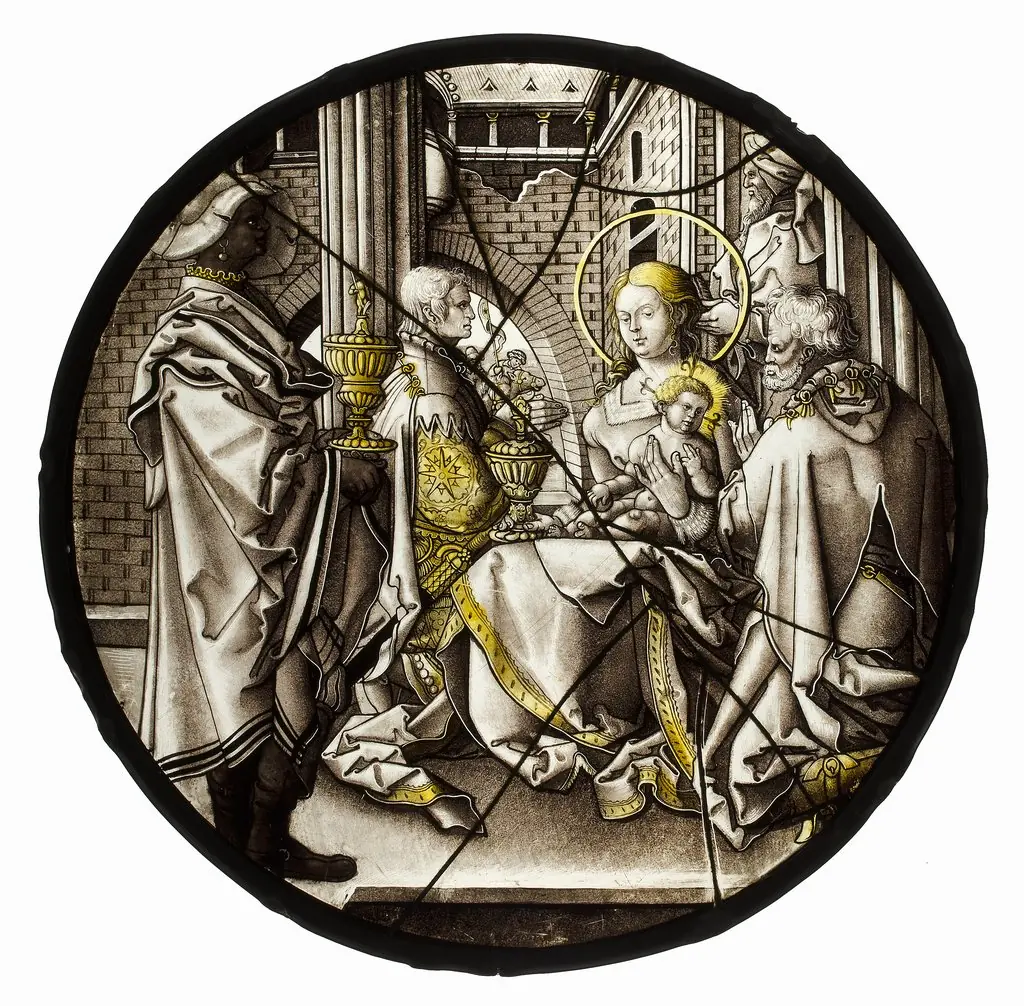 Roundel with Adoration of the Magi
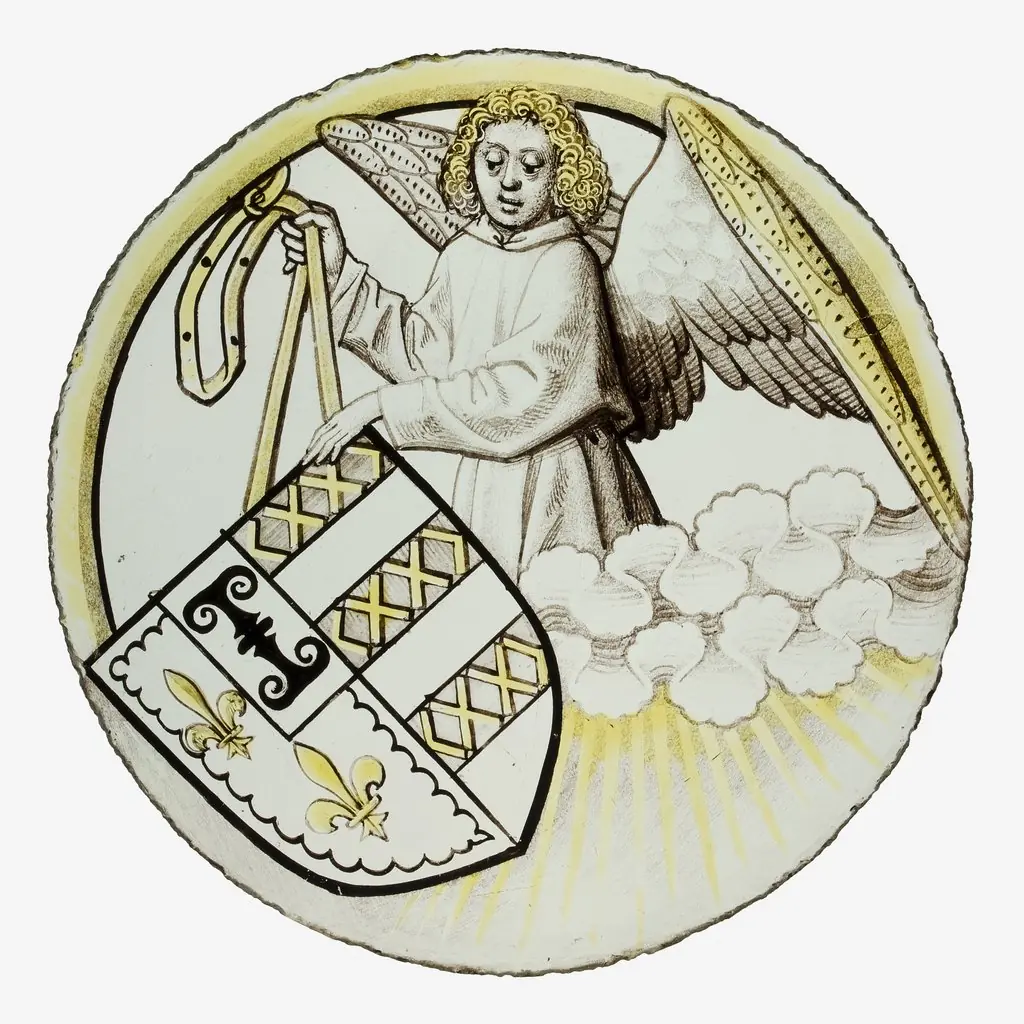 Roundel with Angel Supporting a Heraldic Shield
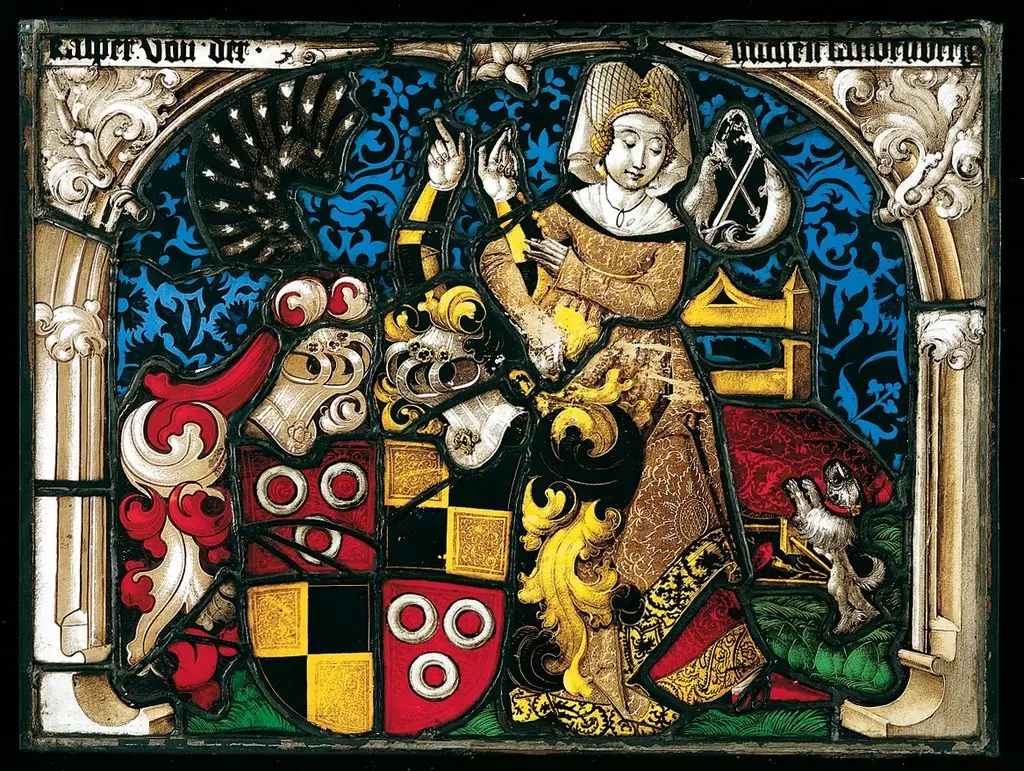 Stained-Glass Panel with a Coat of Arms and a Female Supporter
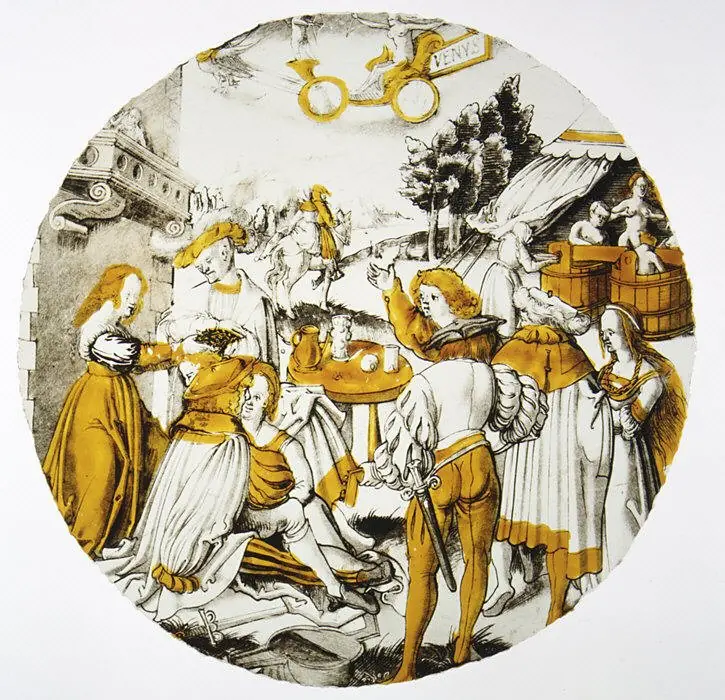 Roundel of The Planet Venus and Her Children
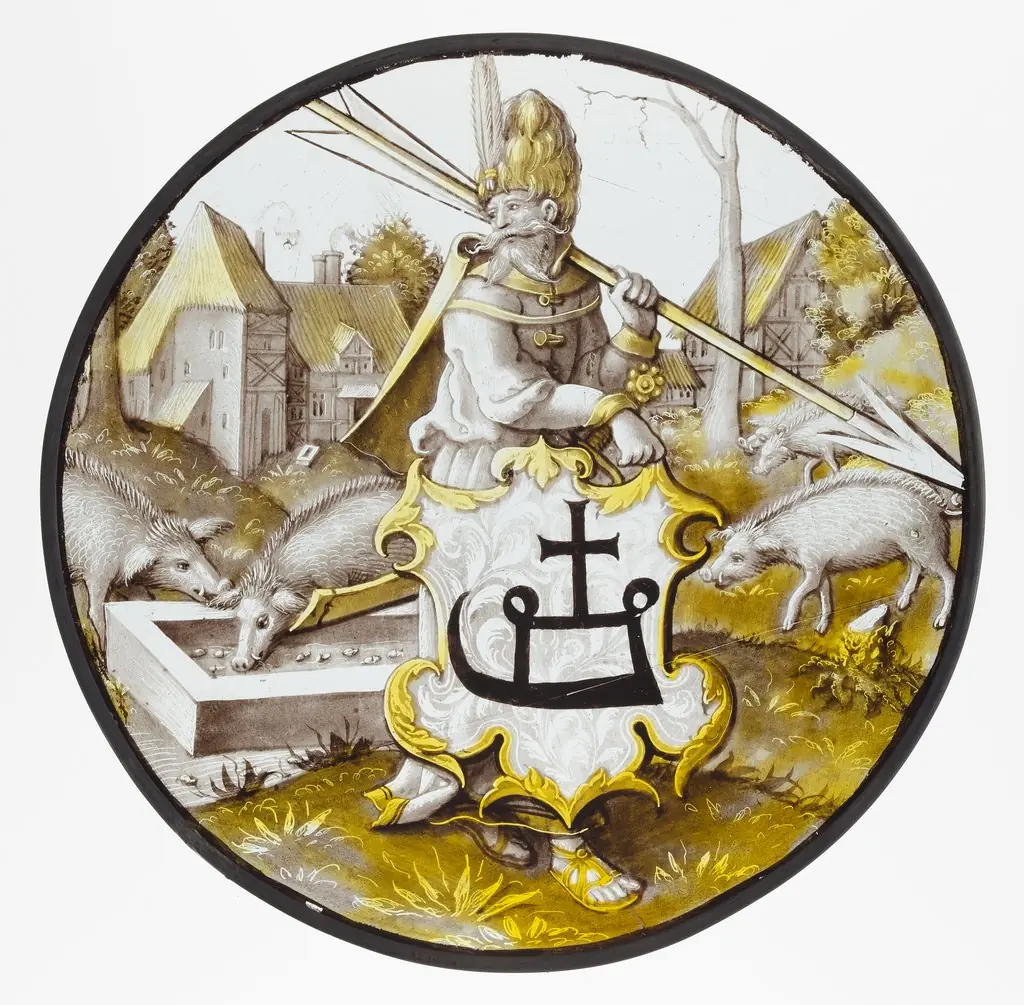 Roundel with Turkish Soldier holding an Arrow and Support
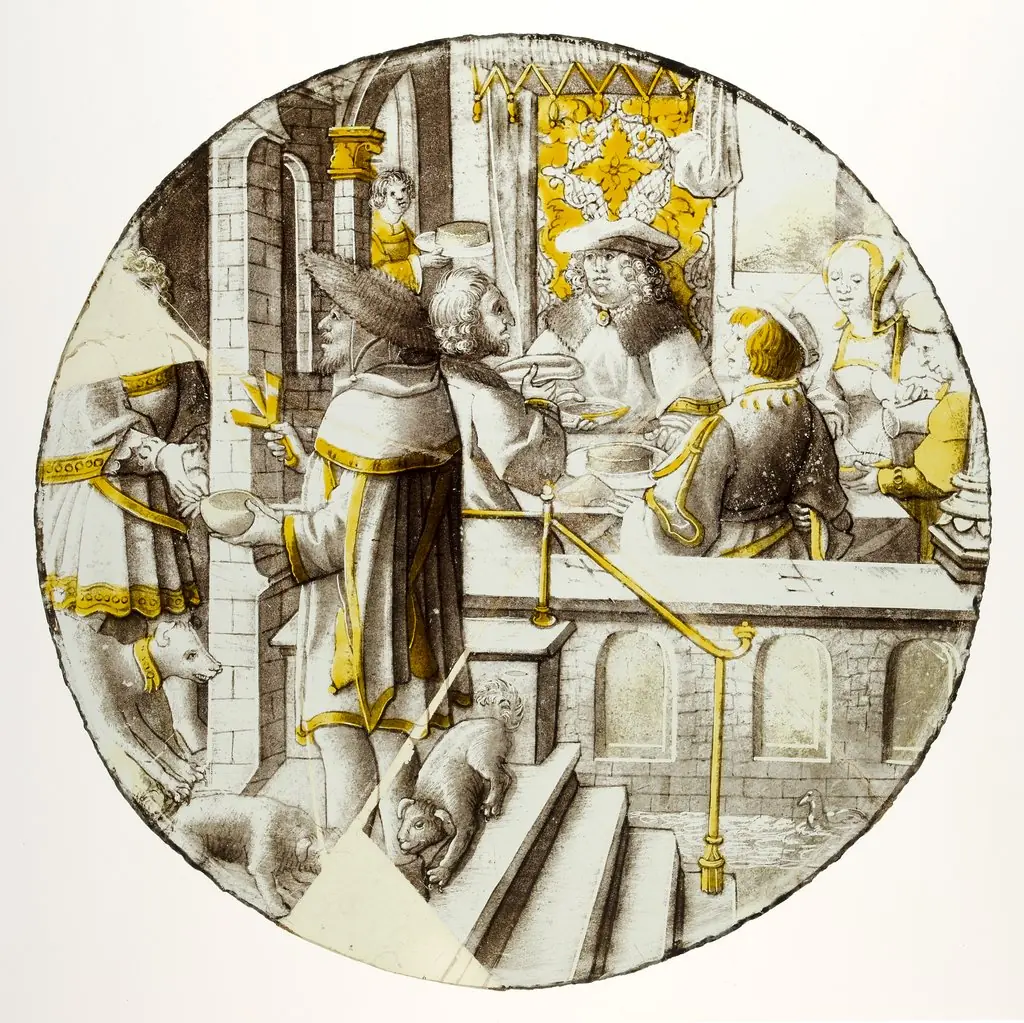 Roundel with Lazarus at the House of Dives
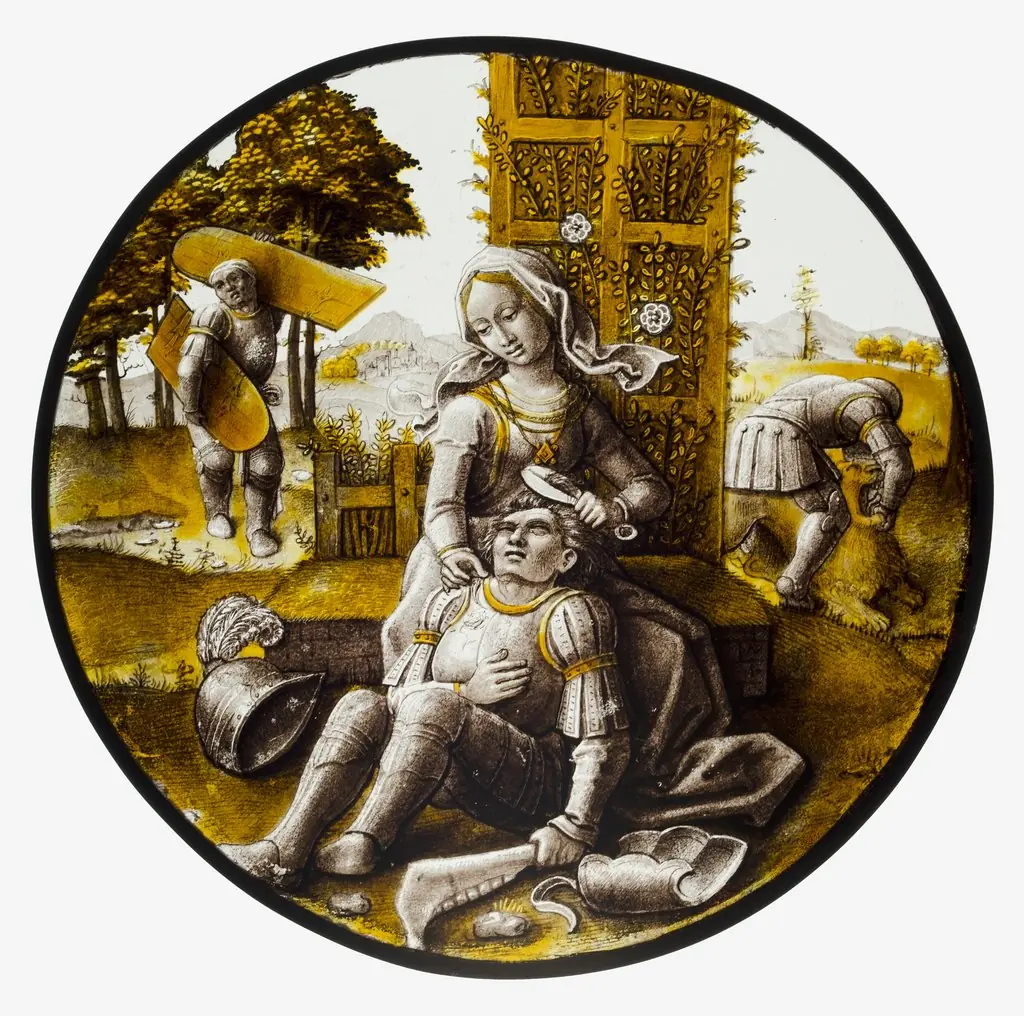 Roundel with Delilah Cutting the Hair of Samson
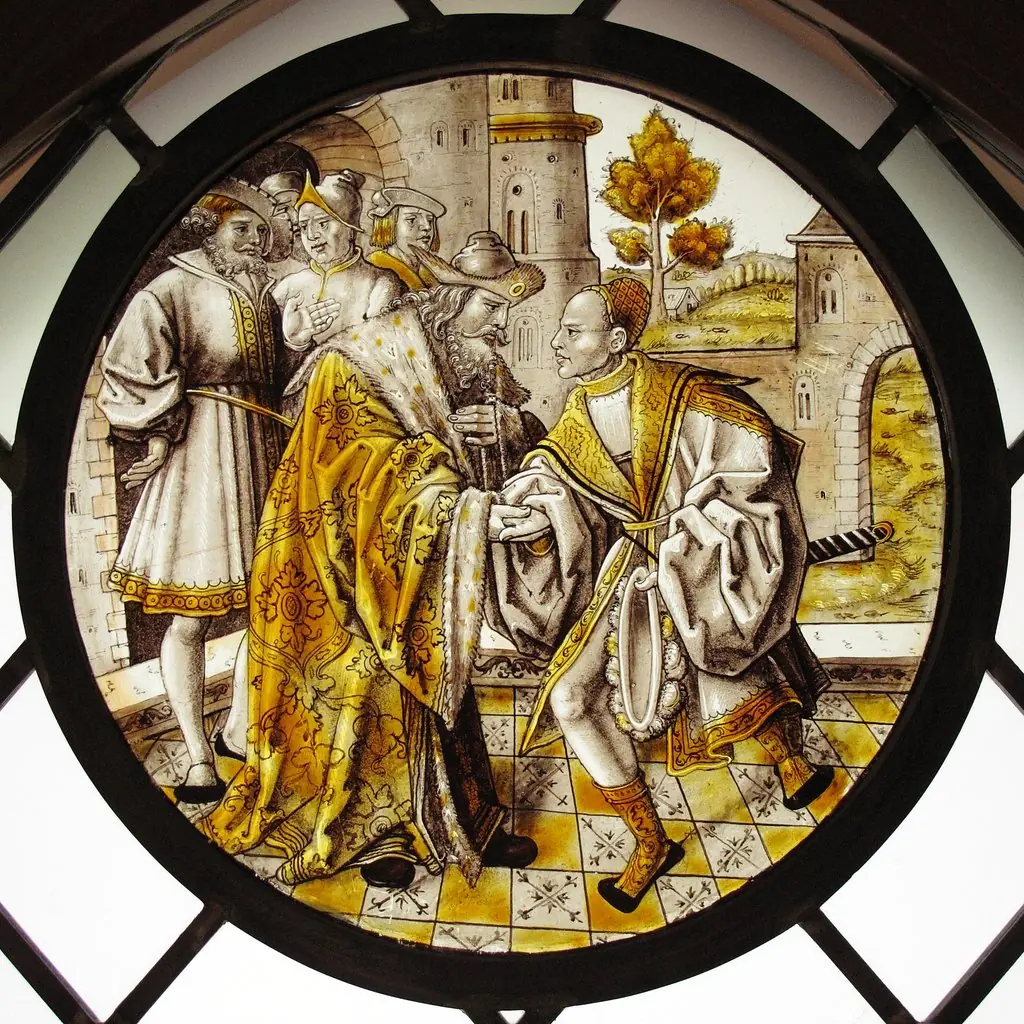 Roundel with Return of the Prodigal Son
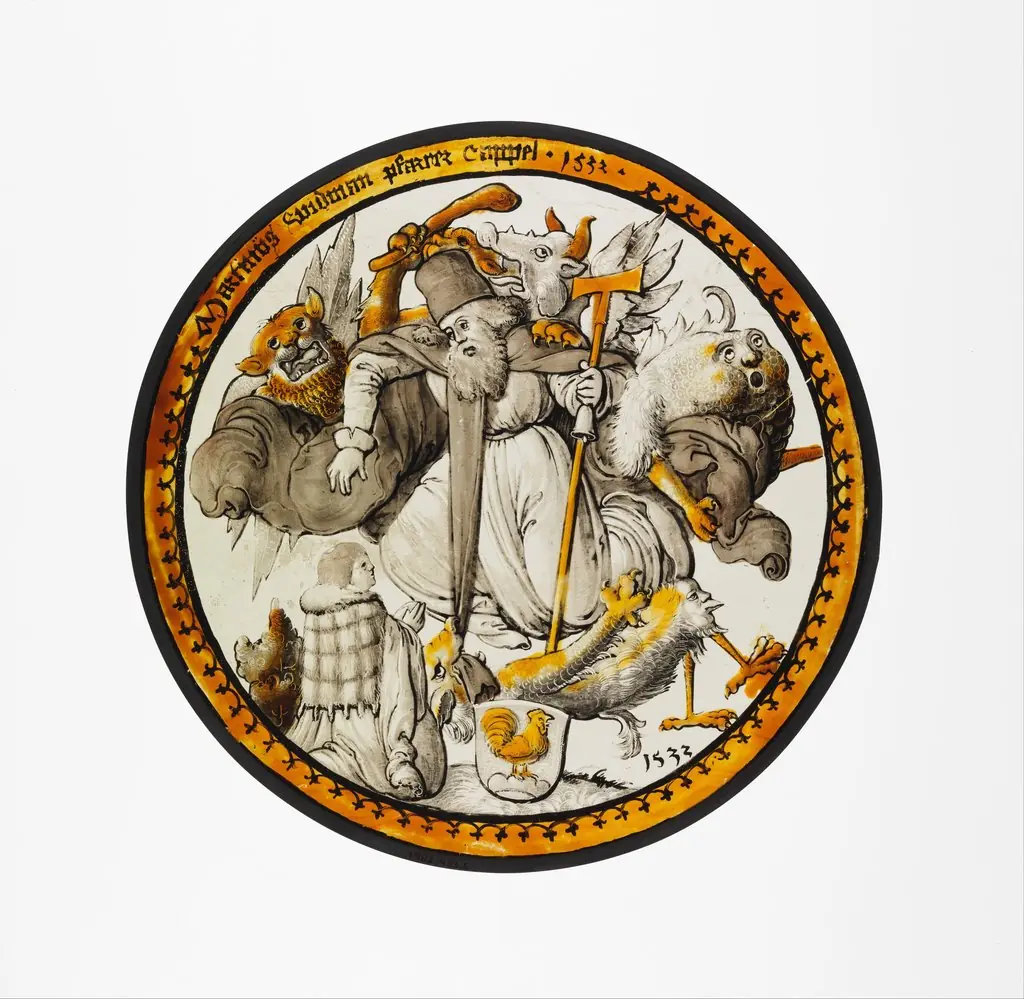 Roundel with the Temptation of Saint Anthony
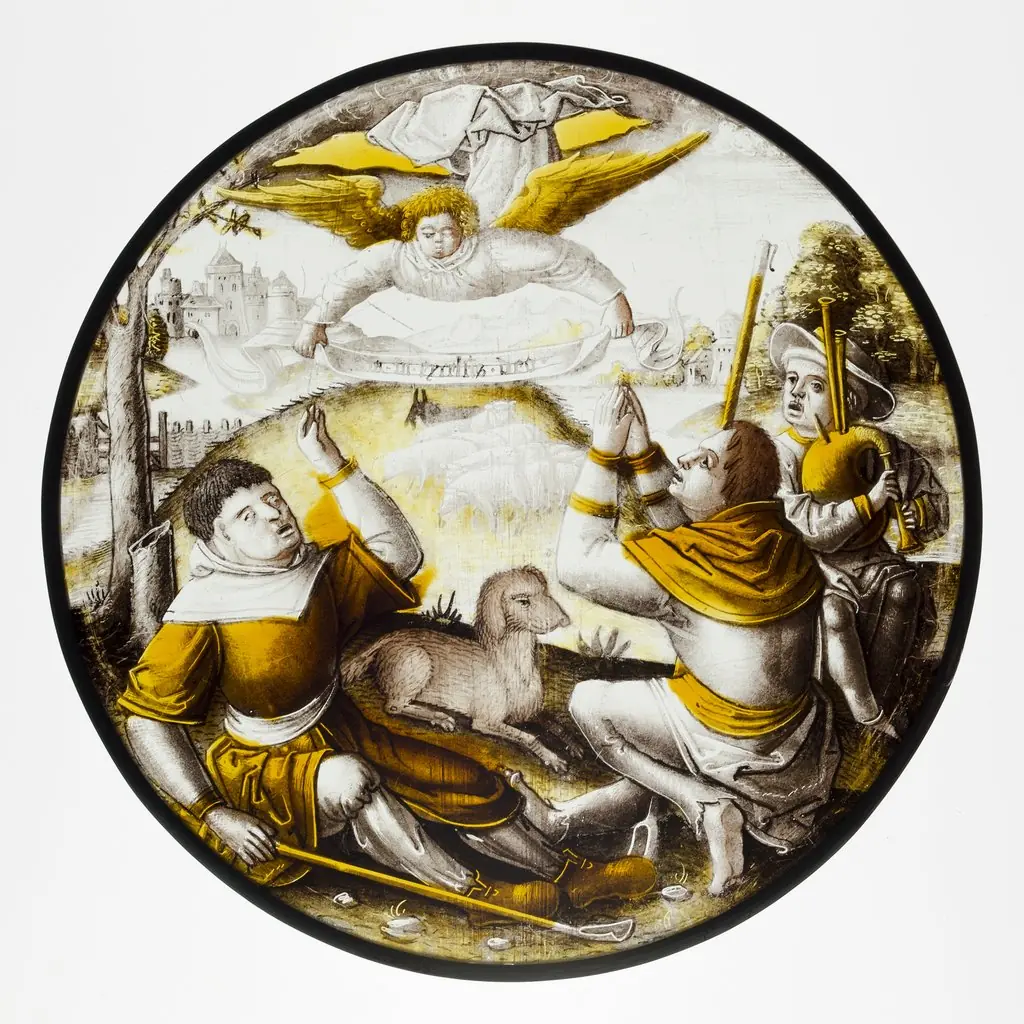 Roundel with Annunciation to the Shepherds