Artwork
Roundel of The Planet Venus and Her Children
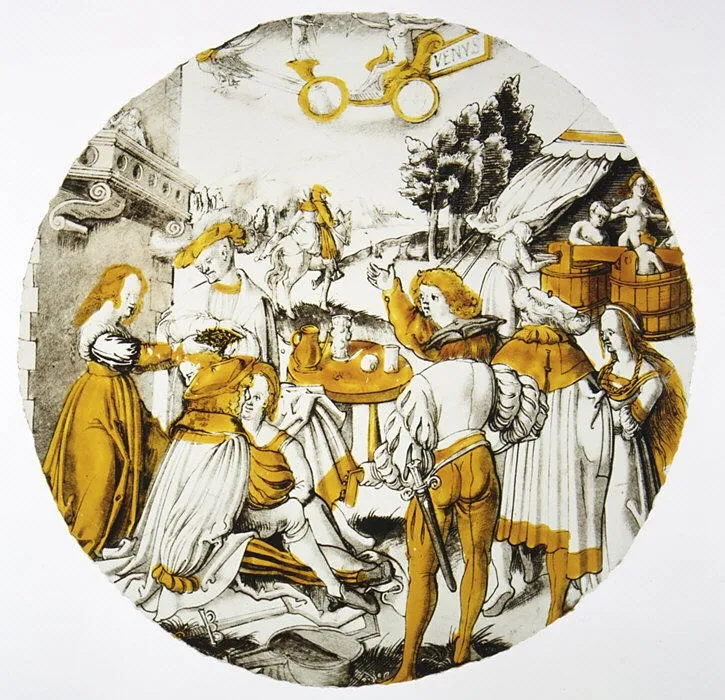
Roundel of The Planet Venus and Her Children is an unspecified painting. It dates from 1520 and is held in the collection of the Metropolitan Museum of Art.
About this work
Subject & Meaning
This synthesis of celestial and terrestrial realms underscores the painting's allegorical function within its mythological genre.
The roundel portrays Venus, the Roman goddess of love, accompanied by her offspring, embodying themes of fertility and divine affection in Renaissance mythology. Depicted as a woman, the composition draws on classical iconography in which Venus symbolizes beauty and procreative power, reflecting humanist ideals of love's generative force. The work's meaning is rooted in mythological narratives that celebrate Venus as both protector of love and mother of its next generation, aligning with Renaissance reinterpretations of classical deities. This synthesis of celestial and terrestrial realms underscores the painting's allegorical function within its mythological genre.
Technique & Style
The work is a painting on panel created circa 1520, depicting the mythological figure Venus with her children in a round format typical of early sixteenth-century decorative schemes. It was produced after the style of Jörg Breu the Elder and is held in the Metropolitan Museum of Art's collection of European paintings.
History & Provenance
The roundel is dated to around 1520 and is catalogued as a painting after Jörg Breu the Elder, held in the collection of the Metropolitan Museum of Art. Its iconography, Venus with her children, aligns with Renaissance mythological themes associated with Breu's circle. The available records do not provide an accession number or any documented exhibition history.
Overview
The work titled Roundel of The Planet Venus and Her Children is a circular painted composition. At its centre lies a reclining female figure clutching a golden cup, surrounded by a gathering of figures who stand, kneel or reach toward her. The scene is set against a backdrop that includes a building, trees and distant diminutive figures, rendered in a palette dominated by bright yellows and whites on a weathered, cracked surface.
Context
Roundels were often used in decorative cycles during the Renaissance and Baroque periods, serving both ornamental and narrative functions. Depicting planetary deities aligns with the period’s interest in astrology and allegorical representation, where Venus symbolized love, beauty and the generative forces of nature.
Artist & collection

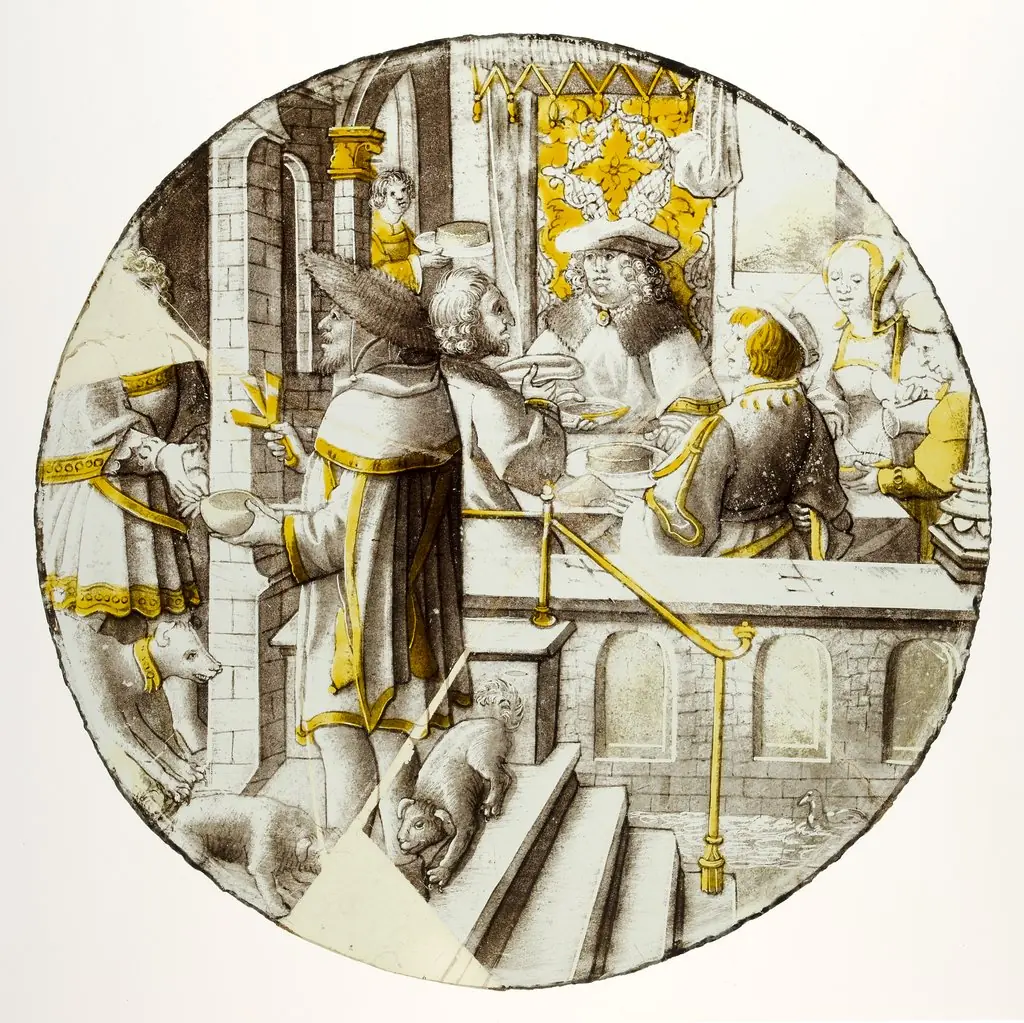
- Roundel with Lazarus at the House of Dives
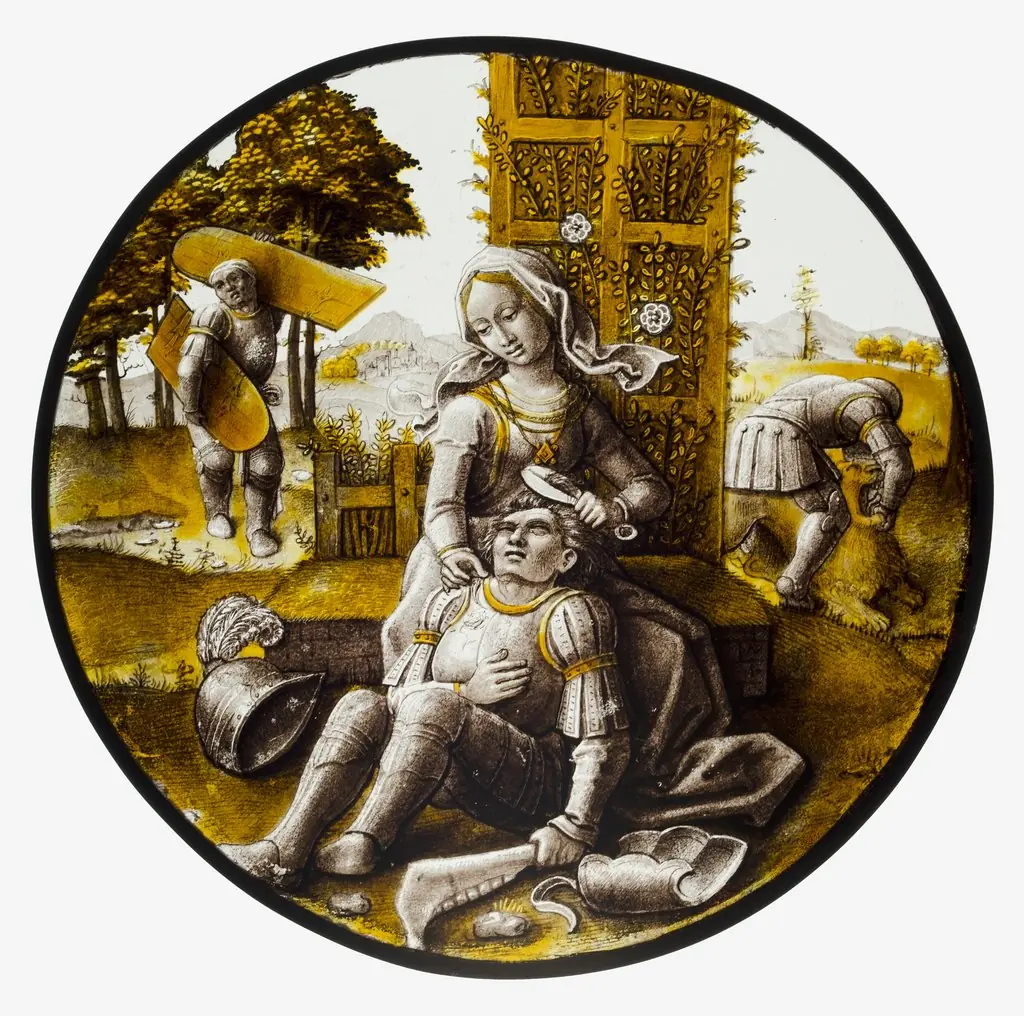 Roundel with Delilah Cutting the Hair of Samson
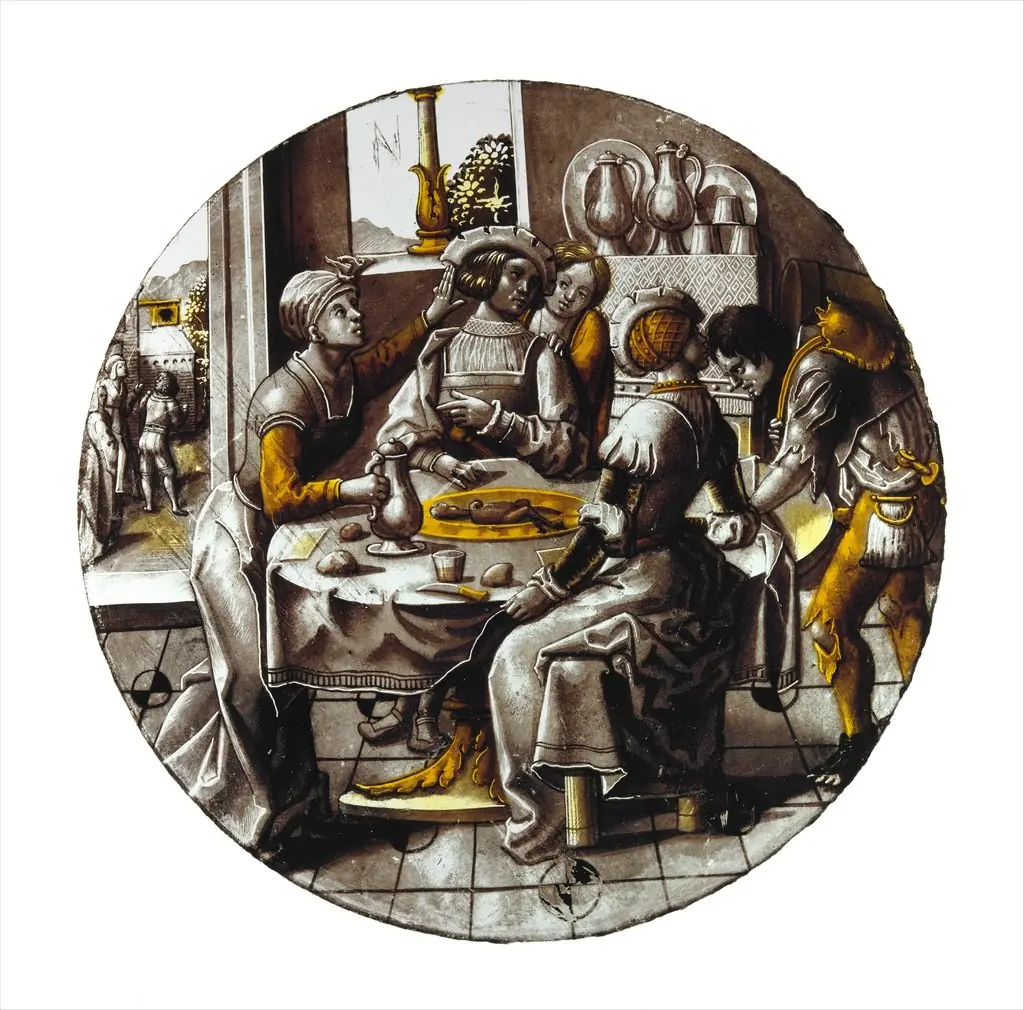 Roundel with Sorgheloos ("Carefree") with Easy Fortune
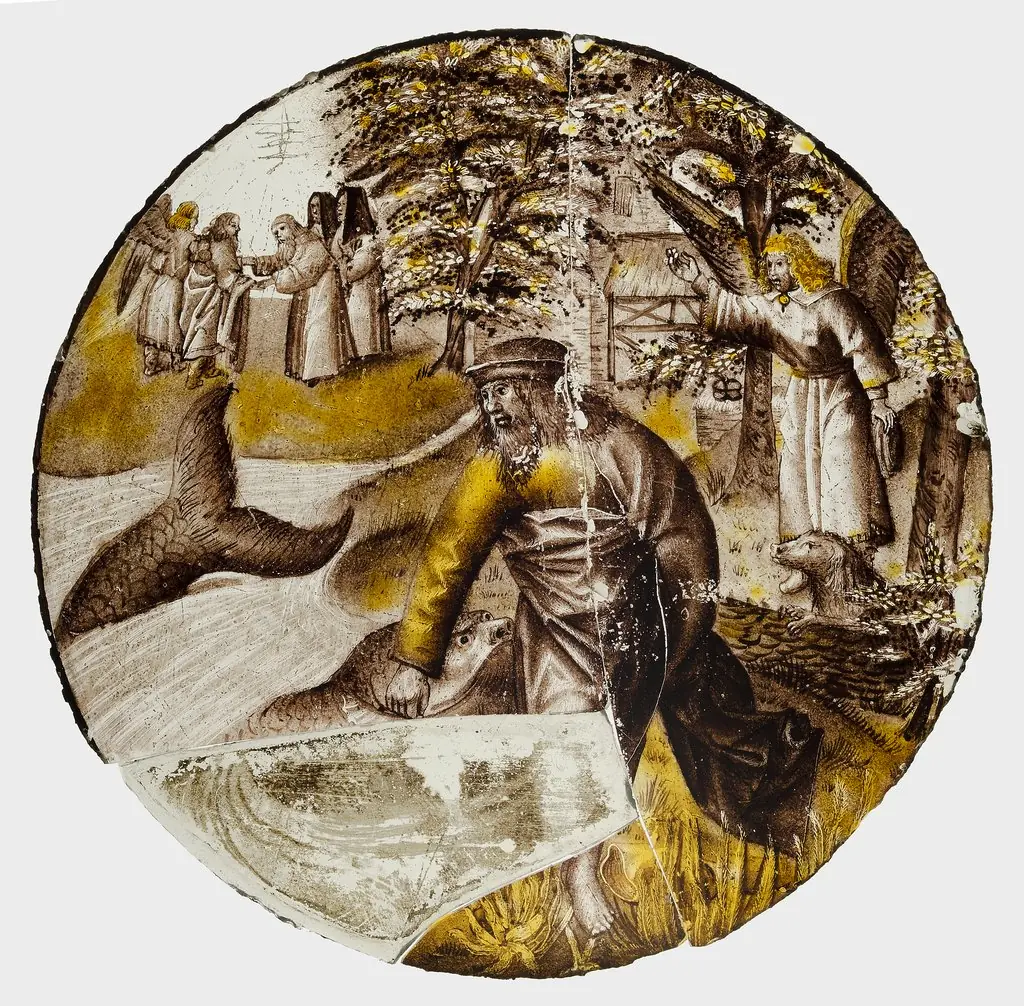 Roundel with Tobias Drawing the Fish from the Water
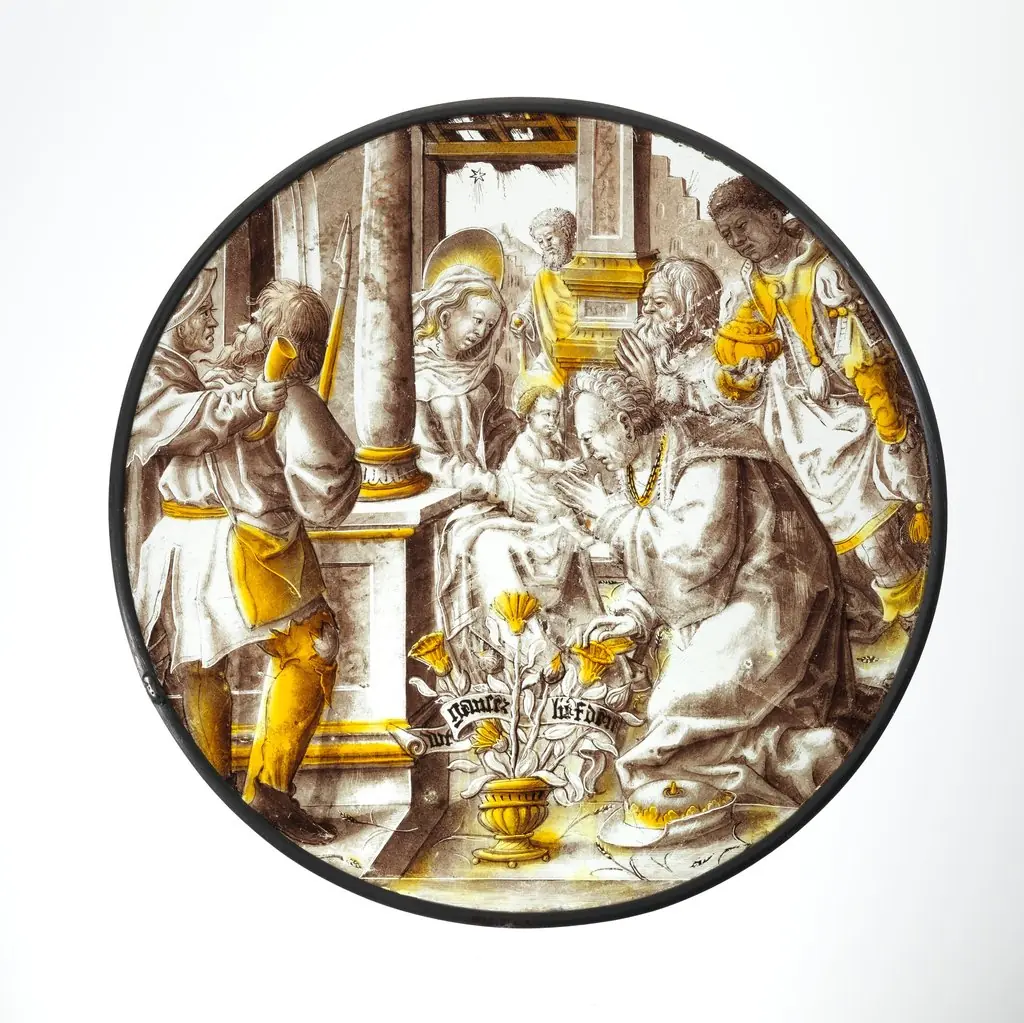 Roundel with Adoration of the Kings
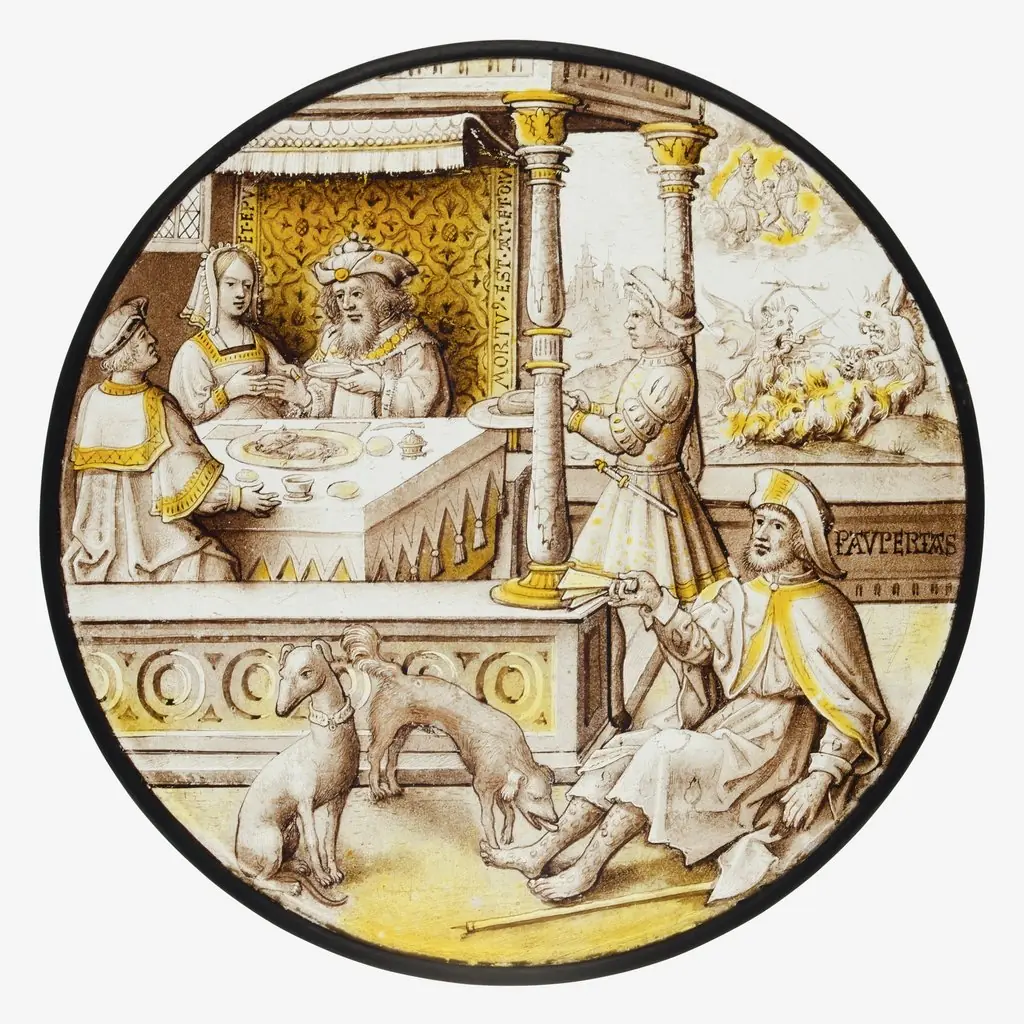 Roundel with Lazarus at the House of Dives
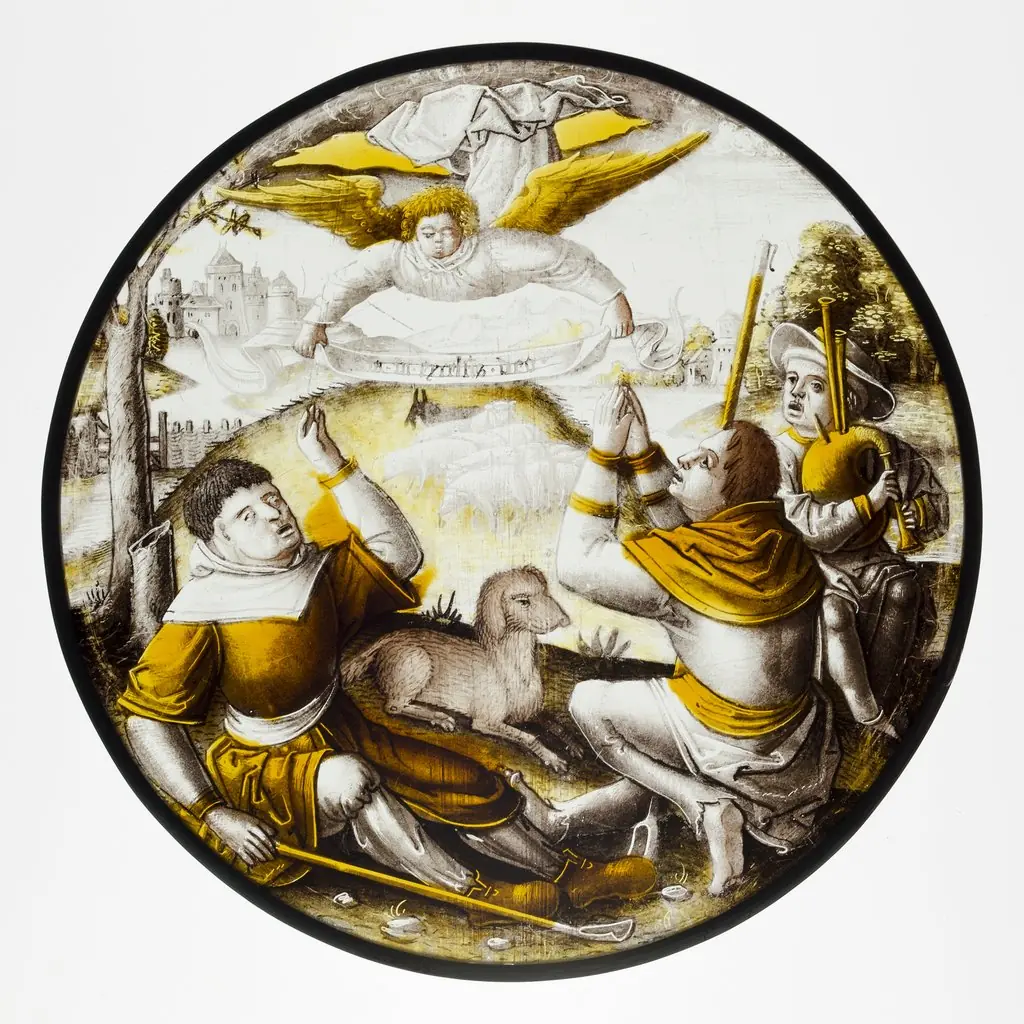 Roundel with Annunciation to the Shepherds
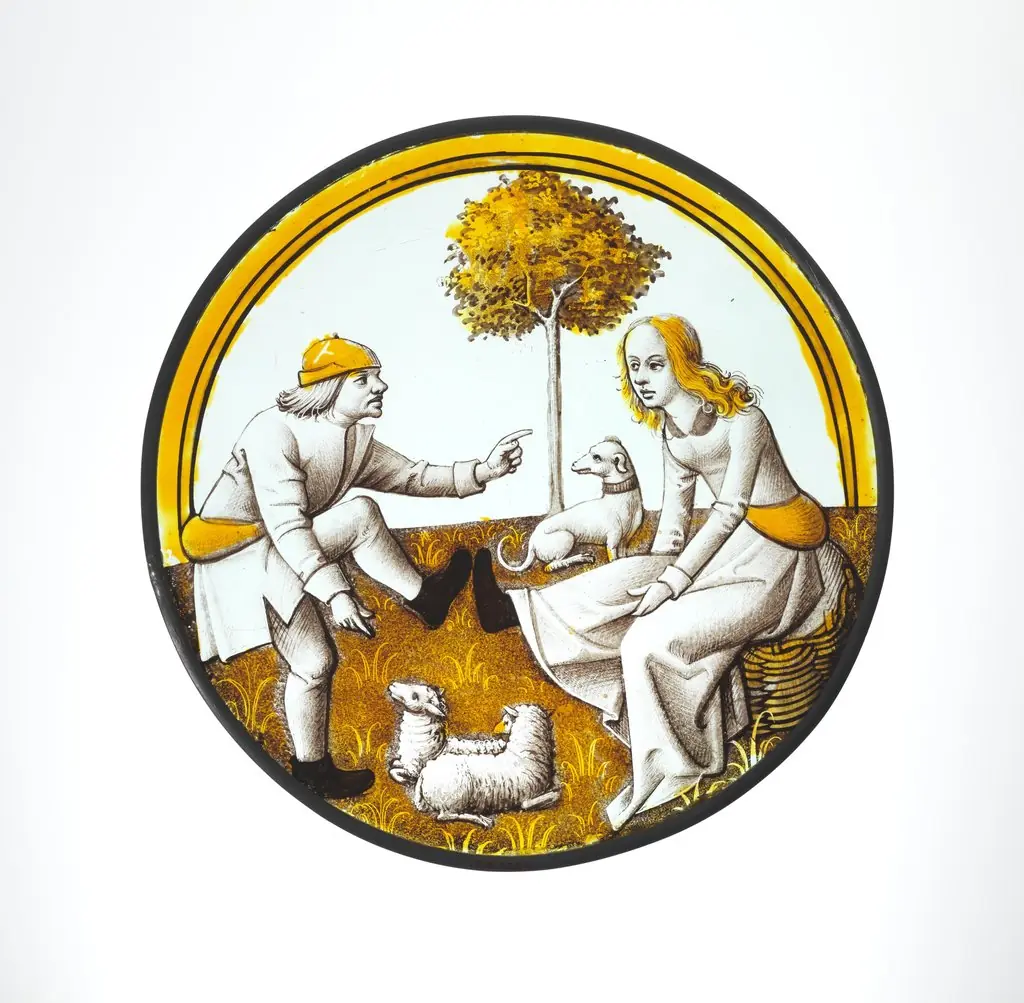 Roundel with Playing at Quintain
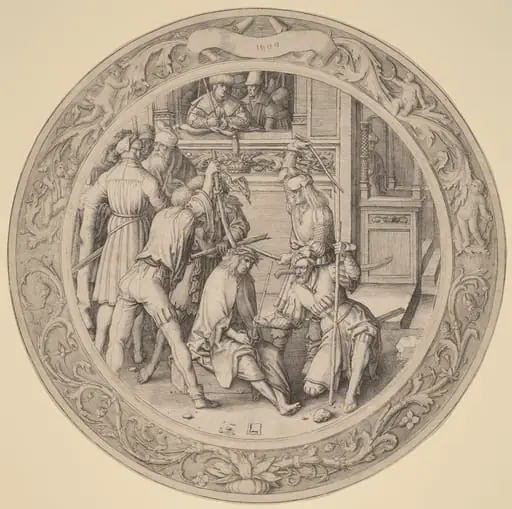 Christ Crowned with Thorns
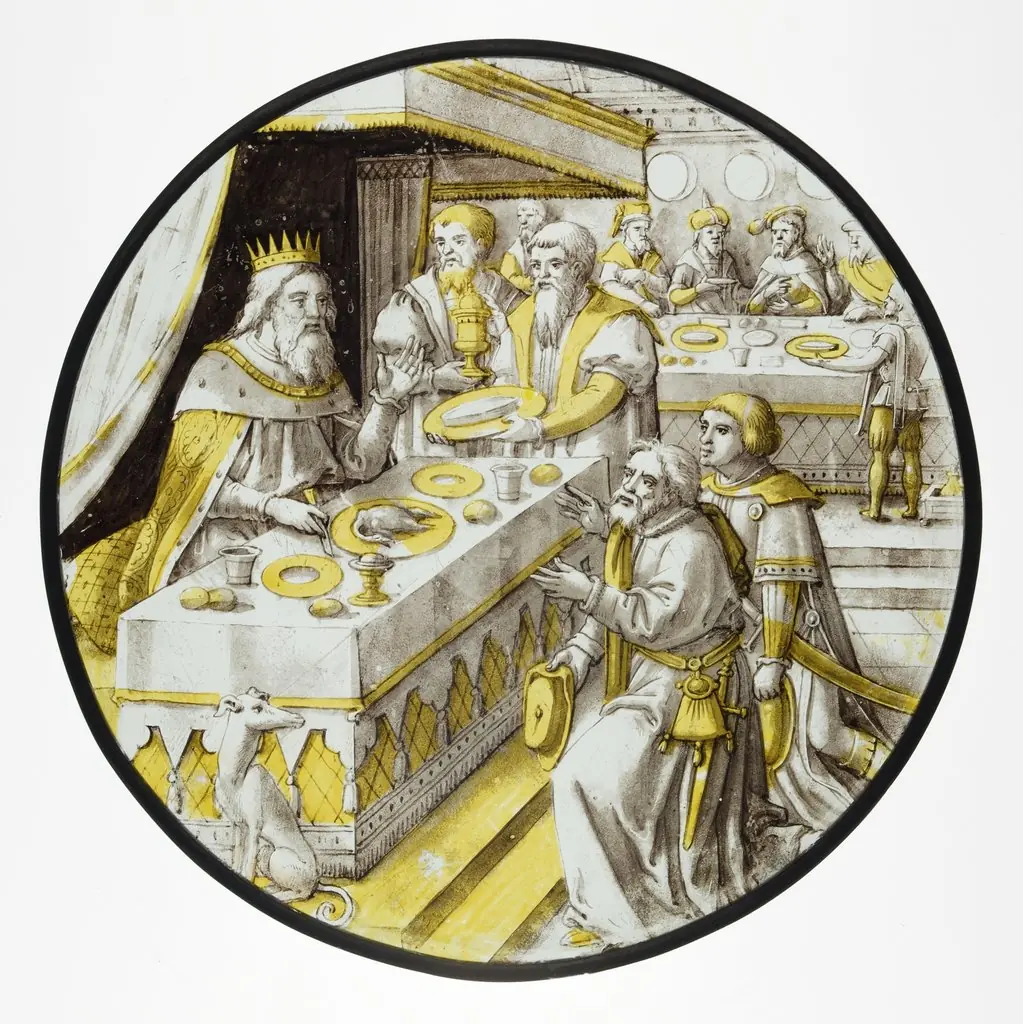 Roundel with Joseph Presenting his father, Jacob, to the Pharoah (from a Series of the History of Joshua)
 The Hay Harvest (June)
 Roundel with Christ and the Adulterous Woman