Artwork
Rama, Sita, and Lakshmana in the forest
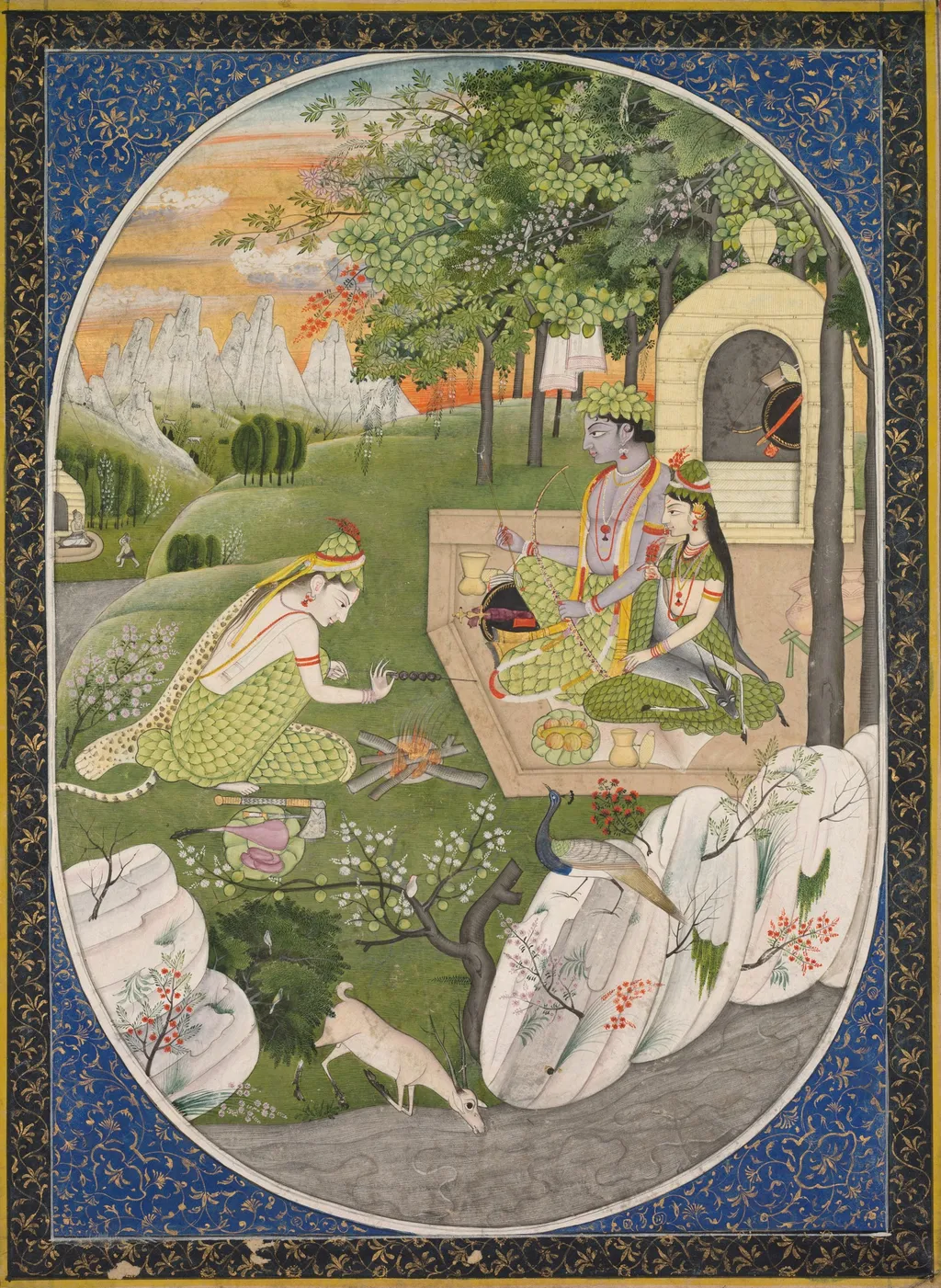
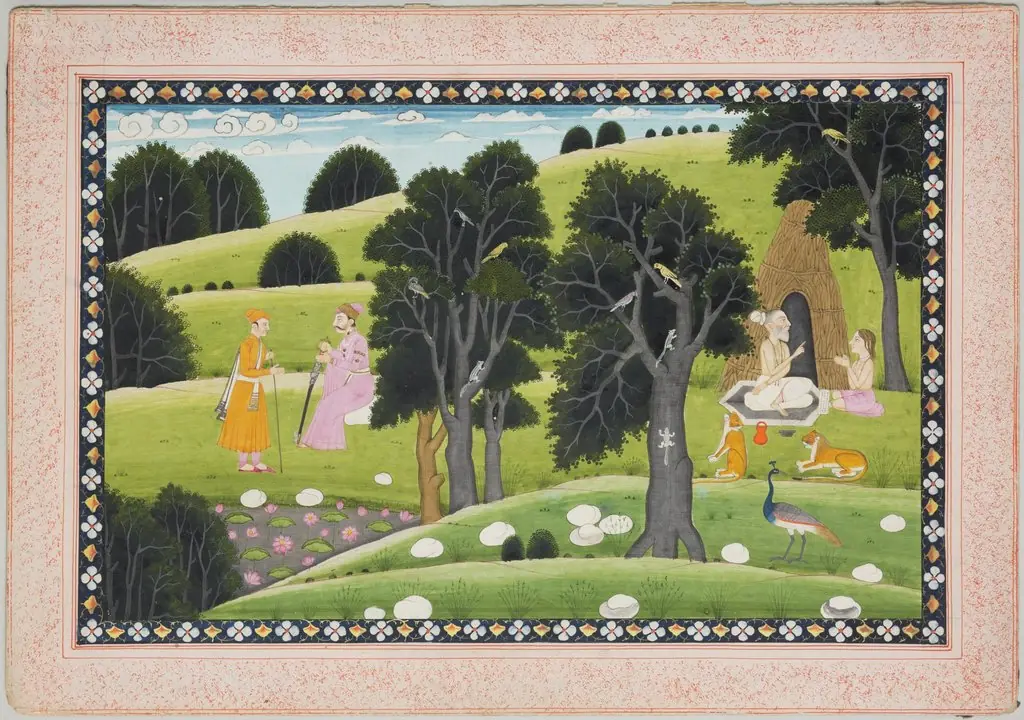
Rama, Sita, and Lakshmana in the forest is an unspecified painting by Unknown. It dates from 1830 and is held in the collection of the Cleveland Museum of Art. The work depicts a forest scene populated by three human figures and a massive turtle that dominates the lower foreground.
About this work
Overview
Lush green foliage, a peacock, a deer, and distant mountains complete the setting, all framed by an elaborate gold‑and‑blue border.
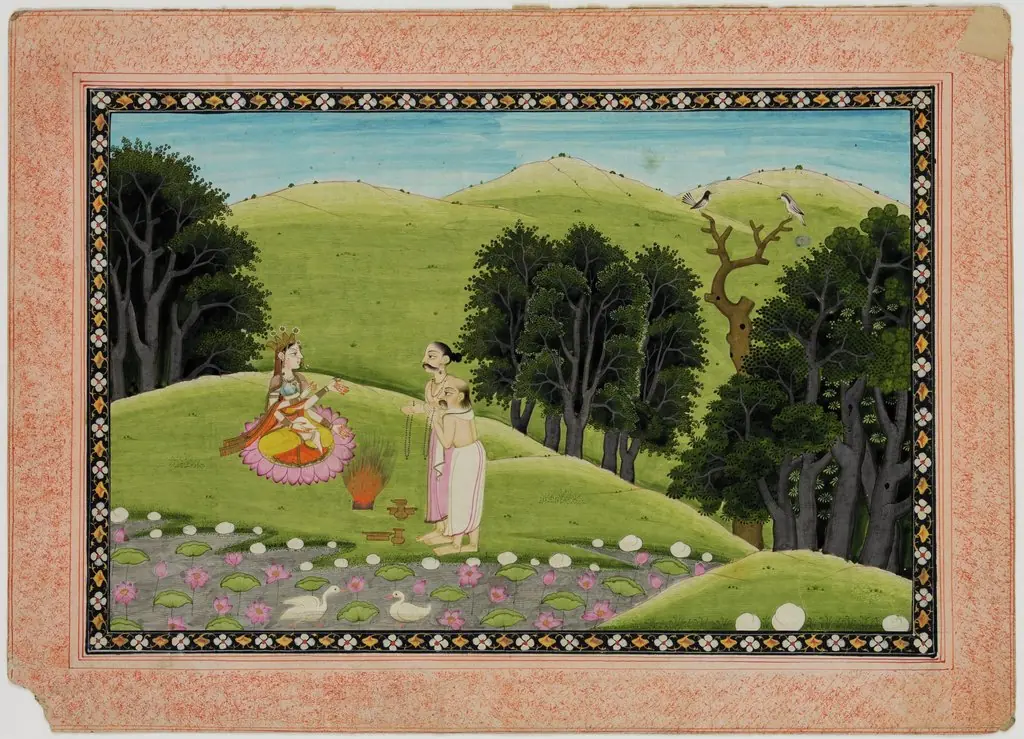
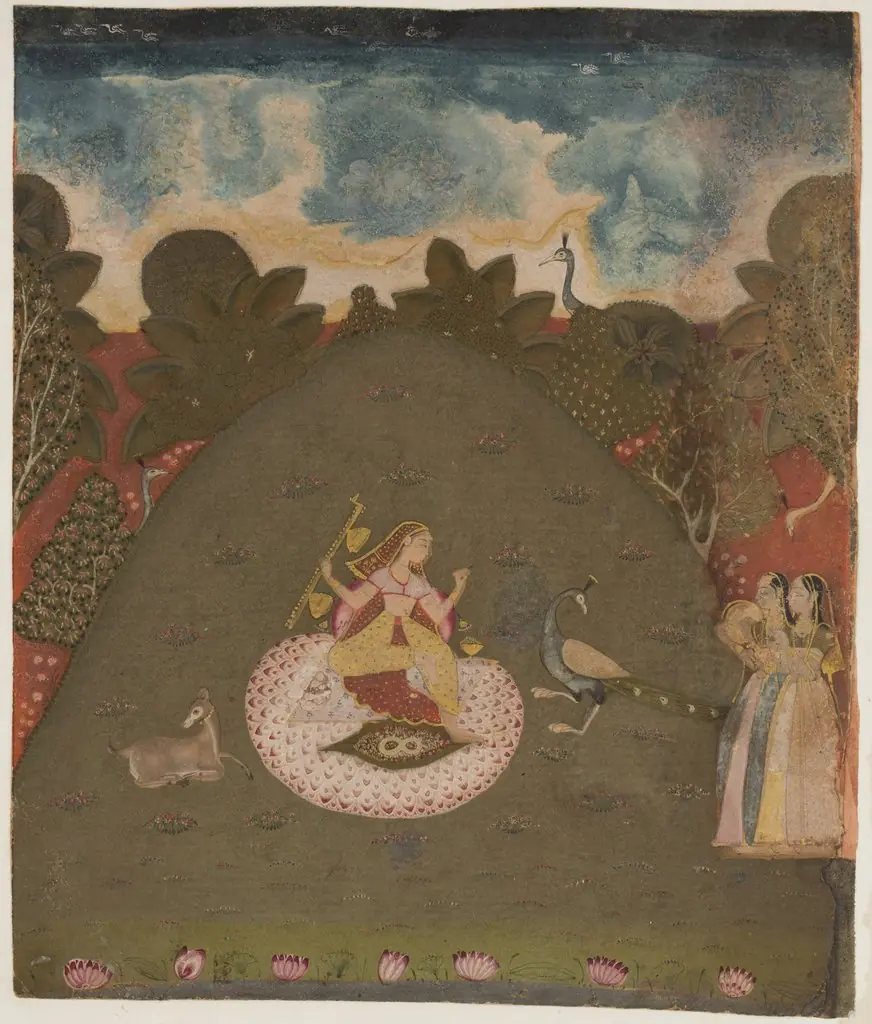
The work depicts a forest scene populated by three human figures and a massive turtle that dominates the lower foreground. One figure kneels on the grass, extending a hand toward the creature, while another sits on a rock clutching a bow. A third figure rests on a woven mat amid fruit and jars.
Lush green foliage, a peacock, a deer, and distant mountains complete the setting, all framed by an elaborate gold‑and‑blue border.
Subject & Meaning
The three individuals are traditionally identified as Rama, Sita, and Lakshmana, characters from the Indian epic Ramayana, portrayed during their exile in the forest. The oversized turtle may symbolize a sacred or mythic element, perhaps referencing the turtle’s role as a protective platform or as an allusion to the cosmic world‑turtle motif found in South Asian iconography.
Technique & Style
Rendered in vivid pigments, the painting combines naturalistic detail, such as the textured bark, feathered peacock, and spotted deer, with stylized decorative elements in the border. Gold leaf and deep blue pigments outline the frame, creating a contrast between the narrative interior and the ornamental exterior, a characteristic approach in courtly Indian painting.
History & Provenance
The piece is part of the collection at the Cleveland Museum of Art. While specific dates and prior ownership are not provided, the work reflects the artistic conventions of Indian narrative painting, likely produced for a devotional or courtly audience before entering the museum’s holdings.
Context
Set within the broader tradition of Ramayana illustration, the composition aligns with other Indian works that visualize episodes of exile and divine intervention. The inclusion of everyday objects, fruit, jars, a woven mat, grounds the mythic narrative in a recognizable domestic environment.
Artist & collection