Artwork
Relief of a groom and horses, from Khorsabad (Sargon, 722-705 B.C.). Paris: Louvre
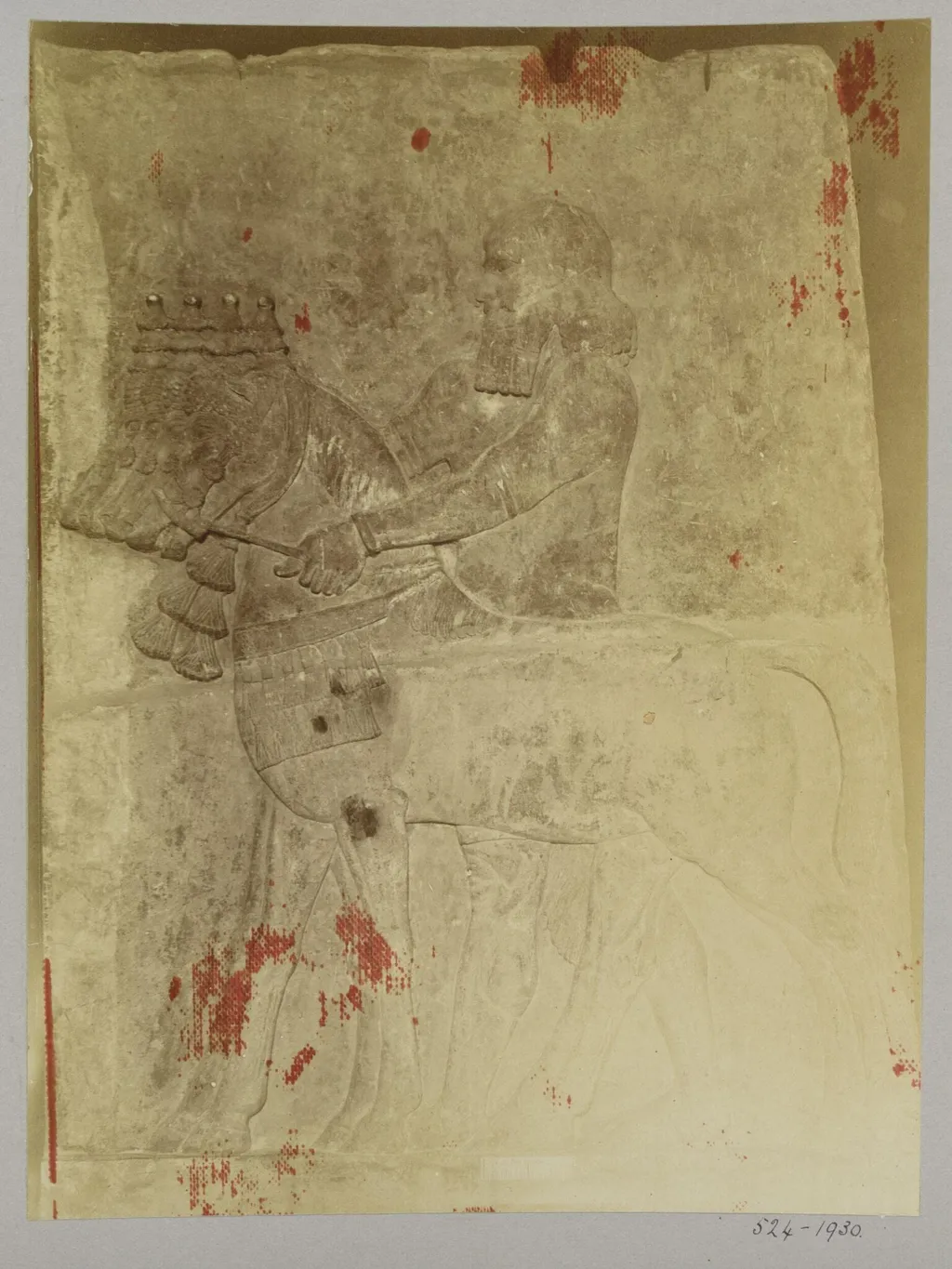
Relief of a groom and horses, from Khorsabad (Sargon, 722-705 B.C.). Paris: Louvre is a photographic photography by the Impressionist artist Unknown. It dates from 1880 and is held in the collection of the Victoria and Albert Museum. A sepia-toned photograph captures a stone relief from ancient Khorsabad, dating to the reign of Sargon II (722–705 B.
About this work
Overview
A sepia-toned photograph captures a stone relief from ancient Khorsabad, dating to the reign of Sargon II (722–705 B.
A sepia-toned photograph captures a stone relief from ancient Khorsabad, dating to the reign of Sargon II (722–705 B.C.). The image records a scene originally carved into the palace walls, depicting a groom guiding two horses in profile. The photograph, produced in the late 19th century, preserves the relief’s condition at that time, including surface wear and traces of pigment, offering a historical record of Assyrian sculptural detail now partially faded or lost.
Subject & Meaning
The relief portrays a groom, clad in a long robe and helmet, leading two horses in synchronized profile. The figures are arranged in a formal, rhythmic composition typical of Assyrian court art, emphasizing order and control. The groom’s role suggests ceremonial or administrative function, possibly linked to royal stables or military logistics. The paired horses, rendered with identical posture, reinforce symmetry and institutional discipline central to Assyrian royal ideology.
Technique & Style
The original relief was carved in low relief from alabaster or limestone, with fine incisions defining muscle, harness, and textile patterns. The photograph reveals residual red pigment on the surface, indicating original polychromy. The groom’s helmet and robe are rendered with repetitive, stylized lines, reflecting standardized Assyrian conventions.
The photograph’s tonal range captures subtle depth in the carving, though surface erosion has softened some details over time.
History & Provenance
The relief originated in the palace of Sargon II at Khorsabad, modern-day Dur-Sharrukin, where it adorned interior walls as part of a larger narrative program. It was removed during 19th-century excavations by French and Assyriological teams and transported to Paris. The photograph was made shortly after its arrival at the Louvre, documenting its state before further weathering or restoration. Its current location remains the Louvre’s Department of Near Eastern Antiquities.
Context
This relief formed part of a vast decorative scheme in Sargon II’s palace, where animal and human figures lined corridors to project imperial power. Grooms and horses were common motifs, symbolizing control over nature and military readiness. Similar reliefs appear across Assyrian capitals, but Khorsabad’s are notable for their density and preservation.
The photograph preserves a fragment of a visual language designed to intimidate and awe visitors entering the royal domain.
Legacy
The photograph serves as a critical archival document, capturing the relief’s appearance before modern conservation altered its surface. It allows scholars to trace pigment traces, carving techniques, and damage patterns over time. Though the original relief remains in the Louvre, this image anchors its historical visibility, bridging 19th-century archaeological practice with contemporary study of Assyrian art and material culture.
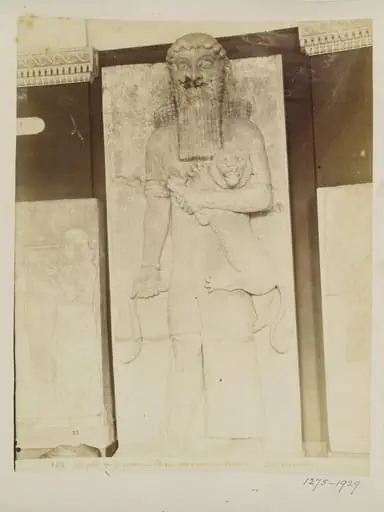
Artist & collection









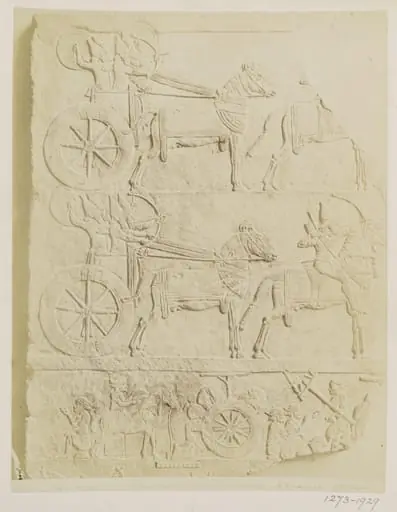 Bas-relief showing chariots, war and mounted warriors and a bivouac from Palace of Kuyunjik, period of Ashua-bari-pal (668-626 B.C.). Paris: Louvre
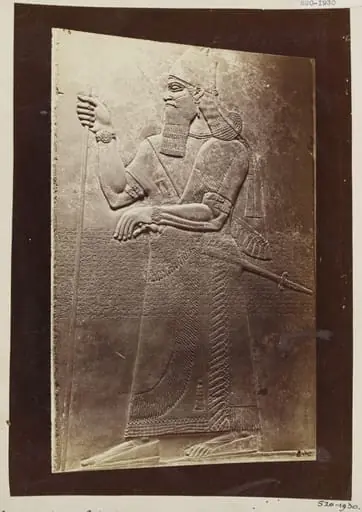 Relief depicting Assyring King Ashur-Nasir-Pal II (885-860 B.C.), Louvre, Paris
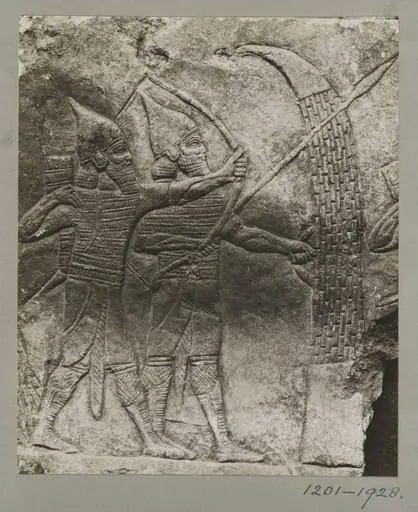 Assyrian slab of archers and spearmen, from the Palace of Shur-Bari-Pal (BC. 668-626), at Nineveh. ca. 660 B.C.
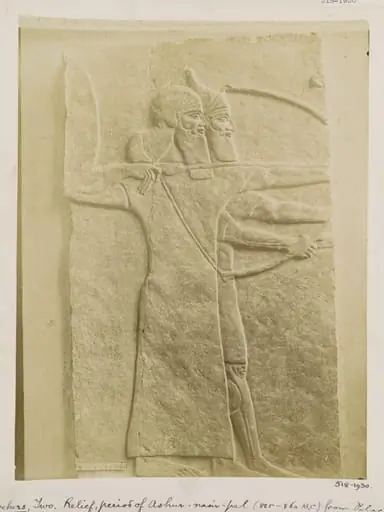 Relief depicting two Assyrian archers from the period of Ashur-Nasir-Pal II (885-860 B.C.) from the Palace of Nimrud. Louvre, Paris
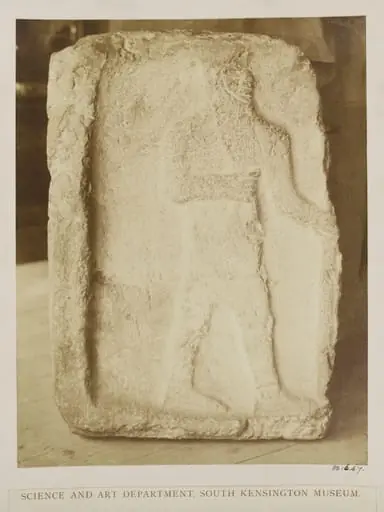 Assyrian sculpture relief of a bearded man
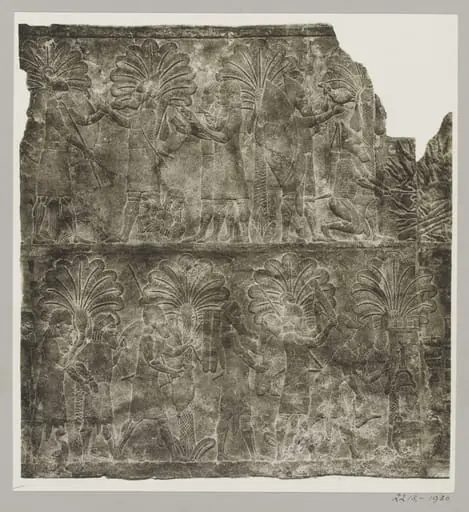 Assyrian reliefs depicting Ashurbanipal and warriors in their camp at Nineveh (Kuyuryick). London, British Museum
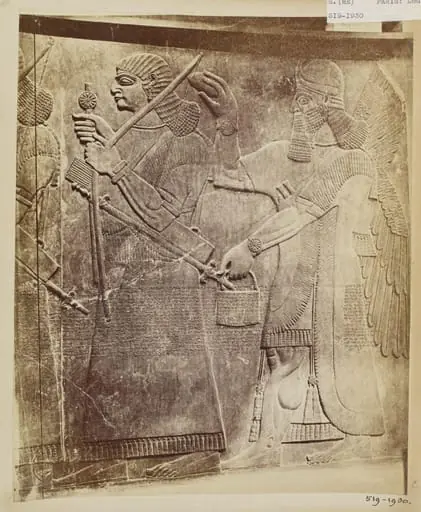 Sculpture depicting a royal Assyrian armsbearer with attendant genius from the period of Ashur-nasir-pal II (885-860 B.C.), Louvre, Paris
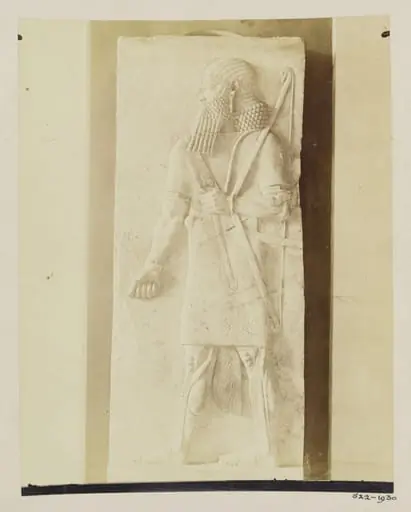 Sculpture of Assyrian archer, 9th century B.C., Louvre, Paris
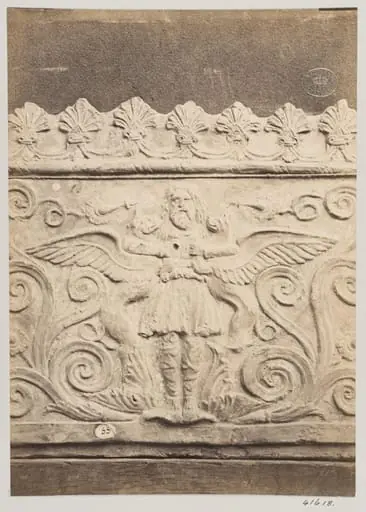 Bas-relief portion of a frieze of a flying genie in terra cotta