Artwork
Royal Women Celebrating Diwali
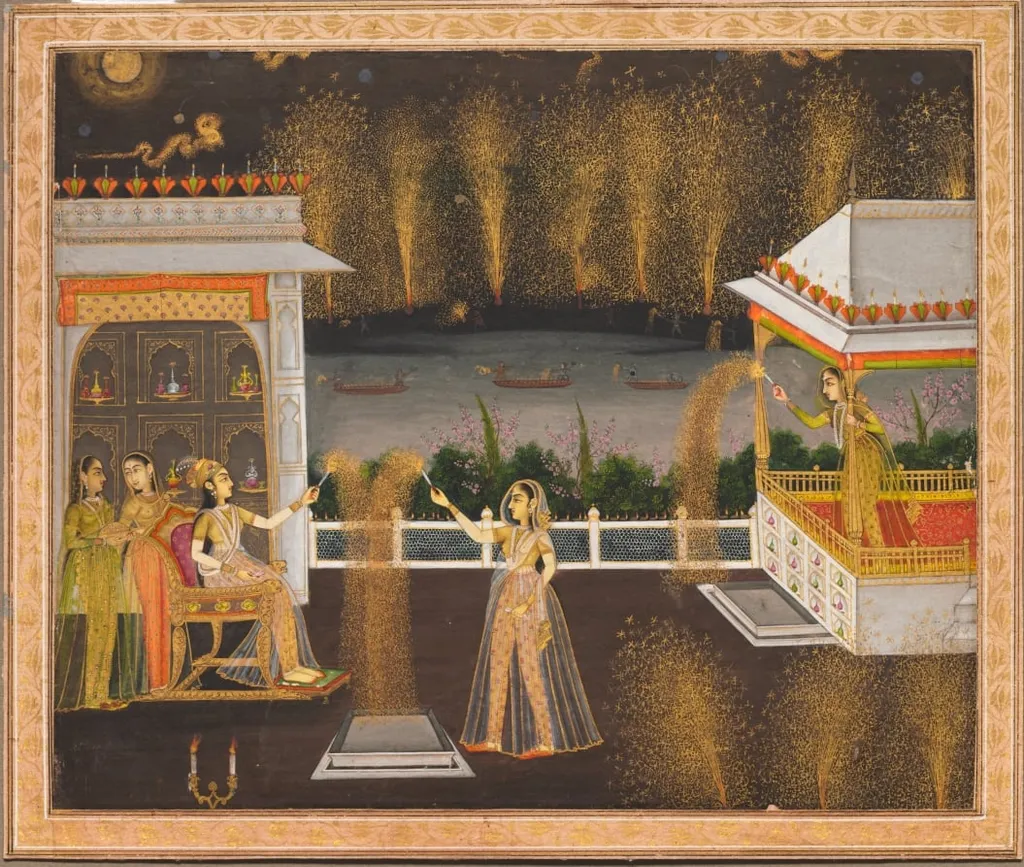
Royal Women Celebrating Diwali is an unspecified painting by the Mughal Painting artist Unknown. It dates from 1760 and is held in the collection of the Cleveland Museum of Art. This painting captures a private nocturnal celebration of Diwali within a Mughal royal enclosure.
- Accession no.
- 1971.82
- Credit line
- Andrew R. and Martha Holden Jennings Fund
About this work
Overview
This painting captures a private nocturnal celebration of Diwali within a Mughal royal enclosure. Lit candles, butter lamps, and fireworks illuminate the scene under a full moon, emphasizing light as both ritual and aesthetic. The focus rests on women of the court engaged in quiet revelry, contrasting with the more common depictions of male imperial activities in Mughal art of the period.
Subject & Meaning
Their actions, lighting sparklers, gathering on balconies, and observing riverborne displays, reflect a personal, gendered space of festivity.
The scene portrays royal women celebrating Diwali, the Hindu festival of lights, within the intimate confines of their palace quarters. Their actions, lighting sparklers, gathering on balconies, and observing riverborne displays, reflect a personal, gendered space of festivity. The absence of male figures underscores a domestic sphere where women preside over ritual and joy, offering a rare glimpse into their autonomous cultural expression.
Technique & Style
Executed in the refined Mughal miniature tradition of the mid-18th century, the painting employs delicate brushwork, rich pigments, and precise detail to render textures of fabric, water, and flame. The night setting is rendered with subtle gradations of color and controlled luminosity, enhancing the glow of lamps and fireworks without sacrificing atmospheric depth or spatial clarity.
History & Provenance
Created during a period when Mughal imperial patronage was shifting toward courtly leisure, the work likely originated in a northern Indian atelier, possibly linked to Lucknow or nearby centers. Its subject matter aligns with a growing interest in scenes of female domesticity, suggesting it was commissioned by or for a royal woman, though its exact provenance remains undocumented.
Context
While Mughal painting of the era often highlighted male rulers in battle or hunt, this work reflects a quieter trend: the depiction of women’s lives in private, ritualized settings. Diwali, though widely observed, was rarely portrayed in court art. Here, its celebration becomes a vehicle for visualizing female agency and the cultural richness of royal interiors beyond public spectacle.
Legacy
The painting stands as a testament to the diversity of Mughal visual culture, challenging assumptions that court art was exclusively martial or patriarchal. It contributes to broader scholarly interest in gendered spaces and regional variations within Indian painting, inviting comparisons with later Nawabi works from Awadh and other northern courts that similarly elevated domestic and feminine themes.
Artist & collection









 Untitled
 A blindfolded suitor is brought before a princess; verso: scrolling floral vines
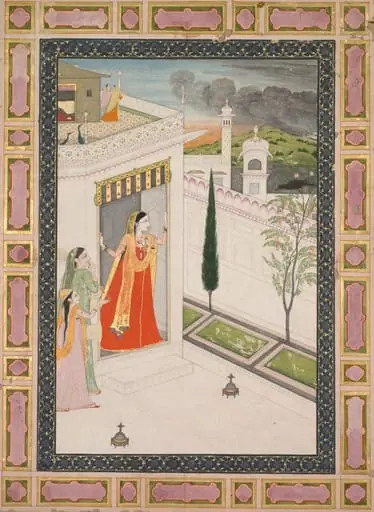 Augury of the crow (Vasakasajja Nayika)
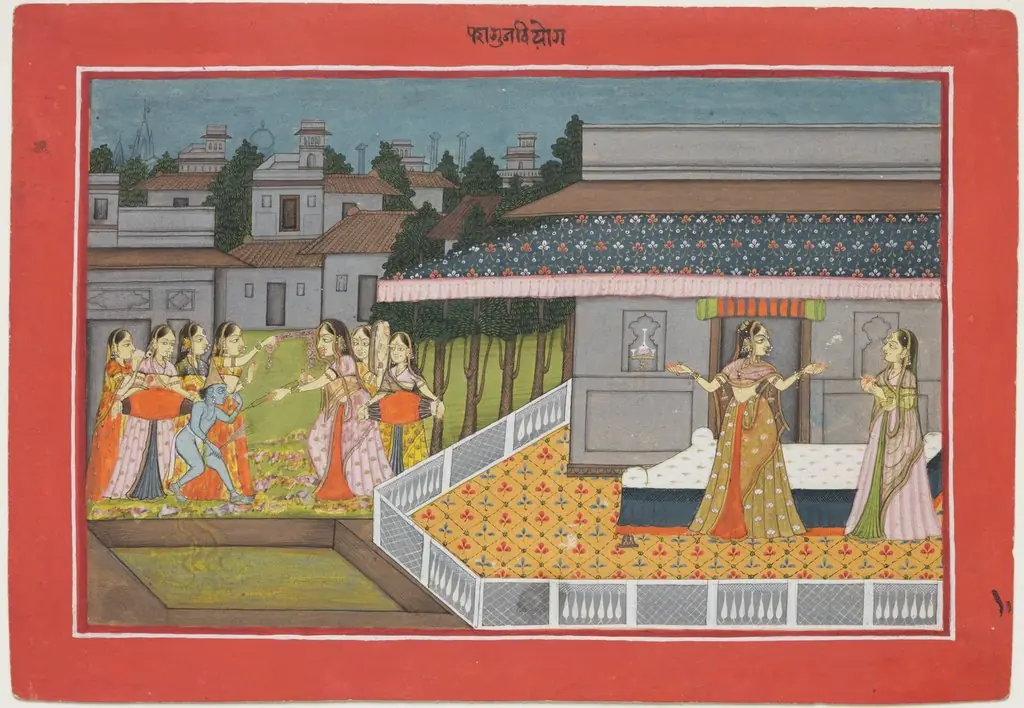 The Month of Phalguna (February-March), from a manuscript of the Barahmasa ("Twelve Months")
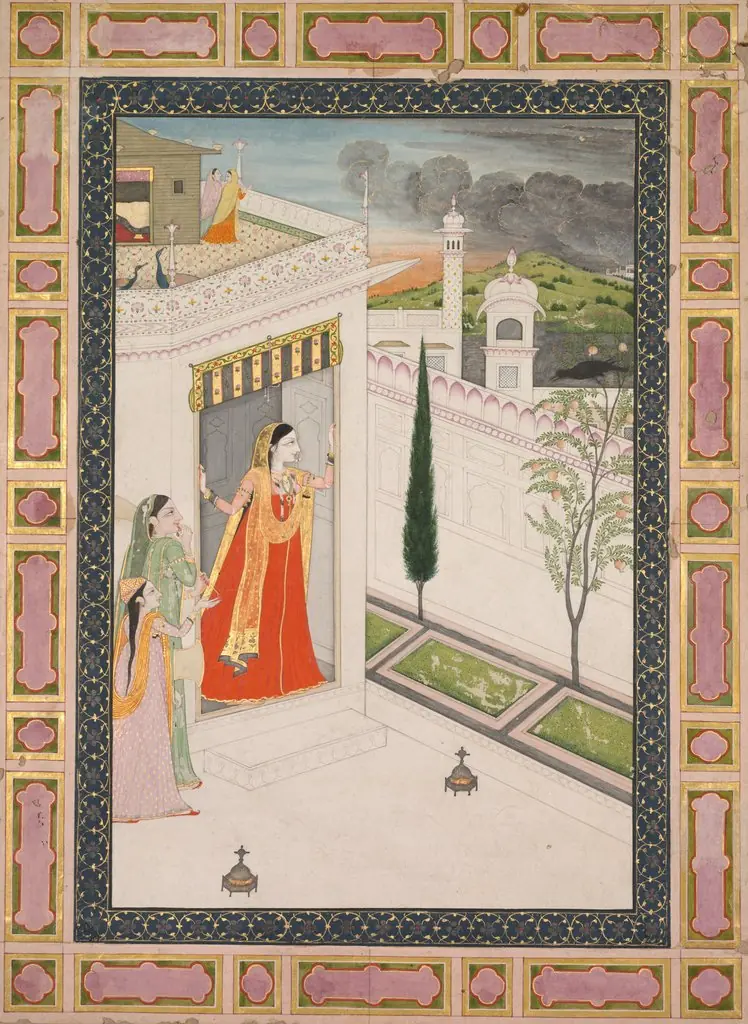 Augury of the Crow (Vasakasajja Nayika)
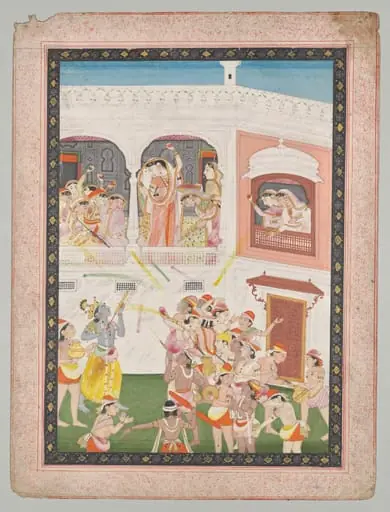 Radha and Hindu God Krishna celebrating the festival Holi
 A blindfolded suitor is brought before a princess (recto)
 Ravana addresses Sita in the garden of Lanka, from Chapters 53 and 54 of the Aranya Kanda (Book of the Forest) of a Ramayana (Rama’s Journey)
 A blindfolded suitor is brought before a princess; verso: scrolling floral vines
 A blindfolded suitor is brought before a princess (recto)