Artwork
Saint Agapitus of Praeneste in the Arena; (interior) The Beheading of Saint Agapitus of Praeneste
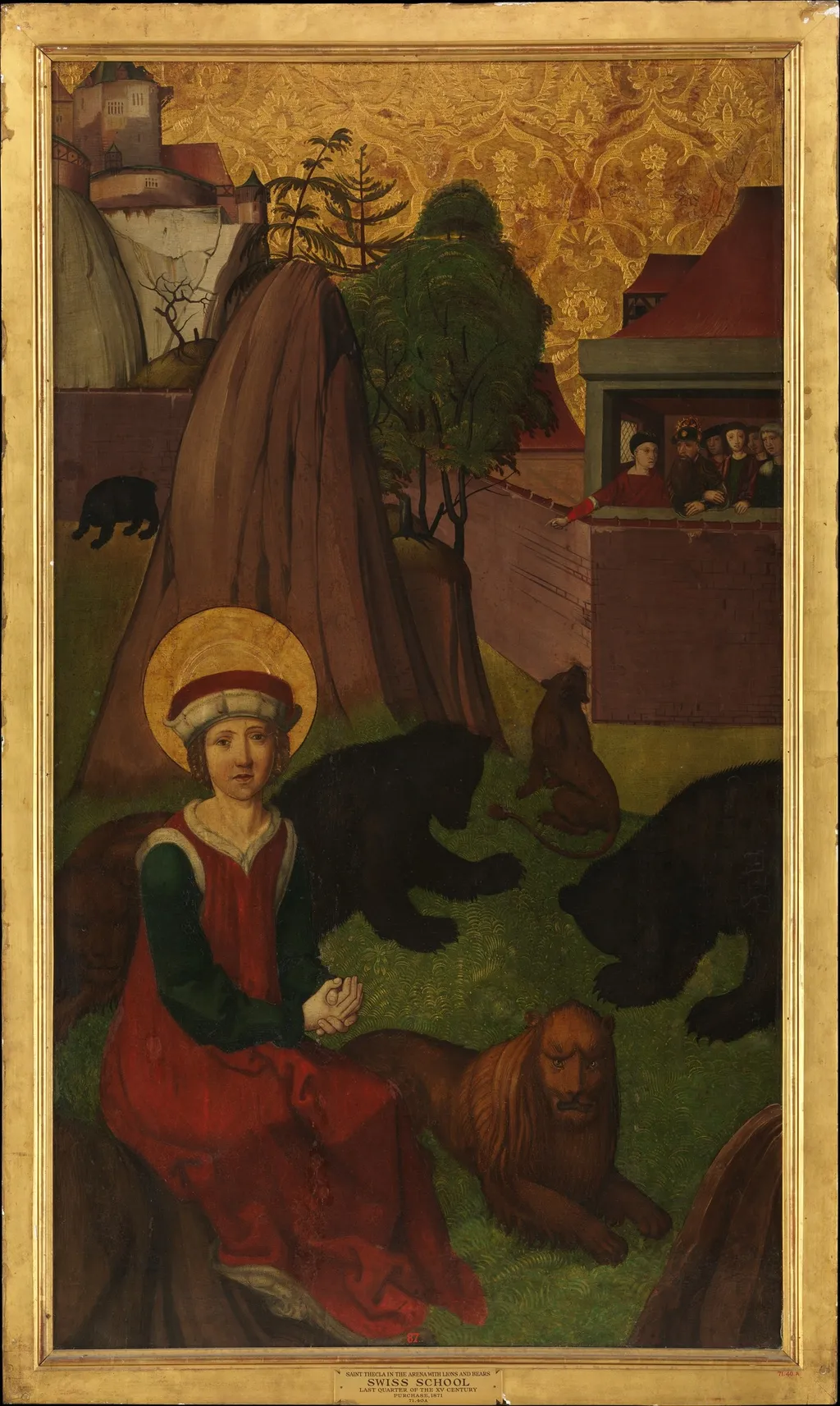
Saint Agapitus of Praeneste in the Arena; (interior) The Beheading of Saint Agapitus of Praeneste is an unspecified painting. It dates from 1500 and is held in the collection of the Metropolitan Museum of Art. This painting, titled Saint Agapitus of Praeneste in the Arena, presents a serene scene centered on a haloed woman.
About this work
Subject & Meaning
Blodgett, underscore its status as a significant example of Swiss‑derived devotional art.
The work portrays the martyr Saint Agapitus of Praeneste at the moment of his beheading within a Roman arena, a scene that emphasizes his steadfast faith amid violent spectacle. The composition includes a bear and a lion, traditional attributes that allude to the wild beasts he endured before execution, reinforcing the narrative of Christian triumph over pagan cruelty. Executed in 1500, the painting functions as a devotional image within the religious genre, reflecting Counter‑Reformation interests in vivid hagiographic storytelling.
Its formal qualities, measuring 137.8 × 77.5 cm and housed in the Metropolitan Museum of Art, formerly owned by William T. Blodgett, underscore its status as a significant example of Swiss‑derived devotional art.
Legacy
Dated to 1500, the painting Saint Agapitus of Praeneste in the Arena; (interior) The Beheading of Saint Agapitus of Praeneste is classified as a religious work by a Swiss artist. Its inclusion in the Metropolitan Museum of Art’s collection, documented by the museum’s provenance records, underscores its recognized significance within early sixteenth‑century religious art. The work’s iconography, featuring a saint, bear and lion, has been cited in scholarly catalogues, contributing to ongoing study of Swiss painting and hagiographic subjects.
Ownership by William T. Blodgett and its display at the Met have reinforced the painting’s reputation as an important example of the period’s devotional imagery.
Overview
This painting, titled Saint Agapitus of Praeneste in the Arena, presents a serene scene centered on a haloed woman. Dressed in a red robe, she sits on a grassy slope, holding a leafy branch while a tranquil lion rests at her feet. Although the title refers to the martyrdom of Saint Agapitus, the foreground depicts a moment of calm.
A crowd observes from a distant building, hinting at the arena setting mentioned in the work's full title.
Technique & Style
The artist employs strong contrasts of light and shadow, a technique known as chiaroscuro, to create dramatic effect and model the forms within the composition. This interplay of illumination and darkness enhances the visual depth and draws attention to the central figure. The careful rendering of textures, from the woman's drapery to the lion's fur and the surrounding foliage, contributes to the painting's overall realism and visual impact.
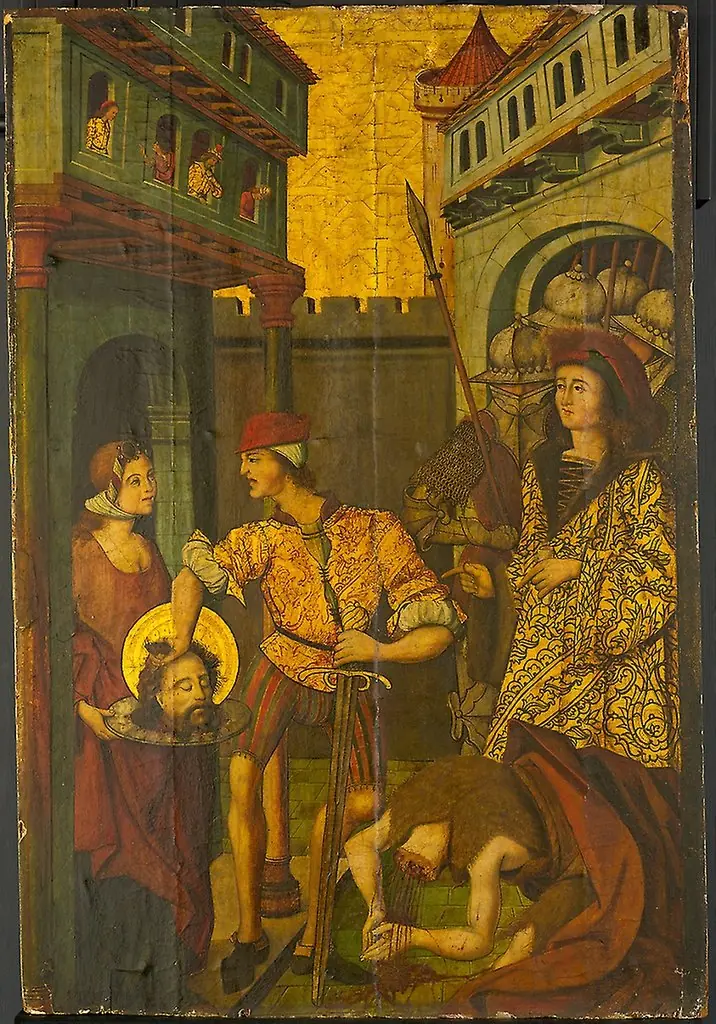
Artist & collection

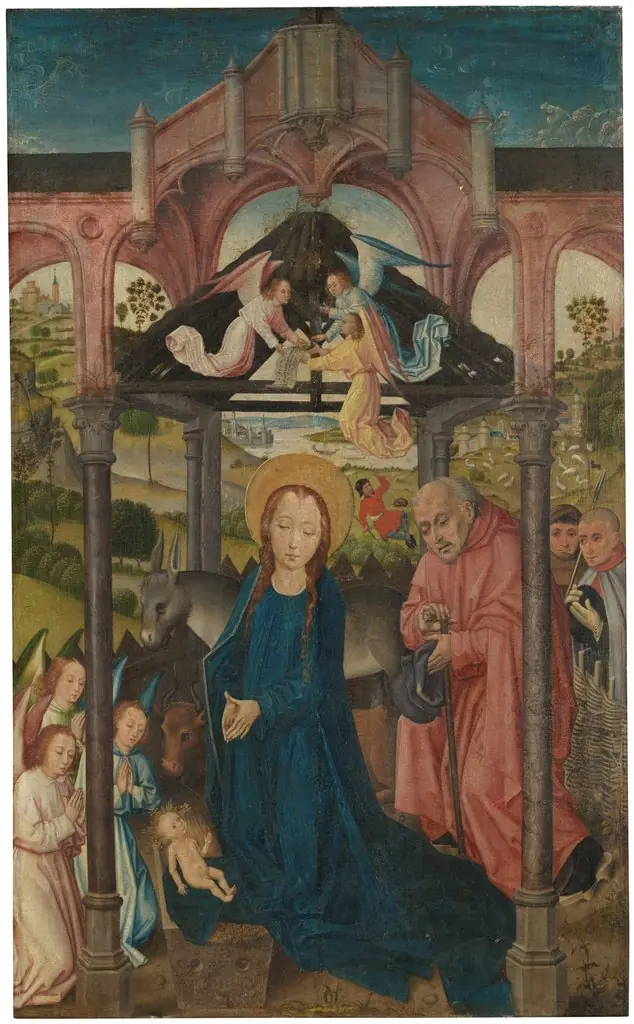 The Nativity
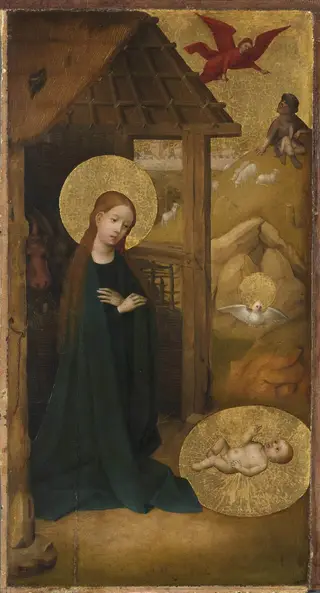 Nativiti (altar piece, with the Cucifixion op Saint Peter and a martyr as outer parts)
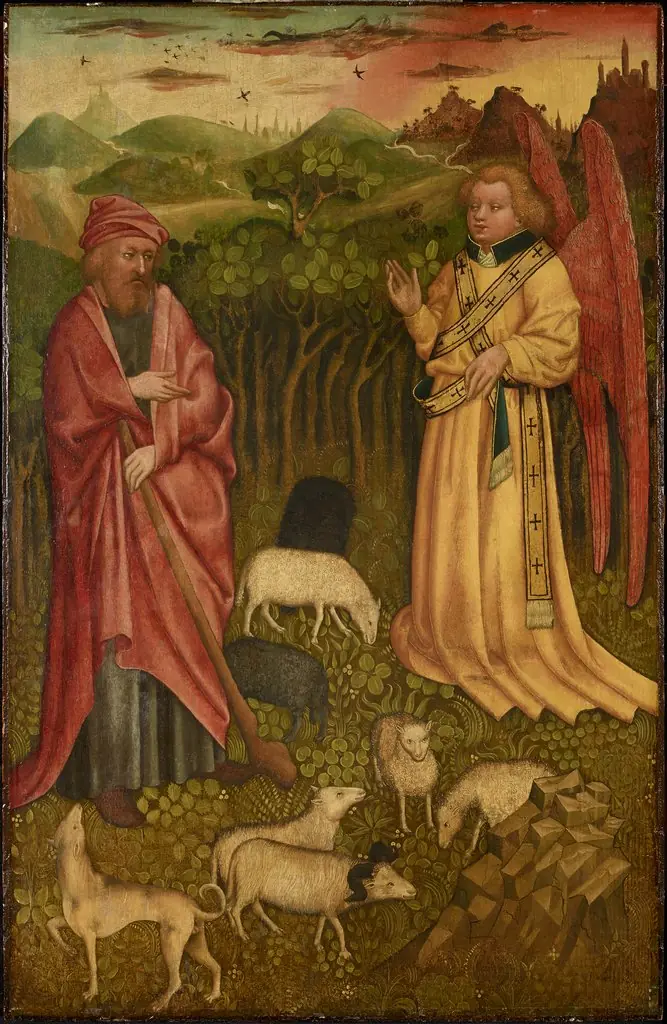 Botschaft des Engels an Joachim
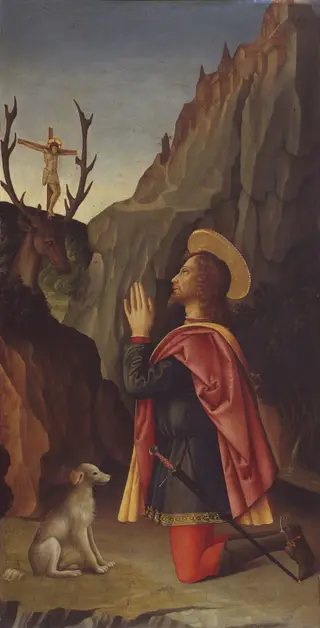 St. Eustace
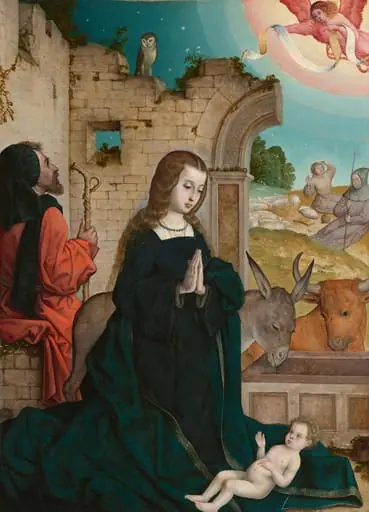 The Nativity
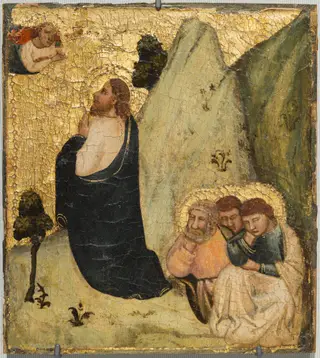 The Agony in the Garden
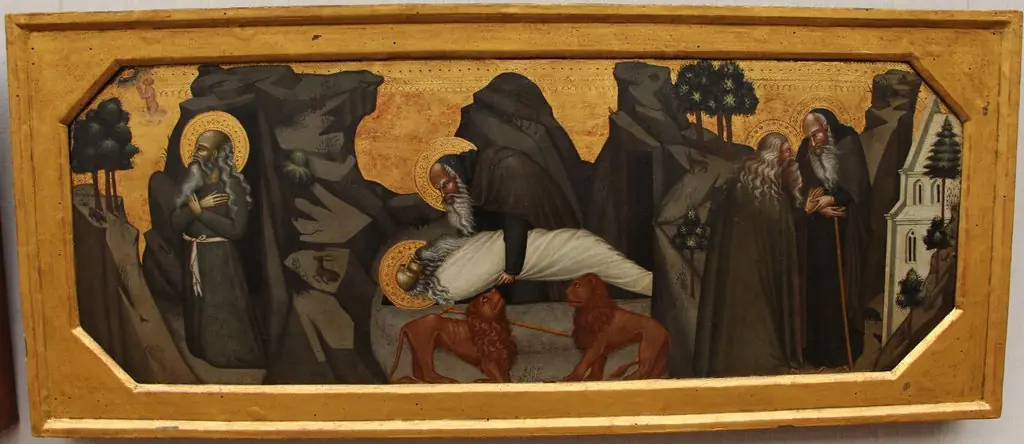 Scenes from the Life of Sacred Hermits
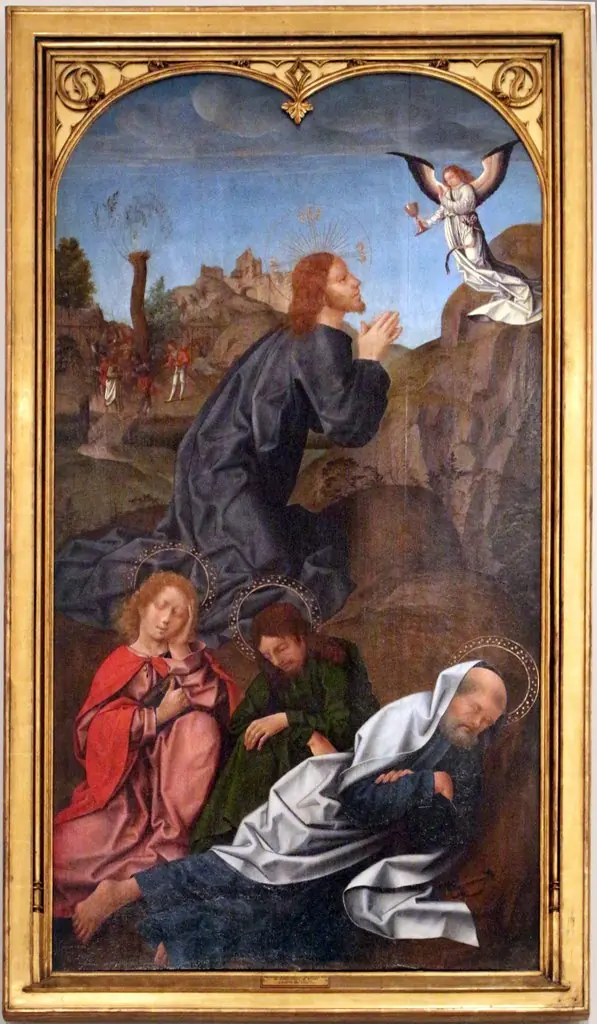 Cristo no Horto
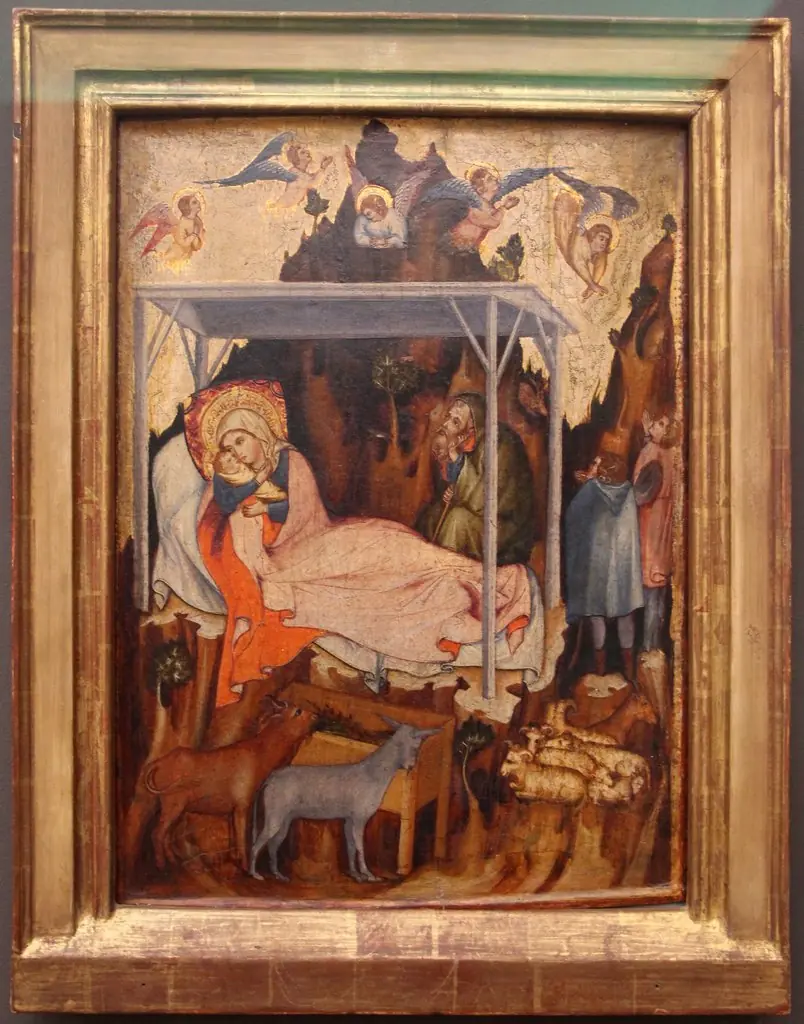 The birth of Christ
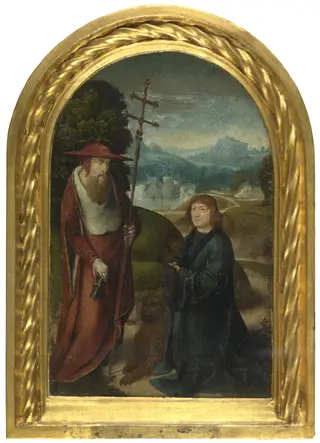 Saint Jerome and Donor
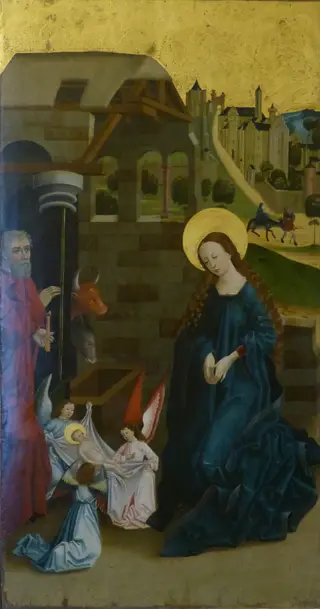 Adoration (The Nativity)
- The Beheading of Saint John the Baptist