Artwork
Saint Margaret
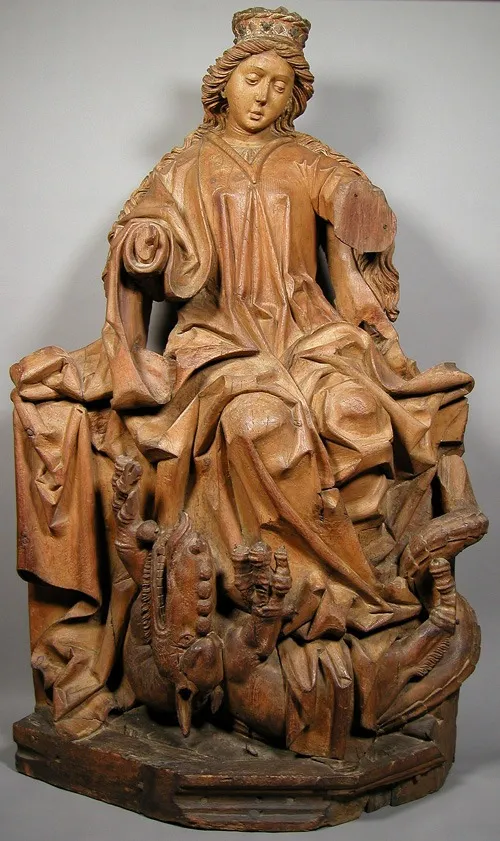
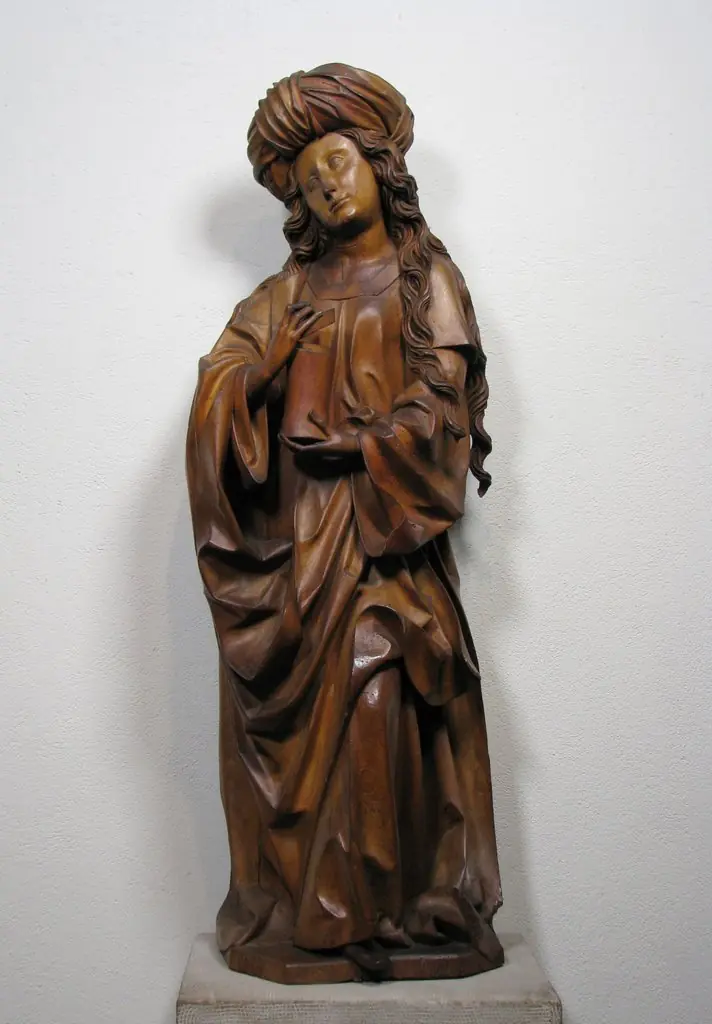
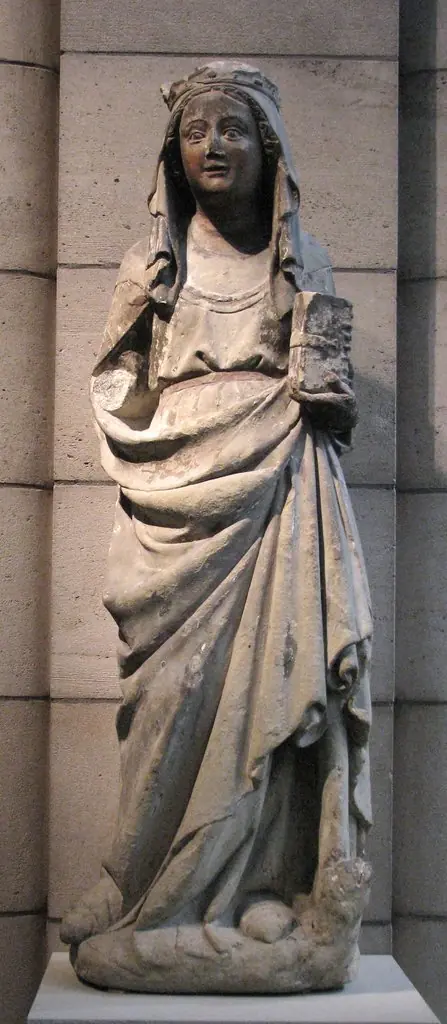
Saint Margaret is an unspecified painting. It dates from 1470 and is held in the collection of the Metropolitan Museum of Art. This carved representation depicts a crowned female figure seated upon a rugged, rocky throne.
About this work
Subject & Meaning
This religious painting, created around 1470 by the Workshop of Michael Pacher, portrays Margaret the Virgin as its central figure. The work depicts a woman, adhering to traditional iconography associated with the saint. As a piece of religious art, it serves to represent the veneration of Margaret the Virgin within the Christian tradition.
History & Provenance
The work depicts Margaret the Virgin and is classified as a painting within the genre of religious art.
Saint Margaret is a religious painting dated to 1470 and attributed to the workshop of Michael Pacher. The work depicts Margaret the Virgin and is classified as a painting within the genre of religious art. It is held in the collection of the Metropolitan Museum of Art, where it remains located.
No further details regarding its commission, earlier ownership, or chain of custody prior to its acquisition by the museum are documented in the available sources.
Legacy
The painting Saint Margaret, created circa 1470 by the Workshop of Michael Pacher, entered the collection of the Metropolitan Museum of Art, where its display has sustained scholarly interest in late fifteenth‑century devotional imagery. As part of the museum’s holdings, the work contributes to the ongoing appreciation of Gothic religious art and the cult of Saint Margaret. The work’s presence in a major institutional collection has ensured its continued relevance in discussions of Central European devotional painting, shaping both public perception and academic research.
Overview
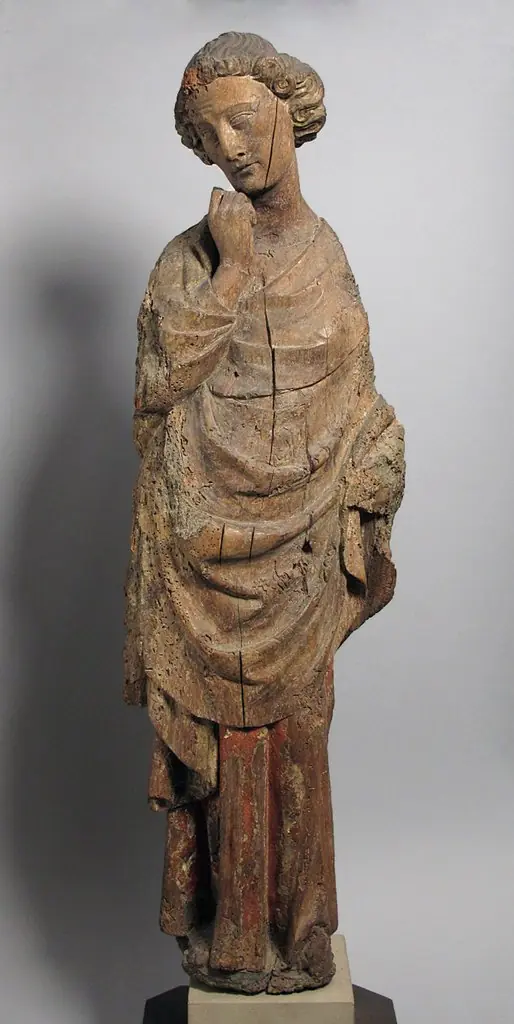
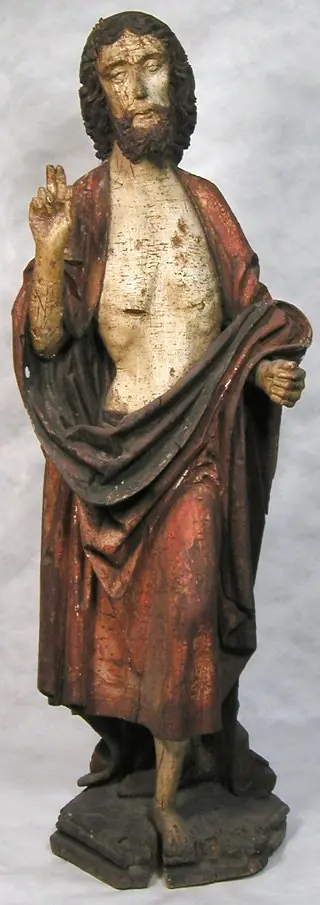
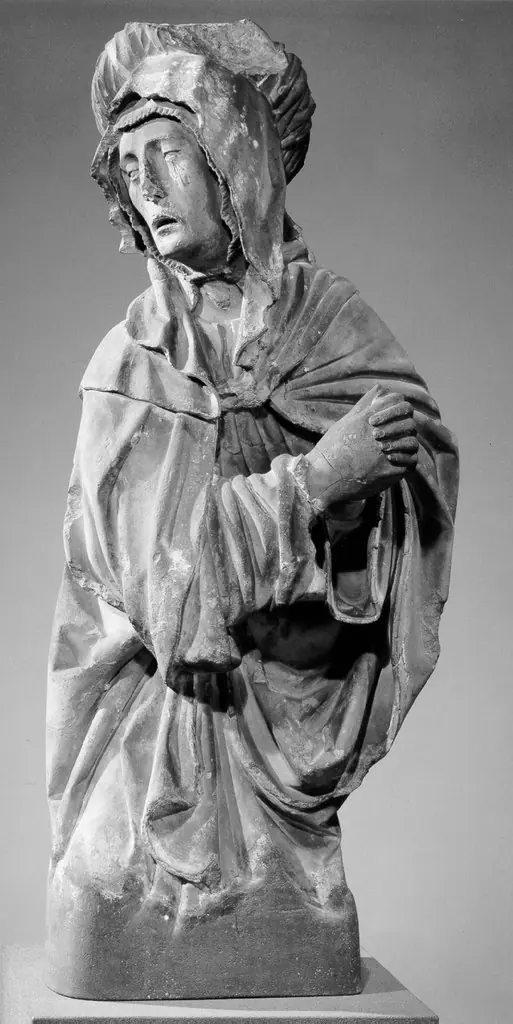
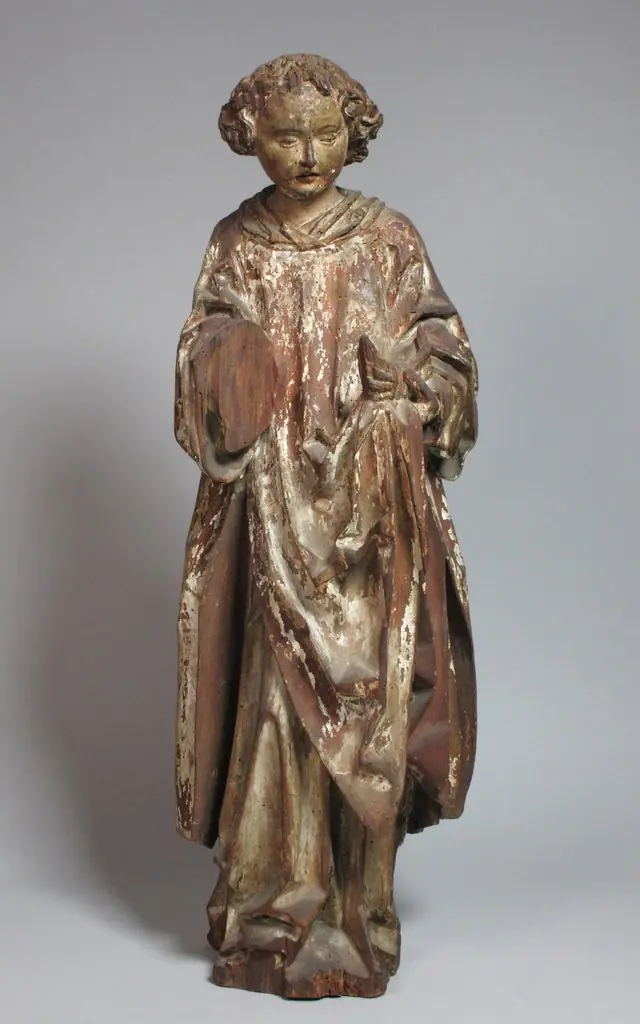
This carved representation depicts a crowned female figure seated upon a rugged, rocky throne. She holds a book in one hand, while a dragon coils around her lower body, its form beneath her foot. The artwork likely served a didactic or devotional purpose, intended to inspire religious faith or convey moral instruction to its viewers.
Technique & Style
The sculpture exhibits a robust carving style, characterized by its textured surface. Despite its apparent roughness, the artist skillfully rendered the drapery, creating deep folds that suggest volume and movement. The dragon's form is dynamically portrayed, conveying a sense of wild energy that contrasts with the saint's composed posture.
Artist & collection