Artwork
Saint Parasceva
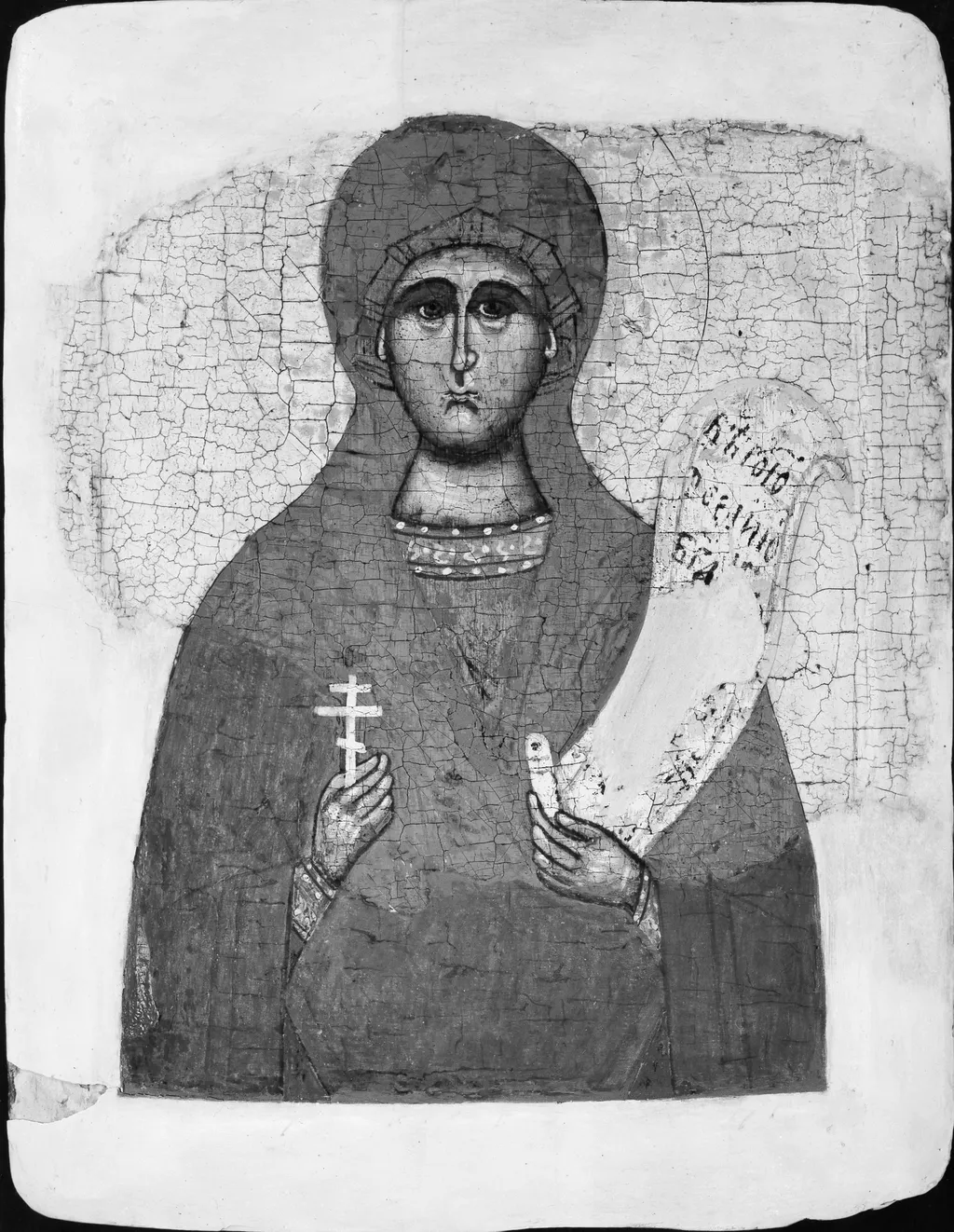
Saint Parasceva is a tempera painting. It dates from 1500 and is held in the collection of the Metropolitan Museum of Art.
About this work
Technique & Style
The work was executed in tempera on a wooden panel, measuring 23.
The work was executed in tempera on a wooden panel, measuring 23.5 cm in height by 18.7 cm in width. It represents a religious composition typical of early sixteenth-century Russian iconography, reflecting the stylistic conventions of anonymous workshops active in Muscovy at the turn of the century. The surface handling exhibits the flat, linear emphasis and symbolic color fields characteristic of the period, while the modest dimensions underscore its devotional function within a domestic or chapel setting.
History & Provenance
The panel painting Saint Parasceva was created circa 1500 by an anonymous Russian master using tempera on wood. It entered the collection of the Metropolitan Museum of Art, where it remains on view as part of their religious art holdings. The work measures 23.5 centimeters in height and 18.7 centimeters in width.
Overview
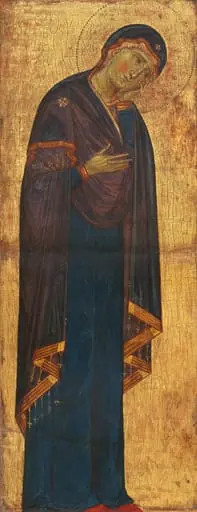
The work depicts a solemn figure, likely Saint Parasceva, rendered in tempera on a flat surface. The saint is shown in dark robes, a halo framing the head, and holding a small cross in one hand while a scroll rests in the other. The composition is simple, with a plain background and a muted palette that emphasizes the figure’s calm demeanor.
Subject & Meaning
The iconography, halo, cross, scroll, and modest gold necklace, identifies the subject as a Christian martyr, traditionally associated with charity and healing. The restrained expression and upright posture convey a sense of spiritual steadfastness, inviting contemplation of the saint’s virtues without narrative distraction.
Context
The painting belongs to a tradition of icon painting that prioritized symbolic clarity over naturalistic representation. Dark garments and gold accents were conventional means to denote sanctity, while the plain background focuses attention on the holy figure, a practice prevalent in Byzantine and post‑Byzantine art.
Legacy
As an example of tempera technique and medieval iconography, the work offers insight into devotional practices and artistic conventions of its era. Its preservation, despite surface deterioration, provides scholars with material evidence of the methods and aesthetic priorities that shaped early Christian visual culture.
Artist & collection

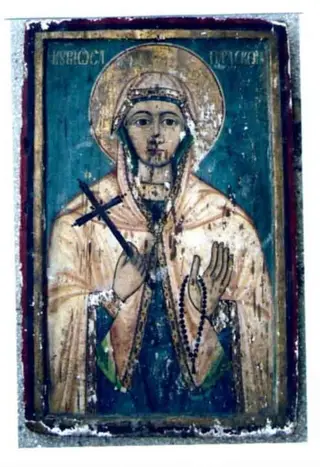 Sfânta Cuvioasă Paraschiva
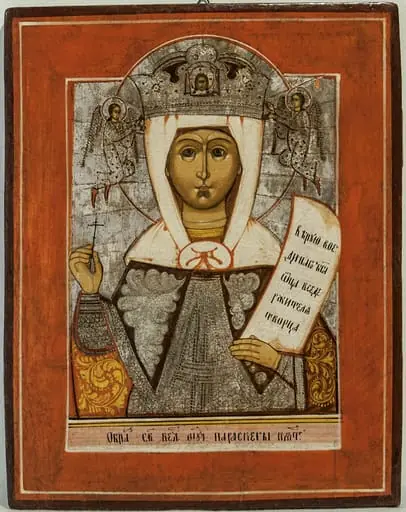 Sfânta Paraschiva este reprezentată frontal, 3/4, încoronată de doi îngeri. Nimbul trasat cu roșu depășește linia chenarului și partea superioară a coroanei. Coroana deschisă, tip bizantin, are pictat central chipul lui Iisus nefăcut de mână de om(Sfântul Keramion). Sub coroană, un văl alb, închis pe piept, încadrează chipul feciorelnic al sfintei, fața rotundă, trăsăturile accentuate, maniera de redare specifică centrului Holui. Expresia gravă. Mantie decorată cu motive fitomorfe ample, foiță argintie incizată și volute aurii pictate pe fond orange. Tunica decorată cu motive geometrice incizate în foiță. De culoare deschisă, În mâna dreaptă, sfânta ține o cruce mică, rusească, în stânga un rotulus desfășurat cu inscripția scrisă în limba slavonă: Cred în unul Dumnezeu… alte inscripții: pe o bandă orizontală, îm partea de jos a icoanei: "Chipul Sf. Mucenițe Parascheva..", Cromatica specifică centrului, tonuri de pământ, roșu, brun roșcat, galben, brun negru, în combinație cu foița metalică argintie înnobilată cu vernis.
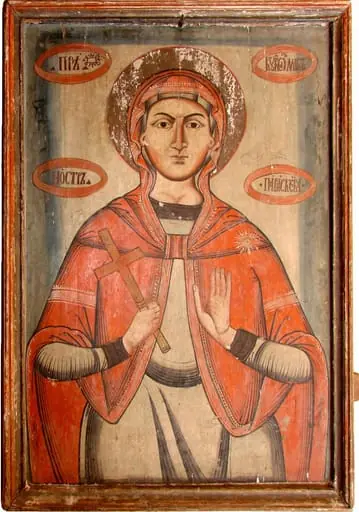 Sf. Paraschiva
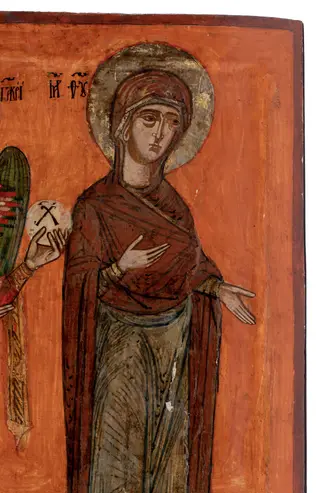 Sfântul Arhanghel Gavriil cu Maica Domnului
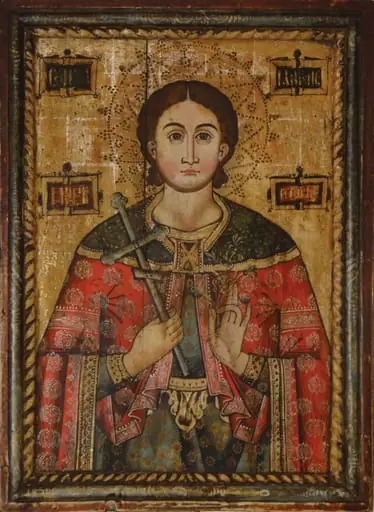 Sf. Gheorghe
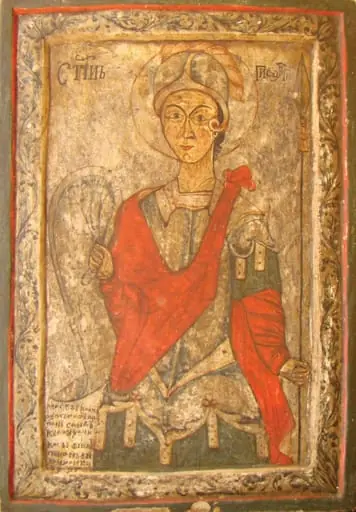 Sf. Gheorghe
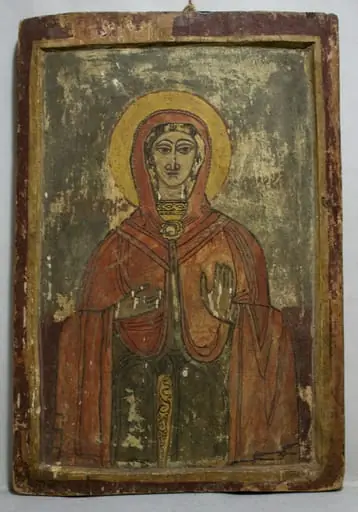 Sfânta Cuvioasă Paraschiva este redată 3/4, frontal, într.o manieră naivă, specific țărănească. Chip oval, trăsăturile feței accentuate, ochii conturați cu negru, privirea îndreptată lateral, scrâncenele mult arcuite, nările mari, gura mică. Mâna stângă o ține la piept, dreapta ridicată în semnde binecuvântare. Înveșmântată cu un maforion roșu pal, cu decorațiuni vagi, albe, stola verde cu galben, porțiune decorată cu motive fitomorfe.Nimb galben cu linia de contur albă. Fond grena în partea de jos, gri în cea superioară. Chenar dublu, galben + grena.
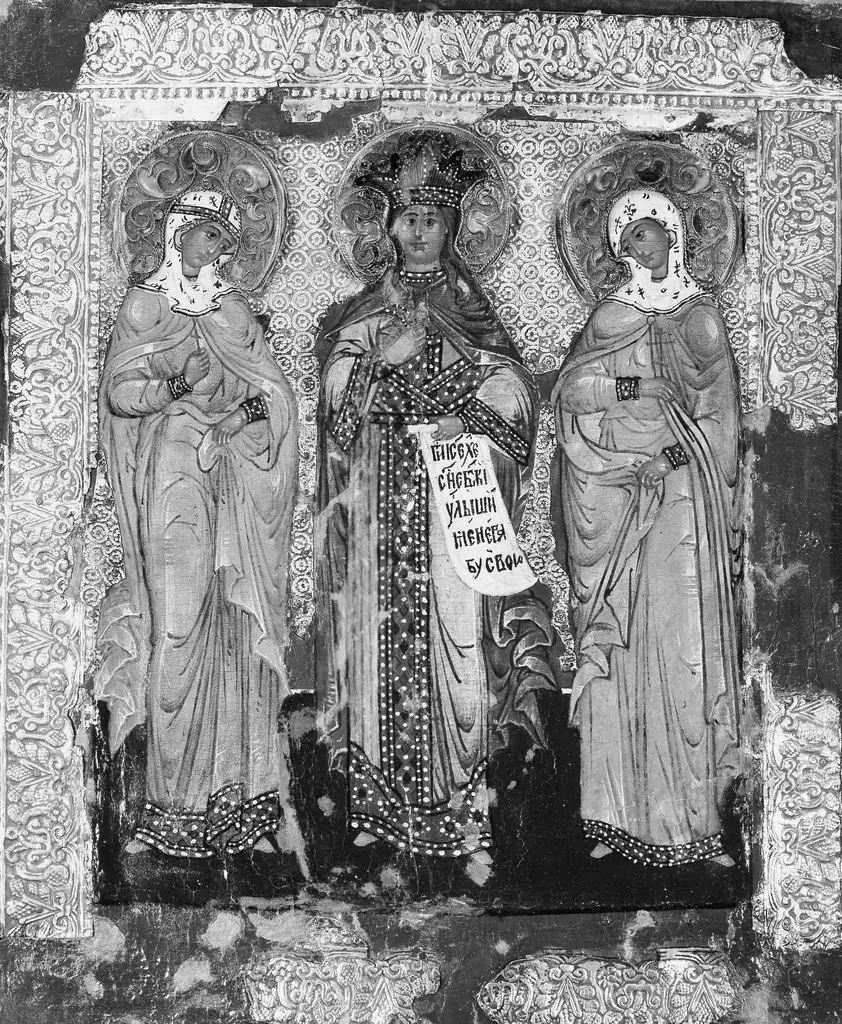 Three Female Saints
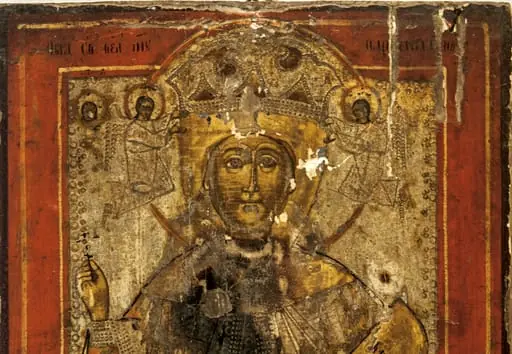 Sfânta Paraschiva este reprezentată frontal, 3/4, încoronată de doi arhangheli (după prescurtările de pe aureole) Nimbul trasat cu roșu depășește linia chenarului și partea superioară a coroanei. Ochii Sfintei, fin trasați, sunt îndreptați spre privitor, impunând un aer sever. Tehnica iluminării treptate cu elemente specifice: accentuarea zonei ochilor, tonurile de pământ ale umbrelor. Tunica decorată cu motive florale ample de culoare deschisă, incizate în stratul de grund. Mantie închisă în față, cu decor linar și bordură lată cu motive geometrice (4 rânduri de puncte și cerculețe incizate în grund). Pe cap, umeri lăsat pe spate, un maforion de culoare deschisă. În mâna dreaptă, Sfânta ține o cruce mică, rusească, în stânga un rotulus desfășurat cu inscripția scrisă în limba slavonă: Cred în unul Dumnezeu… alte inscripții: pe chenar de o parte și de alta a nimbului: Chipul Sf. Mucenițe Parascheva Vineri, în colțul stâng al icoanei IS HR și ѾOН pe nimbul cruciger al lui Iisus, reprezentat ca pe mahrama Veronicăi. Cromatica: Chenar roșu cu două linii galbene și mărginit cu brun; fond - foița metalică decorată prin incizare și ștanțare; Stratul pictural prezintă zgârieturi, arsură.În partea de sus un cui bătut necorespunzător. Pe spate, un bilet, cu ștampila Miliția oraș Deta, cu însemnarea: "Abandonate".
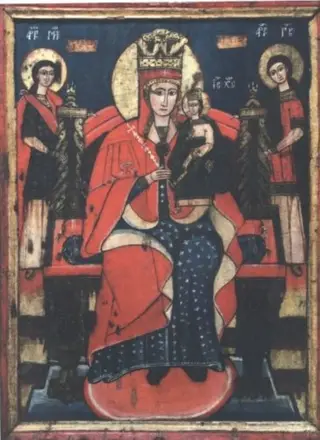 Maica Domnului împărătiță
 The Mourning Madonna
- Saint Paraskevi