Artwork
Self Portrait
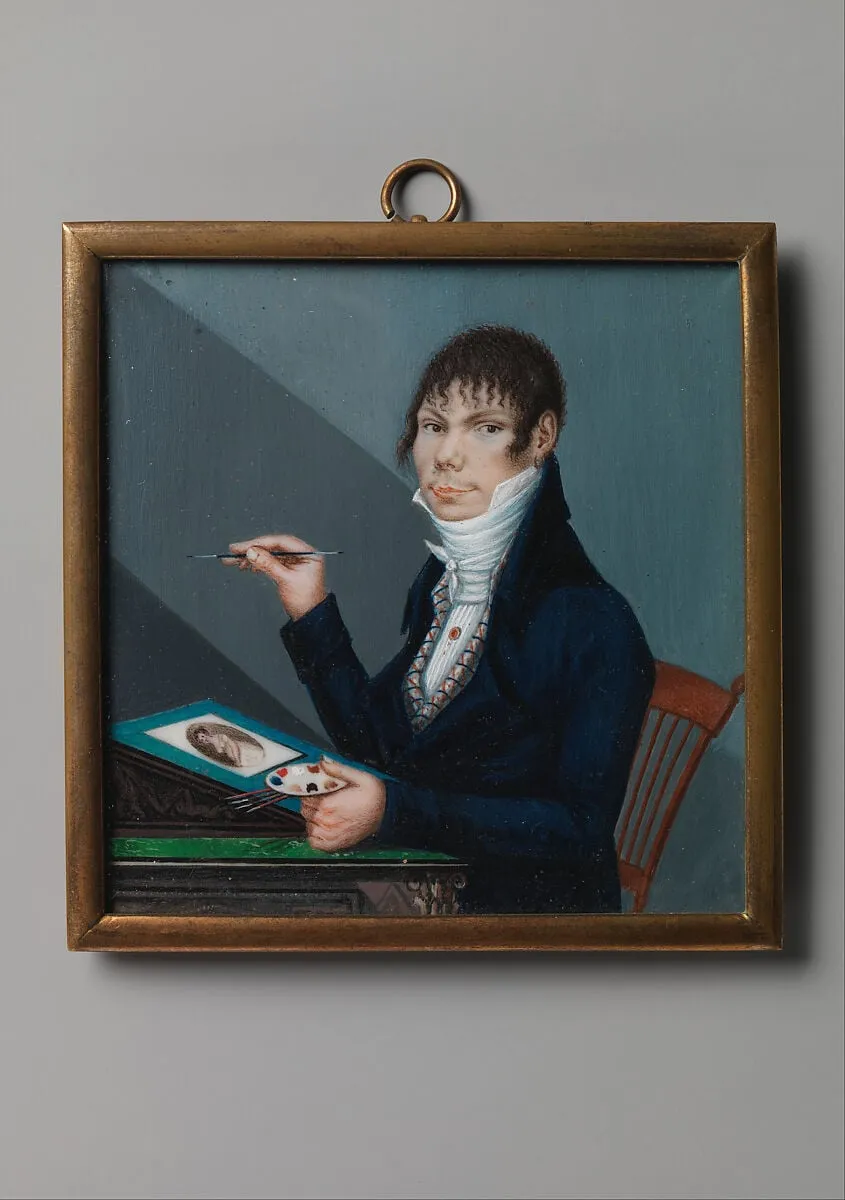
Self Portrait is a watercolor work on paper. It dates from 1802 and is held in the collection of the Metropolitan Museum of Art. This intimate self-portrait, rendered in watercolor on a small ivory support, presents the artist directly to the viewer.
About this work
Technique & Style
The work functions as a portrait depicting a male subject, classified within The American Wing.
Created in 1802, this self-portrait is executed in watercolor on an ivory support. The work functions as a portrait depicting a male subject, classified within The American Wing. The choice of ivory as a ground for watercolor suggests a delicate handling typical of miniature painting traditions of the period, though specific details regarding the artist's brushwork or the object's current physical condition are not documented in the available records.
History & Provenance
The work titled Self Portrait is a watercolor on ivory dating to 1802. Classified as a self-portrait depicting a man, it is held by the Metropolitan Museum of Art in New York, within the department known as The American Wing. Its creation is attributed to an unknown artist, with no record of a commission or ownership transfers before its accession by the museum.
Its placement in this department indicates that it is preserved within the museum's designated area for American art, alongside related works.
Overview
This intimate self-portrait, rendered in watercolor on a small ivory support, presents the artist directly to the viewer. Its diminutive size, comparable to a playing card, places it within the tradition of miniature painting. Such works were often created for personal contemplation or as portable mementos, reflecting a common practice in American art during its period of creation.
Subject & Meaning
The painting depicts the artist in a brown coat, holding a brush and a wooden palette, instruments of his craft. His expression is composed, and his eyes meet the viewer's gaze directly, establishing an immediate connection. This portrayal emphasizes his identity as a painter, presenting himself through the tools and demeanor of his profession.
Context
Miniatures like this self-portrait served a distinct social function, often intended for private ownership and intimate display. Their small scale made them suitable for personal adornment, frequently set into jewelry or carried within lockets. These portable artworks allowed individuals to keep images of loved ones, or in this case, the artist himself, close at hand as cherished personal possessions.
Artist & collection

- Portrait of a Woman
 Selbstbildnis des Malers Anton Meier vor der Staffelei
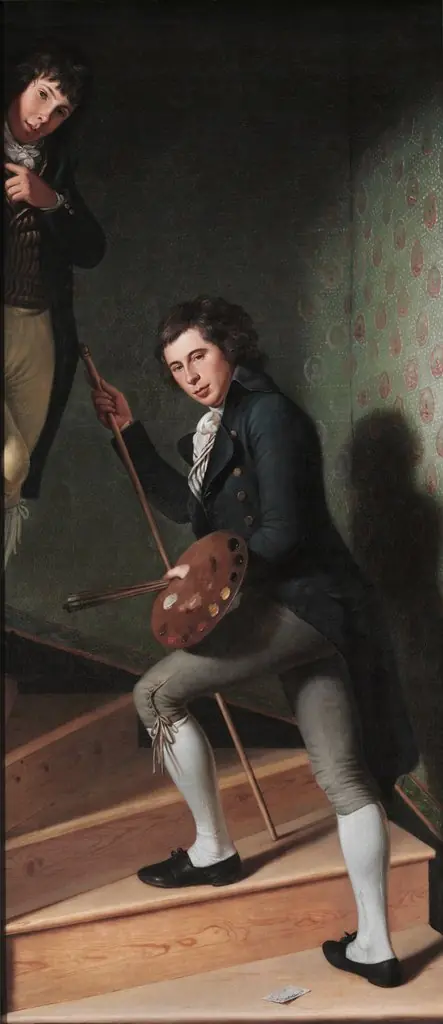 Staircase Group (Portrait of Raphaelle Peale and Titian Ramsay Peale I)
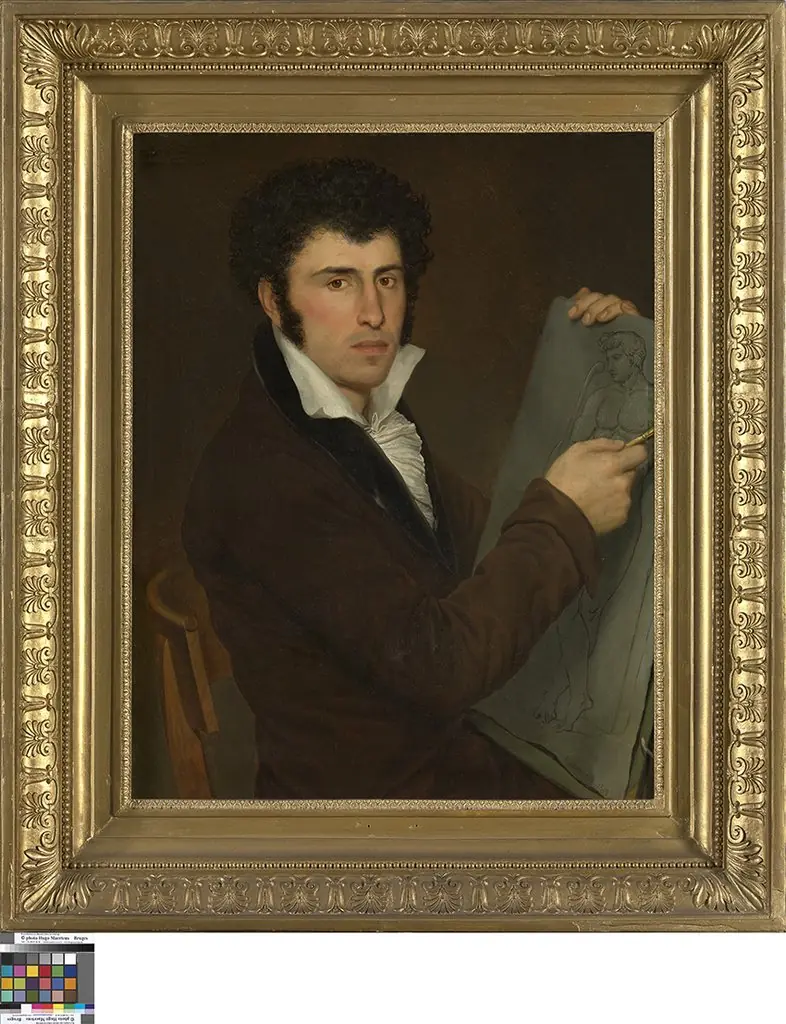 Portret van Filips Jacob Van Houtte
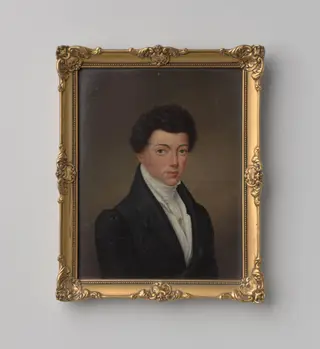 Untitled
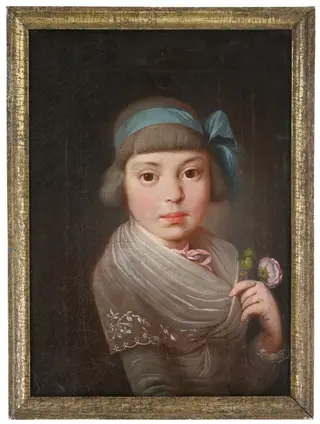 Bildnis eines kleinen Mädchens mit gepuderter Pagenfrisur
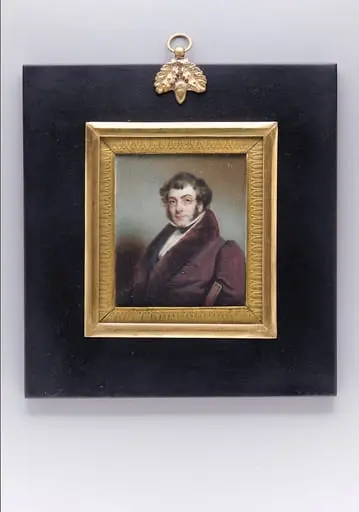 Frederick Gore King
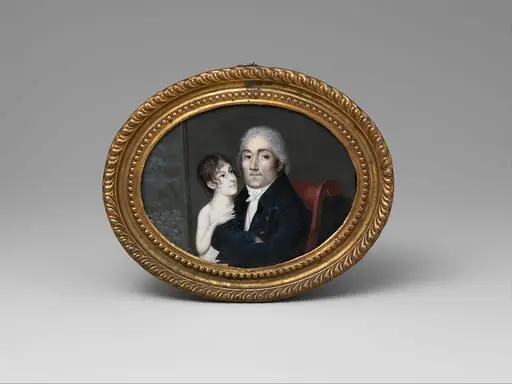 Portrait of a Gentleman and His Daughter
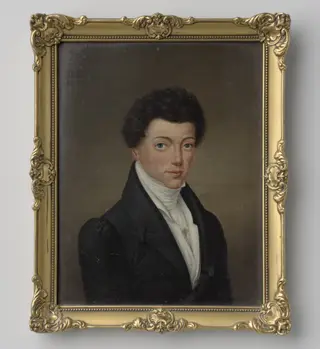 Hendrik Maurits Wolf de Friderici (1818-1841)
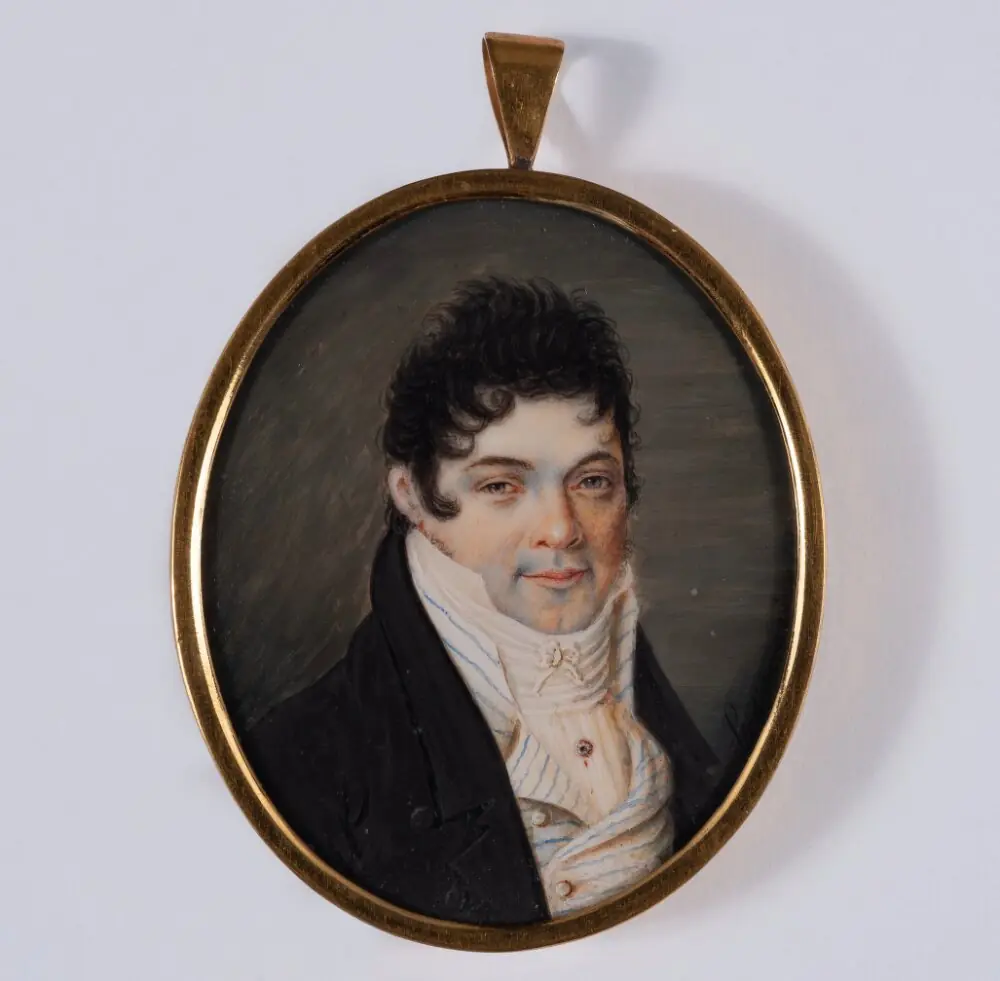 Porträtt av en man
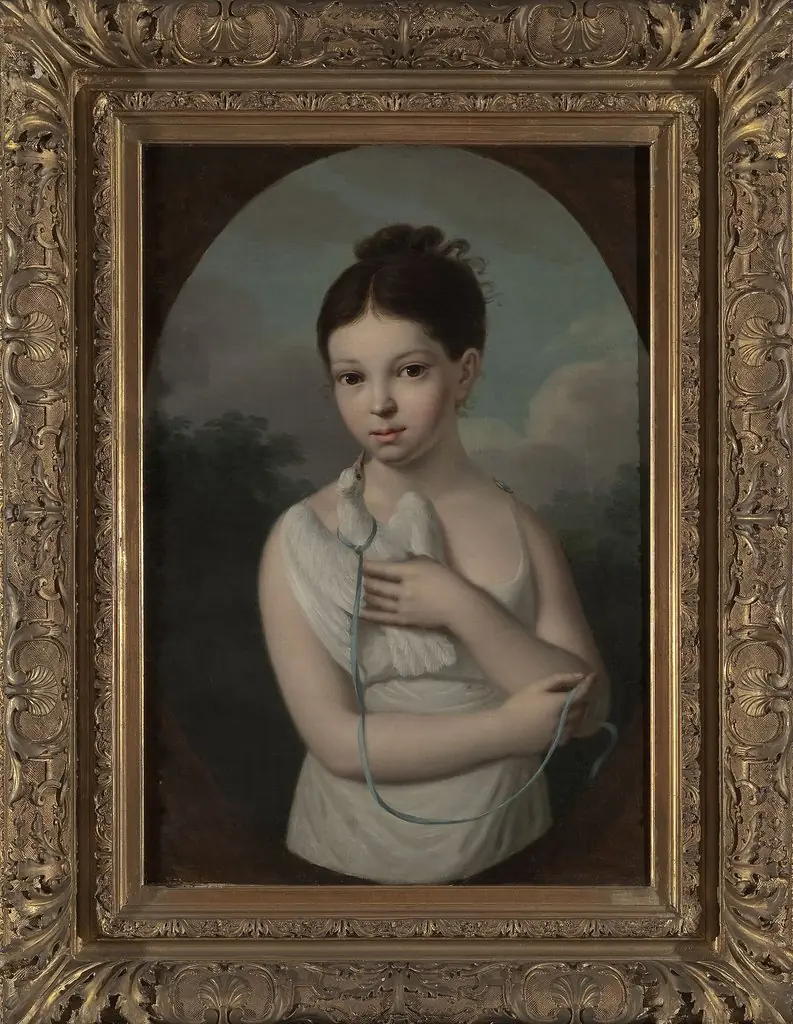 Portrait of Józia Walicka (1808–1880) with a dove
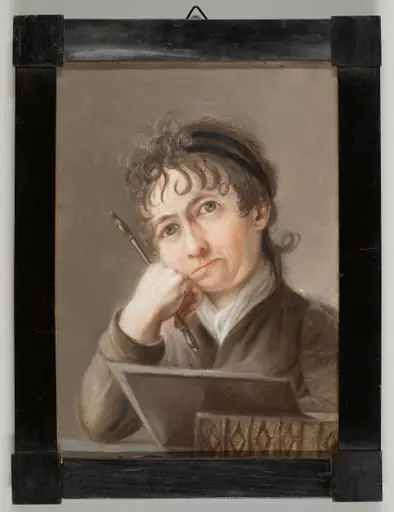 Henry, Susanne: Self-portrait