Artwork
出山釈迦像 (Shussan Shaka zō)|Shaka (Shakyamuni), The Historical Buddha, Descending from the Mountains
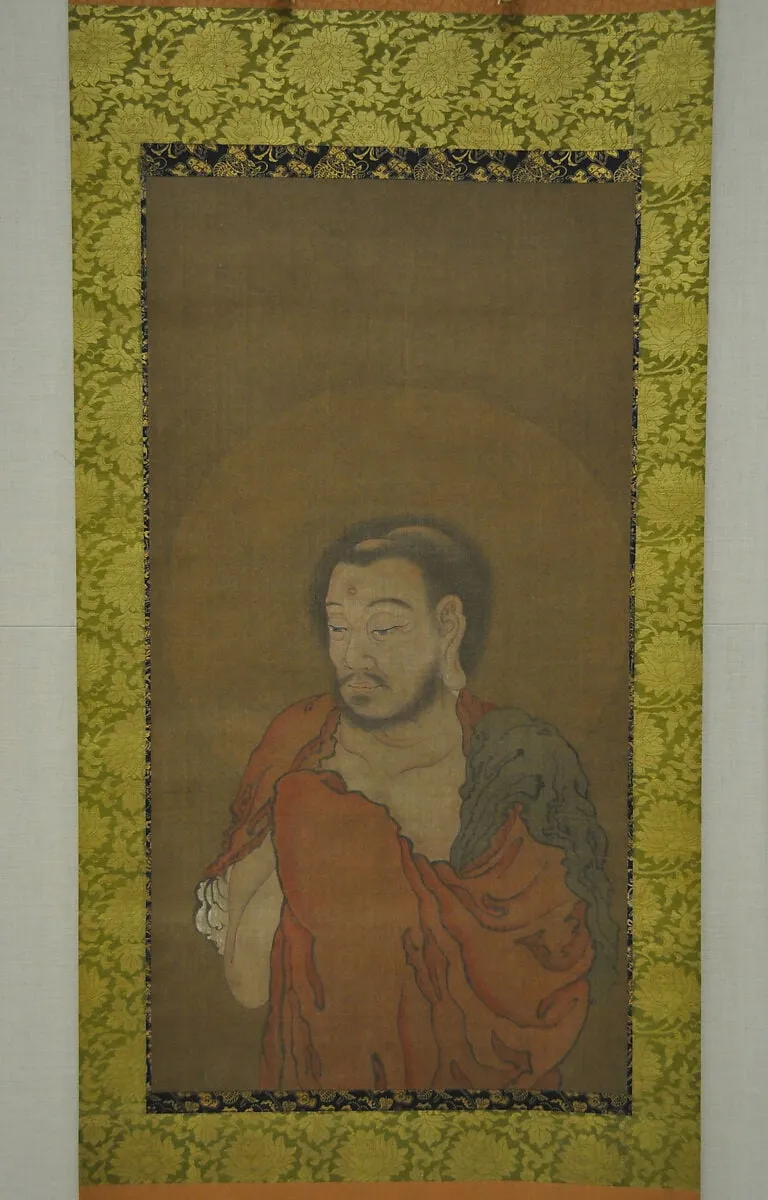
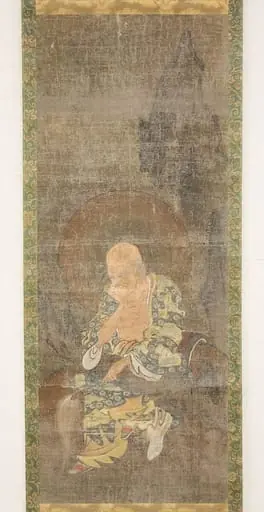
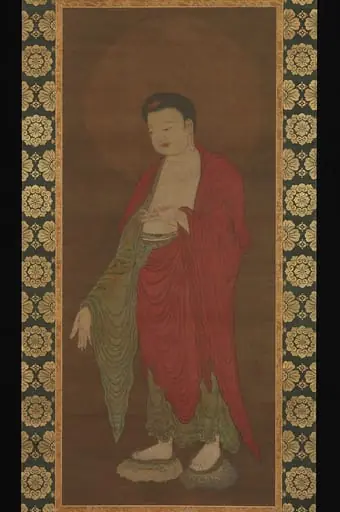
出山釈迦像 (Shussan Shaka zō)|Shaka (Shakyamuni), The Historical Buddha, Descending from the Mountains is an ink painting. It dates from 1449 and is held in the collection of the Metropolitan Museum of Art.
About this work
Subject & Meaning
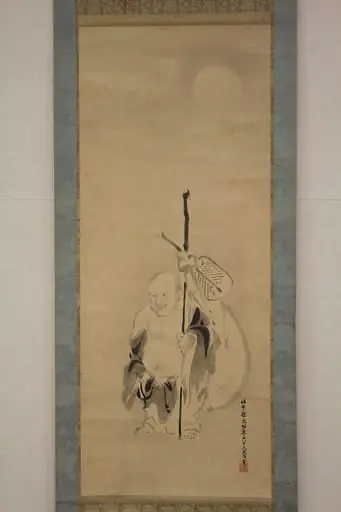
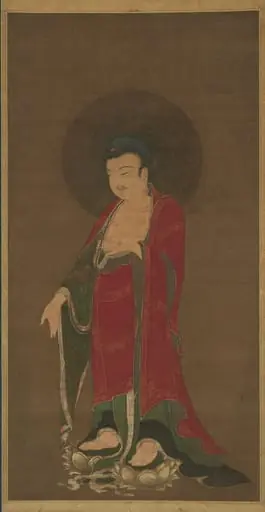
Created in 1449 by an anonymous Japanese artist, this hanging scroll depicts Shakyamuni (the Historical Buddha) as a solitary male figure.
Created in 1449 by an anonymous Japanese artist, this hanging scroll depicts Shakyamuni (the Historical Buddha) as a solitary male figure. The work's title, Shussan Shaka zō, identifies the specific narrative moment of the Buddha descending from the mountains, traditionally understood as his return to society following a period of ascetic meditation. As a piece of religious art executed in ink and color on silk, the image serves as a visual representation of this pivotal transition in the Buddha's spiritual journey.
The depiction focuses entirely on the figure of the Buddha, emphasizing his human form within a sacred context without additional narrative elements described in the available records.
History & Provenance
The Shussan Shaka zō is dated to 1449 on both the museum’s records and the Wikidata entry, which situates its creation within the Muromachi period in Japan. The painting is attributed to an anonymous artist, and its medium is specified as a hanging scroll composed of ink and color on silk. The work entered the collection of the Metropolitan Museum of Art, where it remains located, as confirmed by the museum’s documentation and the Wikidata entry.
Context
The work 出山釈迦像, dated 1449 and executed in ink and color on silk, exemplifies Muromachi‑period Buddhist painting in Japan. As an anonymous work held by the Metropolitan Museum of Art, it is classified as a religious scroll that depicts the historical Buddha Shakyamuni descending from the mountains. Scholars note its significance as a representative example of 15th‑century Japanese religious art, reflecting the devotional practices of the era.
Its presence in a major Western collection underscores its role in introducing Japanese Buddhist iconography to broader art historical discourse.
Overview
This hanging scroll, titled Shaka (Shakyamuni), The Historical Buddha, Descending from the Mountains, depicts the Buddha in a moment of transition. Rendered with ink and color on silk, the artwork presents a solitary figure, gaunt from ascetic practice, navigating a sparse, rocky landscape. His expression conveys a quiet resolve, or perhaps weariness, as he emerges from a period of intense spiritual discipline. The minimalist background emphasizes the figure's presence.
Technique & Style
The artist employs a restrained aesthetic, using ink and subtle color on silk to render the Buddha's emaciated form and simple robe. The rocky terrain is suggested with a few deliberate brushstrokes, while the surrounding space remains largely empty, devoid of detailed flora or sky. This minimalist approach directs the viewer's attention entirely to the central figure, highlighting his physical state and internal contemplation rather than his environment.
Artist & collection