Artwork
Stenciled Scenes of Lion and Gazelle (verso)
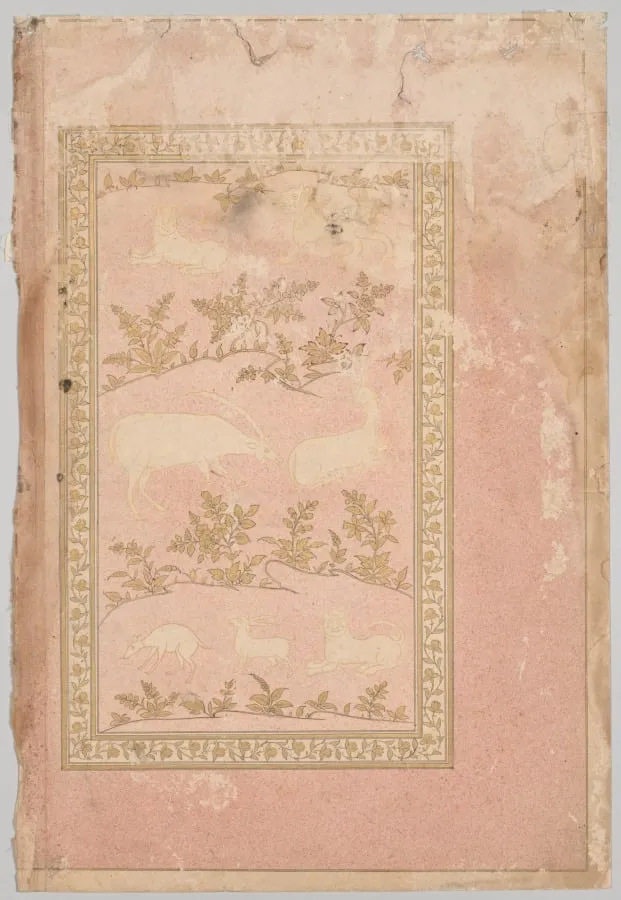
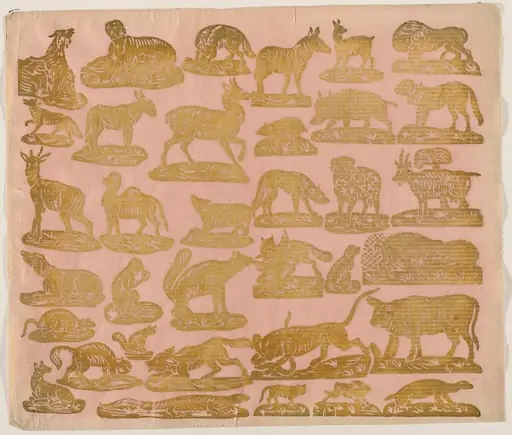
Stenciled Scenes of Lion and Gazelle (verso) is an unspecified painting by the Baroque artist Unknown. It dates from 1710 and is held in the collection of the Cleveland Museum of Art. This painted page features a stylized composition of a lion and a gazelle facing one another beneath a canopy of leaves.
- Accession no.
- 2013.336.b
- Credit line
- Gift in honor of Madeline Neves Clapp; Gift of Mrs. Henry White Cannon by exchange; Bequest of Louise T. Cooper; Leonard C. Hanna Jr. Fund; From the Catherine and Ralph Benkaim Collection
About this work
Overview
The background is a washed pale pink, and the figures appear to have been created using stencils, with manual brushwork adding subtle shading and detail.
This painted page features a stylized composition of a lion and a gazelle facing one another beneath a canopy of leaves. The image is contained within a rectangular frame bordered by a repeating vine-and-leaf motif. The background is a washed pale pink, and the figures appear to have been created using stencils, with manual brushwork adding subtle shading and detail. The overall effect is restrained yet deliberate, suggesting a methodical production process.
Subject & Meaning
The lion and gazelle, positioned in mutual gaze, evoke a quiet tension between predator and prey. Their placement within a naturalistic setting, leafy branches framing the scene, may symbolize balance or the cyclical nature of life. The absence of violence or motion suggests a symbolic rather than narrative intent, possibly reflecting themes of coexistence or harmony within a spiritual or allegorical framework.
Technique & Style
The animals were likely rendered using stencils to ensure consistent form, followed by hand-painted details to suggest volume and texture. Brushstrokes are minimal, limited to light shading along contours and subtle gradations in fur and muscle. The decorative border, composed of simple leaf and vine patterns, echoes the organic forms of the central image, reinforcing a unified, rhythmic aesthetic rooted in repetition and clarity.
History & Provenance
The work originates from a manuscript or codex, likely produced in a monastic or courtly workshop during the late medieval or early Renaissance period. Its preservation suggests it was valued as part of a devotional or literary volume. The stencil technique points to a tradition of efficient image replication, common in regions where manuscript production was standardized for religious or aristocratic patrons.
Context
While the Baroque era emphasized dynamism and emotional intensity, this image reflects an earlier aesthetic focused on symbolic clarity and formal order. Its use of stencils aligns with practices in illuminated manuscripts and textile design, where repetition and legibility were prioritized over naturalism. The composition’s stillness and symmetry contrast with later Western trends, situating it within a broader medieval visual culture.
Legacy
This piece exemplifies a pre-modern approach to animal representation, where form was simplified for symbolic resonance rather than anatomical accuracy. Its technique influenced later decorative arts, particularly in the use of stenciled motifs in textiles and wall paintings. Though not widely known, it remains a quiet testament to the precision and intentionality of pre-Renaissance artisanal practices.
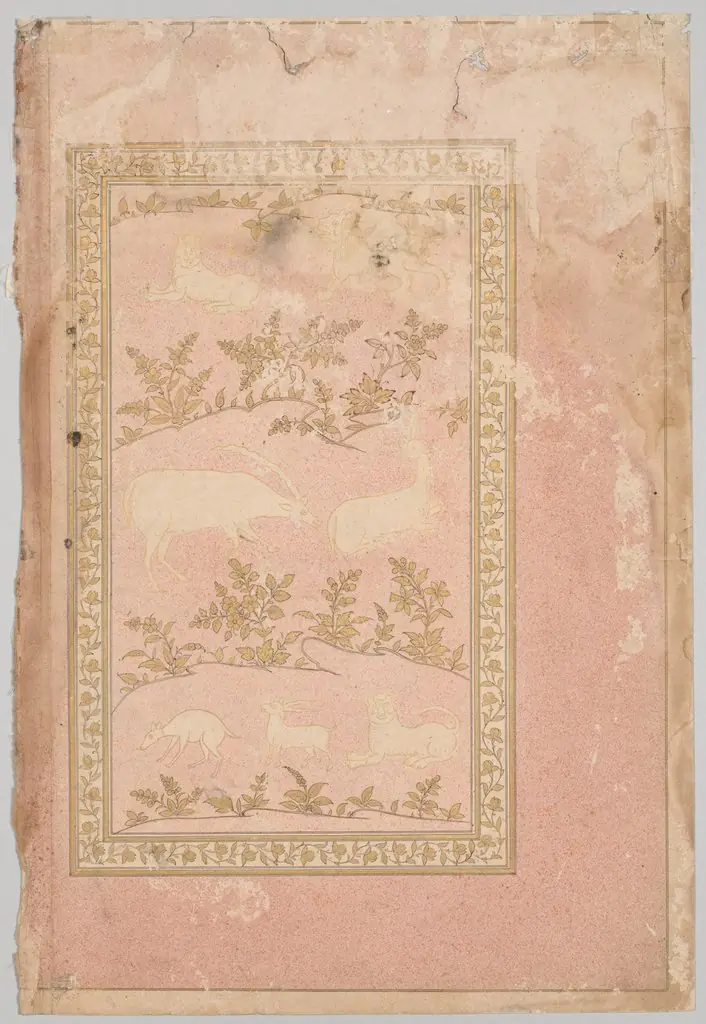
Artist & collection









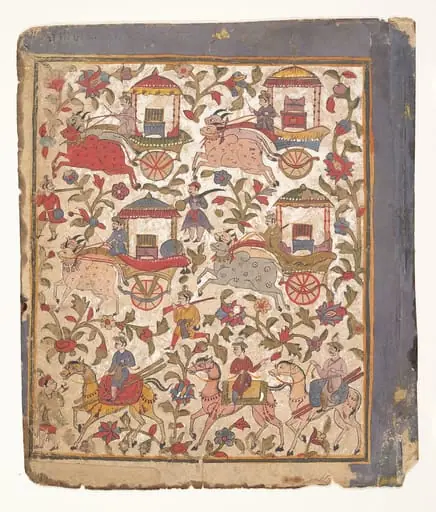 Untitled
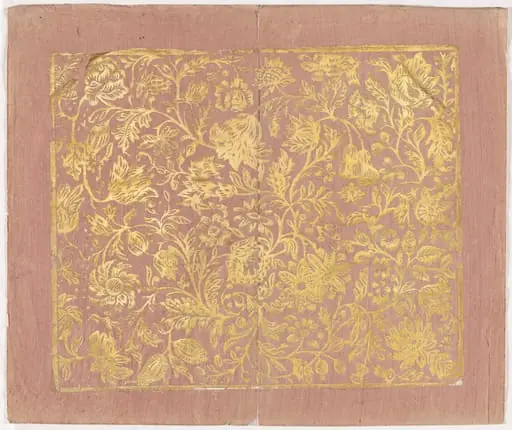 Endpaper with Mixed Floral Pattern
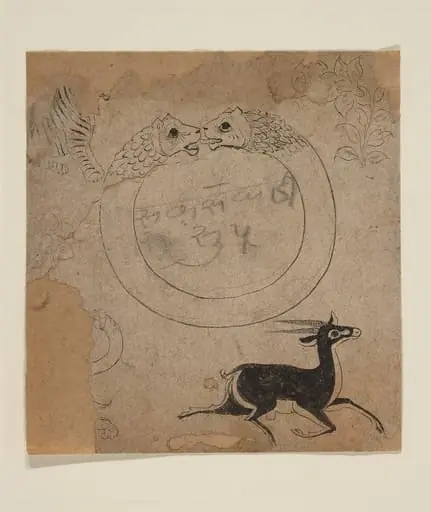 Untitled
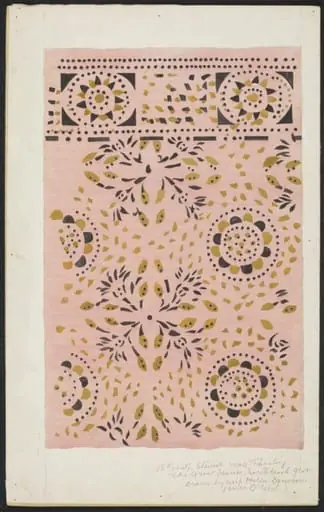 Copy of a 18th century mural painting in the Great House, Northleach, Gloucestershire
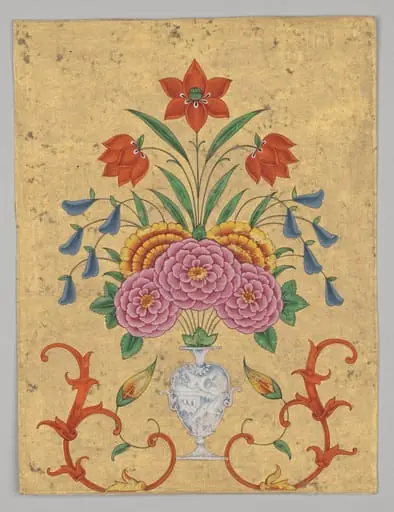 Vase with flower arrangement and scrollwork
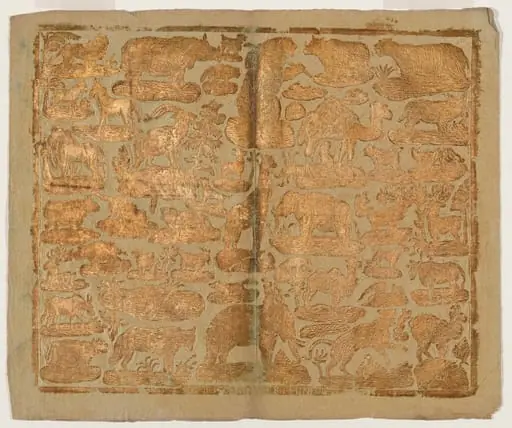 Endpaper with Animals
 Devagandhara Ragini: An Ascetic in Retreat, from the Ragamala Series
 Untitled
 작자미상 소나무 아래 사슴 조선|作者未詳 松下雙鹿圖 朝鮮|Deer amid Pine Trees
 Endpaper with Animals