Artwork
Sultan Abdullah Qutb Shah (1614-74) on Horseback
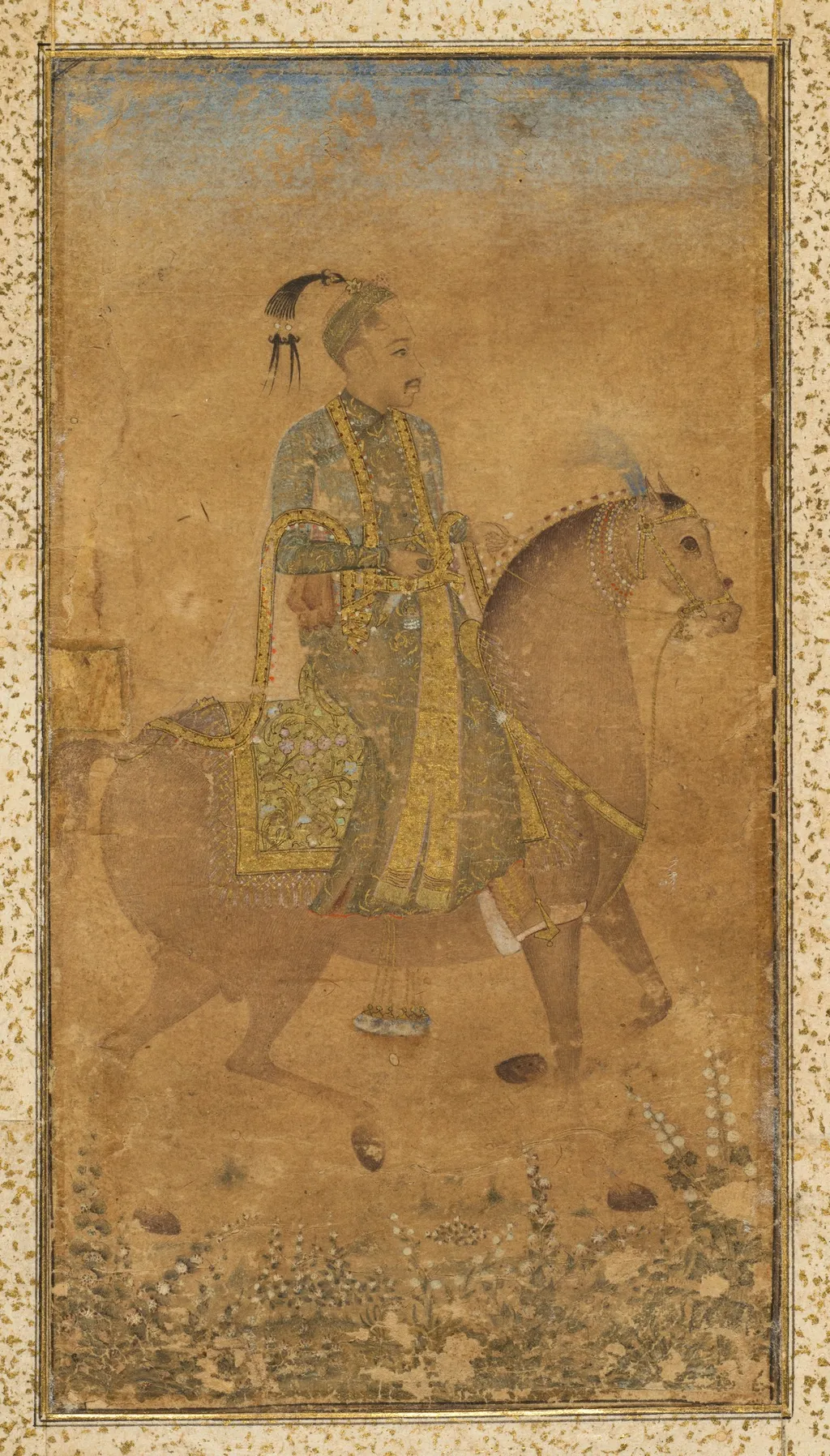
Sultan Abdullah Qutb Shah (1614-74) on Horseback is an unspecified painting. It dates from 1635 and is held in the collection of the Cleveland Museum of Art. This painting depicts Sultan Abdullah Qutb Shah (1614-74) mounted on a horse.
About this work
Subject & Meaning
The painting depicts Sultan Abdullah Qutb Shah (1614–1674) as the central figure mounted on a horse, an arrangement that aligns with traditions of equestrian portraiture in South Asian courtly art. The ruler's elevated position on horseback signals authority and martial prowess, common visual tropes used to assert sovereignty in seventeenth-century Deccani portraiture. The inclusion of the horse as a symbol of power underscores the sultan's role as a warrior-leader, a motif that reinforced both political legitimacy and dynastic prestige within the Qutb Shahi context.
The choice of an equestrian format for a royal portrait of this period typically conveyed themes of command and dominion, situating the ruler above the viewer and within a sphere of military and ceremonial leadership.
History & Provenance
Sultan Abdullah Qutb Shah (1614–74) on Horseback is dated to 1635 and classified as an equestrian portrait depicting the sultan on horseback.
Sultan Abdullah Qutb Shah (1614–74) on Horseback is dated to 1635 and classified as an equestrian portrait depicting the sultan on horseback. The artist is unknown. The work is part of the collection of the Cleveland Museum of Art, where it is recorded under accession number 2013.287.
Beyond its presence in the museum's holdings, no further ownership history or exhibition record is documented in the sources.
Overview
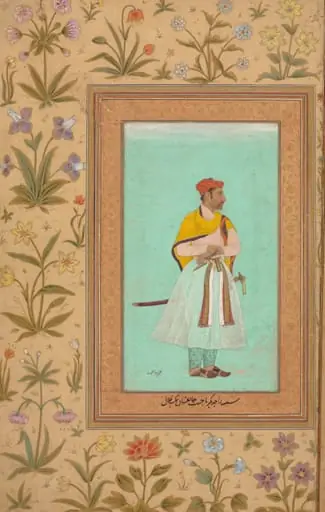
This painting depicts Sultan Abdullah Qutb Shah (1614-74) mounted on a horse. The ruler is dressed in an elaborate blue and gold ensemble, complete with a turban, and holds the horse's reins. His steed is richly caparisoned with a golden bridle and a decorative saddle blanket.
The horse is shown in a dynamic pose, with bent legs suggesting movement and its head turned slightly, set against a plain, light brown background.
Technique & Style
The artist employed a meticulous approach to detail, evident in the intricate patterns and embellishments adorning the Sultan's clothing and the horse's saddle. This careful rendering extends to the depiction of textures and colors, creating a rich visual experience. The precise execution highlights the artist's proficiency in capturing the nuances of fabric, metalwork, and animal form within the composition.
Artist & collection

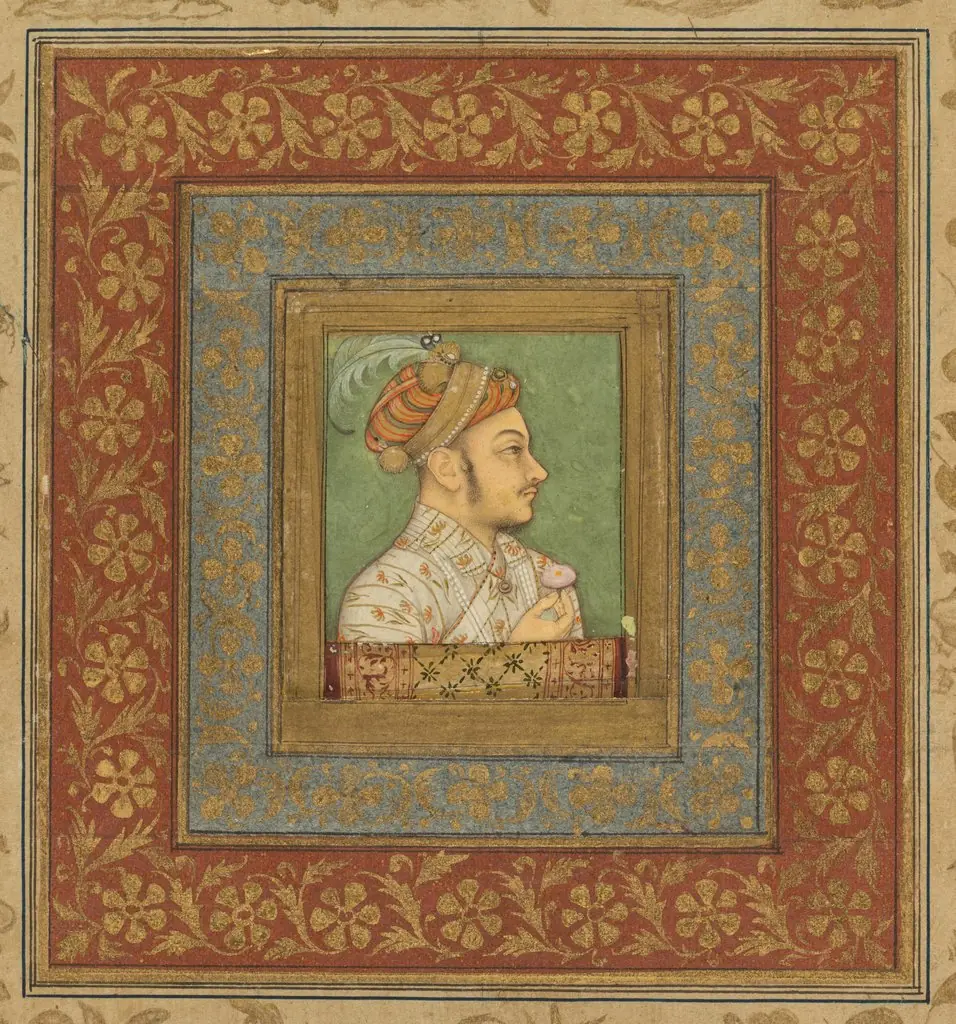 Portrait of Murad Bakhsh (1624–61)
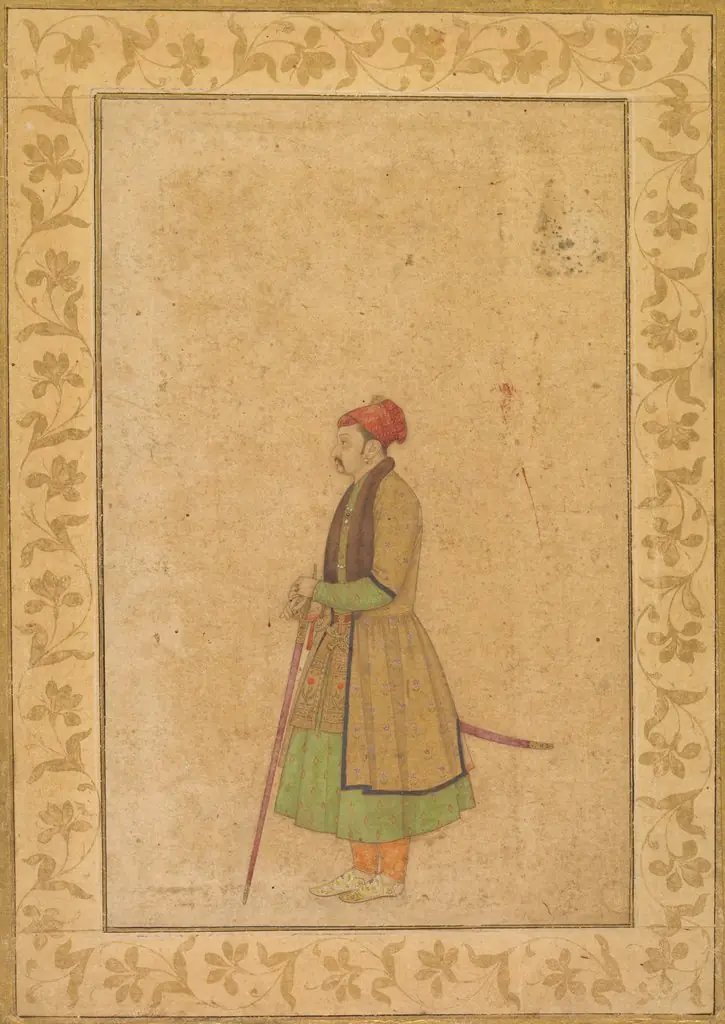 Portrait of Raja Ram Singh of Amber (r. 1667-1688) with a Deccan Sword (recto)
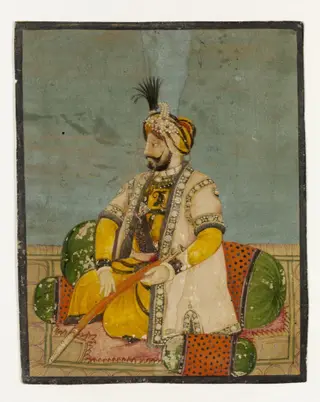 Raja Ranbir Singh
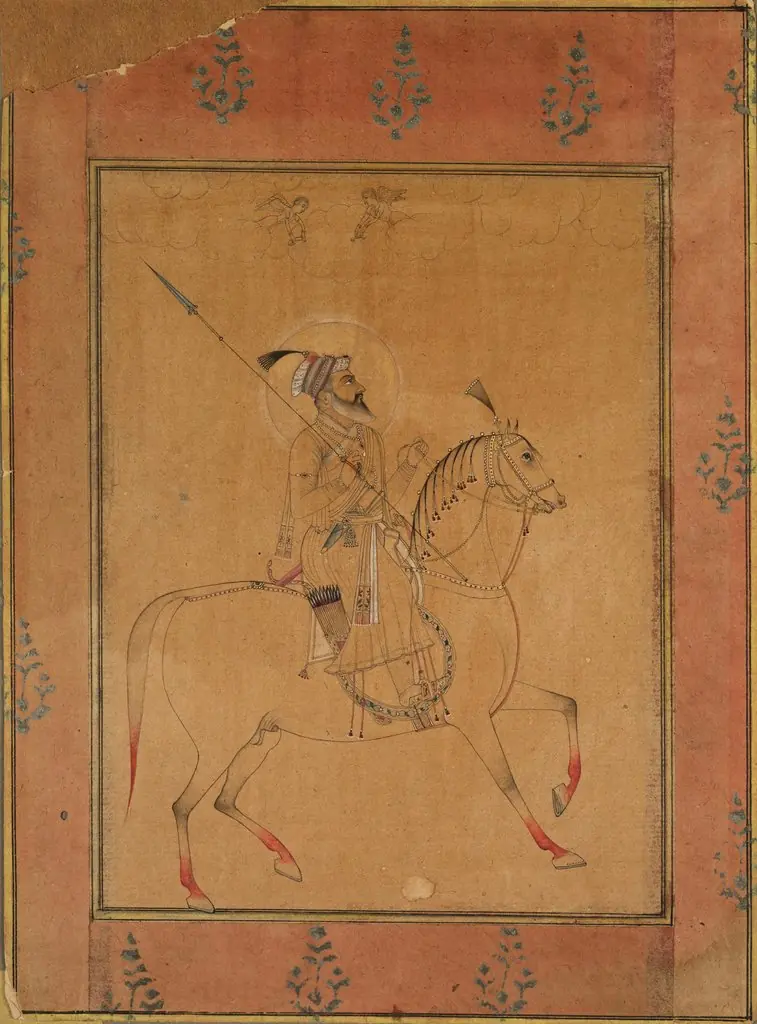 Emperor Shah Jahan
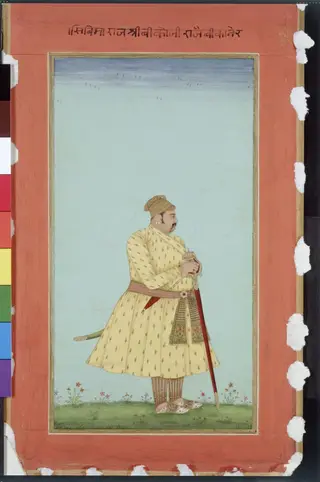 Rao Bikoji
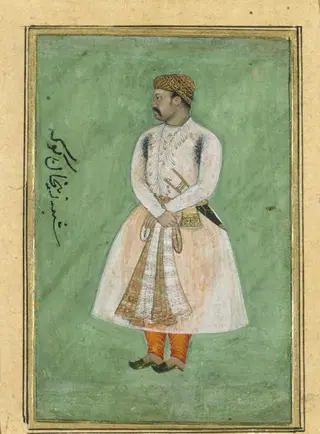 Zain Khan Koka
 Untitled
 Portrait of a Prince with a Ruby
 Ram Singh I
 Untitled
 Portrait of Raja Bikramajit
- Sultan Abdullah Qutb Shah (1614-74) on Horseback