Artwork
Emperor Shah Jahan
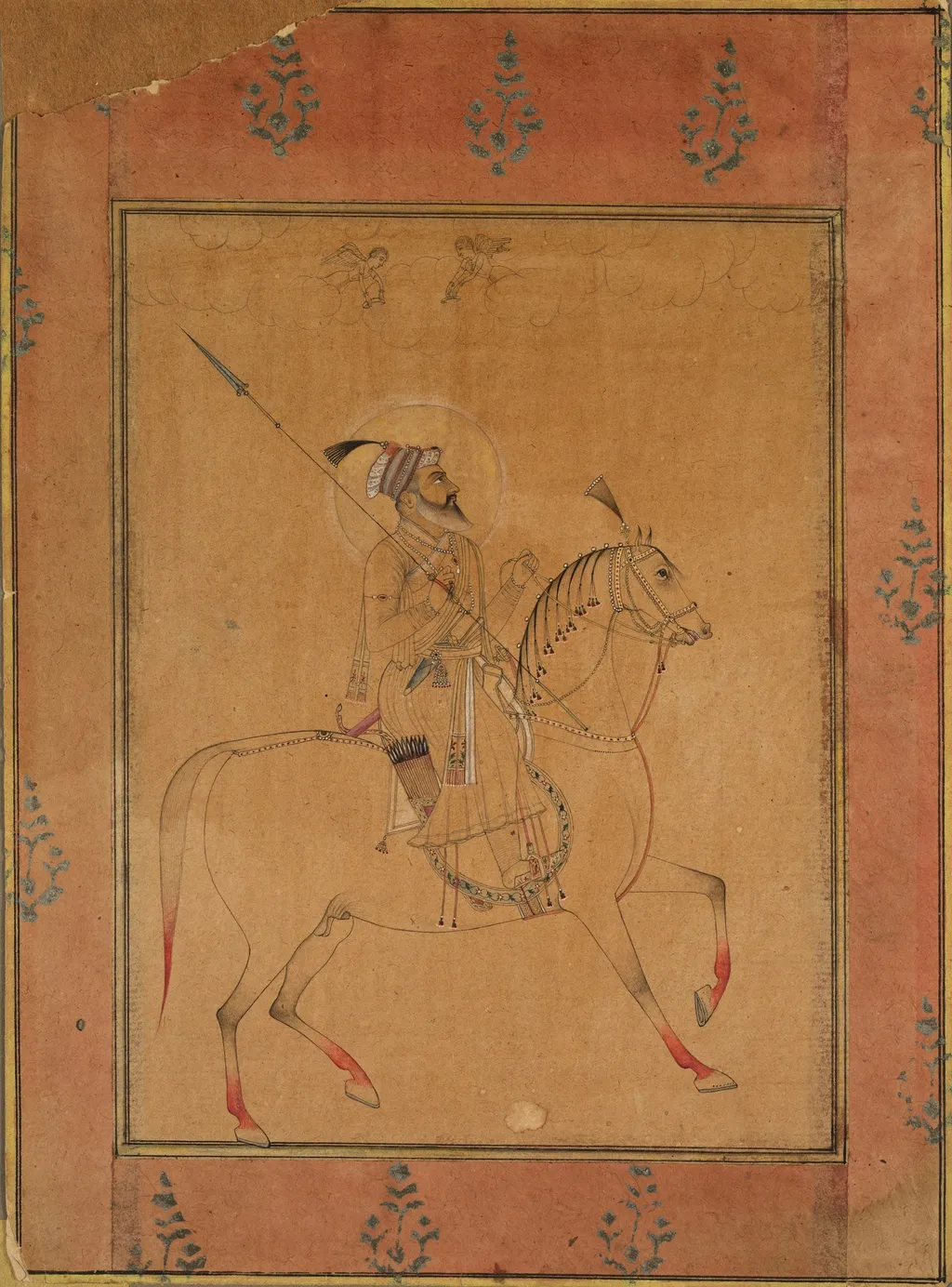
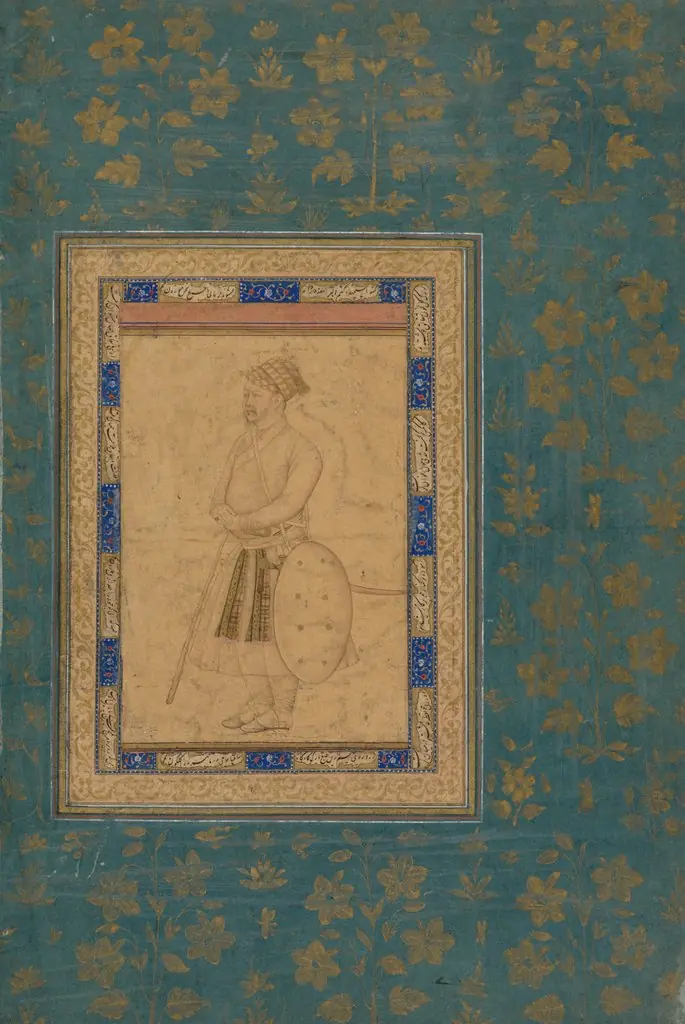
Emperor Shah Jahan is an unspecified painting. It dates from 1674 and is held in the collection of the Cleveland Museum of Art.
About this work
History & Provenance
The painting titled Emperor Shah Jahan, created in 1674 by an unknown artist, is held in the collection of the Cleveland Museum of Art in Cleveland.
Emperor Shah Jahan is a painting dated to 1674, produced within the Mughal Empire. The work is held in the collection of the Cleveland Museum of Art, where it is catalogued under accession reference 1917.1065, indicating that it entered that institution's holdings by 1917. Its attribution is not firmly established, as the artist remains unknown.
The painting's creation in 1674 places it well after the death of the Mughal emperor Shah Jahan in 1666, situating it as a later commemorative or portrait tradition rather than a contemporary likeness.
The painting titled Emperor Shah Jahan, created in 1674 by an unknown artist, is held in the collection of the Cleveland Museum of Art in Cleveland. The work is cataloged under the accession number 1917.1065. Originating from the Mughal Empire, this specific portrait entered the museum's holdings in the early 20th century.
Context
The painting titled Emperor Shah Jahan, created in 1674 within the Mughal Empire, depicts the Mughal ruler Shah Jahan. It is housed in the collection of the Cleveland Museum of Art, which holds it as part of its assemblage of works from the Mughal period (1917.1065). Scholarly attention to this work often situates it within the broader context of Mughal court painting, emphasizing the era's distinctive fusion of Persianate aesthetics and imperial patronage.
The attribution to an unknown artist and its stylistic characteristics have been discussed in relation to other paintings produced during Shah Jahan's reign, contributing to ongoing assessments of artistic production in 17th-century South Asia.
Overview
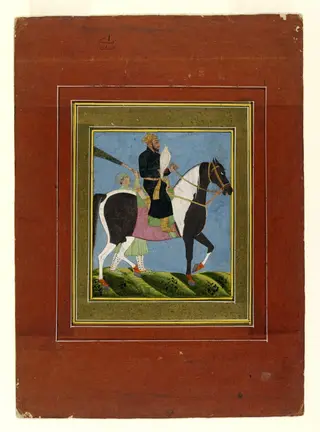
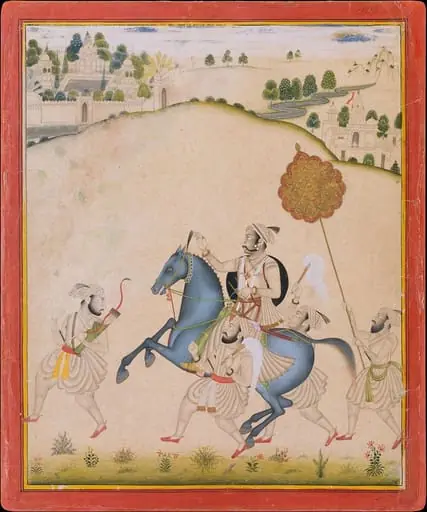
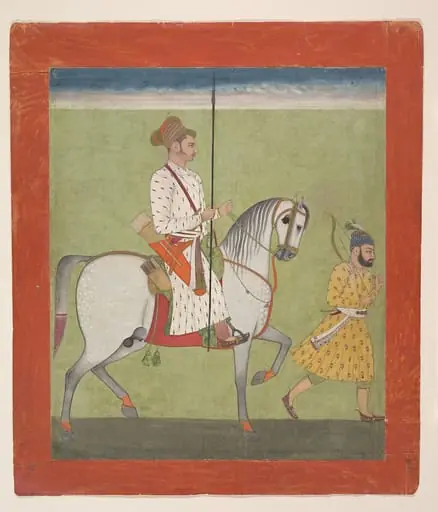
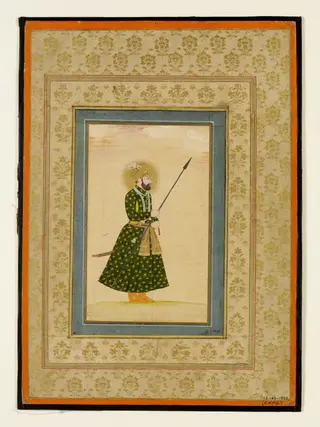
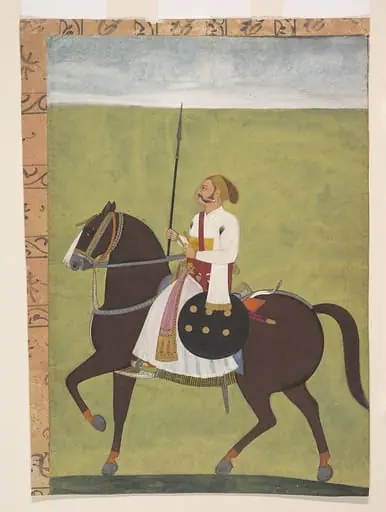
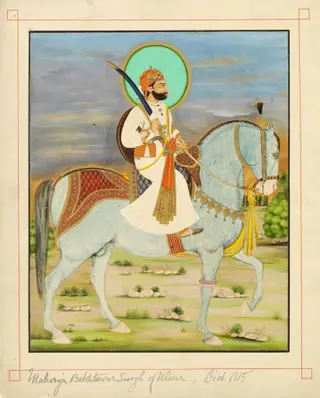
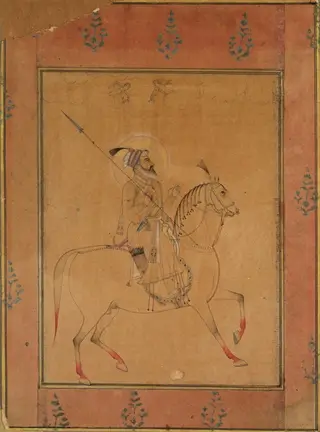
The work depicts a mounted figure, identified as Emperor Shah Jahan, charging on a richly adorned horse. He grasps a spear in one hand while the other holds the reins, his head crowned by a turban and surrounded by a luminous halo. The composition is framed by a decorative border of stylized foliage, and the palette consists of warm, earthy tones that lend the scene a manuscript‑like quality.
Subject & Meaning
The rider is presented as a sovereign warrior, the spear symbolising authority and martial prowess. The halo surrounding his face elevates the figure beyond mere mortal status, suggesting a divine or exalted legitimacy for Shah Jahan’s rule. The elaborate armor and horse decoration reinforce the imperial grandeur associated with the Mughal emperor.
Technique & Style
Executed in a miniature painting tradition, the piece employs fine brushwork to render intricate patterns on the horse’s trappings and the surrounding border. The use of a glowing halo effect and the flat, decorative background are characteristic of courtly manuscript illustration, while the warm, earthy pigments create a cohesive visual harmony.
Legacy
Images of Shah Jahan on horseback have persisted in South Asian visual culture, influencing later artistic representations of Mughal authority. The work exemplifies the synthesis of Persian miniature techniques with indigenous Indian motifs that defined Mughal court art during the 17th century.
Artist & collection