Artwork
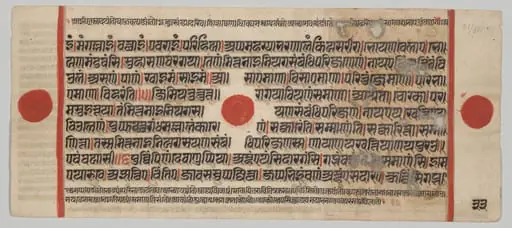
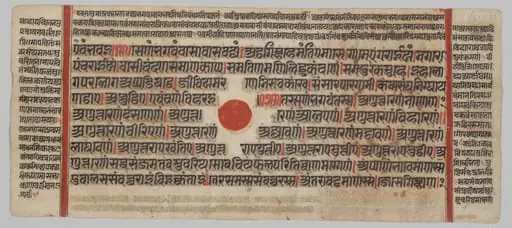
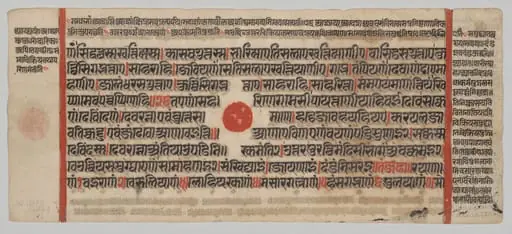
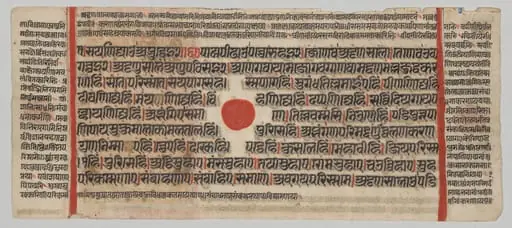
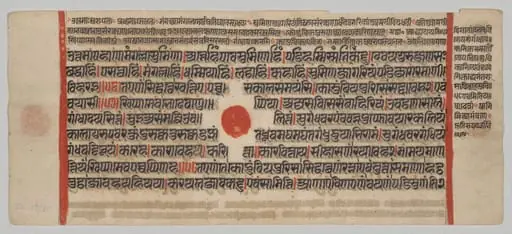
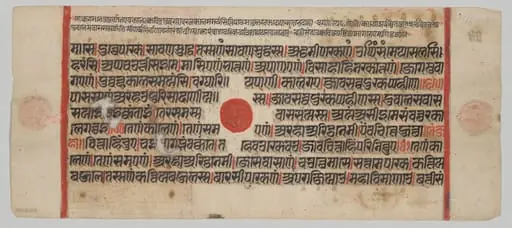
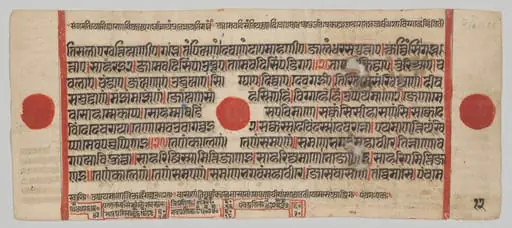
Text, Folio 51 (verso), from a Kalpa-sutra
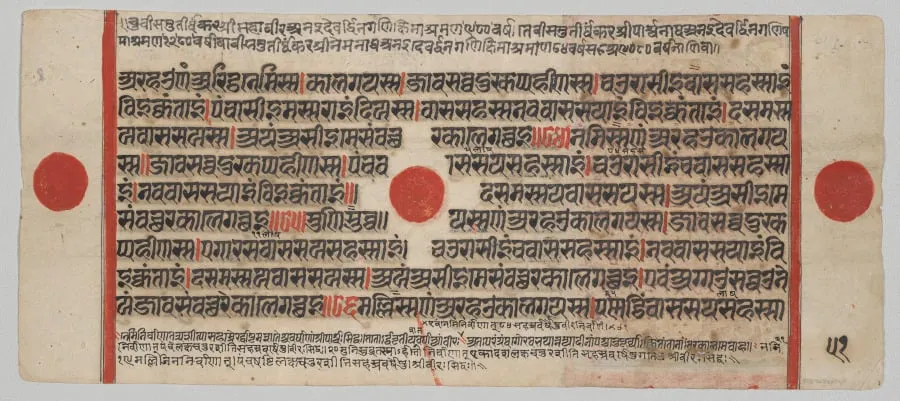
Text, Folio 51 (verso), from a Kalpa-sutra is an unspecified painting by the Mughal Painting artist Unknown. It dates from 1488 and is held in the collection of the Cleveland Museum of Art. This folio comes from a 15th-century Gujarati manuscript of the Kalpa-sutra, a sacred Jain text.
- Accession no.
- 1932.119.51.b
- Credit line
- Edward L. Whittemore Fund
About this work
Overview
The image functions as a visual guide to Jain cosmology and doctrine, designed for contemplative use by monastic and lay communities.
This folio comes from a 15th-century Gujarati manuscript of the Kalpa-sutra, a sacred Jain text. It illustrates a moment of spiritual revelation, depicting Nemi, the 22nd Tirthankara, at the center of a circular composition. The image functions as a visual guide to Jain cosmology and doctrine, designed for contemplative use by monastic and lay communities. Its structured layout reflects the precision and symbolism central to Jain devotional art.
Subject & Meaning
Nemi, a historical and mythic figure in Jain tradition and cousin of Krishna, is shown seated in meditation after attaining enlightenment. Around him, a multitude of divine beings and animals gather in concentric rings, all oriented toward him as he delivers his final teaching. The crescent moon above his head signifies his liberation from samsara, the cycle of rebirth, placing him beyond the material world in a state of eternal stillness.
Technique & Style
Executed in opaque watercolor on paper, the painting employs fine brushwork and mineral pigments typical of western Indian manuscript traditions. The circular arrangement of figures is rendered with meticulous detail, each small form carefully outlined and colored. The composition’s symmetry and flat spatial treatment emphasize spiritual order over naturalism, aligning with Jain aesthetic principles that prioritize symbolic clarity.
History & Provenance
Created in Gujarat during the 15th century, this folio likely belonged to a larger illuminated manuscript commissioned by a Jain patron or monastery. Such texts were used in ritual recitations and teaching. Its survival suggests careful preservation within religious communities.
The style and script align with known workshops in the region, though the specific provenance before modern collections remains undocumented.
Context
Jain communities in medieval Gujarat produced richly illustrated manuscripts to support doctrinal study and devotion. The Kalpa-sutra, detailing the lives of the Tirthankaras, was especially favored for its narrative and symbolic potential. This folio reflects a broader tradition where visual diagrams served as aids to meditation and memory, reinforcing the nonviolent, ascetic ideals central to Jain philosophy.
Legacy
This folio exemplifies the enduring Jain practice of encoding spiritual concepts in visual form. Its structured, symbolic language influenced later manuscript traditions across western India. While no longer used in active ritual, such works remain vital to the study of Jain art, offering insight into how abstract theological ideas were made tangible for generations of devotees.
Artist & collection