Artwork
The Adoration of the Magi
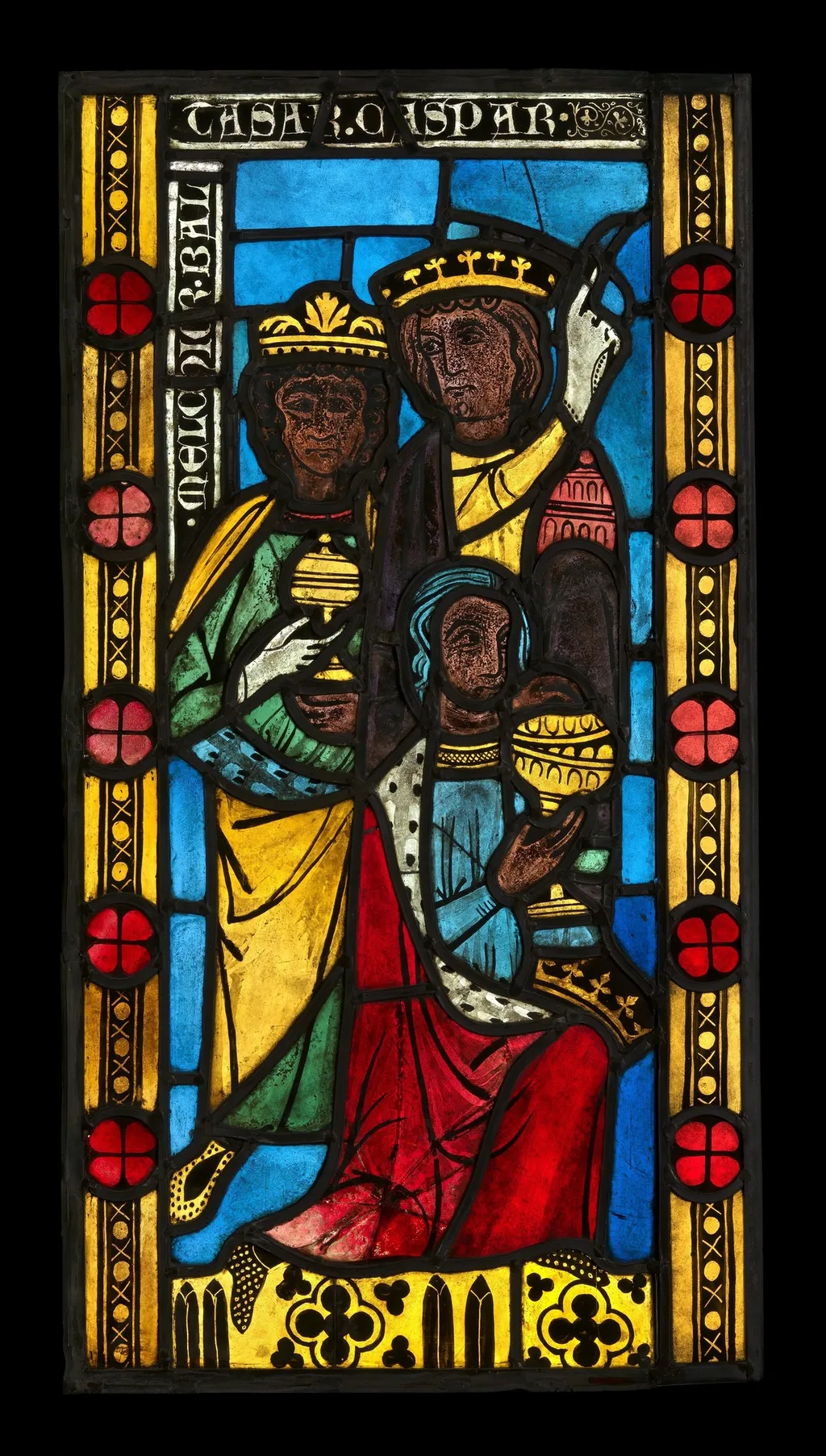
The Adoration of the Magi is an unspecified painting. It dates from 1296 and is held in the collection of the Metropolitan Museum of Art.
About this work
Subject & Meaning
By focusing on the Christ Child as the focal point of the Magi's adoration, the work participates in this devotional tradition.
The painting depicts the Adoration of the Magi, a religious subject drawn from the Gospel of Matthew. The scene centers on the Christ Child, who is venerated by the Magi in an act of homage. As a work of religious art dated to 1296, it belongs to the iconographic tradition of presenting the Magi's visit as a moment of revelation, in which the Christ Child is recognized and honored by the visiting kings bearing gifts.
The Adoration of the Magi theme was among the most popular subjects in late medieval painting, used to express themes of kingship, divine incarnation, and the recognition of Christ by the Gentile world. By focusing on the Christ Child as the focal point of the Magi's adoration, the work participates in this devotional tradition.
History & Provenance
The work titled The Adoration of the Magi is dated to 1296. It was produced in the late thirteenth century by an anonymous hand and is held in the Metropolitan Museum of Art, New York, under accession number 2003.478.1. The painting depicts the biblical scene of the Magi adoring the Christ Child and belongs to the religious art genre.
While attributed to an anonymous artist within the museum's records, it remains a significant example of late-thirteenth-century religious art depicting the Christ Child. The provided sources confirm its current location and inventory status but do not list specific past exhibitions or loan history.
Context
The Adoration of the Magi is a late-thirteenth-century religious painting attributed to an anonymous artist, created in 1296 and housed in the Metropolitan Museum of Art. Its iconography centers on the Christ Child receiving the gifts of the Magi, a common devotional motif in medieval Italian art. The work exemplifies the devotional style of the period and is situated within the broader corpus of anonymous religious paintings that shaped early Italian visual culture. Contemporary critical commentary on the piece is not documented in the sources consulted.
Overview
This panel, titled The Adoration of the Magi, depicts a traditional biblical scene rendered in stained glass. It features three figures presented with bright, flat colors and stiff poses, characteristic of early artistic styles. The composition includes two standing crowned figures and a seated figure holding a child, set against a background of geometric patterns. The overall aesthetic suggests a work of considerable age.
Technique & Style
The panel employs a distinct visual style characterized by its bright, unmodulated colors and rigid figural poses. The robes of the standing figures incorporate gold, green, and blue hues, contributing to the work's vibrant palette. A background composed of yellow, red, and black geometric patterns further defines the space, suggesting an early approach to pictorial depth and ornamentation typical of stained glass artistry from earlier periods.
Artist & collection

- The Adoration of the Magi
 The Standing Virgin
 St. Nicholas Accuses the Consul from Scenes from the Life of St. Nicholas
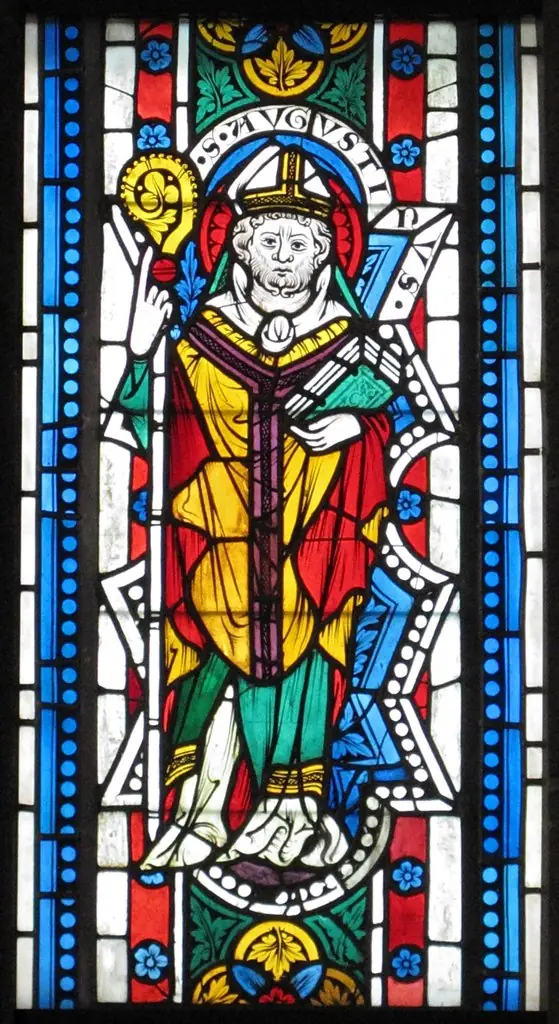 Saint Augustine
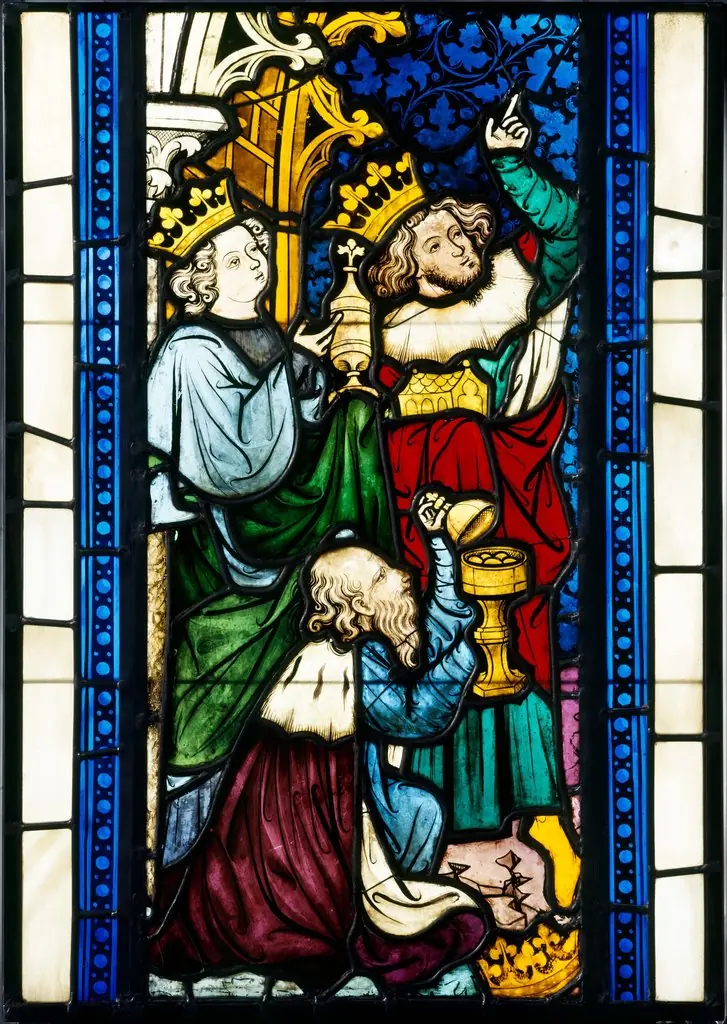 Adoration of the Magi from Seven Scenes from the Life of Christ
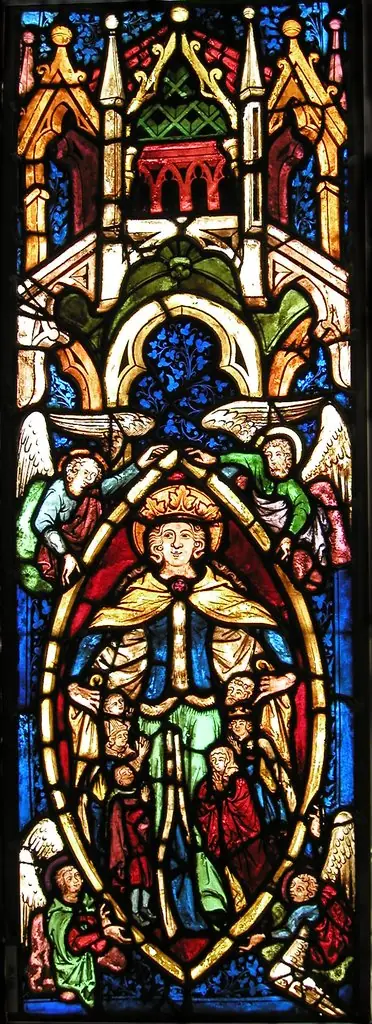 Madonna of Mercy
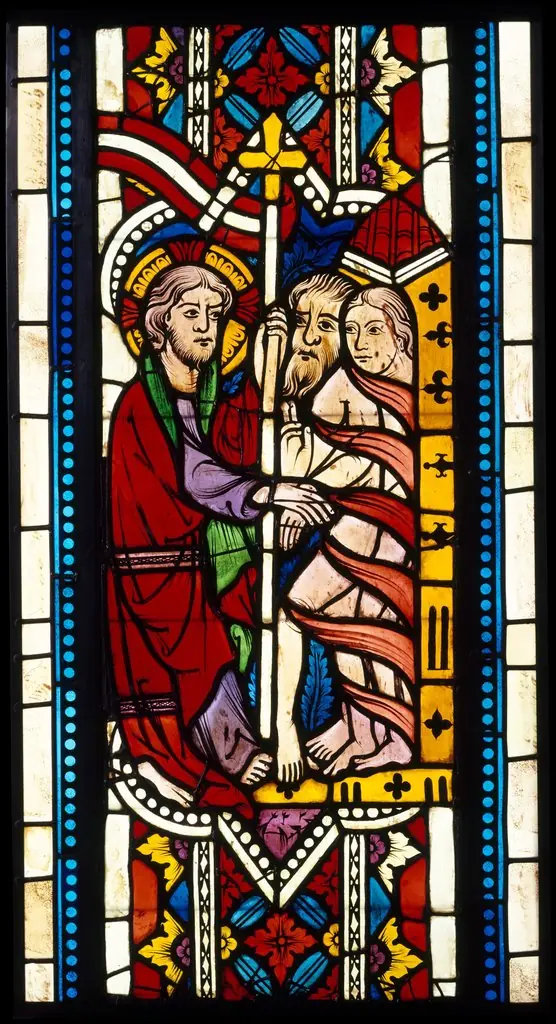 Panel with the Harrowing of Hell
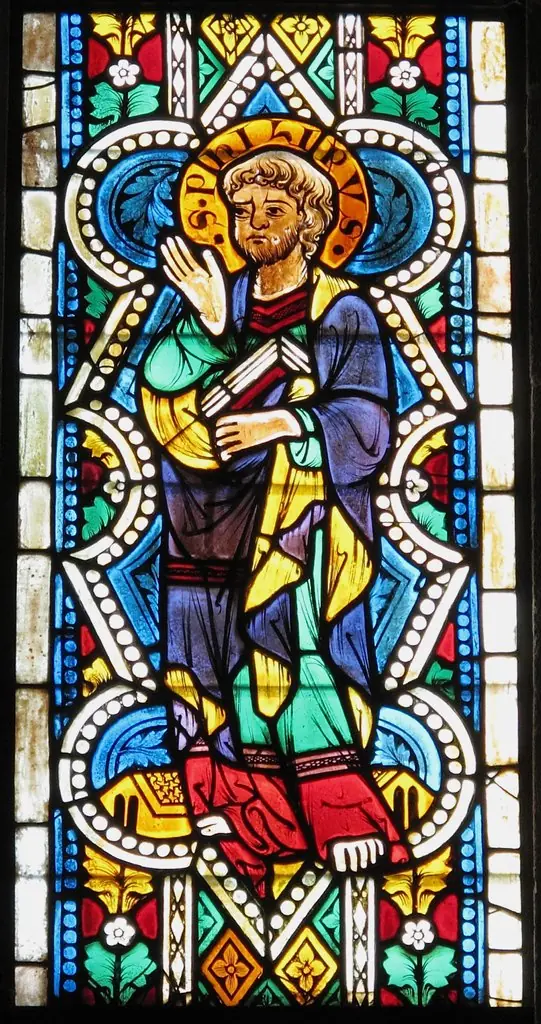 Saint Philip
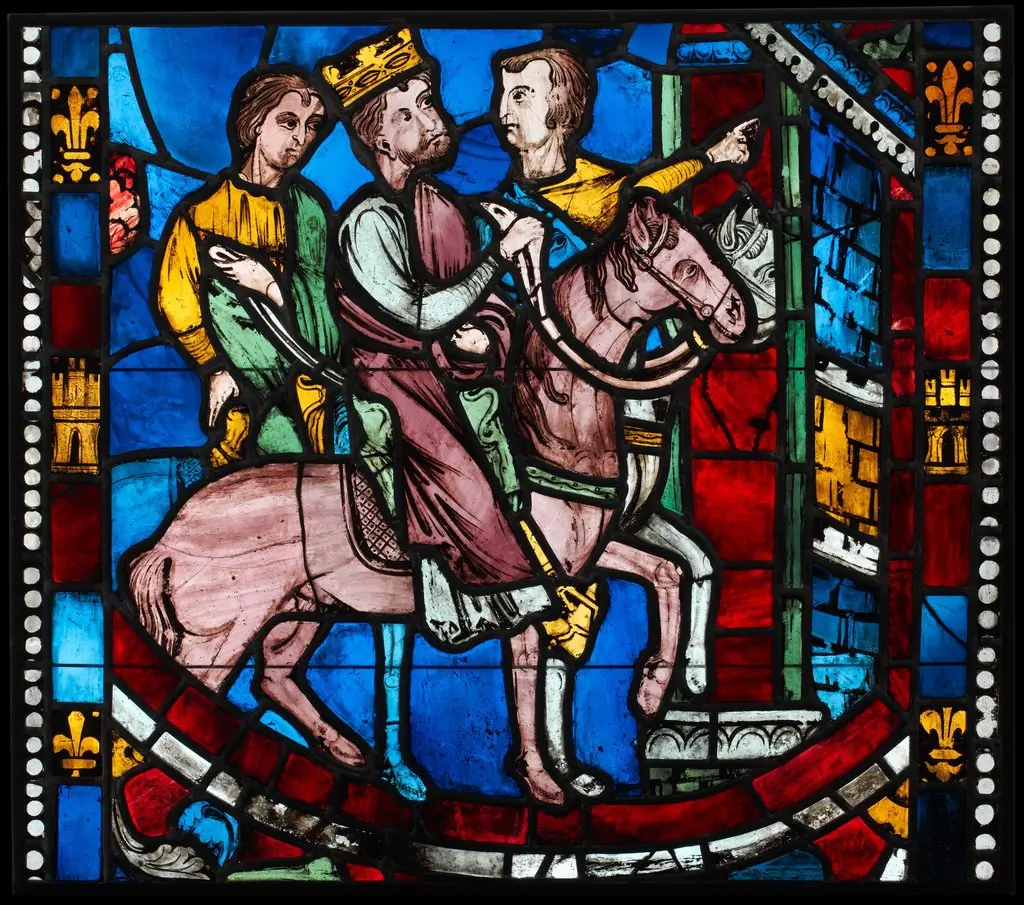 Theodosius Arrives at Ephesus, from a Scene from the Legend of the Seven Sleepers of Ephesus
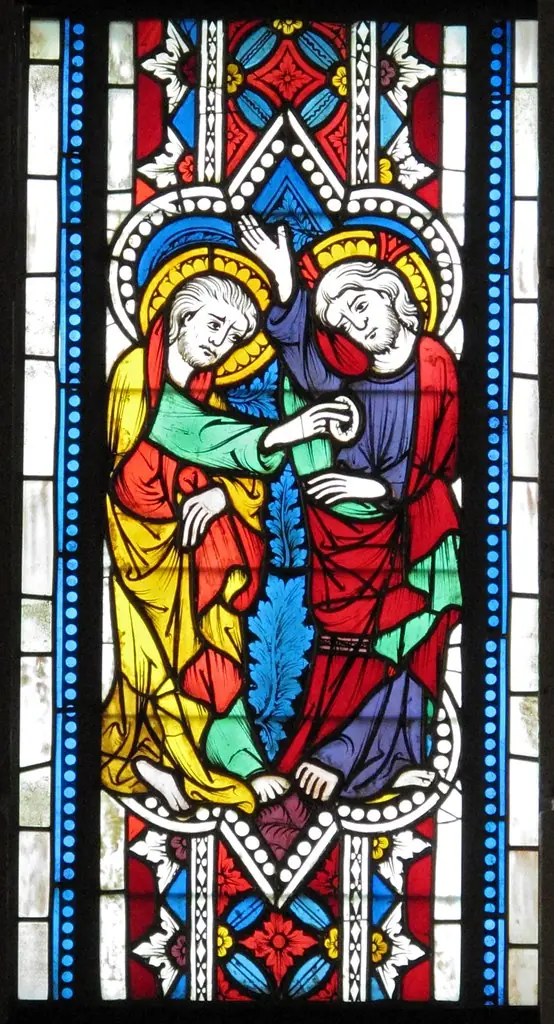 Doubting Thomas
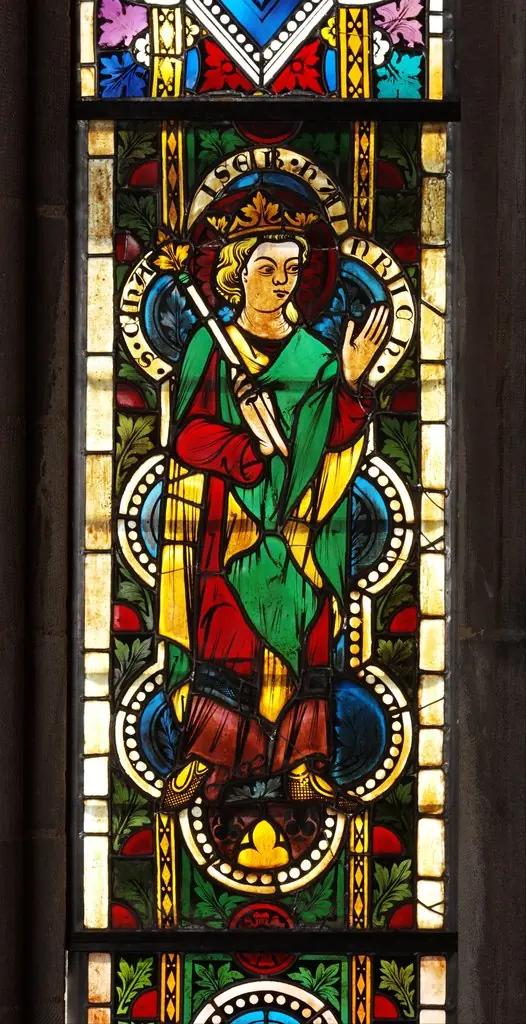 Stained Glass Panel with Emperor Henry II
 Saint Martin Dividing His Cloak