Artwork
Saint Philip
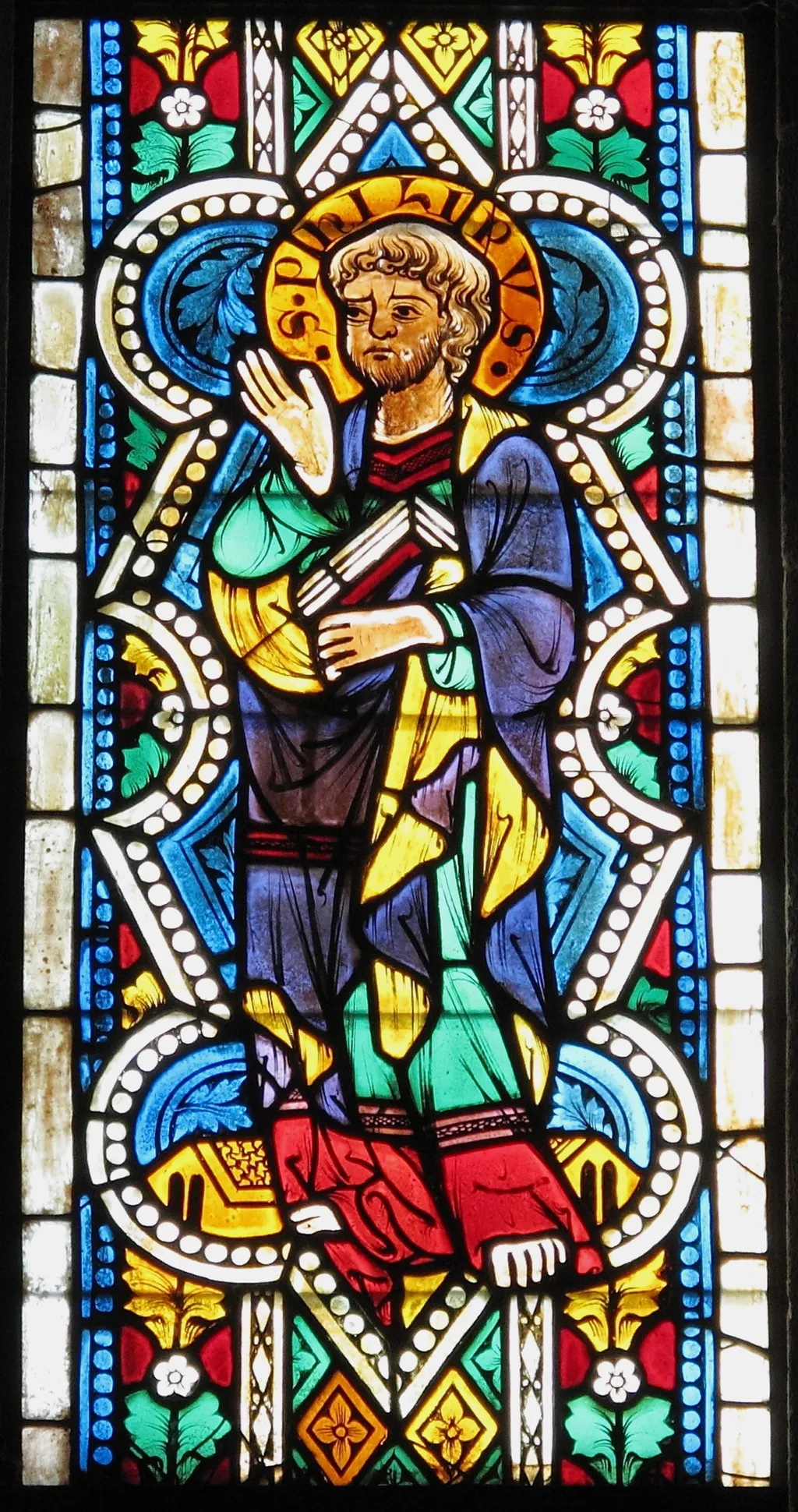
Saint Philip is an unspecified painting. It dates from 1350 and is held in the collection of the Metropolitan Museum of Art.
About this work
Subject & Meaning
Created around 1350, the work presents the saint as a man, consistent with the iconographic conventions for apostles in religious art of the period.
The artwork depicts Philip the Apostle, a figure from Christian tradition identified as the main subject of this religious painting. Created around 1350, the work presents the saint as a man, consistent with the iconographic conventions for apostles in religious art of the period. As a piece of religious genre painting, the image serves to represent the specific identity of Saint Philip within a devotional context.
History & Provenance
The painting titled Saint Philip was created circa 1350. It is attributed to an anonymous hand and classified as a religious work depicting the Apostle Philip. The composition measures 98.4 cm in height and 45.7 cm in width.
The work is held in the collection of the Metropolitan Museum of Art, where it is catalogued under the accession number 65.96.2. No earlier commission or patronage record is documented in the available sources, and the sources do not contain information regarding its exhibition history.
Legacy
The panel, painted circa 1350, entered the collection of the Metropolitan Museum of Art, where its display among the museum's early religious holdings keeps the figure of Philip the Apostle visible to modern viewers. As an example of fourteenth-century devotional painting, it is of interest to the study of medieval apostolic imagery. Its anonymous attribution and museum provenance have secured its place as an artifact of early European art.
Overview
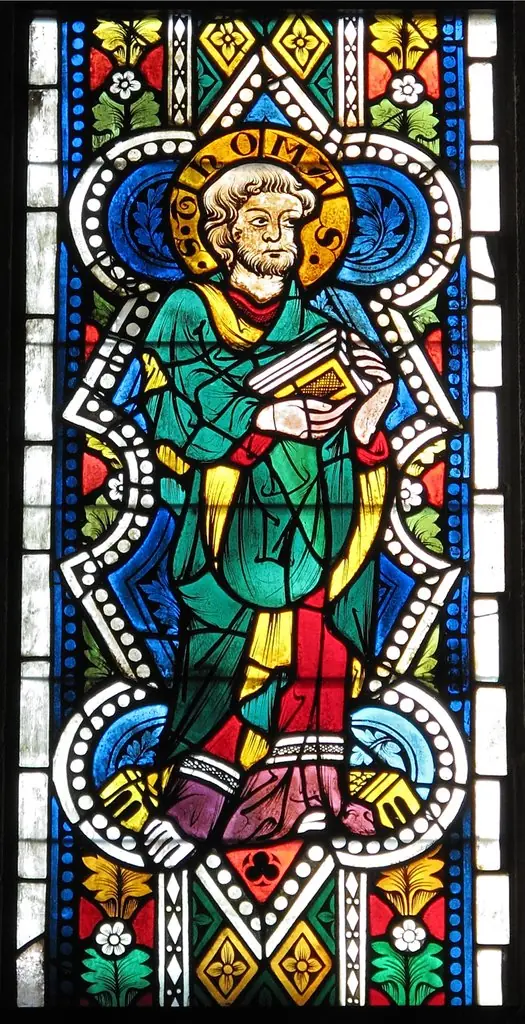
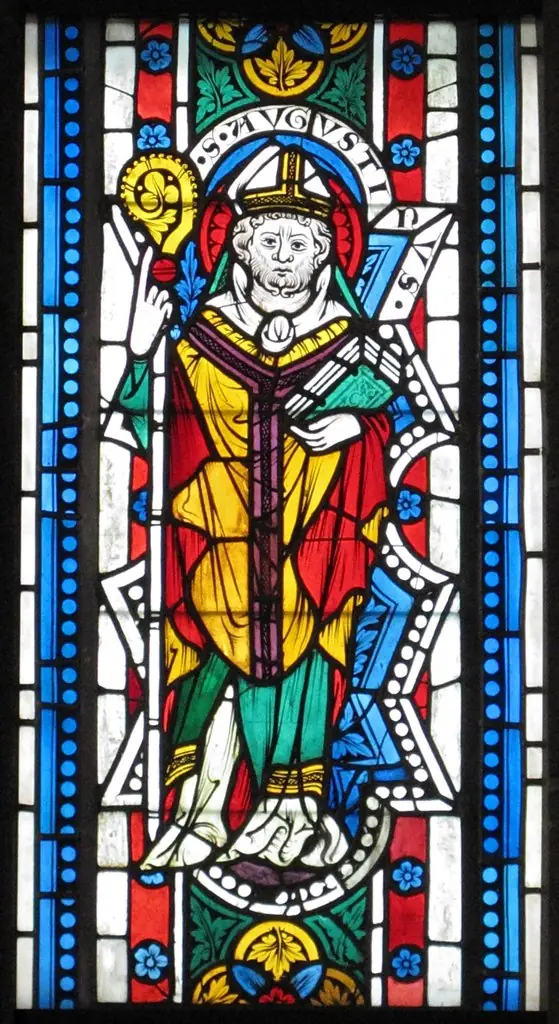
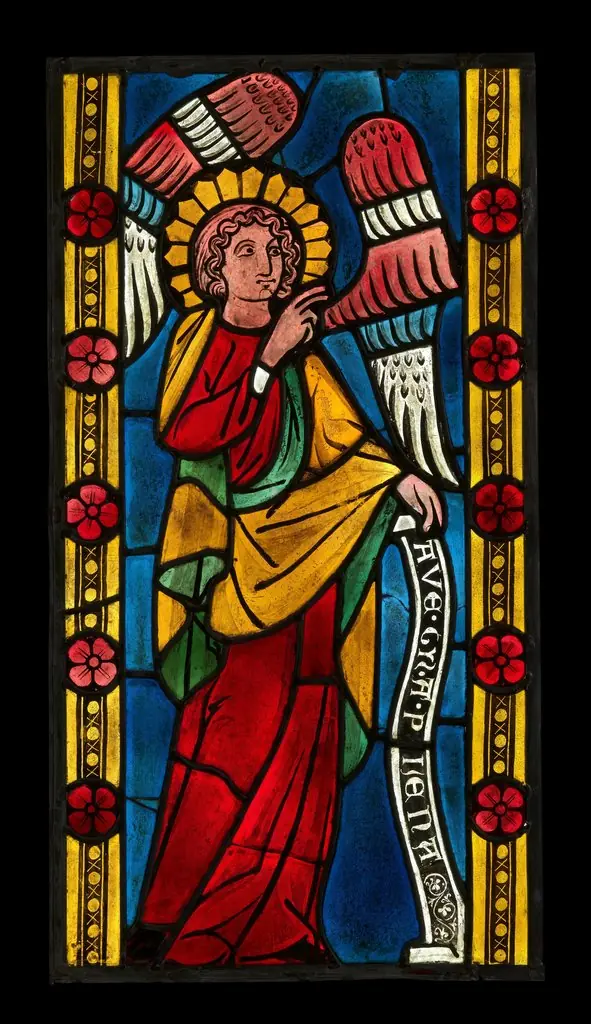
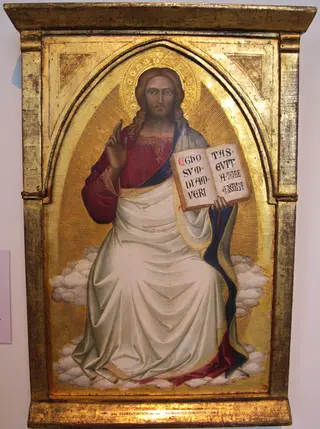
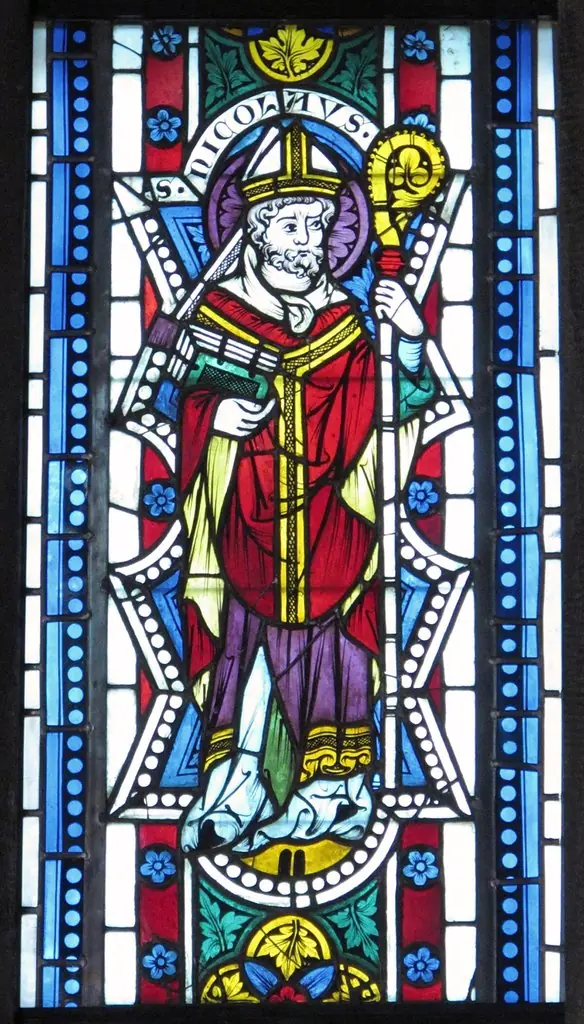
This stained glass panel depicts Saint Philip, rendered in a vibrant palette. The artwork showcases a bearded figure holding a book and performing a gesture of blessing. A luminous halo encircles his head, emphasizing his saintly status.
The intricate design, characterized by bold colors and distinct outlines, is set within a stone frame, creating a striking visual presence.
Technique & Style
The artwork is executed in stained glass, utilizing a rich array of colors such as blue, green, red, yellow, and white. The figure's robes are rendered in blue and green, while the background features dynamic, swirling patterns. Dark lines delineate the forms and separate the colored glass pieces, enhancing the visual contrast and making the hues appear particularly vivid. A sturdy stone frame encases the entire panel.
Artist & collection