Artwork
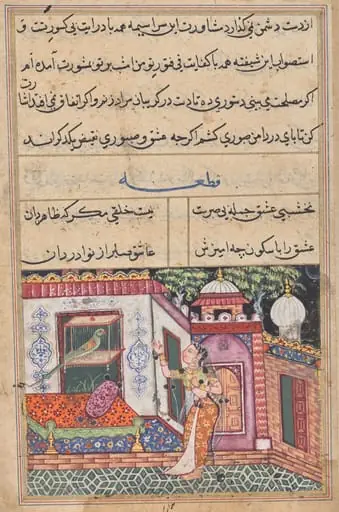
The Brahman’s wife who killed a peacock and ate its gallbladder on the physician’s advice, from a Tuti-nama (Tales of a Parrot): Nineteenth Night
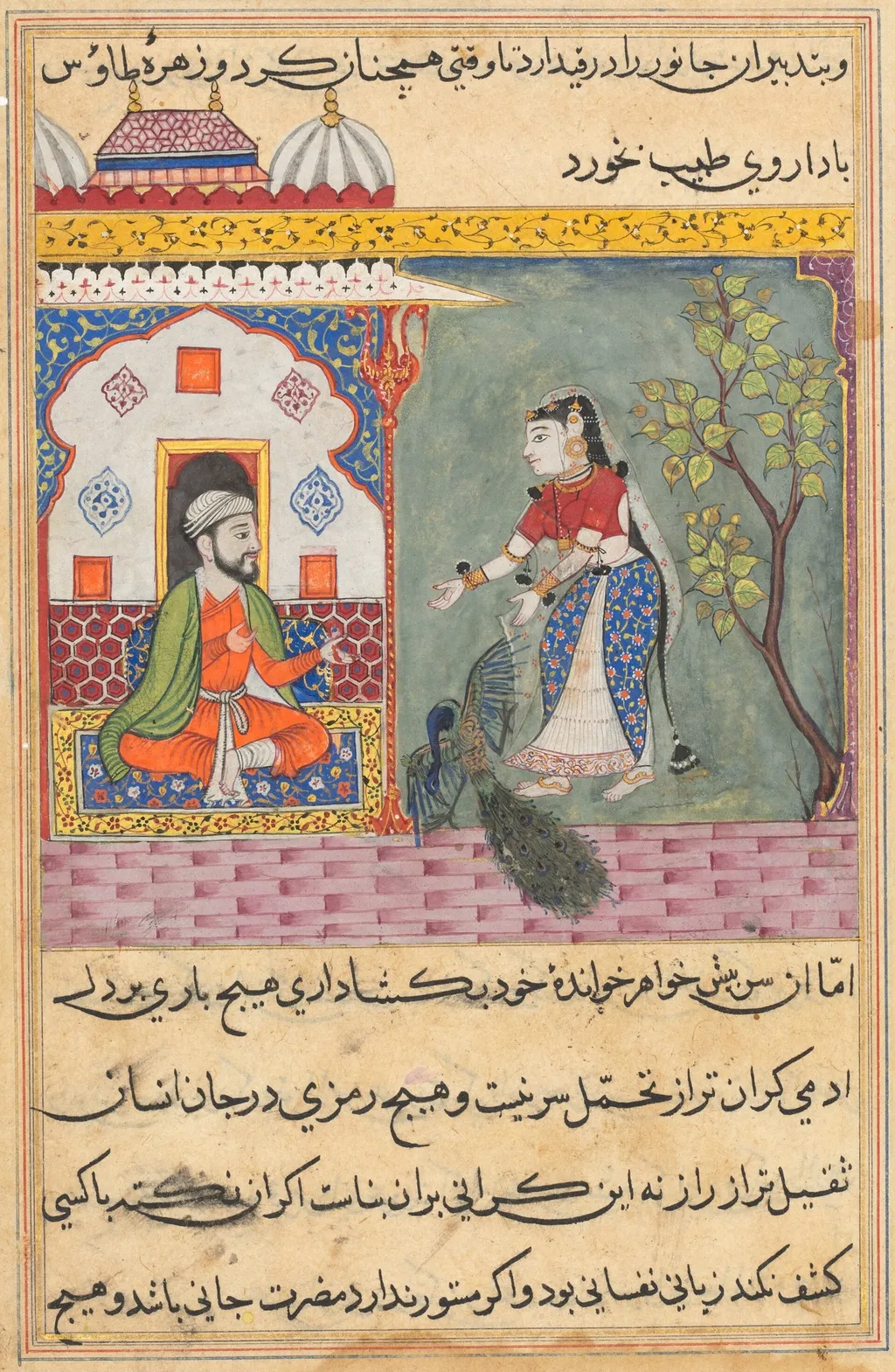
The Brahman’s wife who killed a peacock and ate its gallbladder on the physician’s advice, from a Tuti-nama (Tales of a Parrot): Nineteenth Night is an unspecified painting. It dates from 1560 and is held in the collection of the Cleveland Museum of Art.
About this work
History & Provenance
The painting is held in the collection of the Cleveland Museum of Art, where it is identified by the accession number 1962.
The miniature depicting the Brahman’s wife who killed a peacock and ate its gallbladder on the physician’s advice, from a Tuti-nama (Tales of a Parrot): Nineteenth Night, was created in 1560 in the Mughal Empire. It is part of the Cleveland Museum of Art's collection, catalogued under accession number 1962.279.140.a and attributed to an unknown artist.
The painting is held in the collection of the Cleveland Museum of Art, where it is identified by the accession number 1962.279.140.a. It was produced in 1560 within the Mughal Empire. No exhibition history is documented in the available sources.
Overview
The work, titled The Brahman’s wife who killed a peacock and ate its gallbladder on the physician’s advice, from a Tuti‑nama (Tales of a Parrot): Nineteenth Night, is an oil painting in the collection of the Cleveland Museum of Art. It depicts an interior scene populated by a seated male figure in orange‑green robes and a standing woman in a red‑blue garment, who holds a peacock by the neck while its tail feathers are strewn on the floor.
Subject & Meaning
The narrative derives from the Tuti‑nama, a Persian collection of moral tales. In this episode, a Brahman’s wife follows a physician’s prescription to kill a peacock and consume its gallbladder, an act linked to health or spiritual benefit within the story. The woman's solemn expression underscores the gravity of the prescribed remedy.
Technique & Style
Rendered with a bright palette, the painting combines flat decorative surfaces with detailed figural modeling. Geometric patterns and gold‑lined borders frame the walls, while Arabic calligraphy runs along the upper and lower margins, integrating textual and visual elements typical of Persian miniature traditions adapted to a larger canvas format.
Context
The scene reflects the cultural exchange between Persian literary motifs and South Asian visual conventions. The inclusion of a physician’s advice and the exotic peacock ties the composition to themes of health, ritual, and the moral instruction prevalent in courtly storytelling.
Legacy
As a rare visual representation of a specific Tuti‑nama episode, the painting offers scholars insight into how literary tales were interpreted in visual form, contributing to the broader understanding of narrative art in the Persianate world.
Artist & collection

- The Brahman’s wife who killed a peacock and ate its gallbladder on the physician’s advice, from a Tuti-nama (Tales of a Parrot): Nineteenth Night
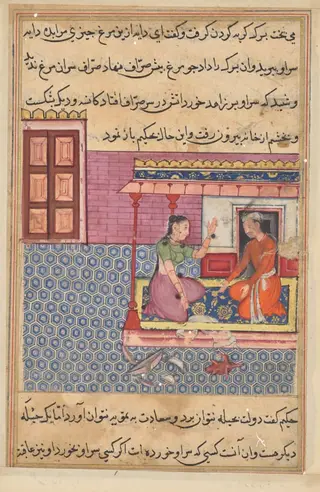 The pious man’s wife offers the seven-colored bird as food to her lover, but not finding its head, he breaks the pot and bowl in anger, from a Tuti-nama (Tales of a Parrot): Fifty-second Night
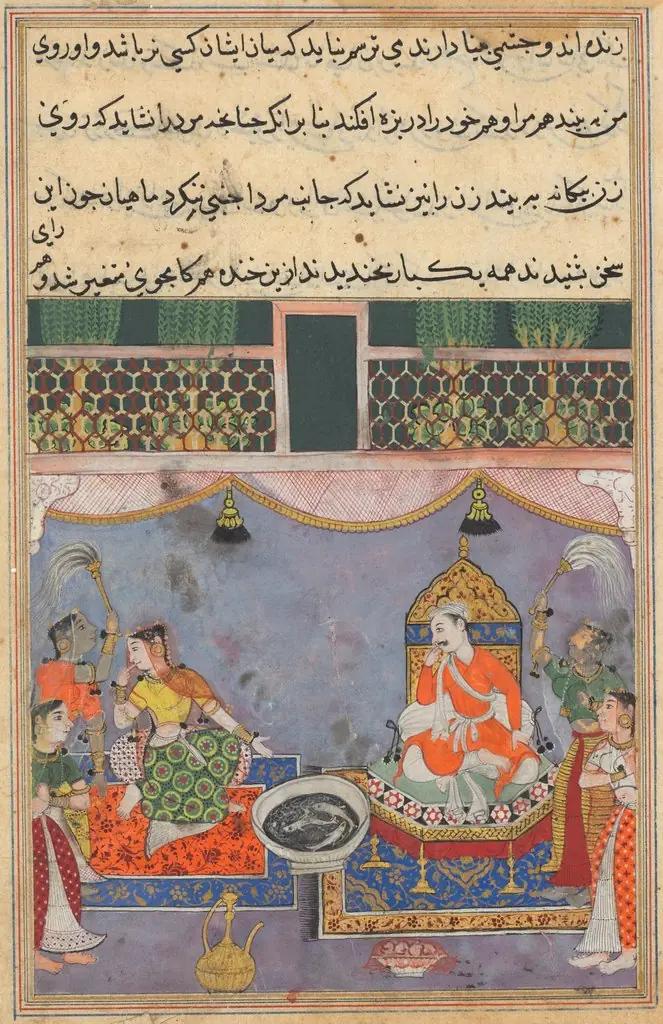 Kamjuy, the wife of the Raja, averts her face from the fishes, from a Tuti-nama (Tales of a Parrot): Twenty-third Night
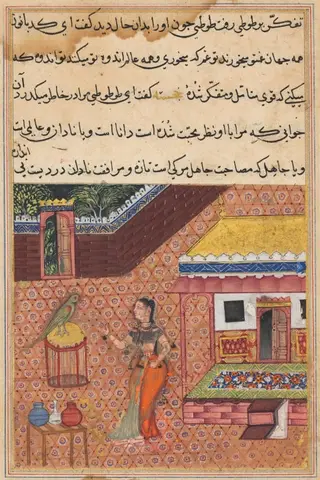 The parrot addresses Khujasta at the beginning of the thirty-fourth night, from a Tuti-nama (Tales of a Parrot)
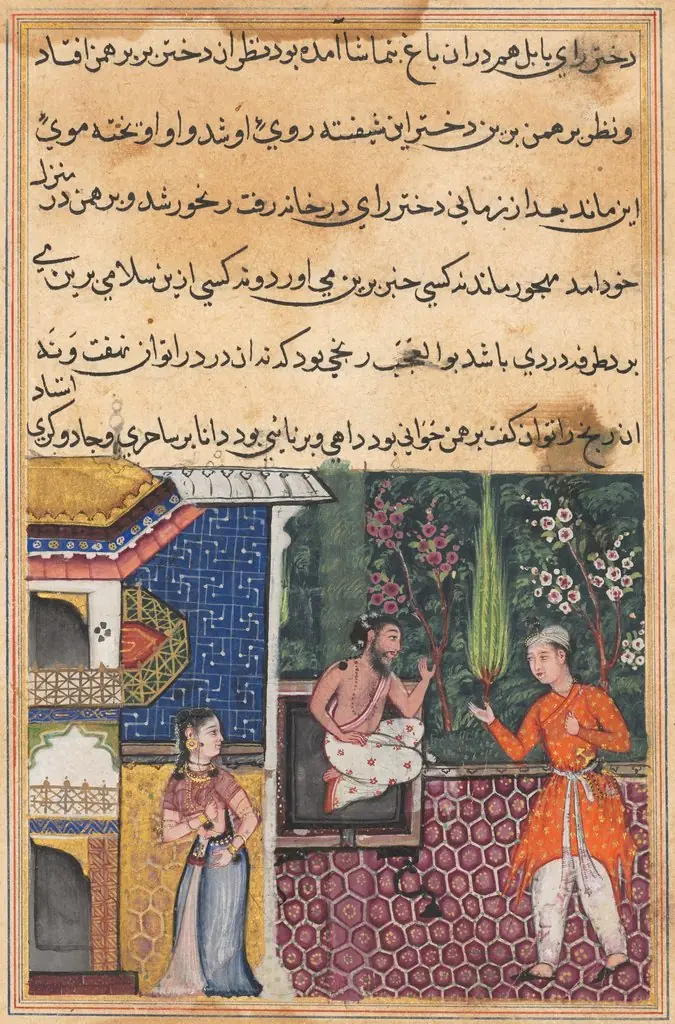 The Brahman gives an account of his falling in love with the king of Babylon’s daughter to his friend, the magician, from a Tuti-nama (Tales of a Parrot): Thirty-fifth Night
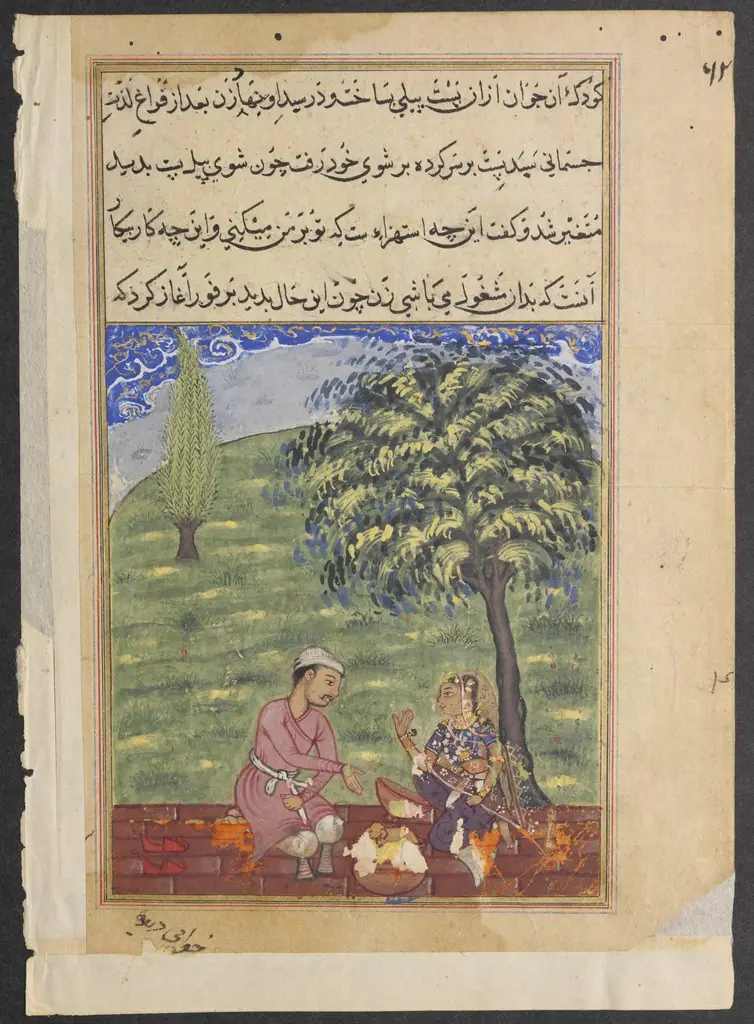 The unfaithful wife explaining away the presence of the dough elephant, from a Tuti-nama (Tales of a Parrot): Eighth Night
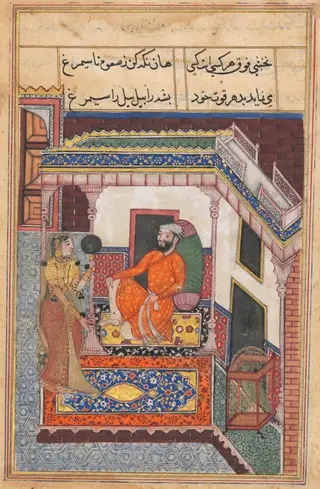 The parrot laughs on hearing the Raja of Ujjain’s wife admire her beauty in a mirror, from a Tuti-nama (Tales of a Parrot: Forty-sixth Night
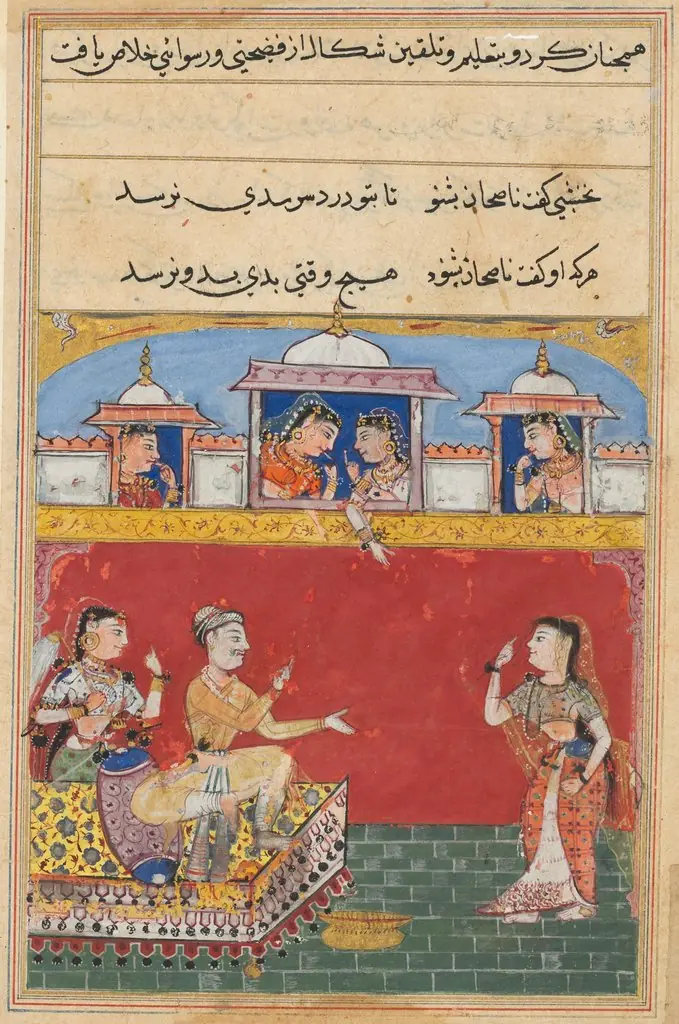 The daughter-in-law returns from her misadventure, feigning insanity, from a Tuti-nama (Tales of a Parrot): Sixteenth Night
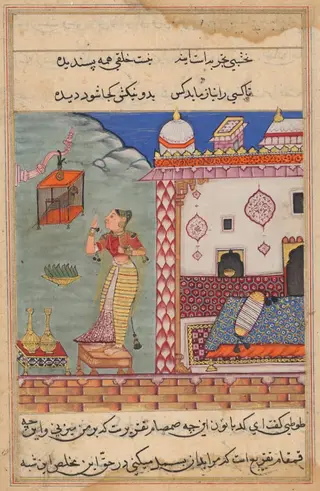 The Parrot Addresses Khujasta at the Beginning of the Twenty-seventh Night, form a Tuti-nama (Tales of a Parrot)
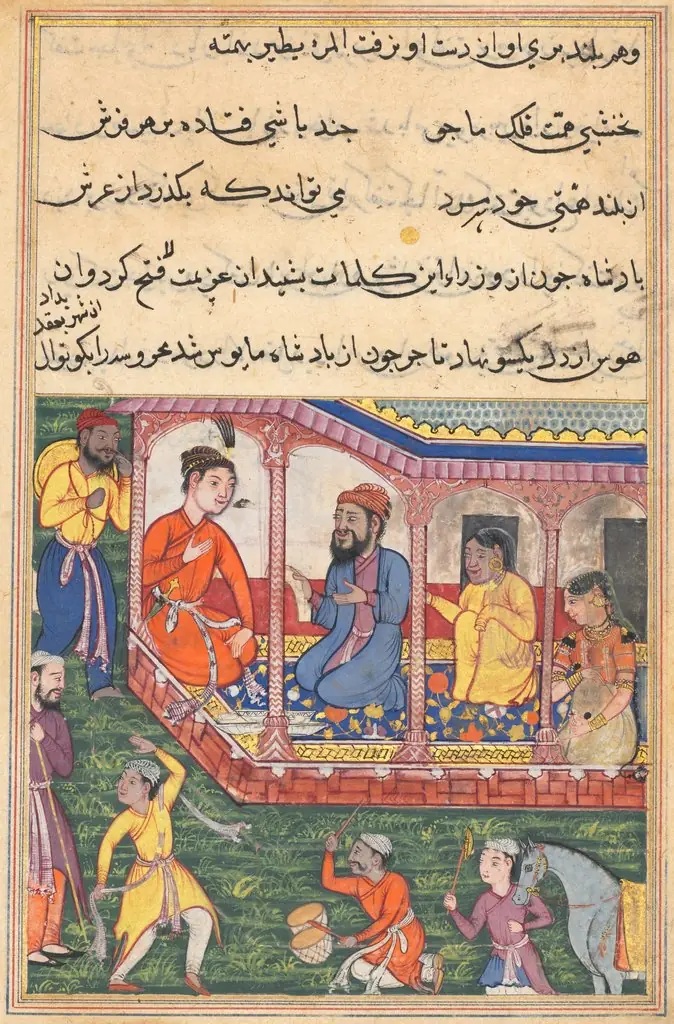 Mahrusa’s marriage to the prefect of the city, from a Tuti-nama (Tales of a Parrot): Thirty-sixth Night
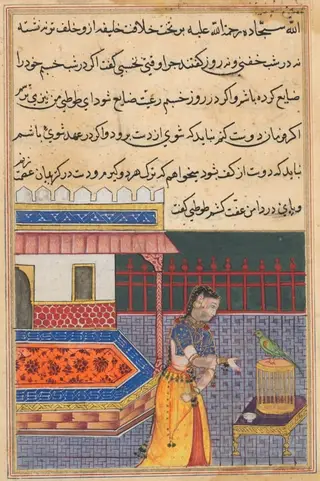 The parrot addresses Khujasta at the beginning of the forty-first night, from a Tuti-nama (Tales of a Parrot): Forty-first Night
 The Parrot Addresses Khujasta at the Beginning of the Eleventh Night, from a Tuti-nama (Tales of a Parrot)