Artwork
The Brahman’s wife who killed a peacock and ate its gallbladder on the physician’s advice, from a Tuti-nama (Tales of a Parrot): Nineteenth Night
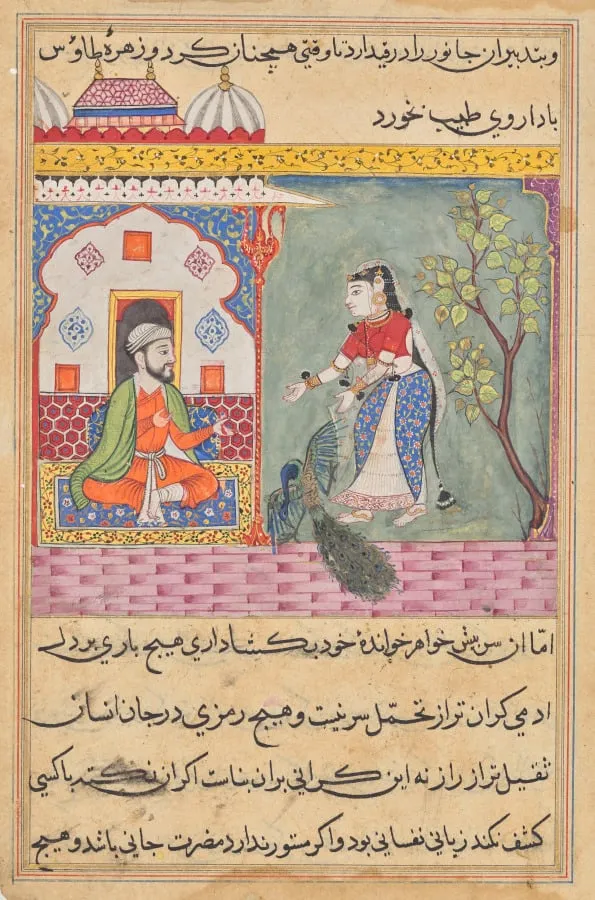
The Brahman’s wife who killed a peacock and ate its gallbladder on the physician’s advice, from a Tuti-nama (Tales of a Parrot): Nineteenth Night is an unspecified painting by the Mughal Painting artist Unknown. It dates from 1560 and is held in the collection of the Cleveland Museum of Art. This painting illustrates a scene from the Tuti-nama, a collection of tales about a parrot, created for the court of Emperor Akbar.
- Accession no.
- 1962.279.140.a
- Credit line
- Gift of Mrs. A. Dean Perry
About this work
The woman killed the peacock on a doctor’s advice, hoping its gallbladder would cure her infertility.
A woman in a pink sari stands over a dead peacock, its feathers scattered. A man in orange and green sits nearby, watching. The room is small, with patterned walls and a tiled floor.
This painting tells a story from a book of parrot tales, written for Emperor Akbar’s court. The woman killed the peacock on a doctor’s advice, hoping its gallbladder would cure her infertility. She lied to cover her crime, showing how far people go for hope.
To see more stories like this, look up Mughal India, court of Akbar (reigned 1556–1605).
Overview
This painting illustrates a scene from the Tuti-nama, a collection of tales about a parrot, created for the court of Emperor Akbar. It depicts a dramatic moment from the Nineteenth Night's story.
Subject & Meaning
The scene shows a woman standing over a dead peacock, having killed it on a physician's advice to cure her infertility. She escapes detection through a clever lie, highlighting the extremes to which people may go driven by hope.
Technique & Style
The painting features a woman in a pink sari and a physician in orange and green, set against a backdrop of patterned walls and a tiled floor. The composition is intimate, with the characters in a small, enclosed space.
Context
The Tuti-nama was written for Emperor Akbar's court, and this painting is part of a visual narrative accompanying the text. It reflects the cultural and artistic traditions of Mughal India during Akbar's reign.
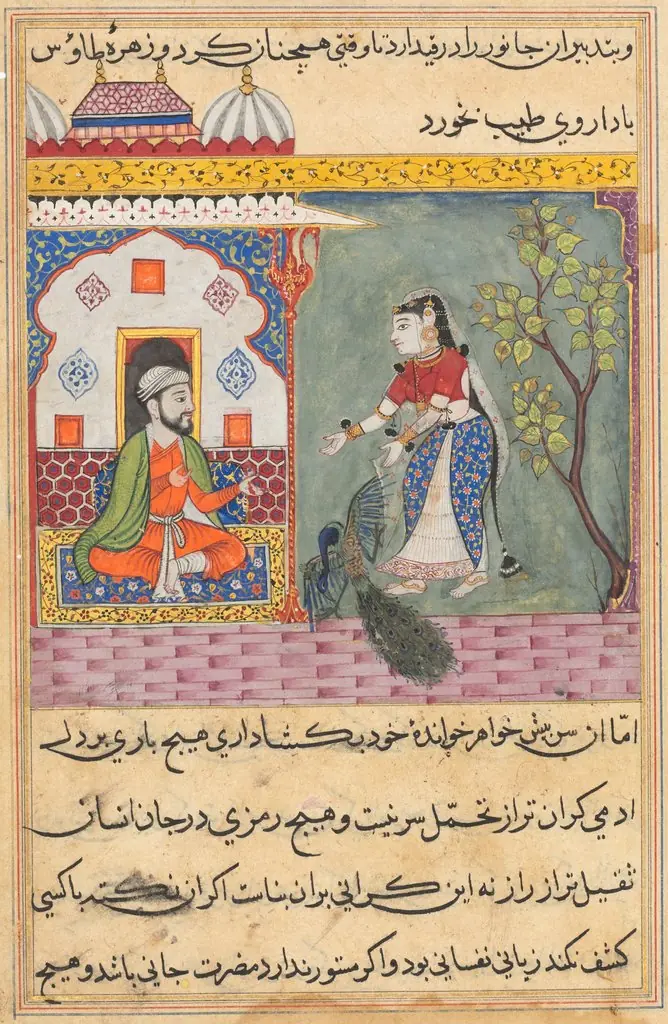
Artist & collection









- The Brahman’s wife who killed a peacock and ate its gallbladder on the physician’s advice, from a Tuti-nama (Tales of a Parrot): Nineteenth Night
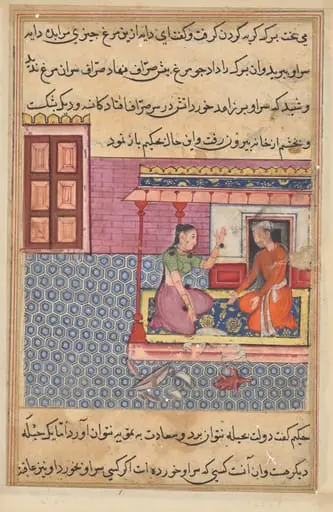 The pious man’s wife offers the seven-colored bird as food to her lover, but not finding its head, he breaks the pot and bowl in anger, from a Tuti-nama (Tales of a Parrot): Fifty-second Night
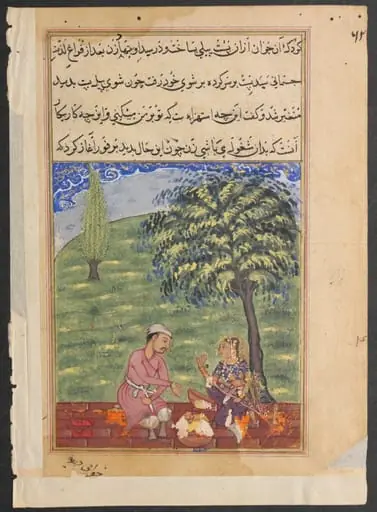 The unfaithful wife explaining away the presence of the dough elephant, from a Tuti-nama (Tales of a Parrot): Eighth Night
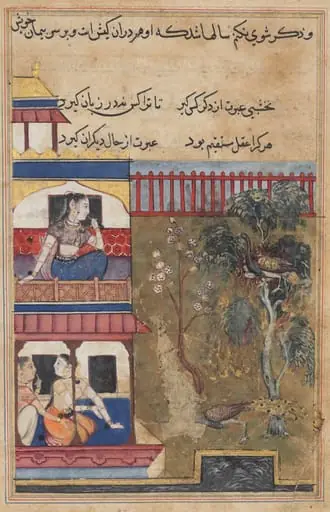 The queen of Rum watches the peahen prefer to burn rather than abandon her eggs while the peacock flees the nest, from a Tuti-nama (Tales of a Parrot): Thirty-ninth Night
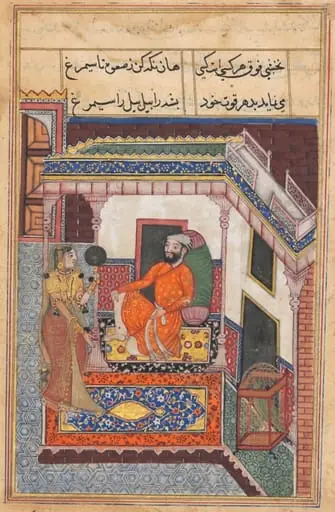 The parrot laughs on hearing the Raja of Ujjain’s wife admire her beauty in a mirror, from a Tuti-nama (Tales of a Parrot: Forty-sixth Night
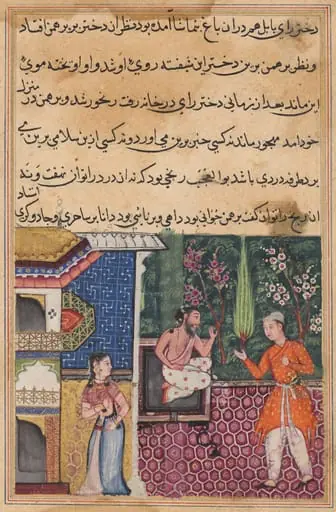 The Brahman gives an account of his falling in love with the king of Babylon’s daughter to his friend, the magician, from a Tuti-nama (Tales of a Parrot): Thirty-fifth Night
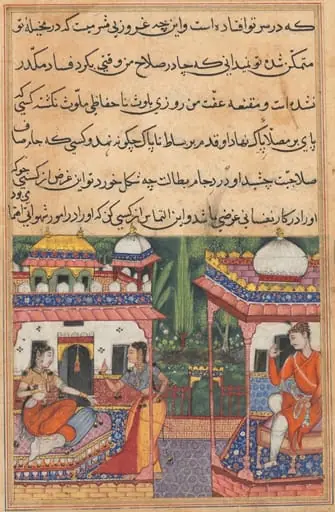 Kaiwan sends a message of love to Khurshid, wife of his brother Utarid who is away on a journey, from a Tuti-nama (Tales of a Parrot): Thirty-second Night
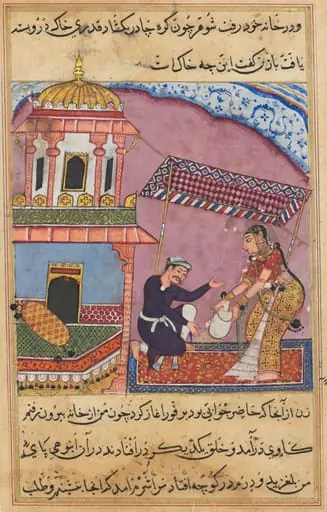 The husband berates his wife for purchasing gravel instead of sugar, from a Tuti-nama (Tales of a Parrot): Eighth Night
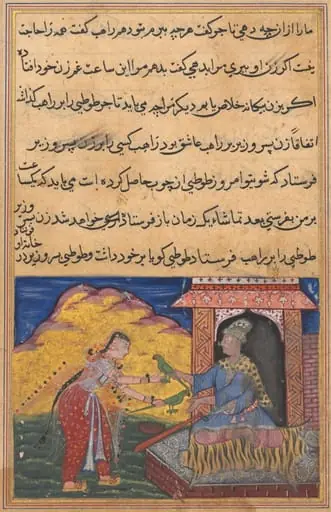 The wife of the son of the vizier brings the magic wooden parrot to her lover, the monk, who exchanges it for the replica, from a Tuti-nama (Tales of a Parrot): Tenth Night