Artwork
The creatures of the sea are asked by the king of the Ocean to take a message to the Brahman, from a Tuti-nama (Tales of a Parrot): Eleventh Night
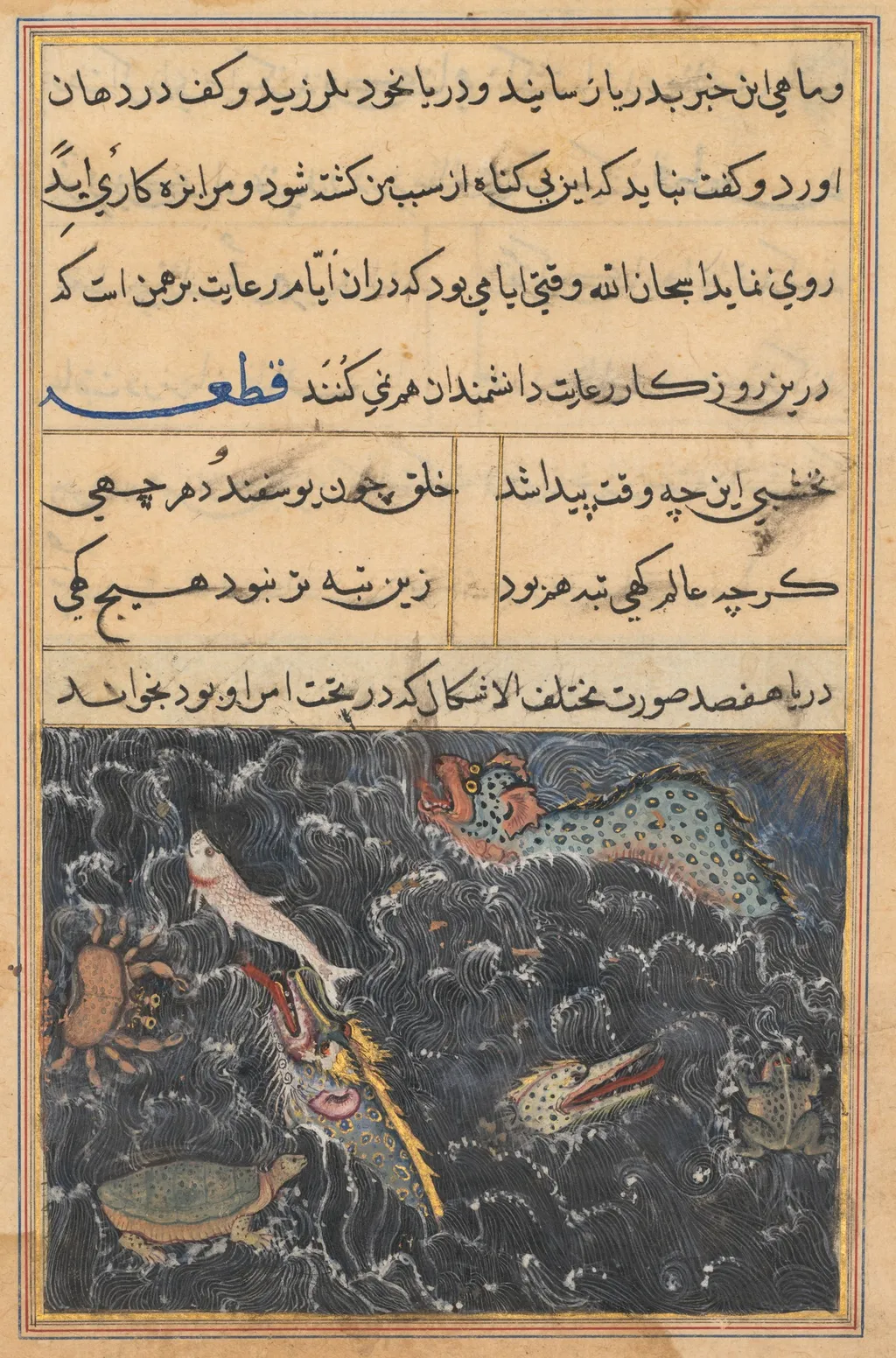
The creatures of the sea are asked by the king of the Ocean to take a message to the Brahman, from a Tuti-nama (Tales of a Parrot): Eleventh Night is an unspecified painting. It dates from 1560 and is held in the collection of the Cleveland Museum of Art. The work is a painted illustration taken from the eleventh night of the Persian collection known as the Tuti‑nama, or Tales of a Parrot.
About this work
Subject & Meaning
The painting illustrates a mythic scene from the Tuti-nama where sea creatures are summoned by the Ocean king to deliver a message to the Brahman.
The painting illustrates a mythic scene from the Tuti-nama where sea creatures are summoned by the Ocean king to deliver a message to the Brahman. The composition emphasizes divine communication and the hierarchical relationship between the oceanic realm and spiritual authority, reflecting Mughal artistic interest in narrative depth and symbolic cosmology. The work belongs to a 16th-century Indian miniature tradition that blends Persian storytelling with local iconography, using fantastical marine beings to convey moral and spiritual lessons.
Its visual language relies on symbolic gestures rather than literal realism, underscoring the allegorical nature of the tale.
The painting was created in 1560 in the Mughal Empire and is part of the Cleveland Museum of Art's collection (accession 1962.279.89.b).
Technique & Style
The painting was executed in 1560 using tempera on paper within the Mughal artistic tradition, depicting figures in a flattened, narrative composition characteristic of manuscript illustration. Figures are rendered in profile with intricate patterning and a limited palette of mineral pigments, reflecting manuscript conventions of the period. The work shows delicate line work and stylized drapery, with flattened spatial depth and emphasis on decorative elements over naturalism, consistent with Mughal manuscript painting techniques of the sixteenth century.
The piece was created on paper support using tempera pigments, with handling evident in minor surface wear and flaking at the edges visible under close examination. Condition includes slight brittleness in the paper substrate and areas of pigment loss, though overall structural integrity remains stable. Formal qualities include a restrained composition with figures arranged in a shallow pictorial space, using outlined contours and flat areas of color to convey narrative, typical of Mughal manuscript painting's focus on symbolic representation rather than three-dimensional modeling.
History & Provenance
Created in 1560 within the Mughal Empire, this painting originates from the eleventh night of the Tuti-nama (Tales of a Parrot) manuscript. The specific artist responsible for the work remains unidentified. The piece eventually entered the collection of the Cleveland Museum of Art, where it is cataloged under the accession number 1962.279.89.b. No further details regarding its original commission, intermediate ownership history, or the circumstances of its acquisition by the museum are provided in the available records.
The painting is held in the collection of the Cleveland Museum of Art, located in Cleveland. It is cataloged within the museum's holdings under the accession number 1962.279.89.b. The work was created in 1560 within the Mughal Empire. The provided sources do not contain information regarding specific exhibitions in which this artwork has been displayed.
Overview
The work is a painted illustration taken from the eleventh night of the Persian collection known as the Tuti‑nama, or Tales of a Parrot. It depicts an underwater tableau in which a variety of marine beings, both recognizable and fantastical, are gathered around a central scene of communication.
Context
The Tuti‑nama blends moral instruction with imaginative storytelling, often employing animal protagonists to explore ethical dilemmas. This particular scene reflects the broader medieval fascination with allegorical voyages and the exchange of knowledge across cultural and spiritual realms.
Artist & collection

- The creatures of the sea are asked by the king of the Ocean to take a message to the Brahman, from a Tuti-nama (Tales of a Parrot): Eleventh Night
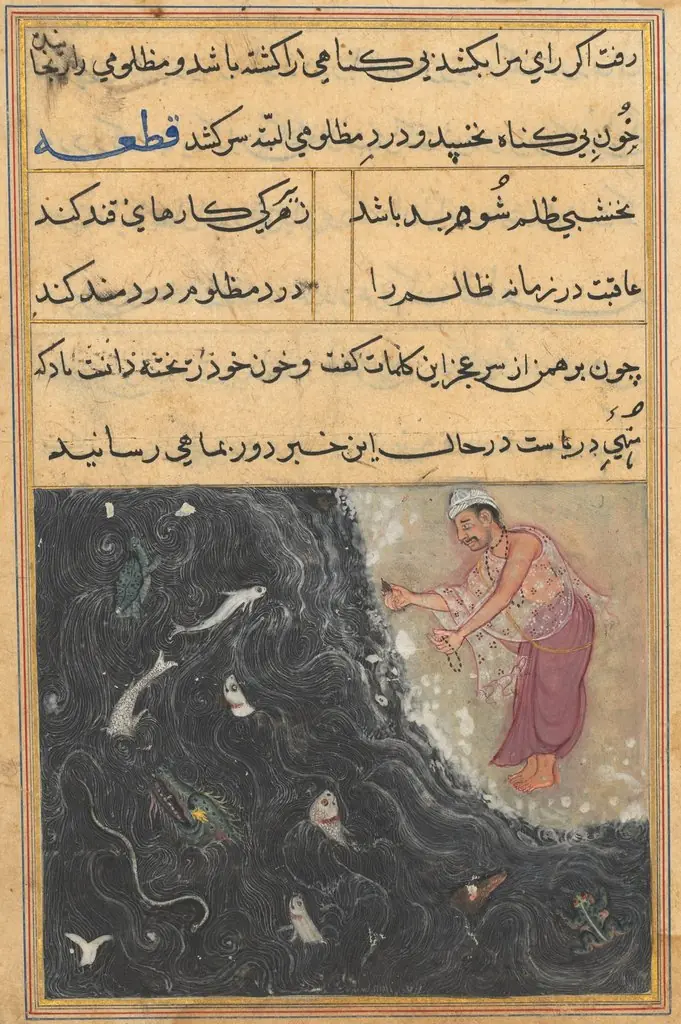 The Brahman’s predicament is conveyed by the wind to the fish who carries the news to the king of the Ocean, from a Tuti-nama (Tales of a Parrot): Eleventh Night
 The Brahman’s predicament is conveyed by the wind to the fish who carries the news to the king of the Ocean, from a Tuti-nama (Tales of a Parrot): Eleventh Night
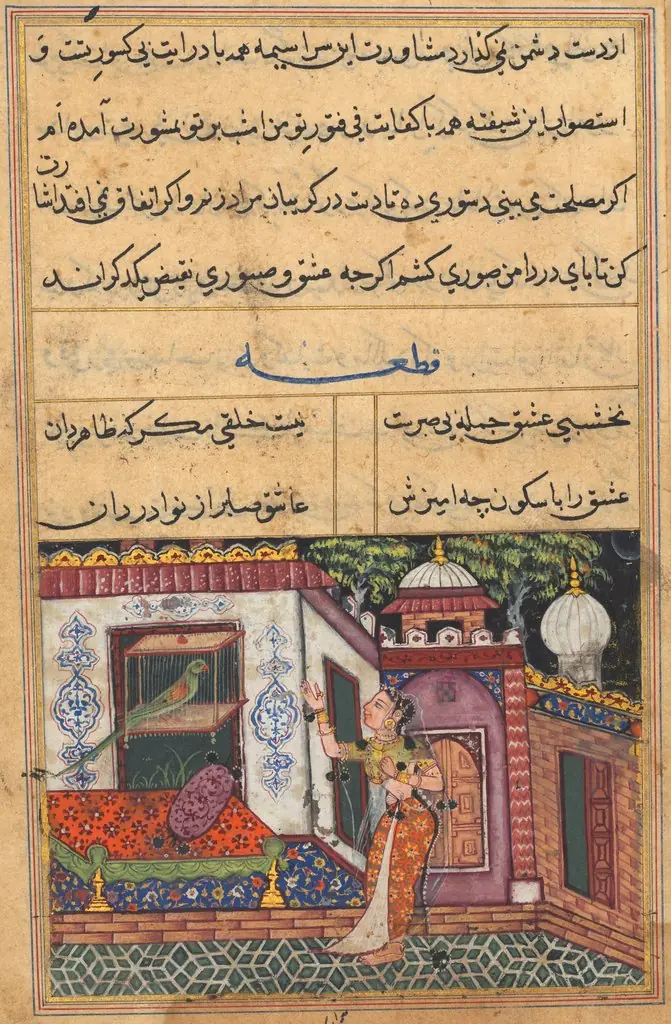 The Parrot Addresses Khujasta at the Beginning of the Eleventh Night, from a Tuti-nama (Tales of a Parrot)
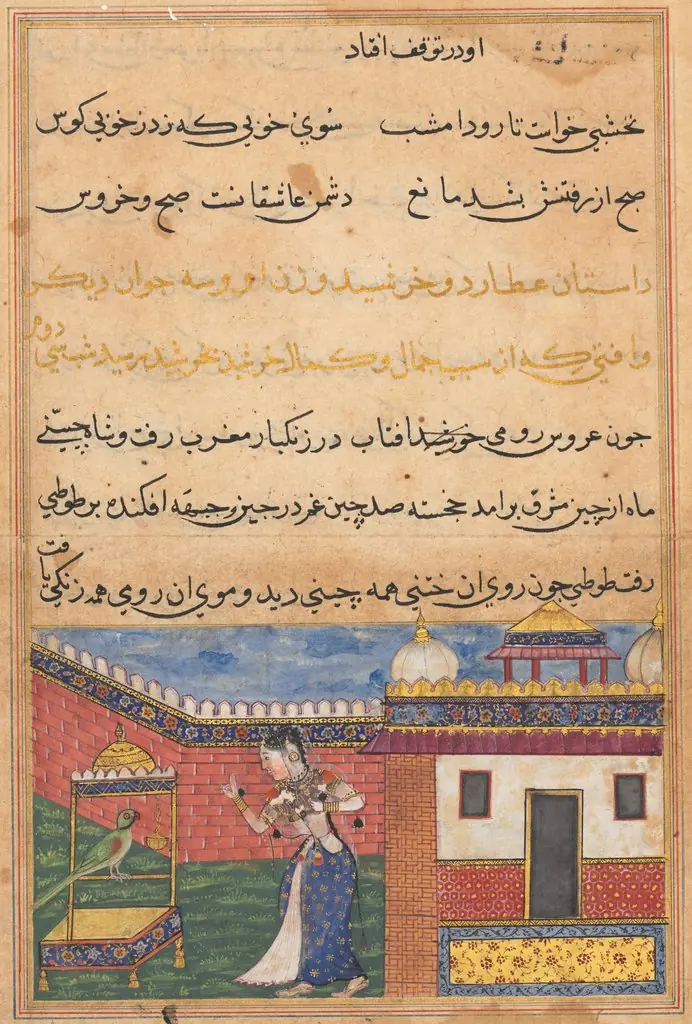 The parrot addresses Khujasta at the beginning of the thirty-second night, from a Tuti-nama (Tales of a Parrot)
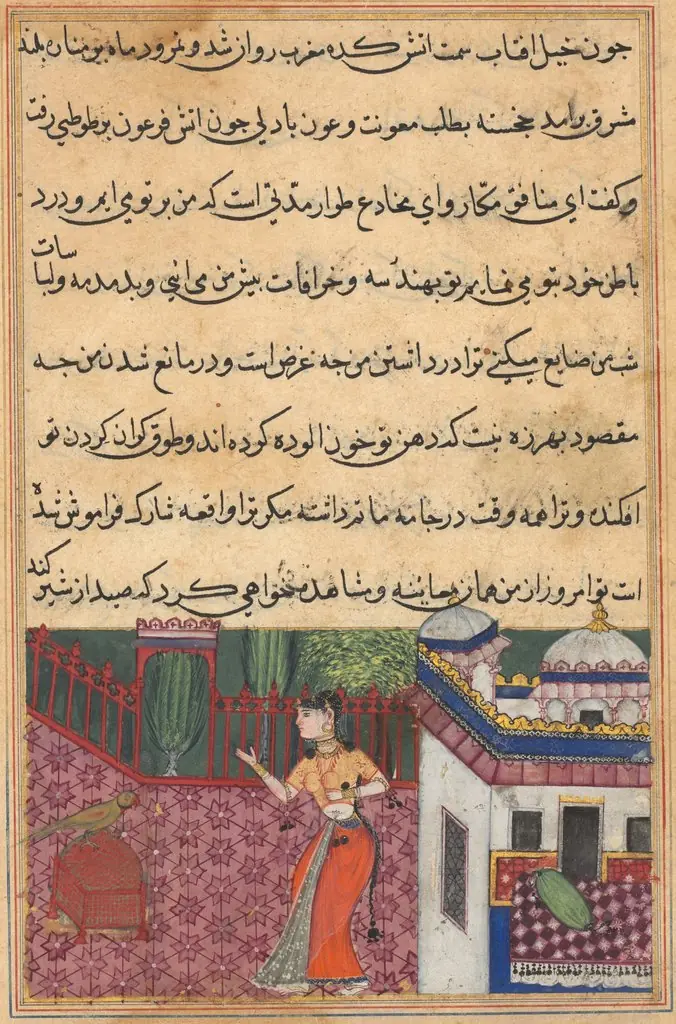 The parrot addresses Khujasta at the beginning of the thirty-third night, from a Tuti-nama (Tales of a Parrot)
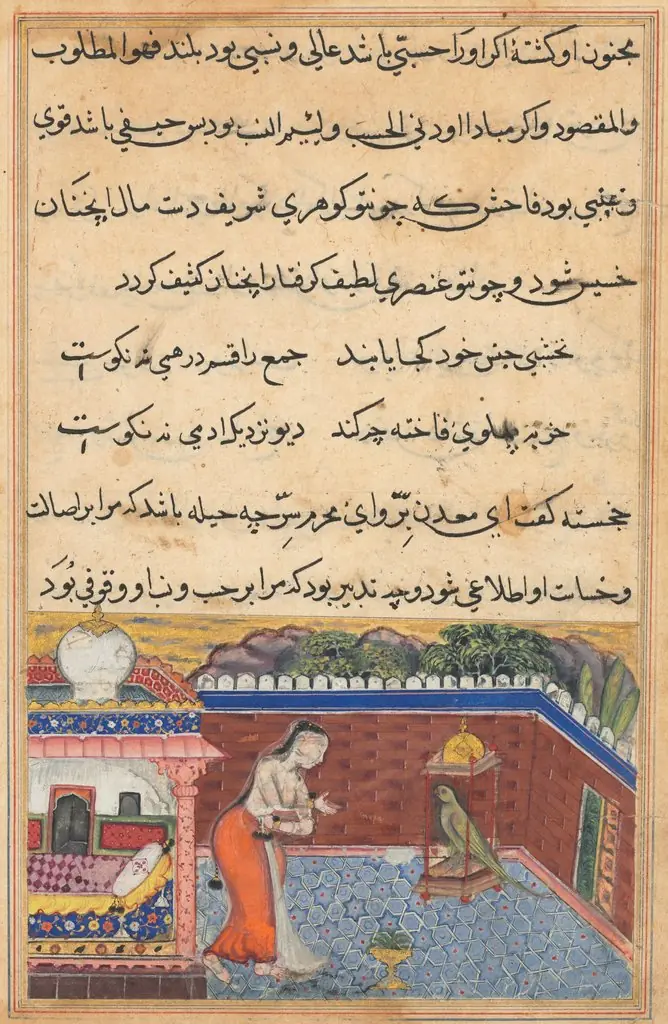 The parrot addresses Khujasta at the beginning of the thirty-first night, from a Tuti-nama (Tales of a Parrot)
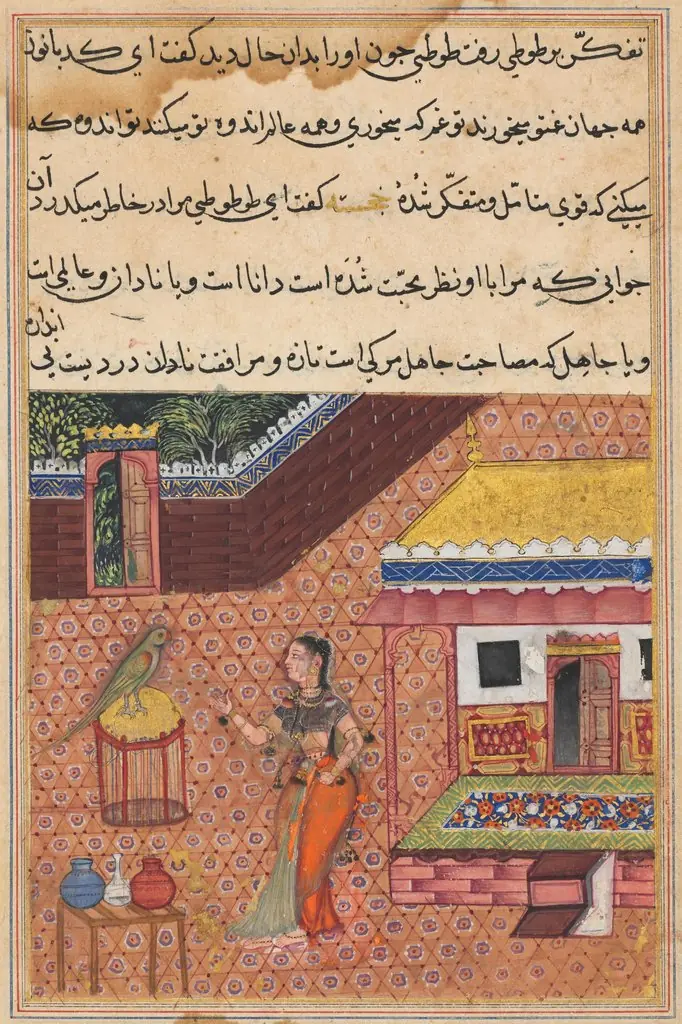 The parrot addresses Khujasta at the beginning of the thirty-fourth night, from a Tuti-nama (Tales of a Parrot)
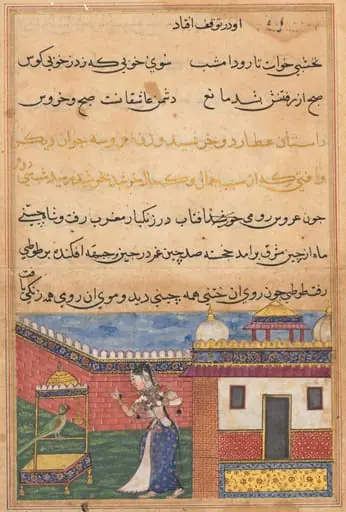 The parrot addresses Khujasta at the beginning of the thirty-second night, from a Tuti-nama (Tales of a Parrot)
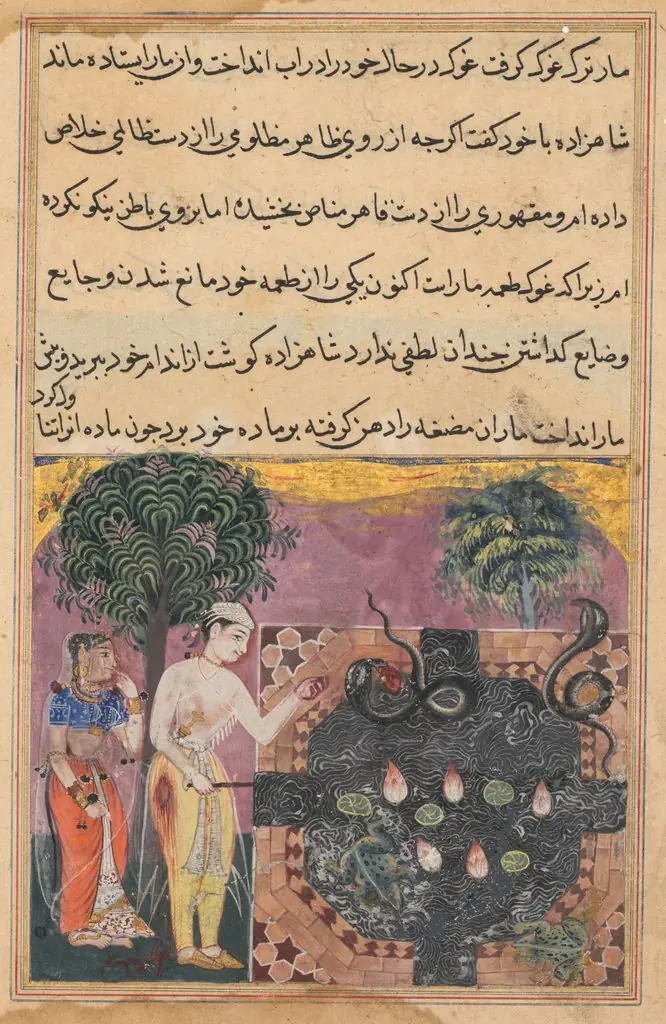 The prince, having deprived the snake of its natural food, a frog, feeds it with a piece of his own flesh, from a Tuti-nama (Tales of a Parrot): Eighteenth Night
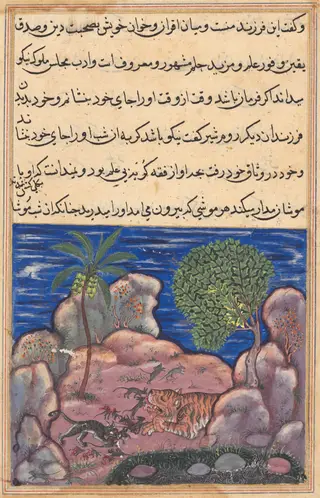 The cat attacks the mice which disturb the lion, from a Tuti-nama (Tales of a Parrot): Fifteenth Night
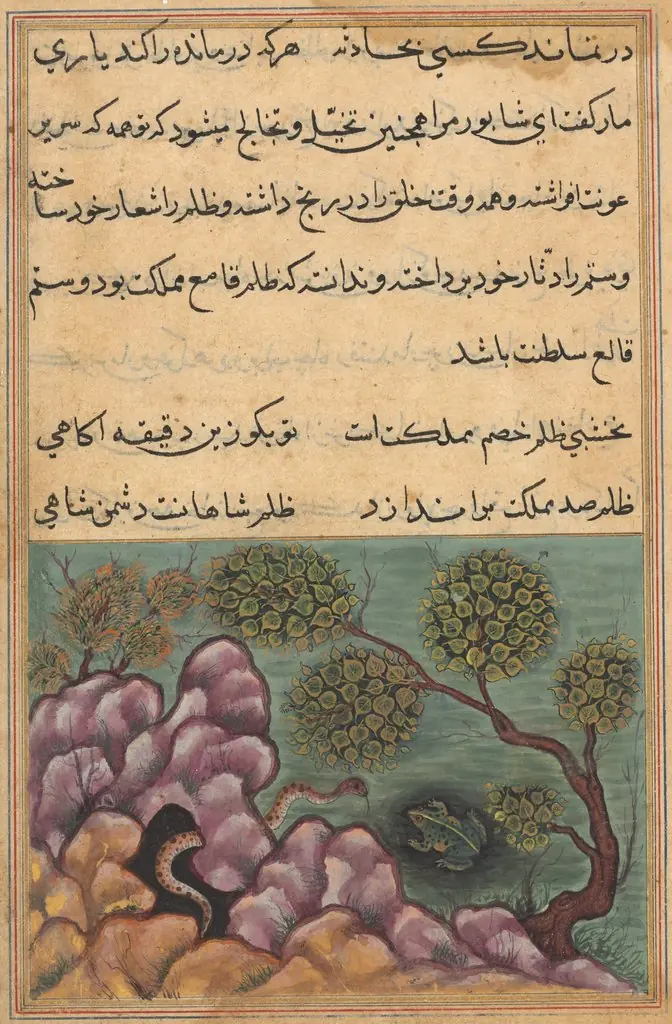 The dethroned frog Shapur seeks the help of the serpent, from a Tuti-nama (Tales of a Parrot): Twenth-sixth Night