Artwork
The prince, having deprived the snake of its natural food, a frog, feeds it with a piece of his own flesh, from a Tuti-nama (Tales of a Parrot): Eighteenth Night
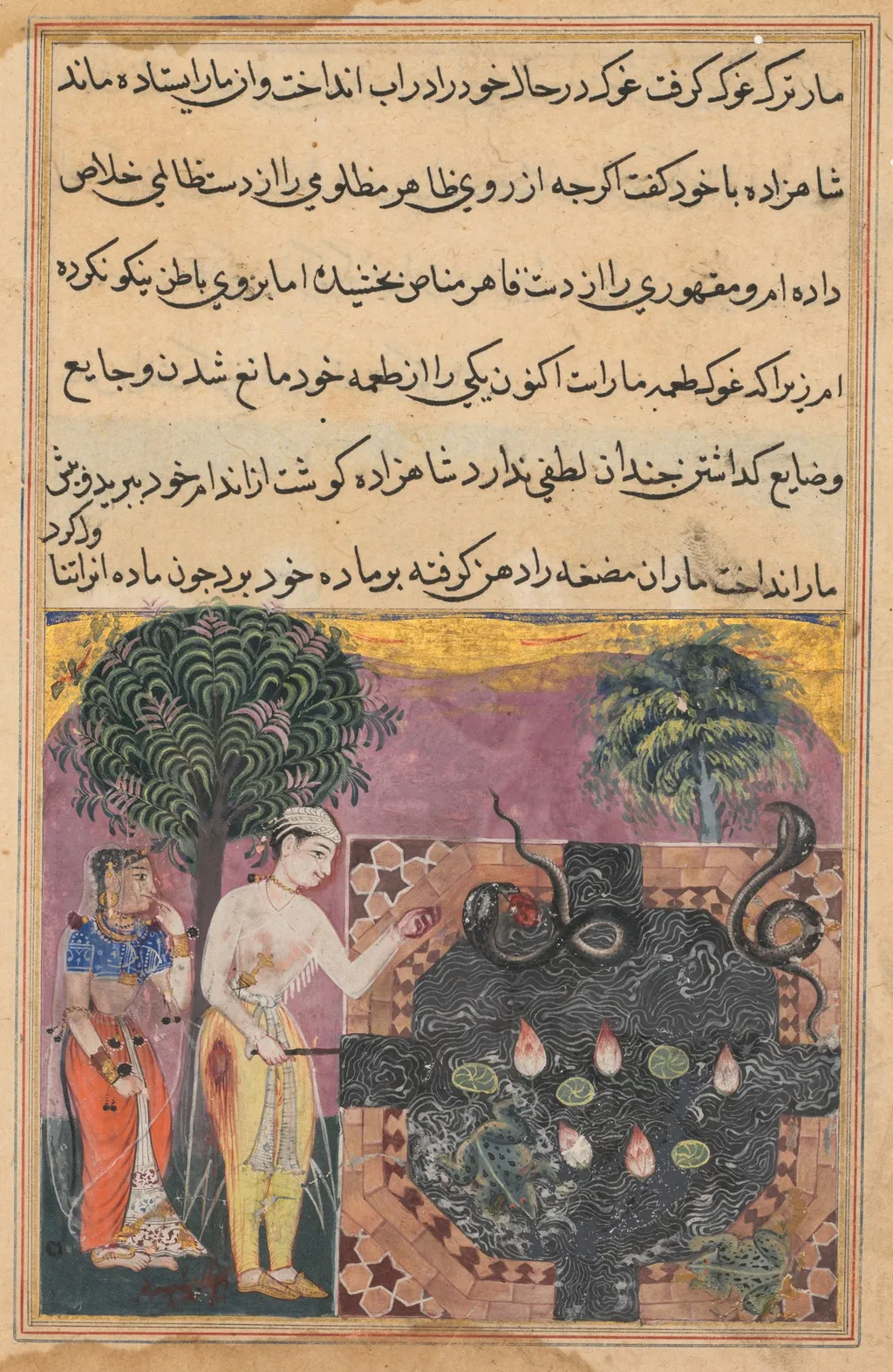
The prince, having deprived the snake of its natural food, a frog, feeds it with a piece of his own flesh, from a Tuti-nama (Tales of a Parrot): Eighteenth Night is an unspecified painting. It dates from 1560 and is held in the collection of the Cleveland Museum of Art. This painting illustrates a scene from the Tuti-nama, or "Tales of a Parrot," specifically depicting the Eighteenth Night.
About this work
Subject & Meaning
The work is housed in the Cleveland Museum of Art and dates to 1560, exemplifying courtly illustration of moral didactics.
The miniature from the Tuti‑nama shows a prince who, having removed a frog from its natural diet, offers the creature a fragment of his own flesh, a scene that also includes a cobra and a frog in the composition. The imagery draws on Mughal court patronage and reflects the narrative of the eighteenth night of the Persian tale, where self‑sacrifice and the reversal of natural order convey a moral lesson about charity and the consequences of depriving living beings of their proper sustenance. The work is housed in the Cleveland Museum of Art and dates to 1560, exemplifying courtly illustration of moral didactics.
History & Provenance
This painting is part of the Tuti-nama (Tales of a Parrot) manuscript, created circa 1560 during the Mughal Empire under the patronage of Emperor Akbar. The Cleveland Museum of Art holds the work (accession no. 1962.279.132.b), where it entered the collection in 1962. The manuscript’s provenance traces to Mughal imperial workshops, likely commissioned as part of a larger literary and artistic project under Akbar’s reign.
The Cleveland Museum of Art’s record confirms its Mughal origin and 16th-century dating, aligning with the manuscript’s broader production context.
Overview
This painting illustrates a scene from the Tuti-nama, or "Tales of a Parrot," specifically depicting the Eighteenth Night. It shows a prince offering a piece of his own flesh to a large cobra, which he had previously deprived of its natural prey, a frog. The dramatic encounter unfolds under a bright sky, with another figure observing the prince's act of self-sacrifice. The enormous snake, with its hood raised and intricately patterned scales, dominates the foreground.
Technique & Style
The painting employs vibrant colors and detailed rendering to convey the scene's intensity. The colossal cobra is meticulously depicted, showcasing individual scales and its characteristic raised hood, contributing to the dramatic atmosphere. Figures are clearly delineated, with the prince in white and yellow, and an observer in red and blue.
The composition places the central action prominently, enhanced by the bright sky and a tree, while script at the top identifies the specific narrative.
Context
This illustration belongs to a manuscript of the Tuti-nama, a renowned collection of 52 Persian tales, often presented as a frame story where a parrot narrates stories over 52 nights to prevent its mistress from leaving her husband. Such illustrated manuscripts were popular in the Islamic world, particularly in India and Persia, serving both as literary works and visual narratives. The presence of script suggests its origin within a tradition of illuminated texts.
Artist & collection

- The prince, having deprived the snake of its natural food, a frog, feeds it with a piece of his own flesh, from a Tuti-nama (Tales of a Parrot): Eighteenth Night
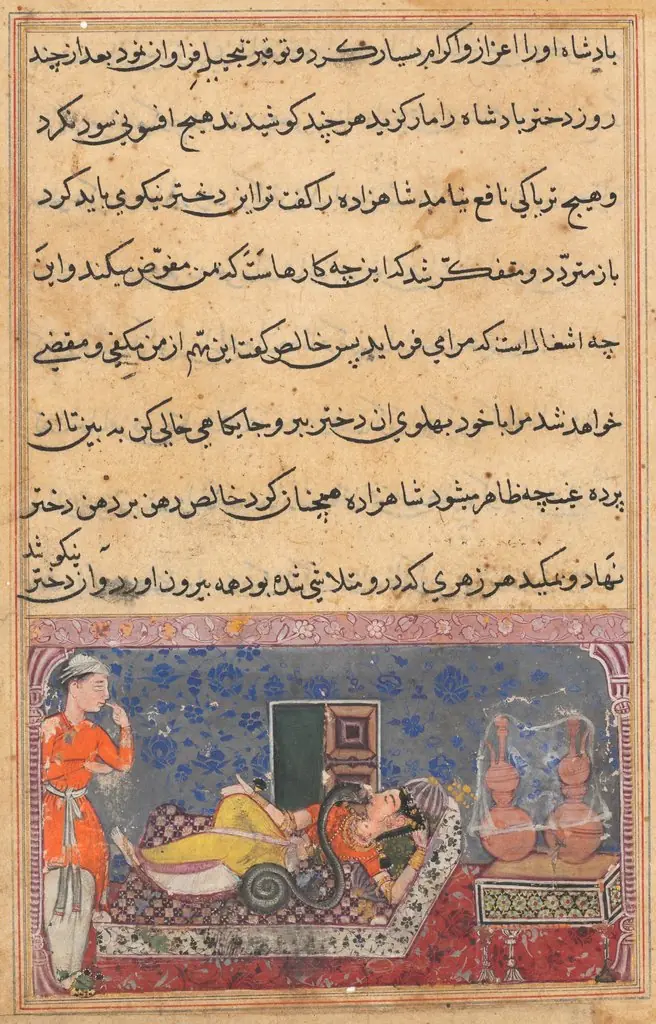 Khalis repays the prince for his kindness by changing into a snake and sucking the poison from the king’s daughter, from a Tuti-nama (Tales of a Parrot): Eighteenth Night
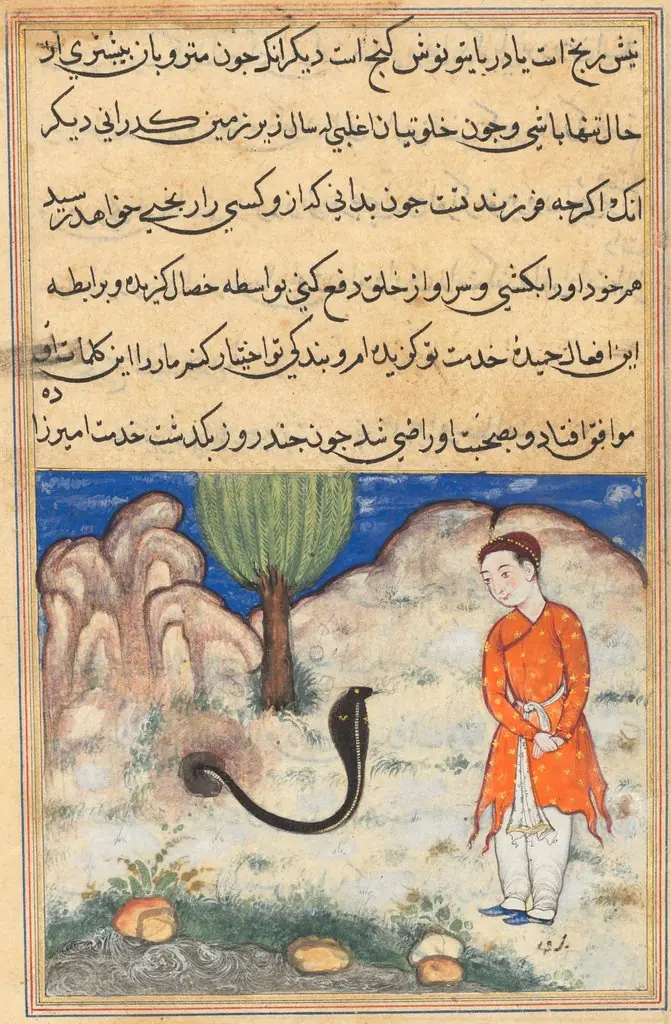 The prince, a son of the ruler of Sistan, enters the service of a snake, from a Tuti-nama (Tales of a Parrot): Thirty-seventh Night
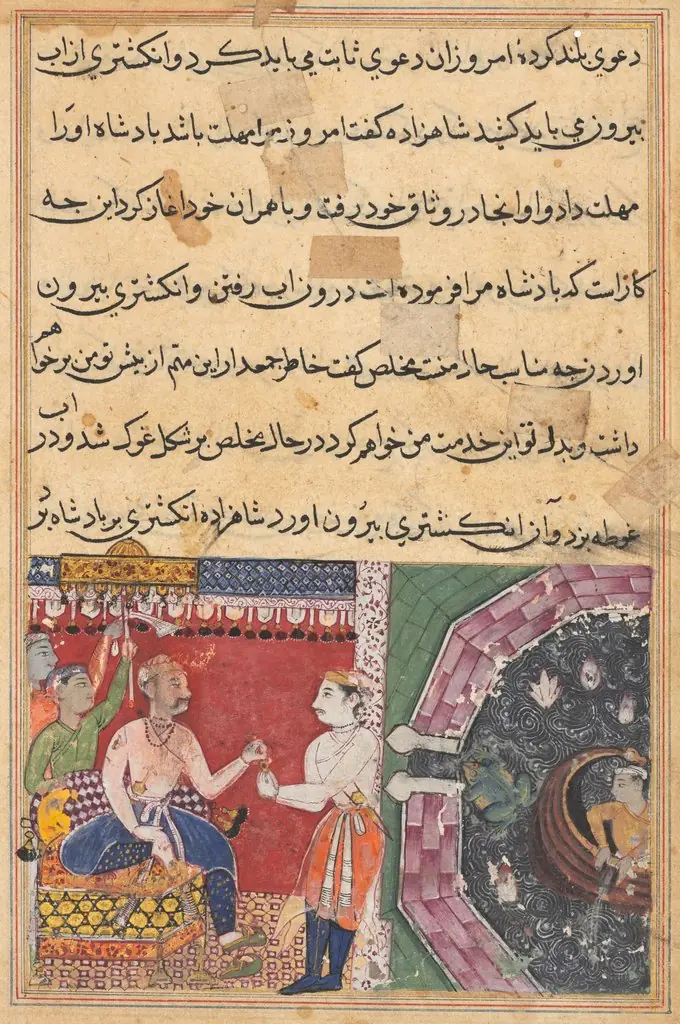 The prince, with the help of Mukhlis who changes into a frog, recovers the ring lost in the sea, and returns it to the king, from a Tuti-nama (Tales of a Parrot): Eighteenth Night
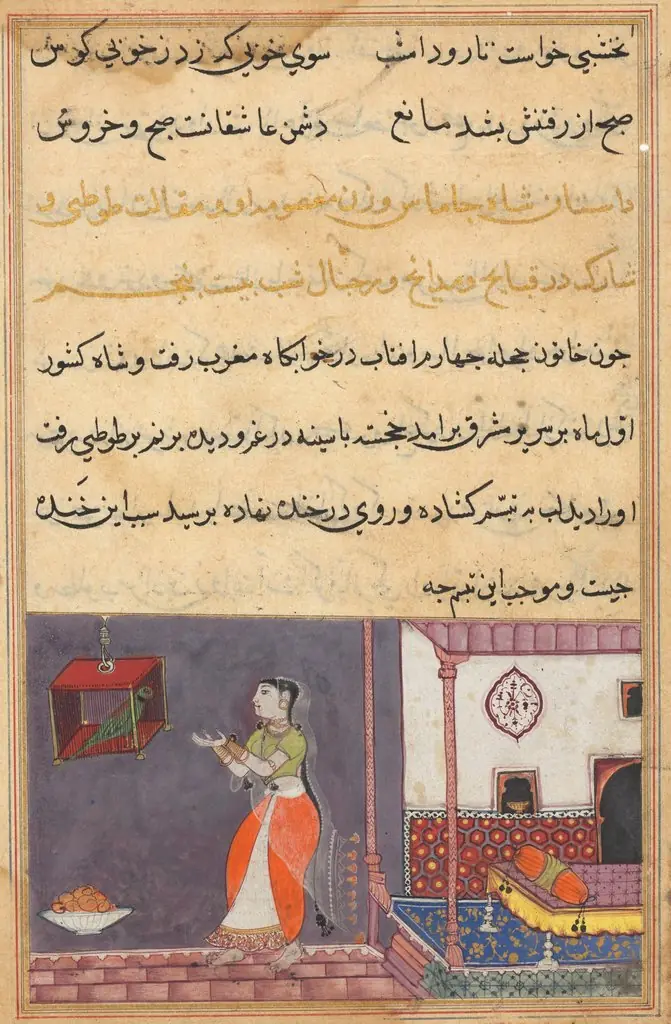 The Parrot Addresses Khujasta at the Beginning of the Twenty-fifth Night, from a Tuti-nama (Tales of a Parrot)
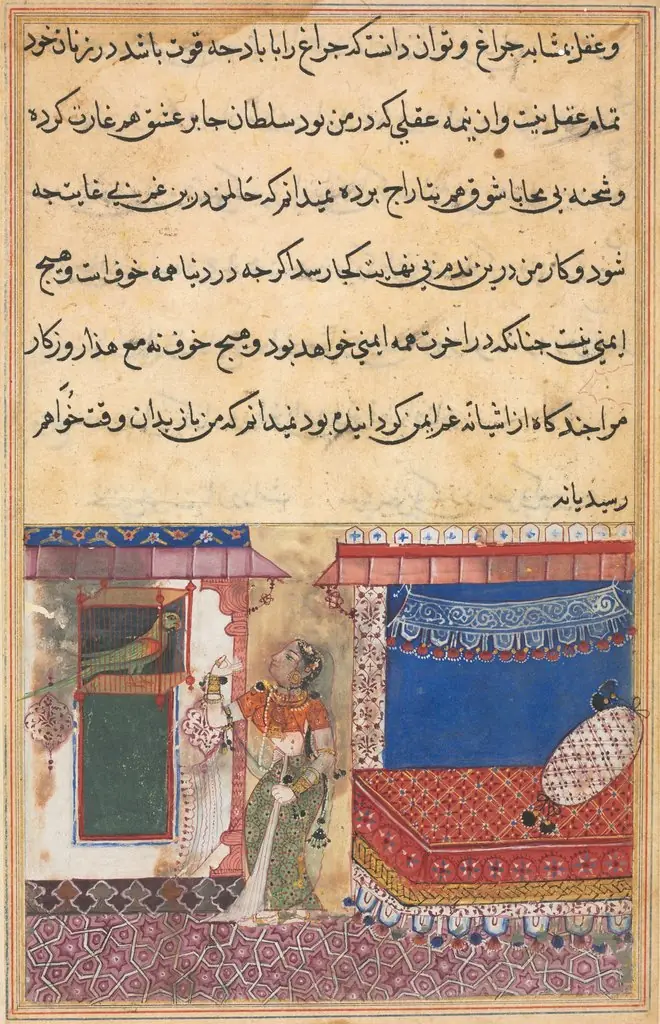 The Parrot Addresses Khujasta at the Beginning of the Eighteenth Night, from a Tuti-nama (Tales of a Parrot)
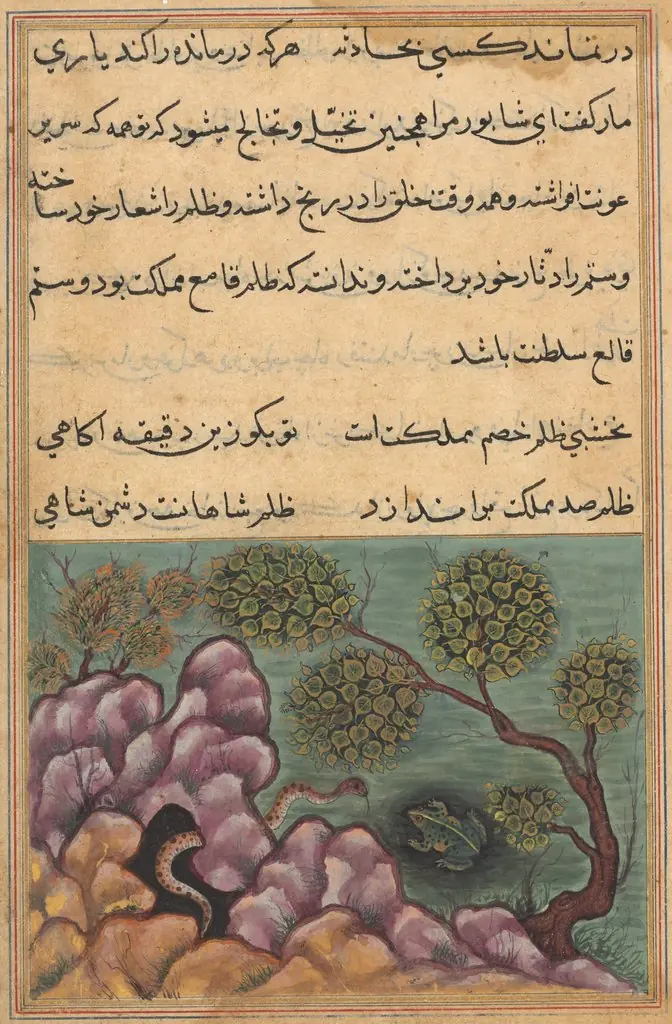 The dethroned frog Shapur seeks the help of the serpent, from a Tuti-nama (Tales of a Parrot): Twenth-sixth Night
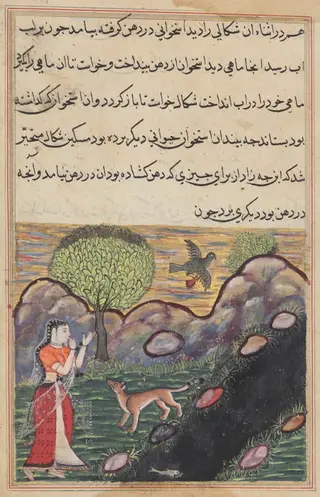 The daughter-in-law of the king of Banaras sees the jackal deprived of its food by a bird, as it unsuccessfully attempts to catch a fish, from a Tuti-nama (Tales of a Parrot): Sixteenth Night
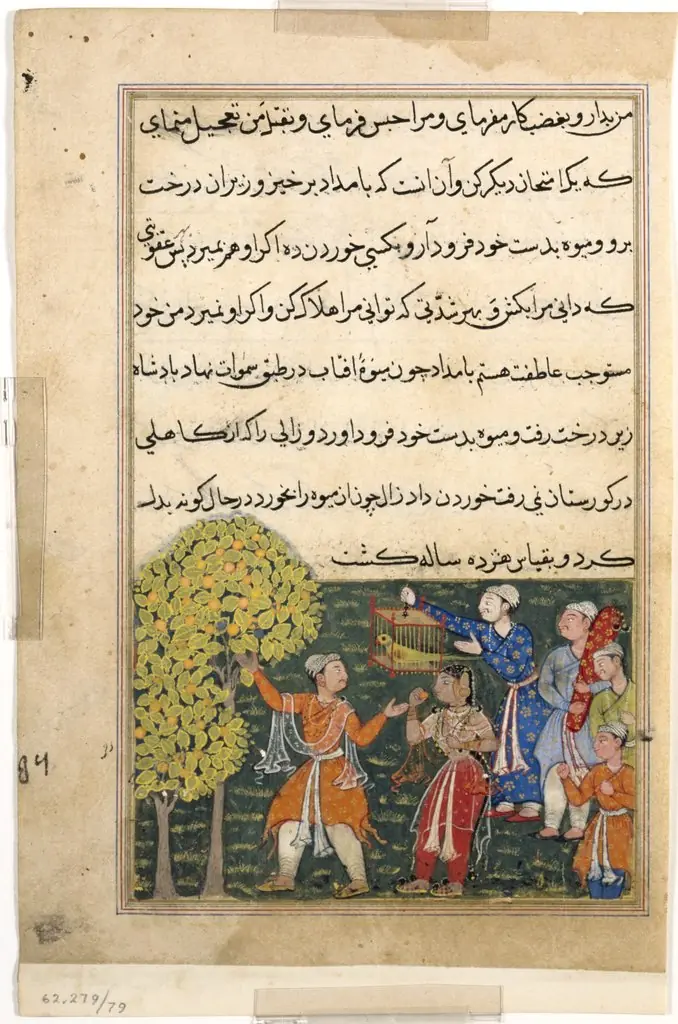 The king plucks fruit from the Tree of Life with his own hands and feeds it to a lady, from a Tuti-nama (Tales of a Parrot): Ninth Night
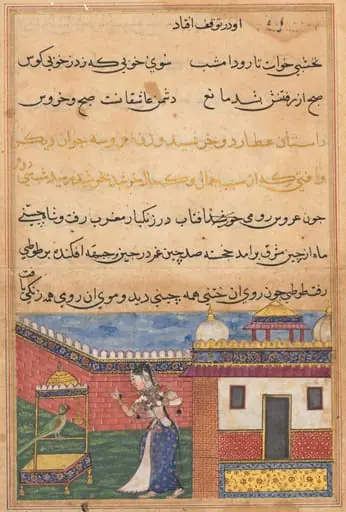 The parrot addresses Khujasta at the beginning of the thirty-second night, from a Tuti-nama (Tales of a Parrot)
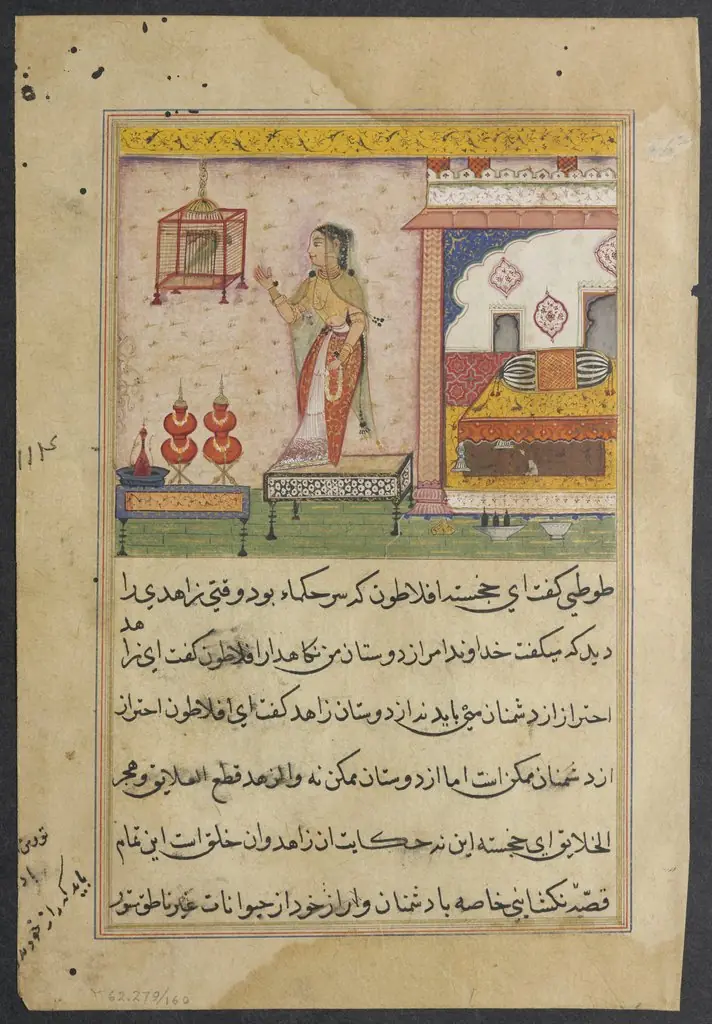 The Parrot Addresses Khujasta at the Beginning of the Twenty-third Night, from a Tuti-nama (Tales of a Parrot)
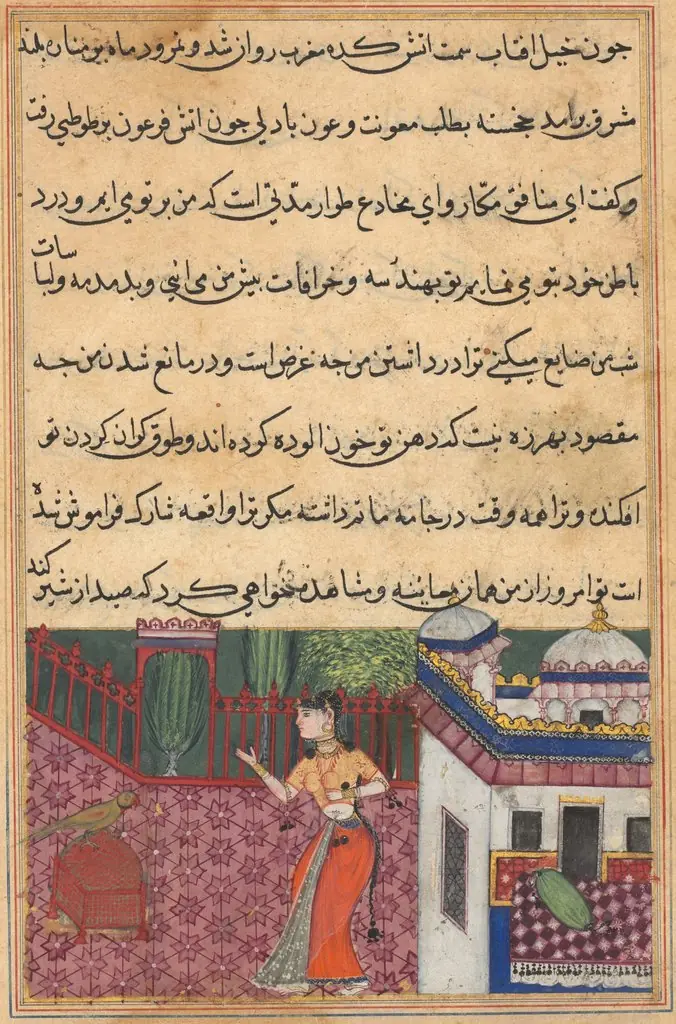 The parrot addresses Khujasta at the beginning of the thirty-third night, from a Tuti-nama (Tales of a Parrot)
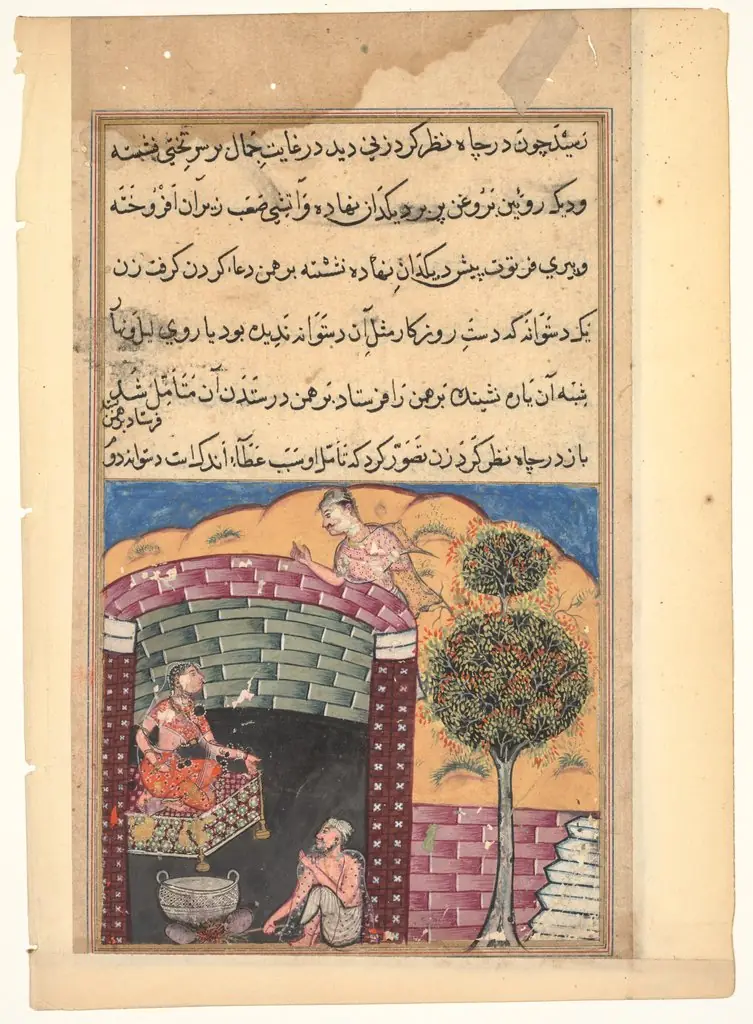 The Brahman gambler sees the daughter of the king of the jinns in a pit together with an old man and a cauldron of boiling oil, from a Tuti-nama (Tales of a Parrot: Seventh Night)
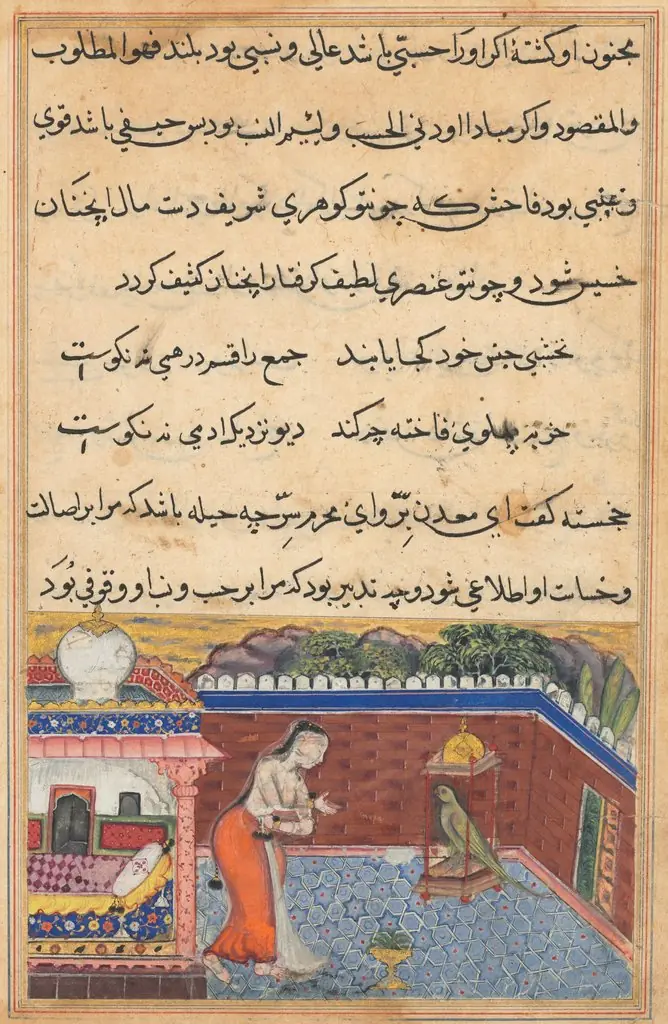 The parrot addresses Khujasta at the beginning of the thirty-first night, from a Tuti-nama (Tales of a Parrot)
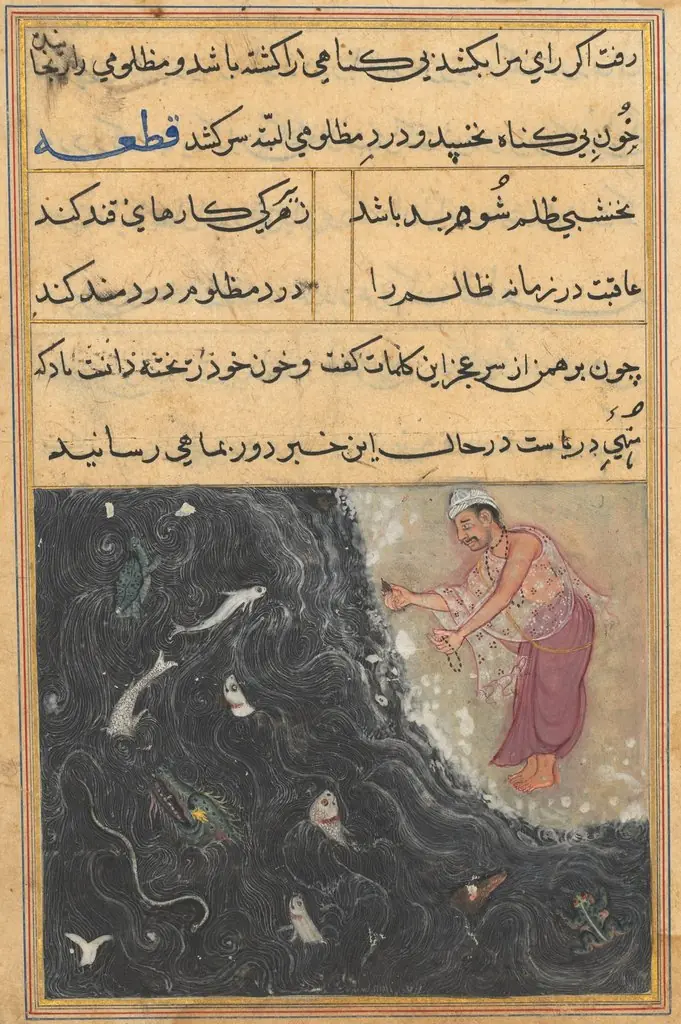 The Brahman’s predicament is conveyed by the wind to the fish who carries the news to the king of the Ocean, from a Tuti-nama (Tales of a Parrot): Eleventh Night
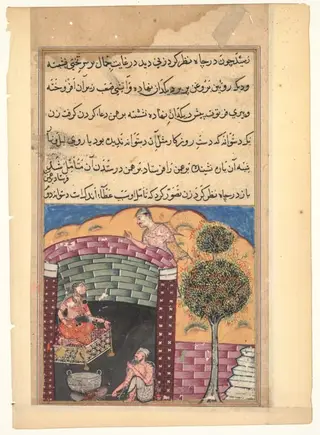 The Brahman gambler sees the daughter of the king of the jinns in a pit together with an old man and a cauldron of boiling oil, from a Tuti-nama (Tales of a Parrot: Seventh Night)
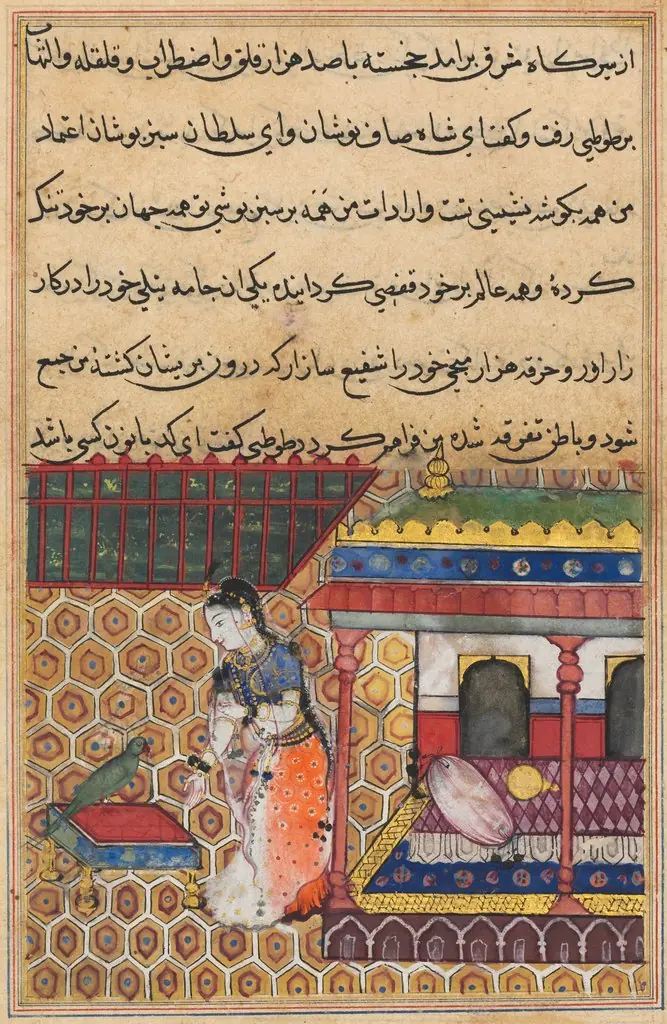 The parrot addresses Khujasta at the beginning of the thirty-eighth night, from a Tuti-nama (Tales of a Parrot)
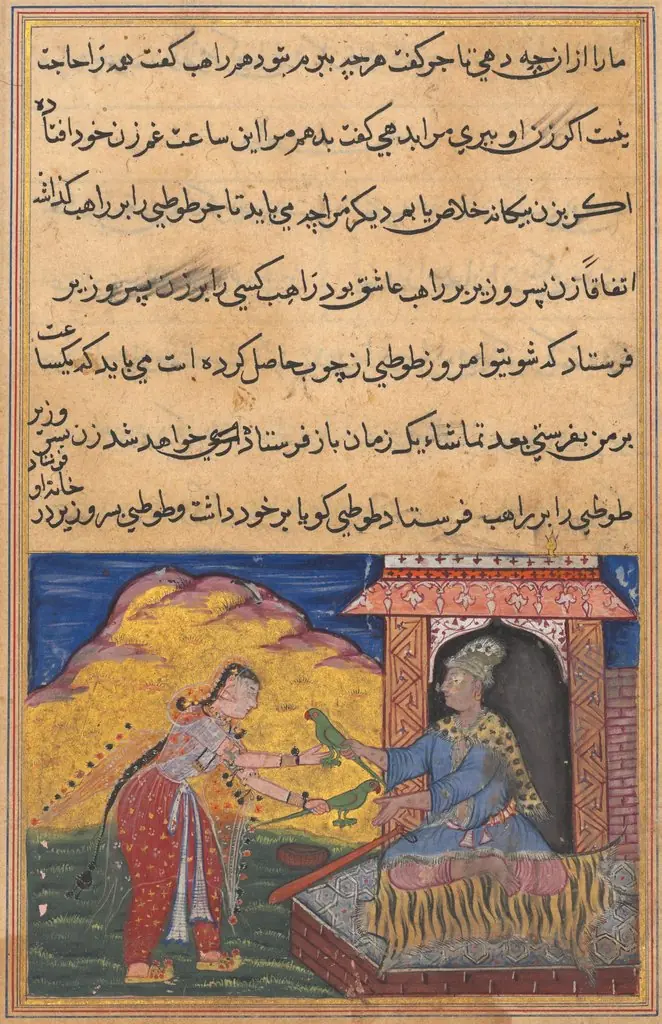 The wife of the son of the vizier brings the magic wooden parrot to her lover, the monk, who exchanges it for the replica, from a Tuti-nama (Tales of a Parrot): Tenth Night
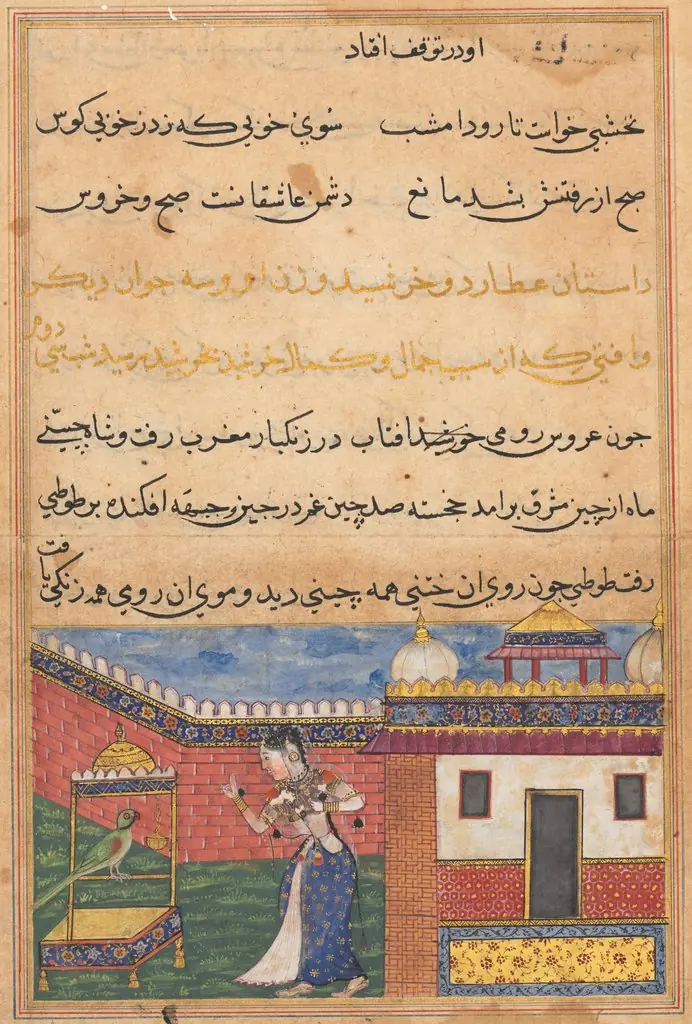 The parrot addresses Khujasta at the beginning of the thirty-second night, from a Tuti-nama (Tales of a Parrot)