Artwork
The parrot addresses Khujasta at the beginning of the thirty-fourth night, from a Tuti-nama (Tales of a Parrot)
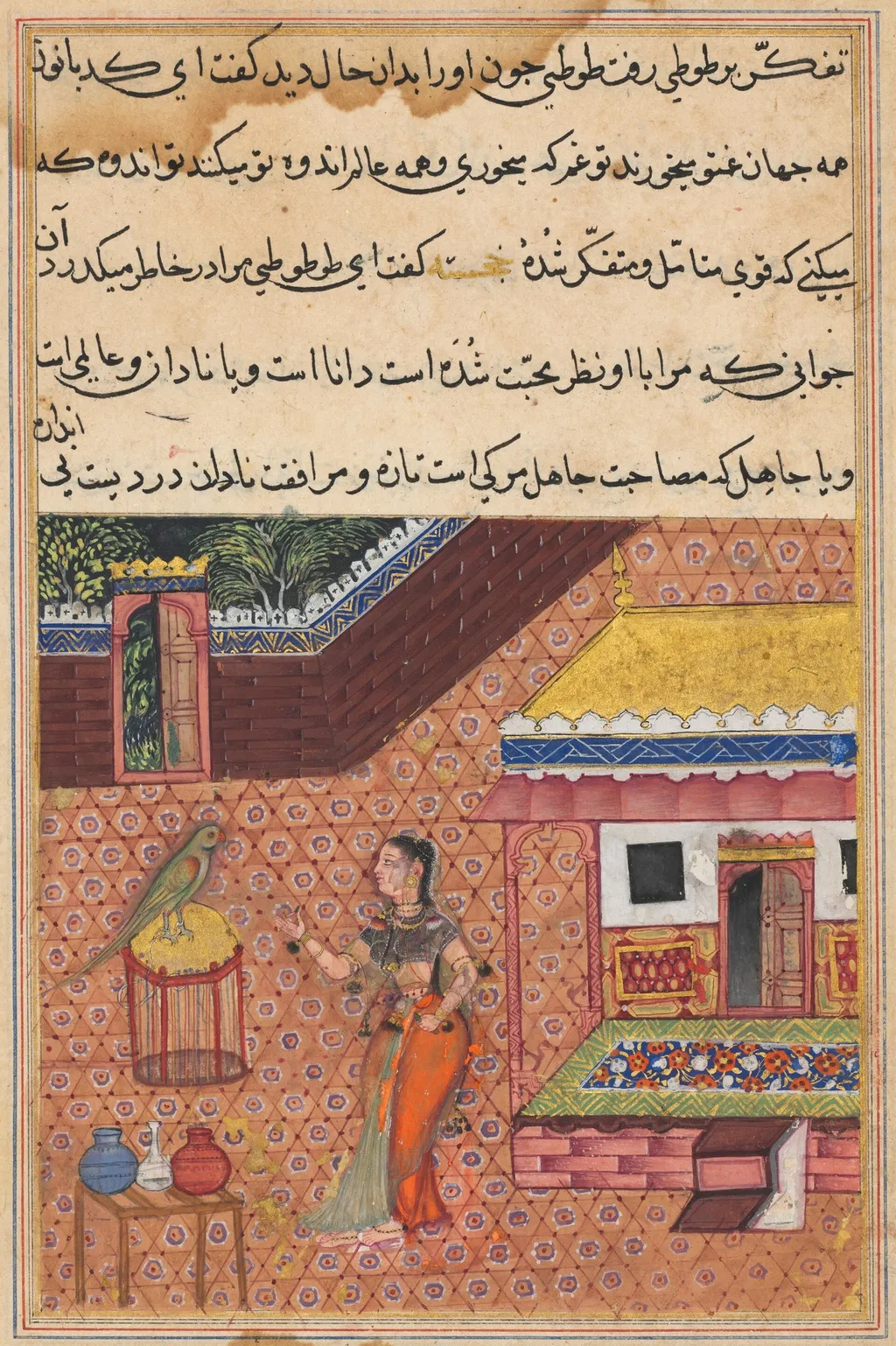
The parrot addresses Khujasta at the beginning of the thirty-fourth night, from a Tuti-nama (Tales of a Parrot) is an unspecified painting. It dates from 1560 and is held in the collection of the Cleveland Museum of Art. The work depicts a woman dressed in vivid orange garments, positioned within an elaborately adorned interior.
About this work
History & Provenance
The provided sources do not contain information regarding specific exhibitions in which this artwork has been displayed.
The work was created in 1560 within the Mughal Empire and is attributed to an unknown artist. It is held in the collection of the Cleveland Museum of Art, where it remains on view as part of the museum's Indian miniature painting holdings, cataloged under accession number 1962.279.223.b. The provided sources do not contain information regarding specific exhibitions in which this artwork has been displayed.
Overview
The work depicts a woman dressed in vivid orange garments, positioned within an elaborately adorned interior. She holds a fan and gazes toward a brightly colored parrot confined in a striped cage. The setting includes a patterned carpet of red, blue and white, a low table bearing two vases, and a window that frames palm trees and a tiled roof beyond.
Subject & Meaning
The scene illustrates a moment from the Persian narrative tradition of the Tuti‑nama, in which a parrot narrates stories to a lady named Khujasta on the thirty‑fourth night. The bird’s apparent speech to the woman underscores the tale’s motif of a talking animal conveying moral or romantic anecdotes.
Technique & Style
Rendered in a detailed, flat decorative manner, the painting emphasizes intricate surface patterning, particularly in the textiles, carpet, and architectural reliefs. The bright palette, stylized foliage visible through the window, and the precise rendering of the cage and bird reflect a courtly aesthetic common to Persian miniature illustration.
Context
Parrot stories were a popular literary device in Persian culture, symbolising wisdom and the transmission of knowledge. The lavish interior and luxurious attire of the female figure reflect the elite environment in which such manuscripts were read and displayed, serving both decorative and didactic purposes.
Artist & collection

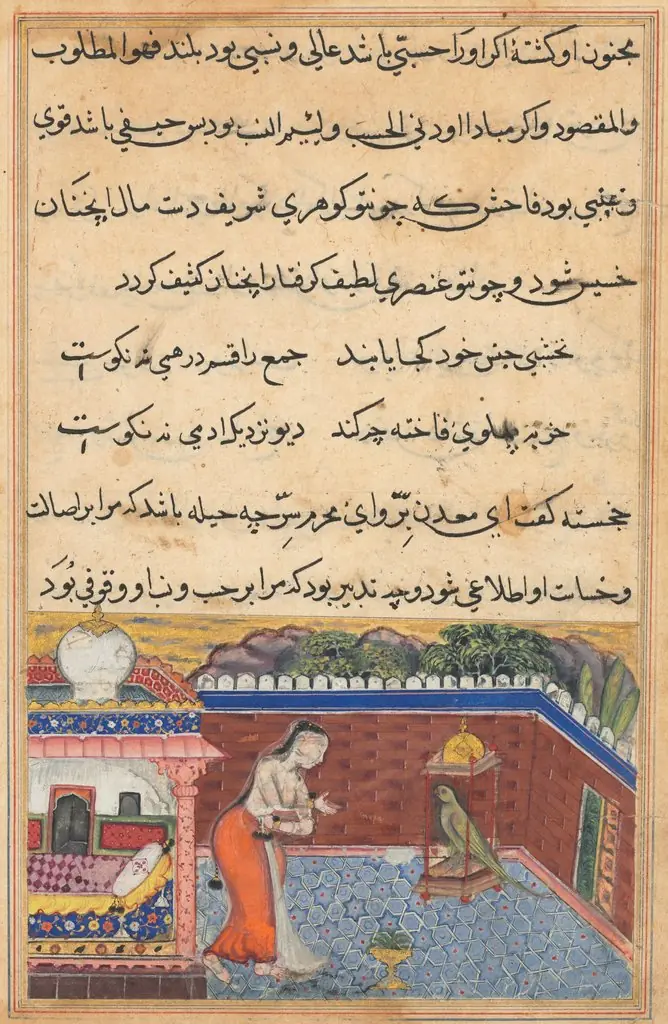
- The parrot addresses Khujasta at the beginning of the thirty-first night, from a Tuti-nama (Tales of a Parrot)
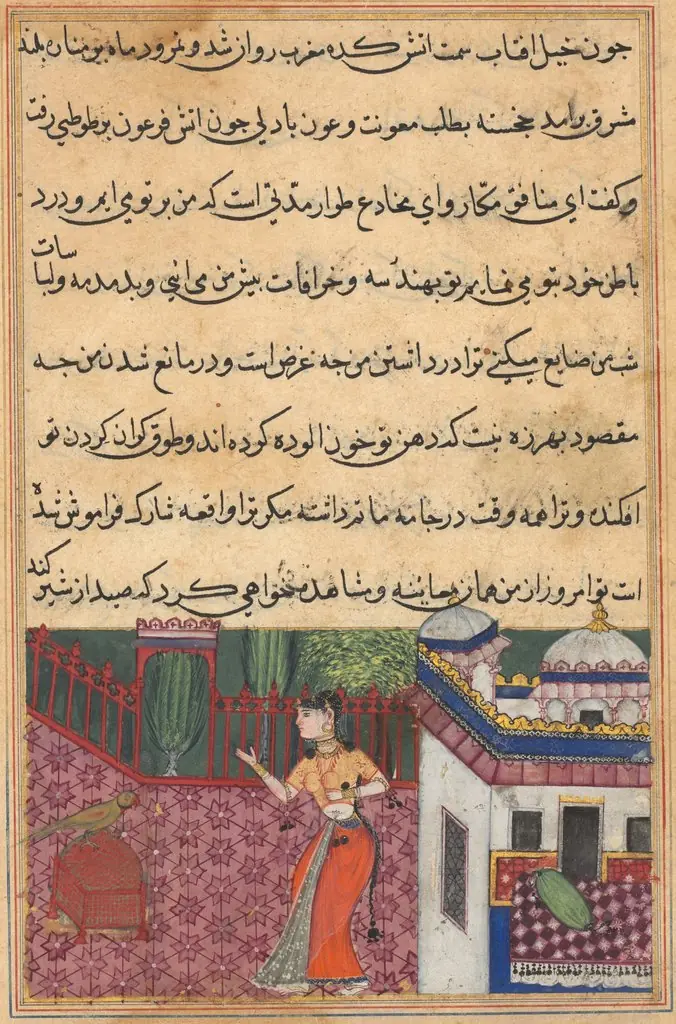 The parrot addresses Khujasta at the beginning of the thirty-third night, from a Tuti-nama (Tales of a Parrot)
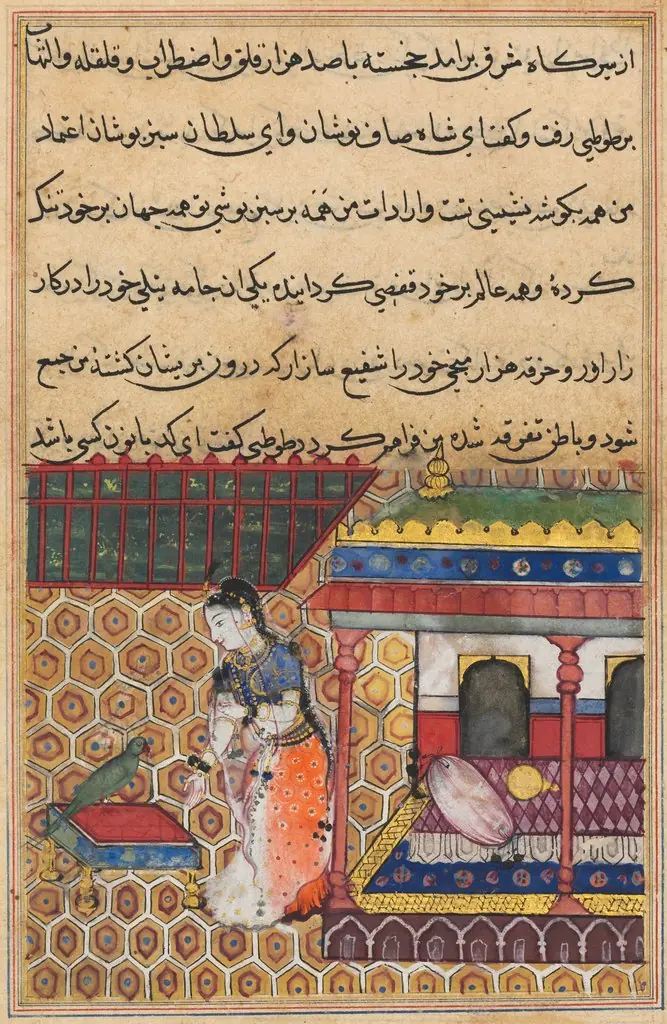 The parrot addresses Khujasta at the beginning of the thirty-eighth night, from a Tuti-nama (Tales of a Parrot)
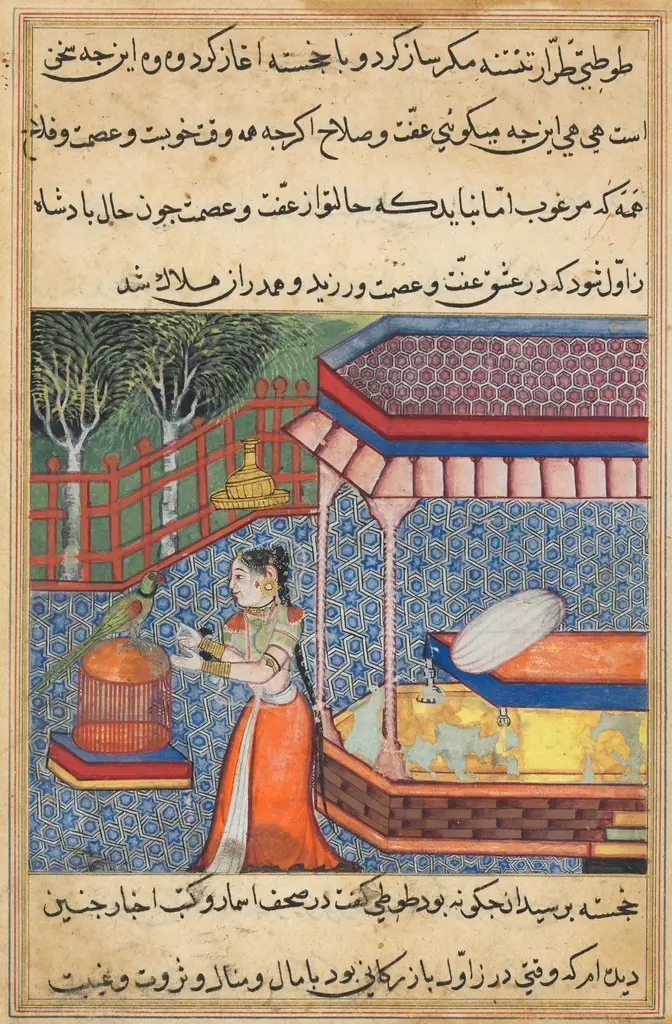 The parrot addresses Khujasta at the beginning of the thirty-sixth night, from a Tuti-nama (Tales of a Parrot)
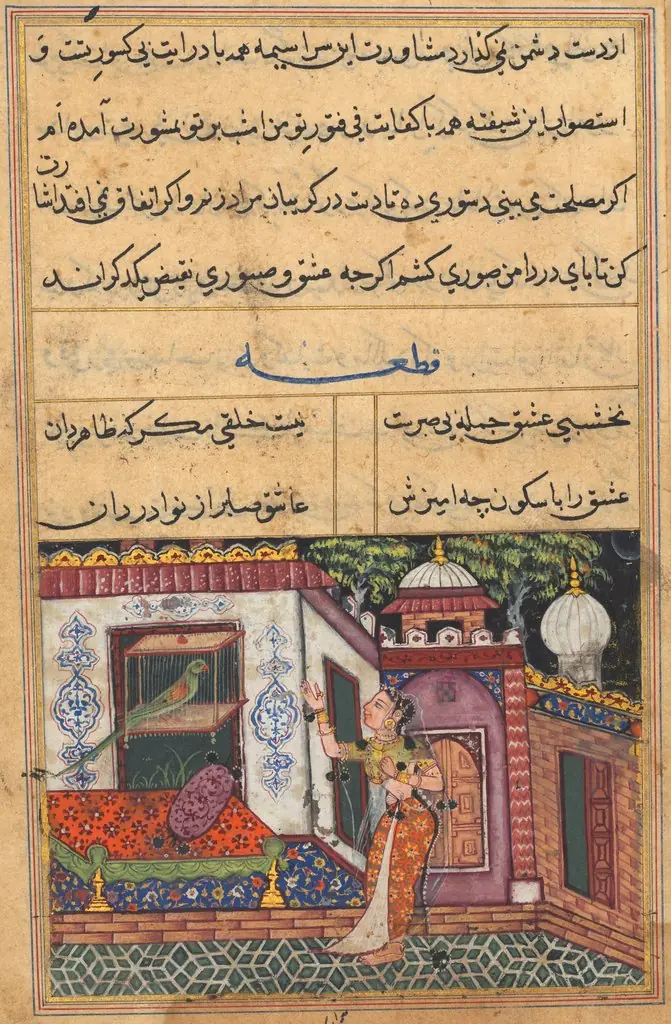 The Parrot Addresses Khujasta at the Beginning of the Eleventh Night, from a Tuti-nama (Tales of a Parrot)
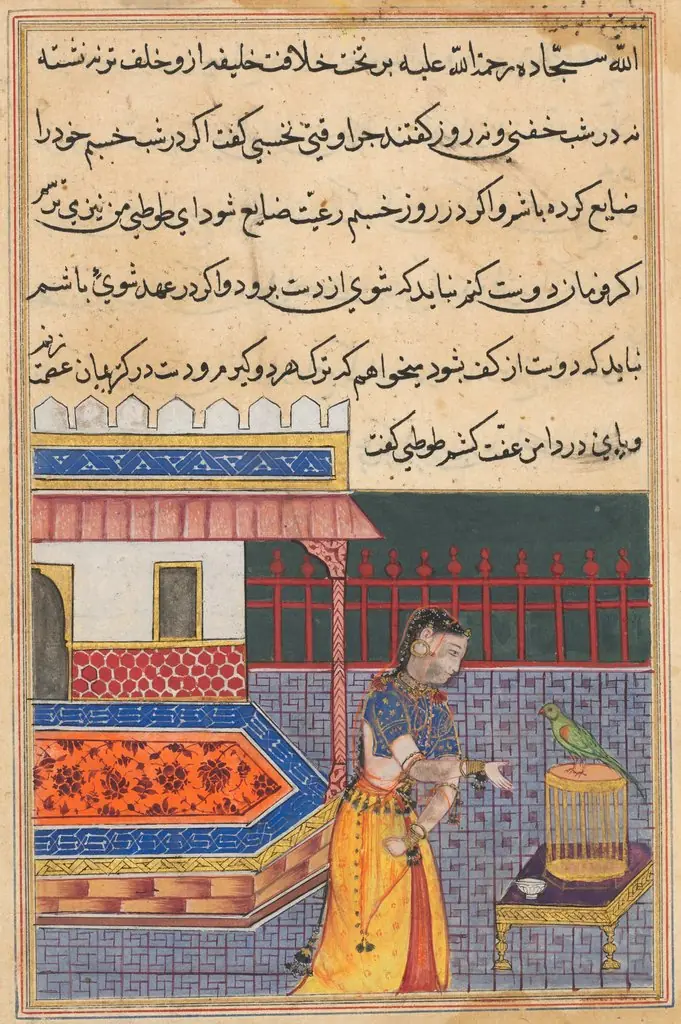 The parrot addresses Khujasta at the beginning of the forty-first night, from a Tuti-nama (Tales of a Parrot): Forty-first Night
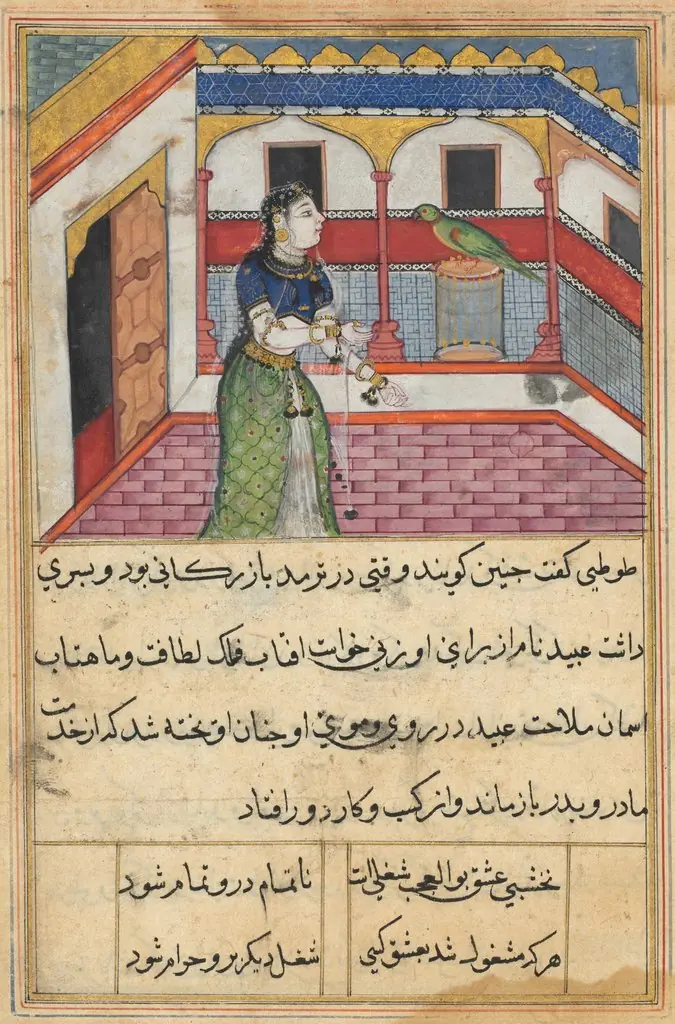 The parrot addresses Khujasta at the beginning of the forty-second night, from a Tuti-nama (Tales of a Parrot)
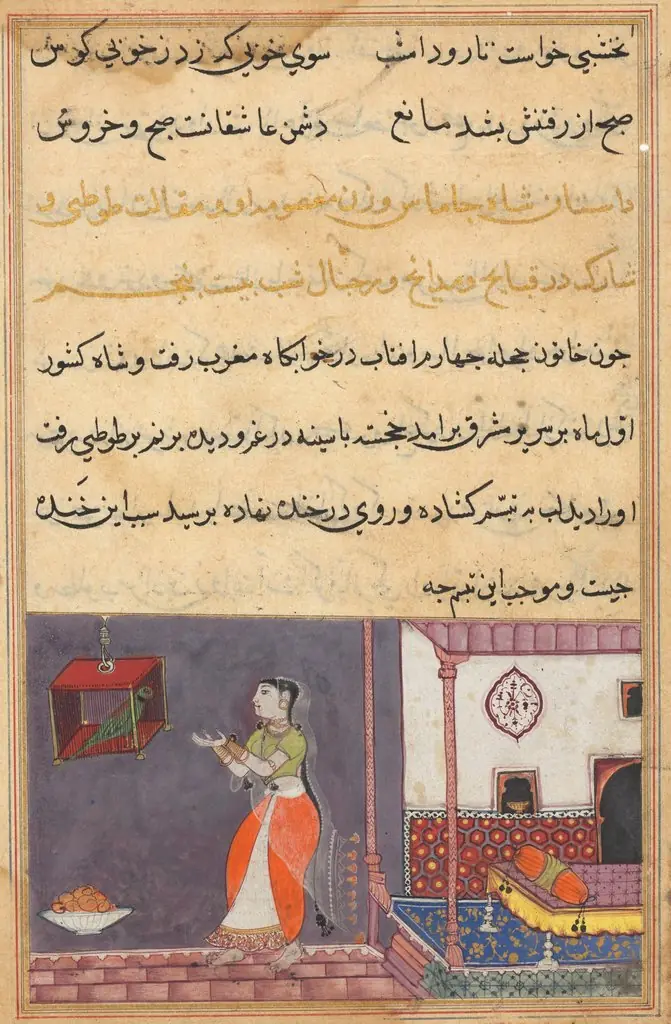 The Parrot Addresses Khujasta at the Beginning of the Twenty-fifth Night, from a Tuti-nama (Tales of a Parrot)
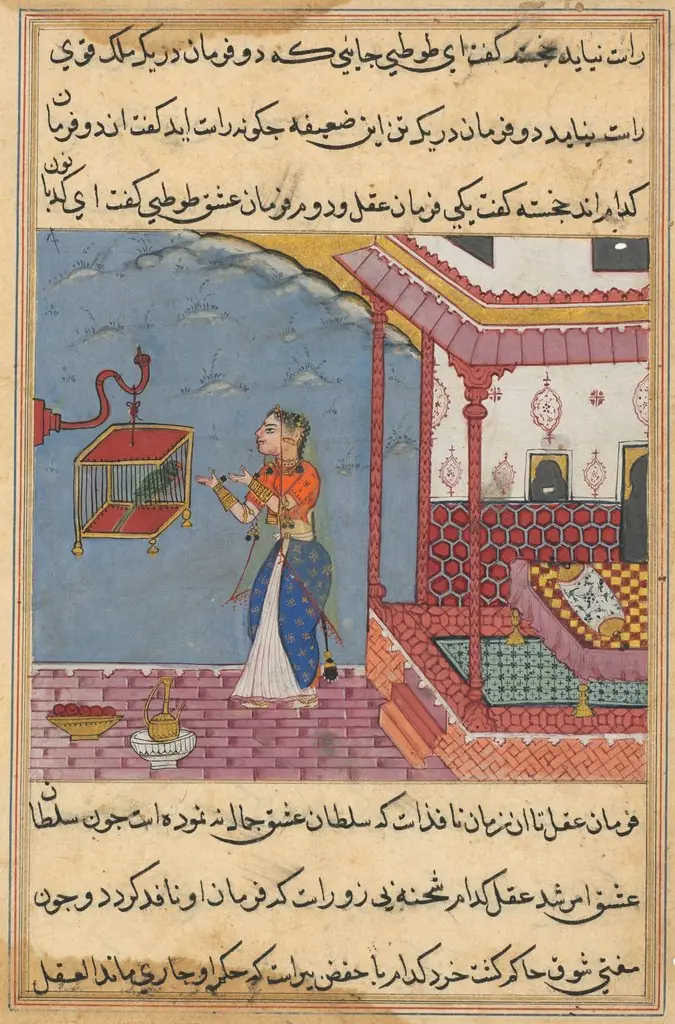 The Parrot Addresses Khujasta at the Beginning of the Twenty-Fourth Night, from a Tuti-nama (Tales of a Parrot)
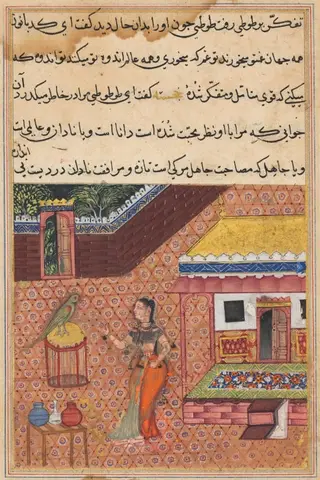 The parrot addresses Khujasta at the beginning of the thirty-fourth night, from a Tuti-nama (Tales of a Parrot)
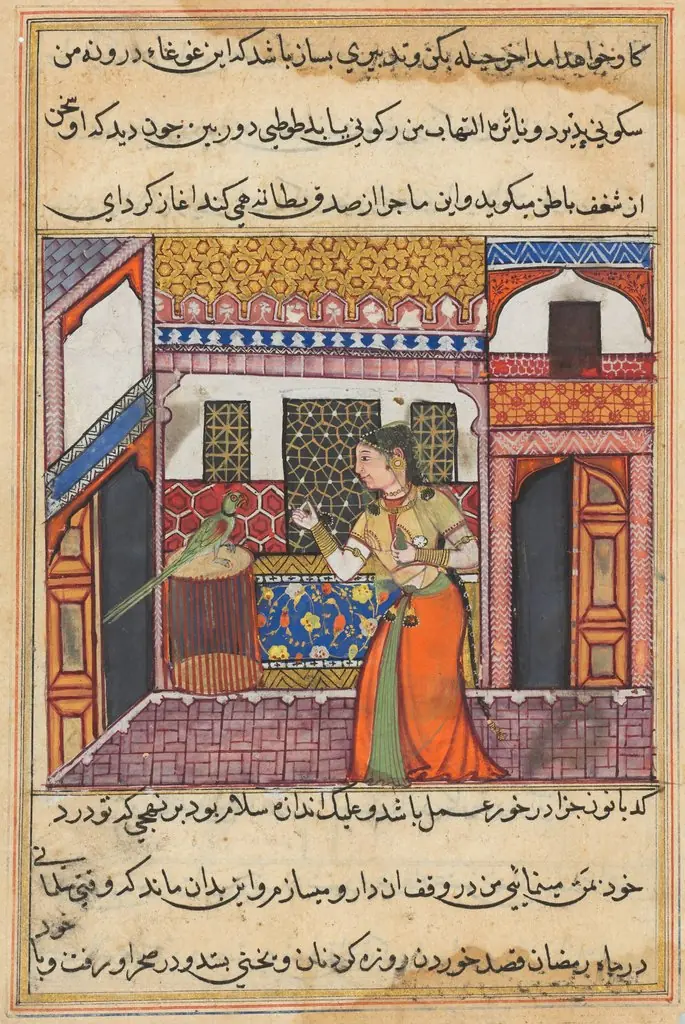 The parrot addresses Khujasta at the beginning of the forty-third night, from a Tuti-nama (Tales of a Parrot)
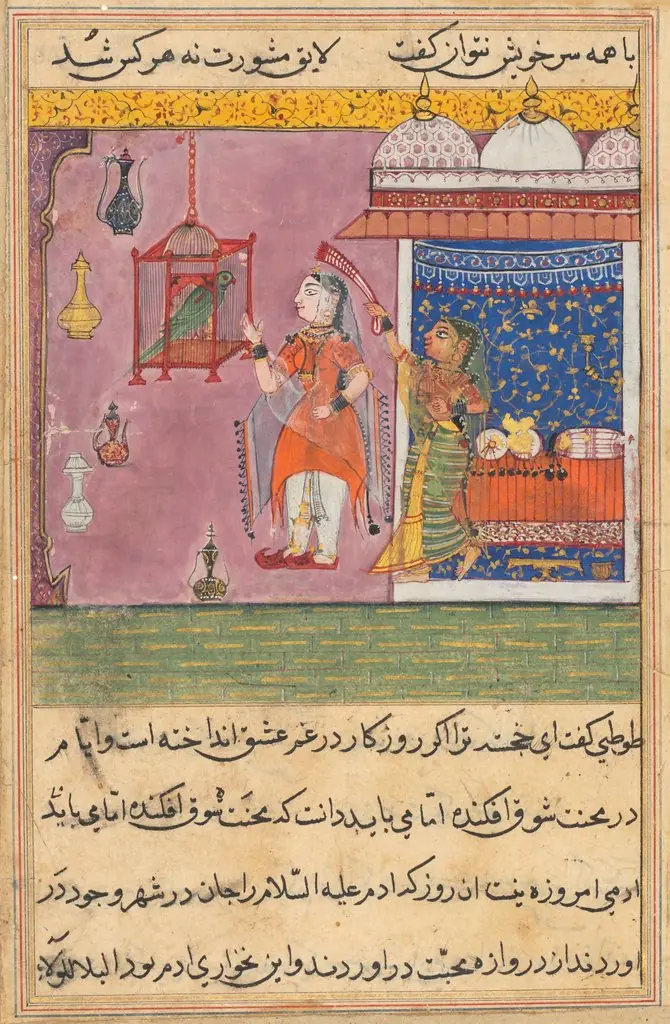 The Parrot Addresses Khujasta at the Beginning of the Nineteenth Night, from a Tuti-nama (Tales of a Parrot)
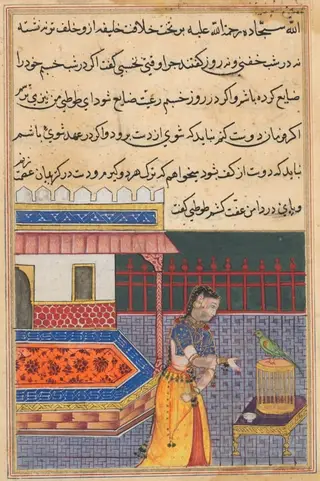 The parrot addresses Khujasta at the beginning of the forty-first night, from a Tuti-nama (Tales of a Parrot): Forty-first Night
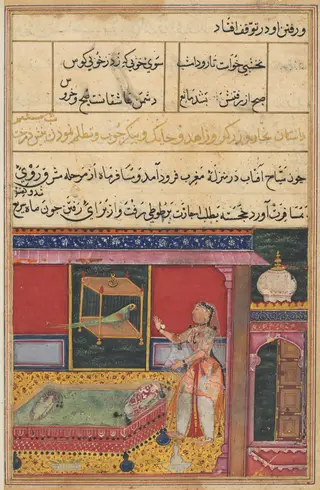 The Parrot Addresses Khujasta at the Beginning of the Sixth Night, from a Tuti-nama (Tales of a Parrot)
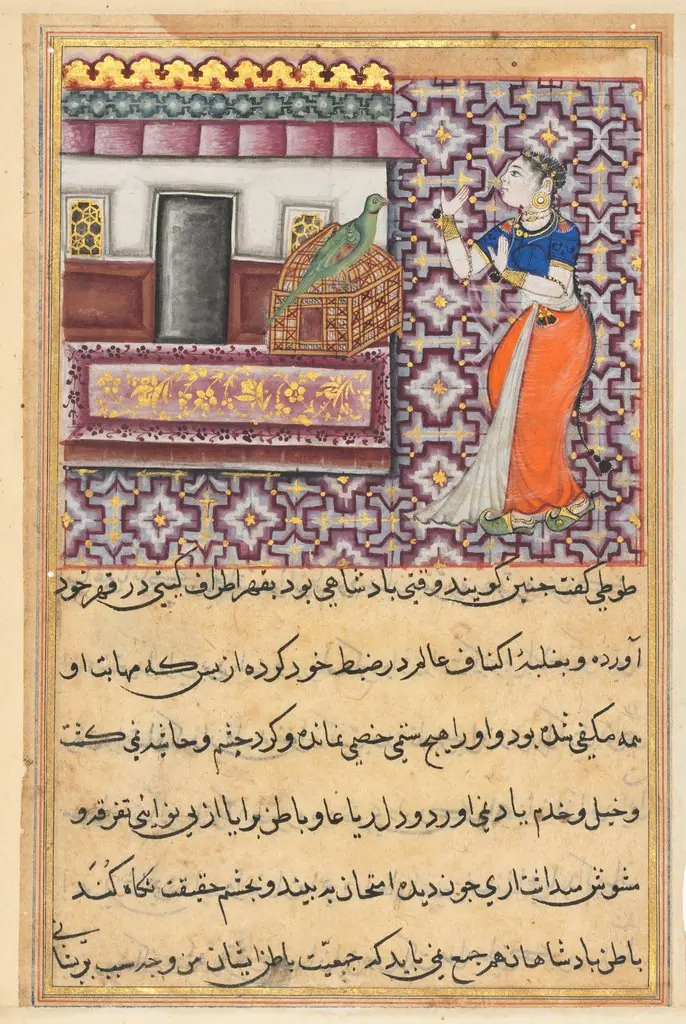 The parrot addresses Khujasta at the beginning of the fiftieth night, from a Tuti-nama (Tales of a Parrot): Fiftieth Night