Artwork
The Crucifixion
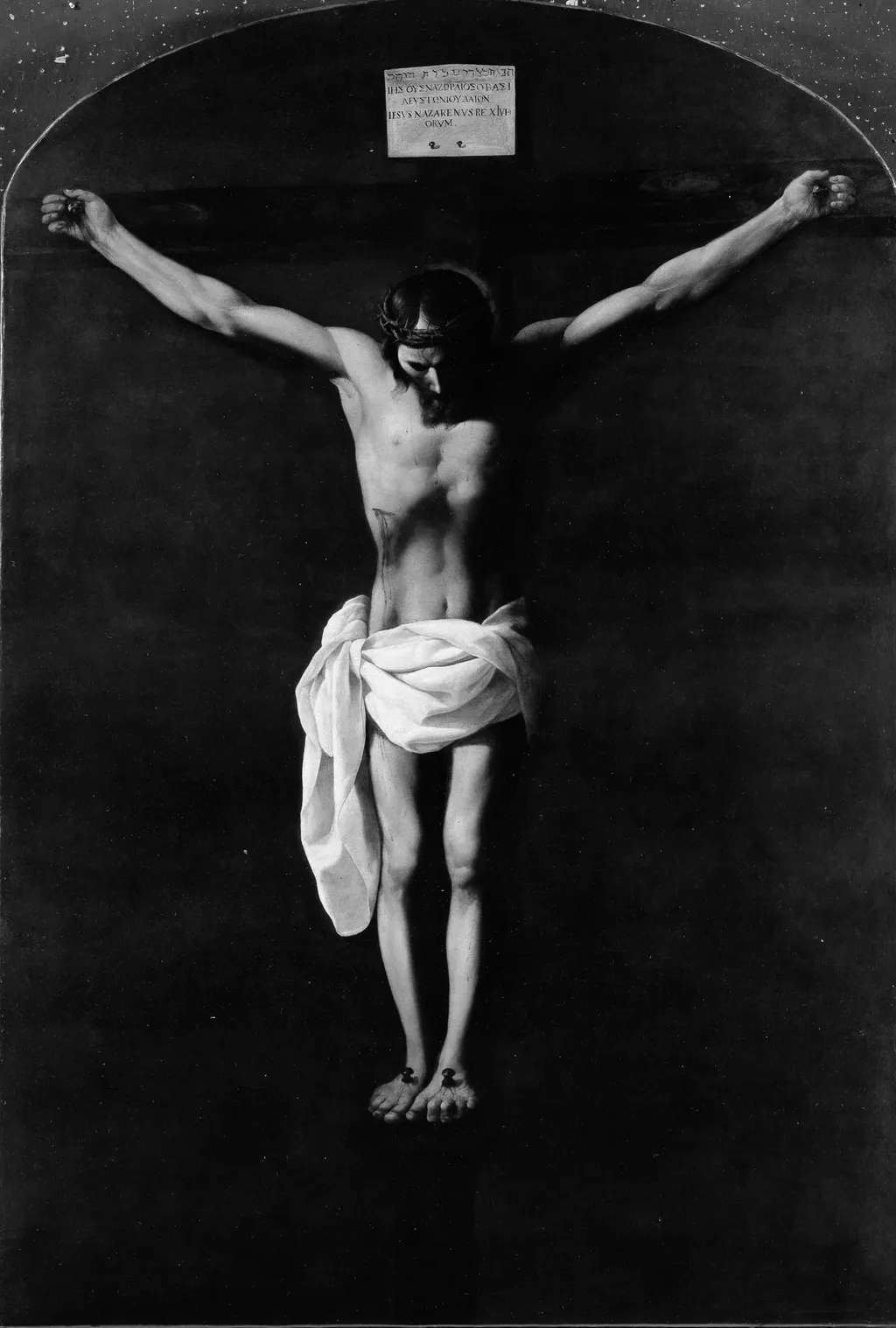
The Crucifixion is an oil painting. It dates from 1700 and is held in the collection of the Metropolitan Museum of Art.
About this work
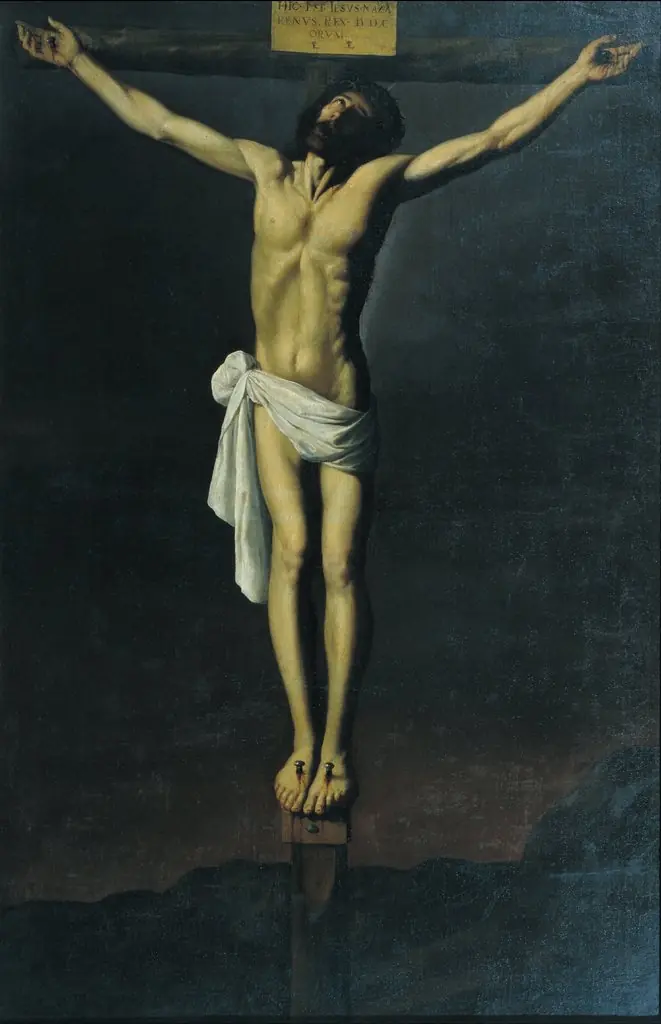
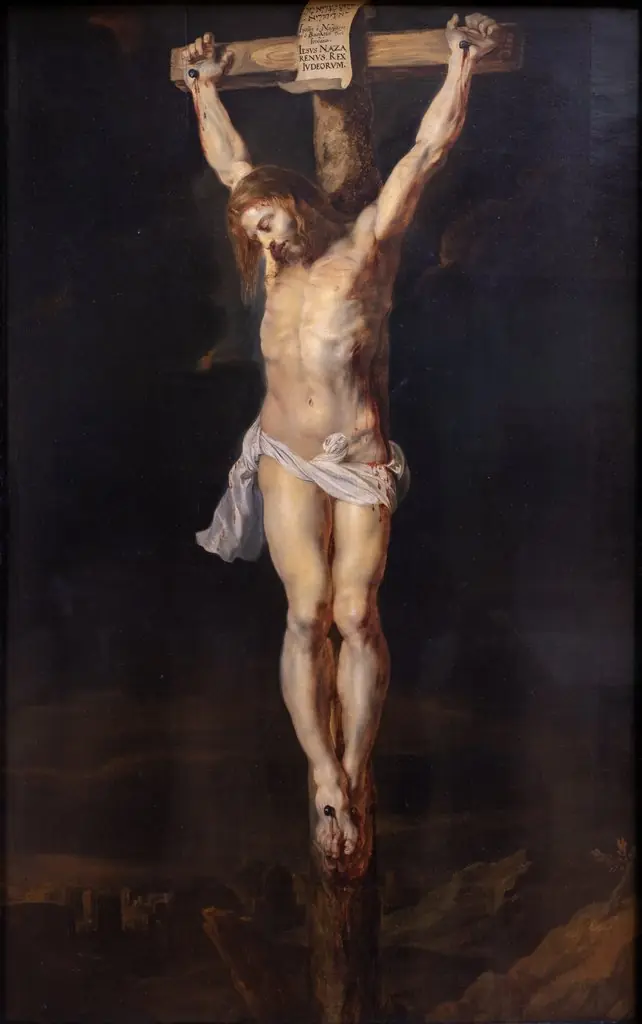
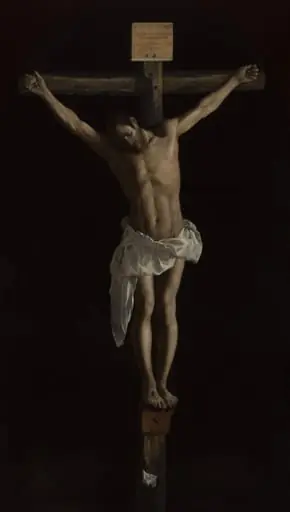
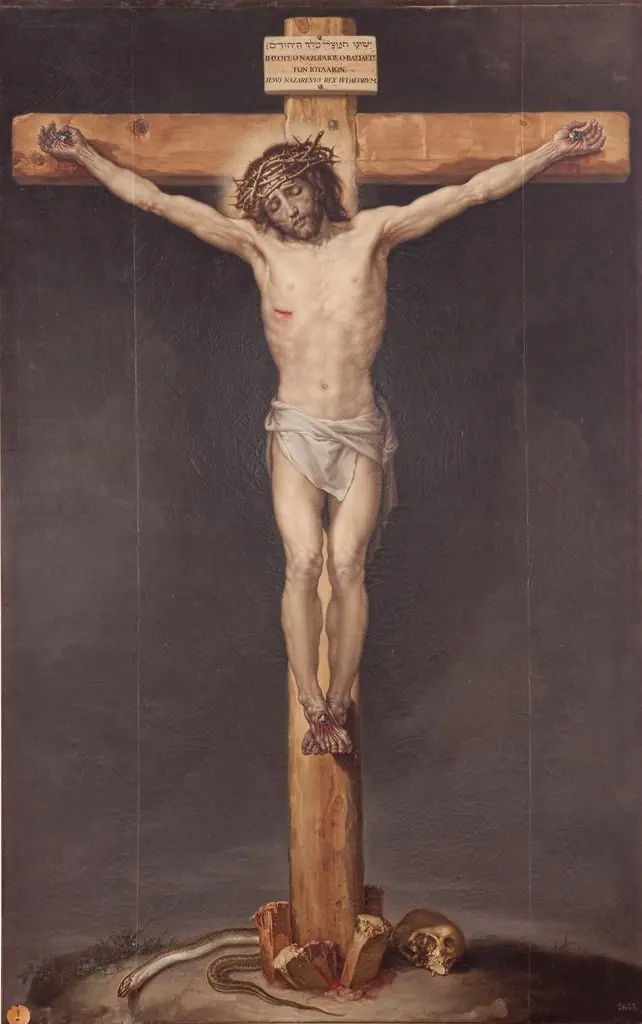
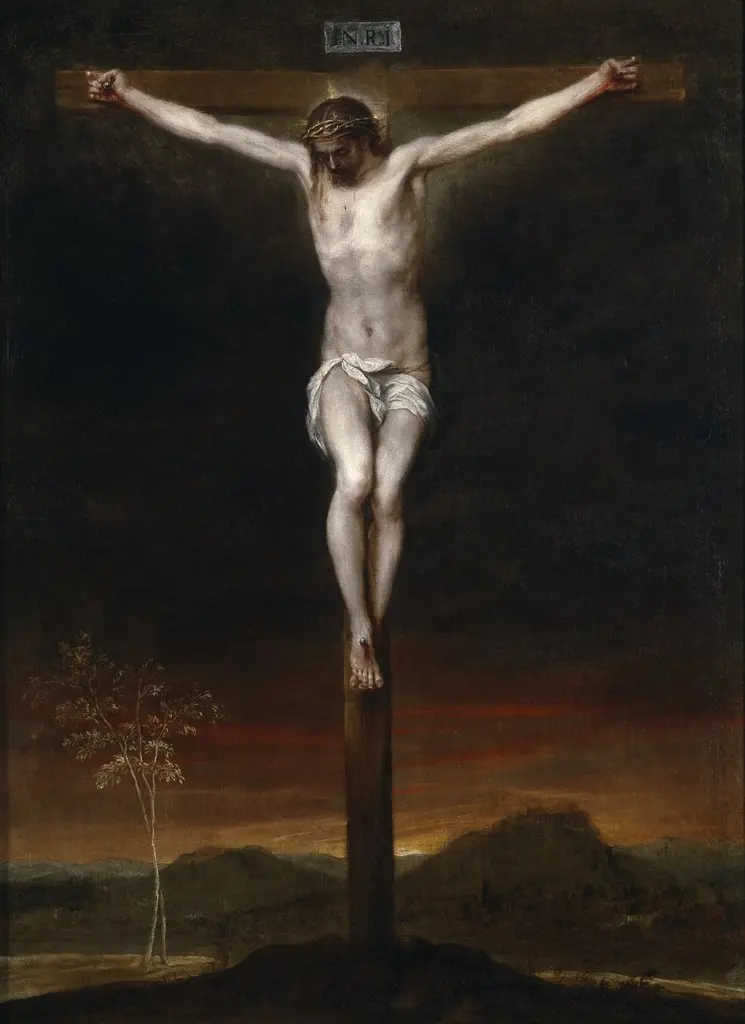
A naked man hangs on the cross, arms stretched wide, feet nailed just above the ground, a crown of thorns on his head. A white cloth drapes loosely at his hips. Against the flat black background, the light seems to come from within the body, the play of light and shadow giving it weight and depth. Oil, around 1700.
Subject & Meaning
The iconography focuses strictly on the figure of Jesus during this moment of death, adhering to traditional representations of the Passion.
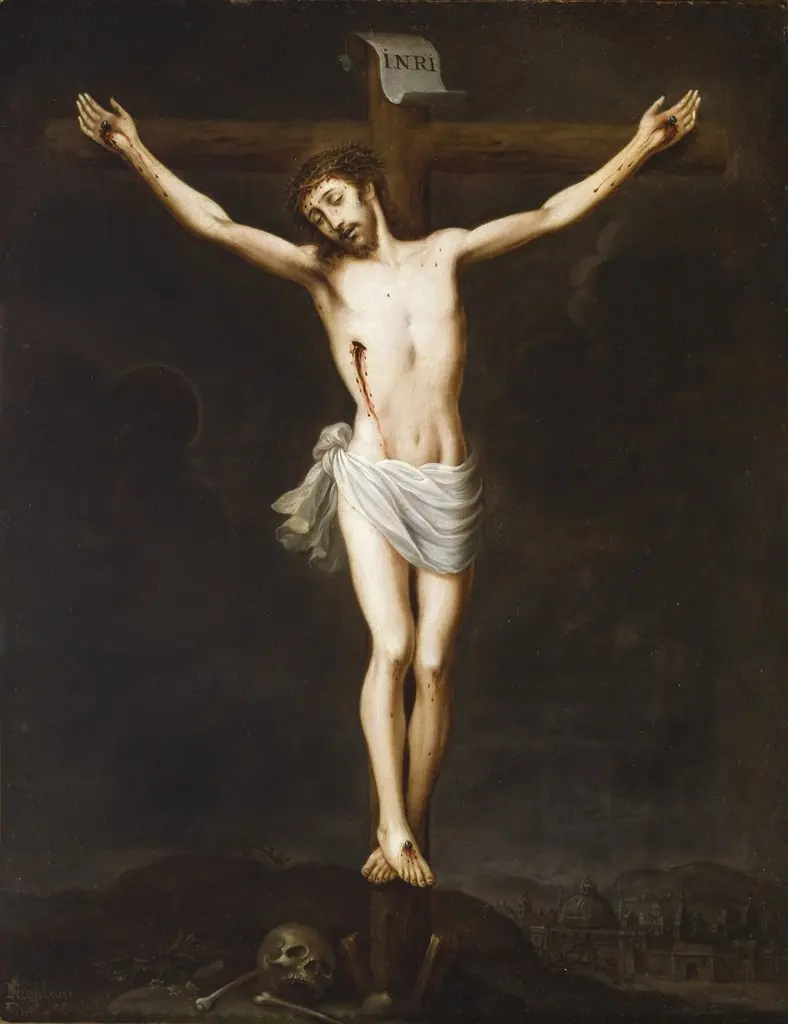
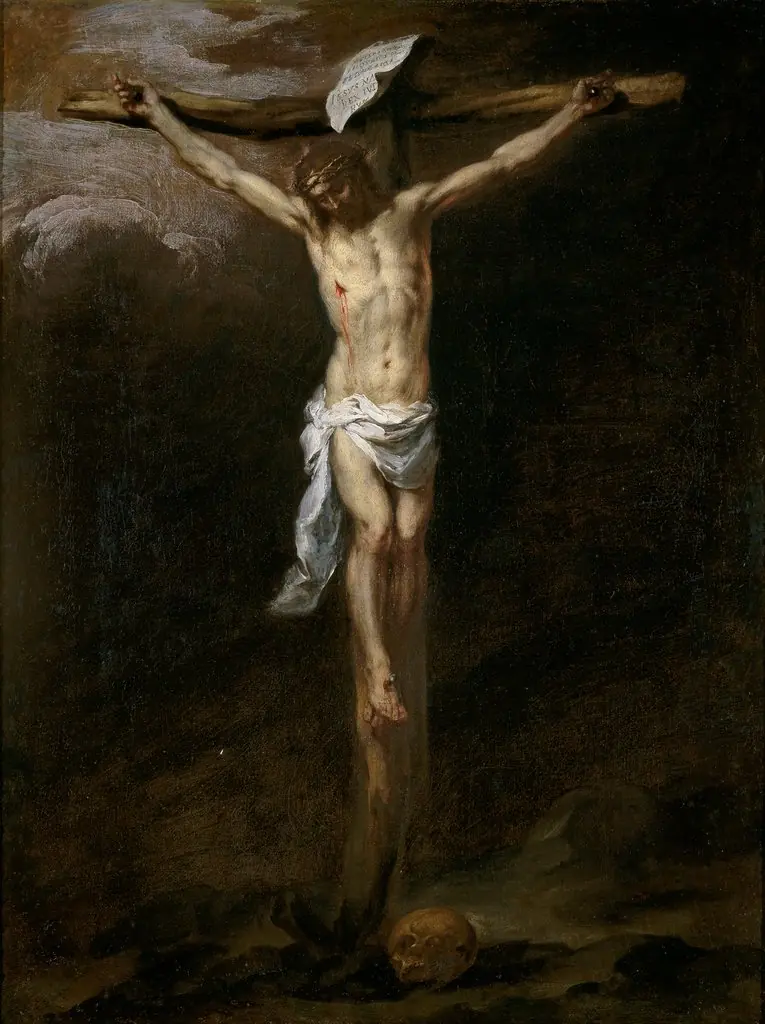
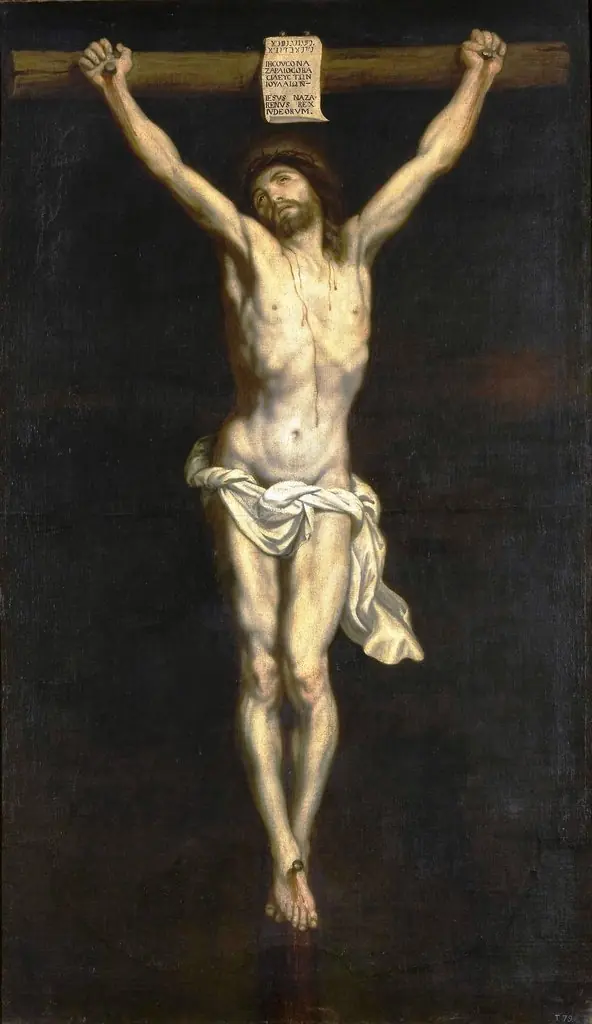
Created around 1700 by the workshop of Francisco de Zurbarán, this oil painting on canvas depicts the crucifixion of Jesus Christ. As a work of religious art, its primary subject is the execution of Christ on the cross, an event central to Christian theology representing sacrifice and redemption. The iconography focuses strictly on the figure of Jesus during this moment of death, adhering to traditional representations of the Passion.
Housed in the Metropolitan Museum of Art, the piece serves as a visual meditation on the suffering of Christ, a theme frequently explored in Spanish Baroque religious painting to inspire devotion and contemplation among the faithful.
Technique & Style
The Crucifixion is an oil painting on canvas. The composition centers on the crucifixion of Jesus, rendered with the chiaroscuro and elongated figures characteristic of the Workshop of Francisco de Zurbarán, whose style informs the piece. The work measures approximately 284.5 cm by 192.7 cm and was produced around 1700.
The painting's formal qualities include a somber palette, dramatic lighting, and a hierarchical arrangement that emphasizes the central figure of Christ.
History & Provenance
The Crucifixion is attributed to the workshop of Francisco de Zurbarán and dated to circa 1700. The painting entered the collection of the Convento de San José, where it remained until its dispersal. By the early nineteenth century, it was owned by Louis-Philippe I of France, later passing to Sir John Hanmer, 1st Baronet, and subsequently to Sir Griffin Hanmer, 7th Baronet.
The work was subsequently acquired by Carl W. Hamilton and later by George R. Hann before entering the Metropolitan Museum of Art, where it is currently located. The painting was included in the exhibition Great Teachers, further documenting its public display history.
Legacy
The Crucifixion (c. 1700) from the Workshop of Francisco de Zurbarán has cemented its legacy through its prominent display and scholarly recognition within religious art. Acquired by major collectors including Louis-Philippe I and later the Metropolitan Museum of Art, the work has been exhibited in significant surveys on Baroque religious painting, such as the Great Teachers exhibition. Its representation of the crucifixion has been cited in studies of Zurbarán's workshop practices, influencing discussions on devotional imagery in seventeenth- and eighteenth-century Spain.
The painting's scale and emotive depiction of Christ have ensured its enduring reputation as a key example of Counter-Reformation art.
Overview
The oil painting titled "The Crucifixion" presents a solitary figure on the cross. The artwork features a stark contrast between the illuminated body of the crucified man and a deep, unadorned black background. This visual arrangement intensifies the focus on the central subject, conveying a sense of profound isolation and gravity.
The artist's deliberate use of light defines the form, making the figure appear to emanate an inner glow.
Artist & collection