The Crucifixion
1627
oil
canvas
From the collection of Art Institute of Chicago
1627
oil
canvas
From the collection of Art Institute of Chicago
Dominant colour
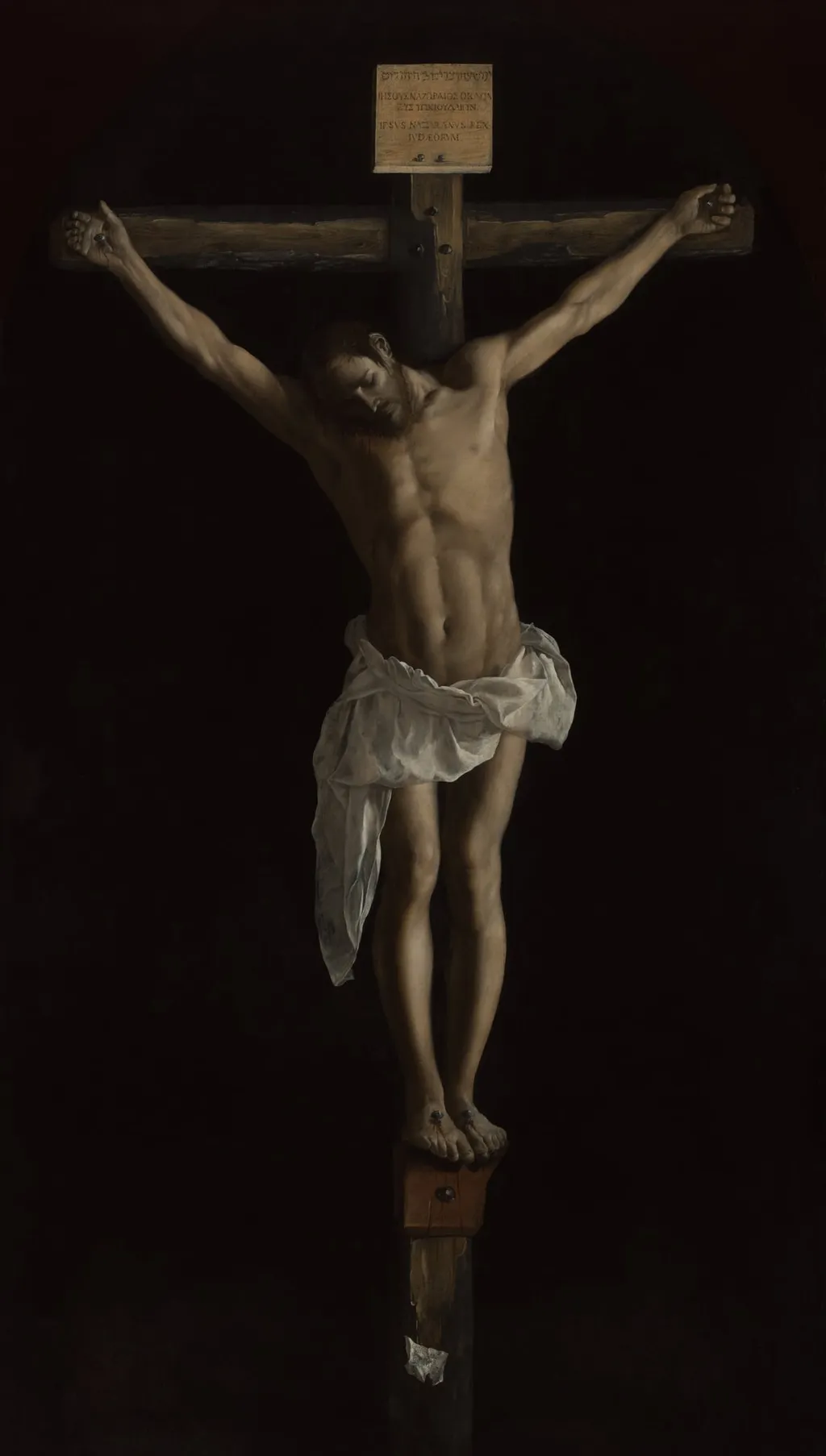
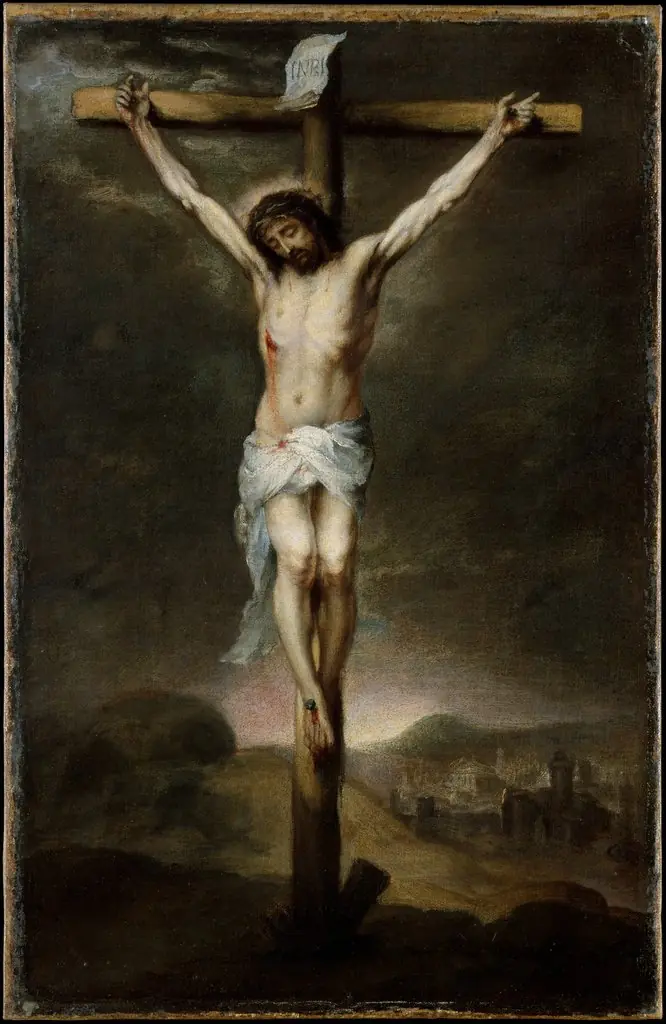
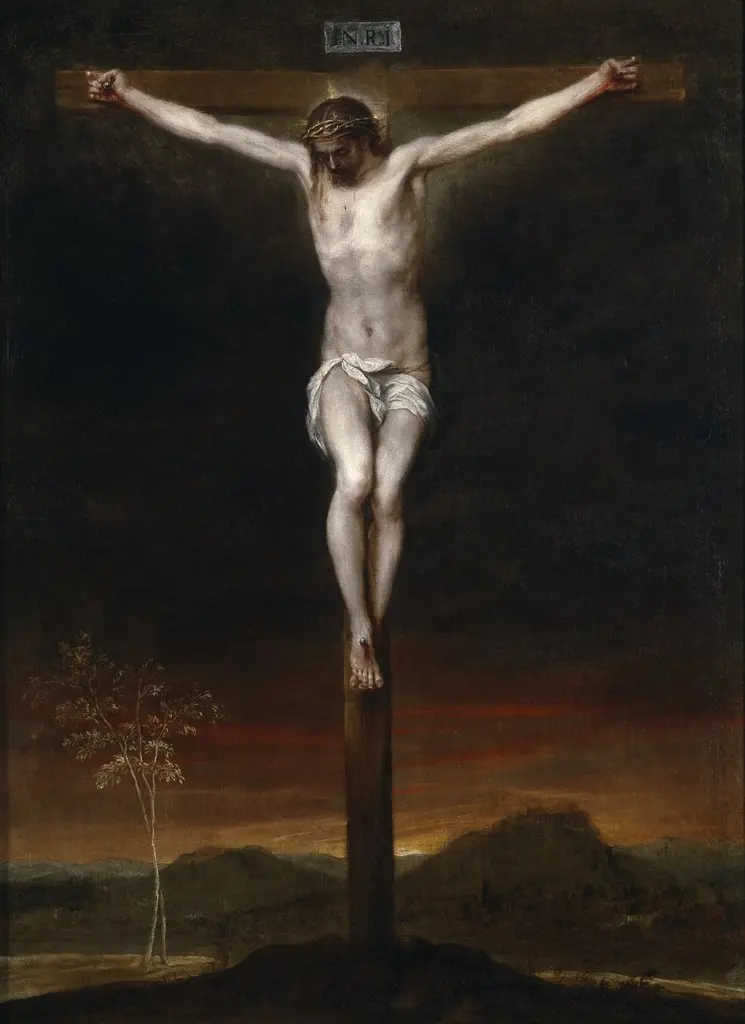
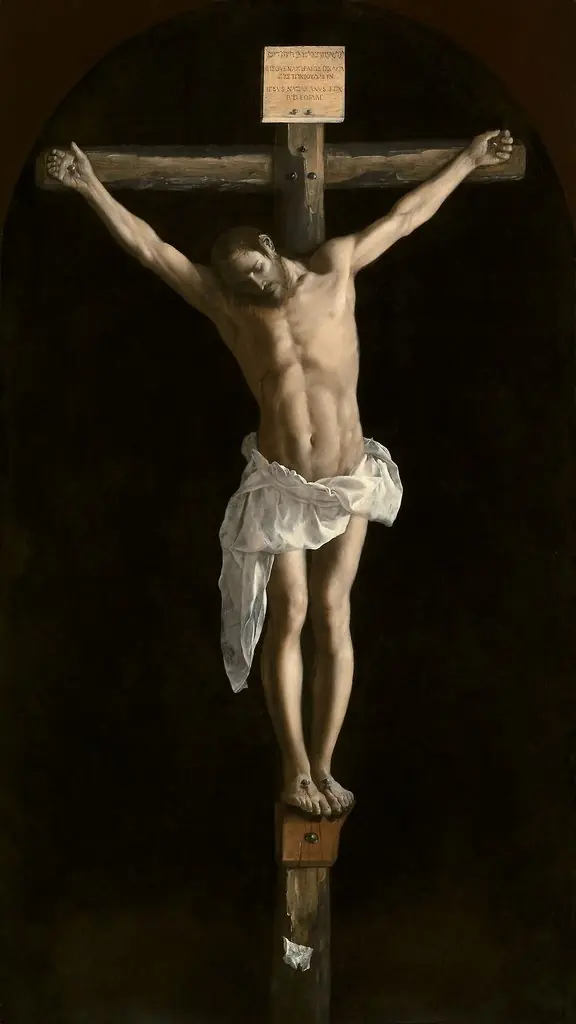
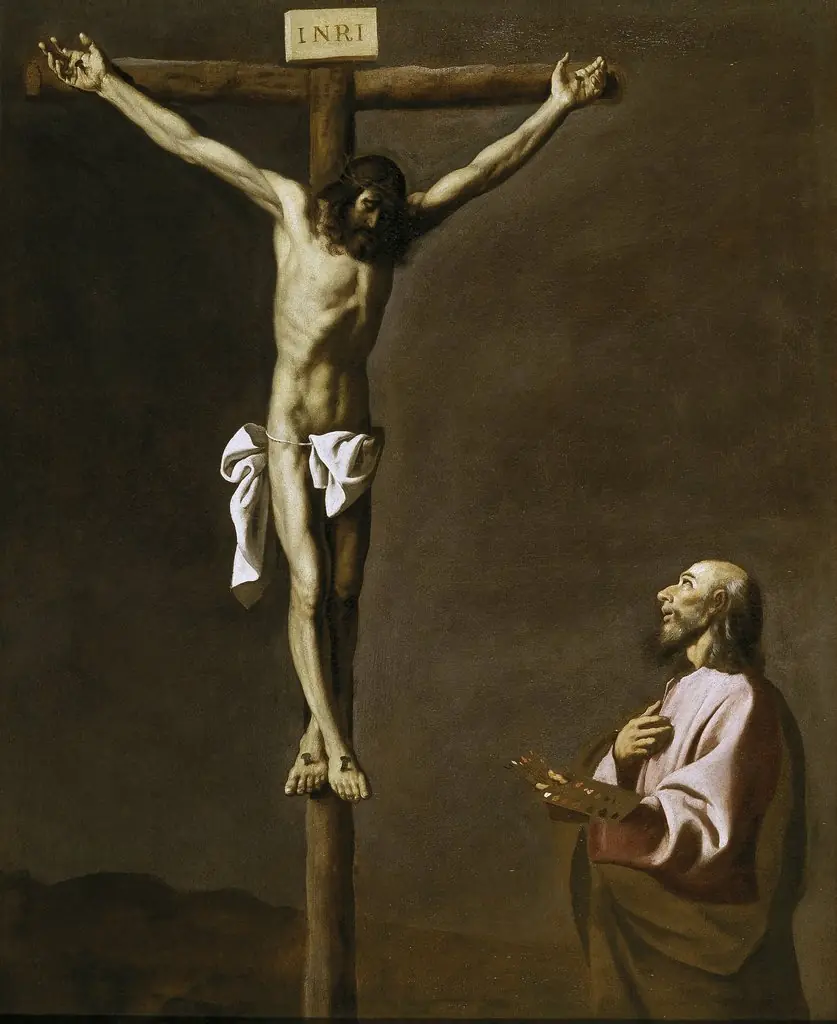
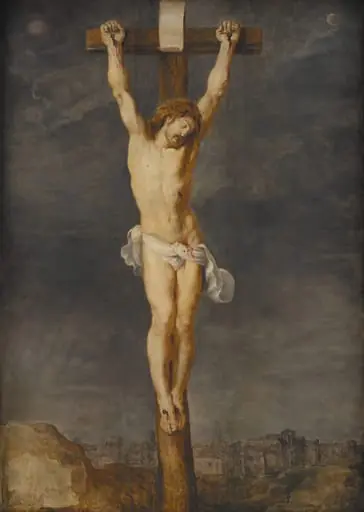
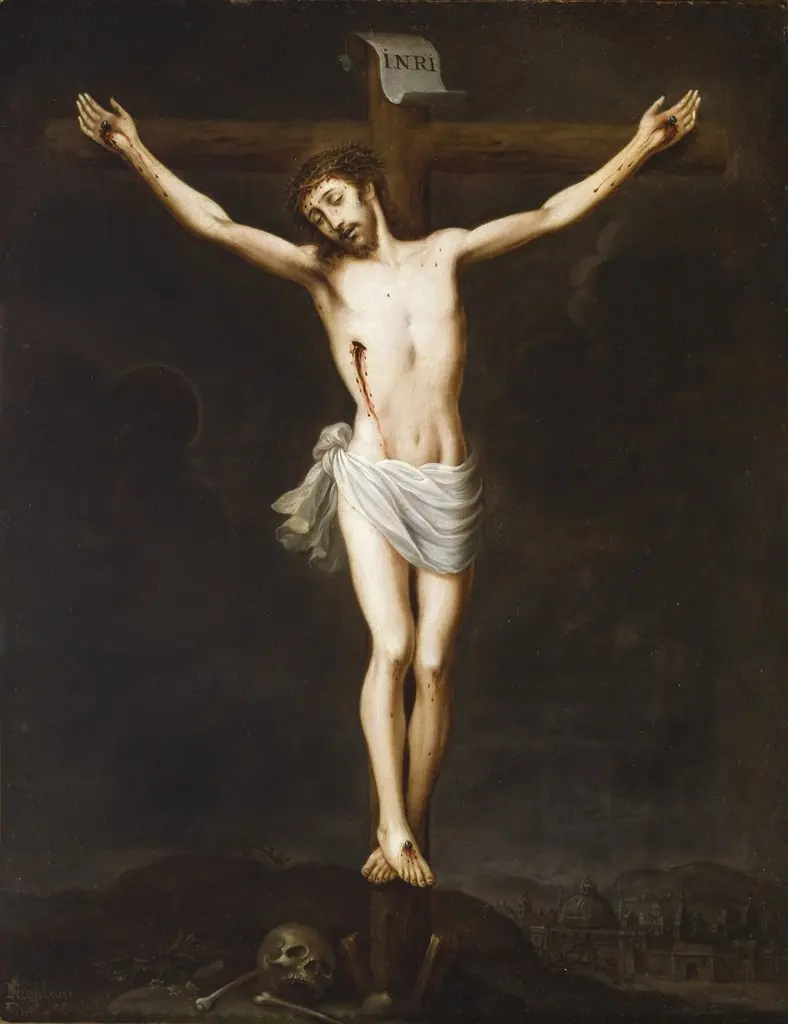
The Crucifixion is a 1627 oil by Francisco de Zurbarán, a Baroque work, depicting Crucifix, held at Art Institute of Chicago.
You see a single, pale Christ on the cross against a black void. His body is lit from the side, muscles tense, head bowed. Zurbarán painted this for a dark monastery chapel. The light hits Christ like a spotlight, making him look almost carved from stone. Early viewers thought it was a sculpture at first glance. To see how light can shape a scene this way, look up chiaroscuro.
In 1626 the Dominican monastery of San Pablo el Real in Seville, Spain, commissioned the young Francisco de Zurbarán to execute a cycle of paintings including The Crucifixion . This work was installed in a dimly lit space in the monastery and was visible to visitors through a grill. Early commentators remarked on its powerful illusion of three-dimensionality, as though it was a sculpture rather than a painting. The dramatically illuminated figure of Christ, set against a dark, empty background, appears outside of time and place, both idealized in its quiet beauty and humanized by the…
Painted for the sacristy of the Dominican monastery San Pablo el Real, Seville; placed on deposit at Palacio Real, Seville, on the order of Joseph Bonaparte, King of Spain, 1810 [see M. Gómez Imaz, 1917, p. 141, no. 224]; acquired by General Jean Toussaint Arrighi de Casanova, Duc de Padoue (died 1853) shortly thereafter [as recounted by his son to Father Stanislas Du Lac, S.J.; see letter from Father Du Lac to Father Paul Troussard dated 16 February 1901 and preserved at the Bibliothèque Sèvres, Paris, copy in file]; by descent to his son, Ernest Louis Hyacinthe Arrighi de Casanova, 2nd Duc…
Chicago, Art Institute of Chicago, The Art of the Edge: European Frames 1300 - 1900, October 17- December 17, 1986, no. 30. New York, Metropolitan Museum of Art, Zurbarán, 22 September - 13 December 1987, no. 2; Paris, Galeries National du Grand Palais, January 14 - April 11, 1988, no. 1. London, National Gallery, The Sacred Made Real: Spanish Painting and Sculpture 1600-1700, October 21, 2009 - January 24, 2010, no. 25; traveled to Washington, D.C., National Gallery of Art, February 28 - May 31, 2010. London, National Gallery, Zurbarán, Oct. 1, 2026–Jan. 31, 2027, no cat. no., fig. 1; Paris,…
Read the full account in the museum source.
Francisco de Zurbarán was a Spanish Baroque painter. He is known primarily for his religious paintings depicting monks, nuns, and martyrs, and for his still-lifes. Zurbarán gained the nickname "Spanish Caravaggio",…
See the richer artist pageYour cart is empty
Explore artworks →