Artwork
Christ Crucified
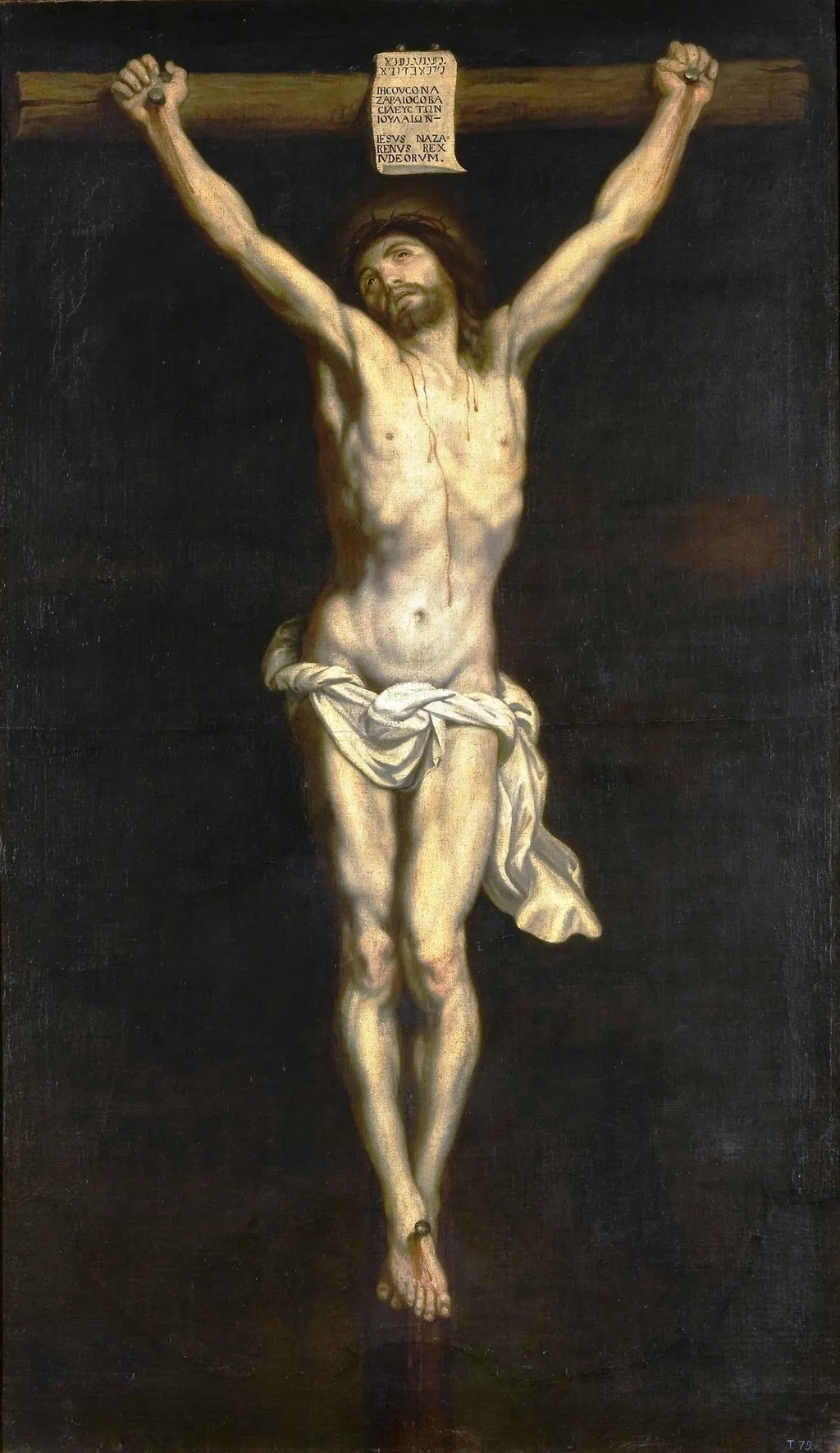
Christ Crucified is an oil painting by the Early Baroque Italian artist Alonso Cano. It dates from 1601 and is held in the collection of the Museo del Prado.
About this work
Subject & Meaning
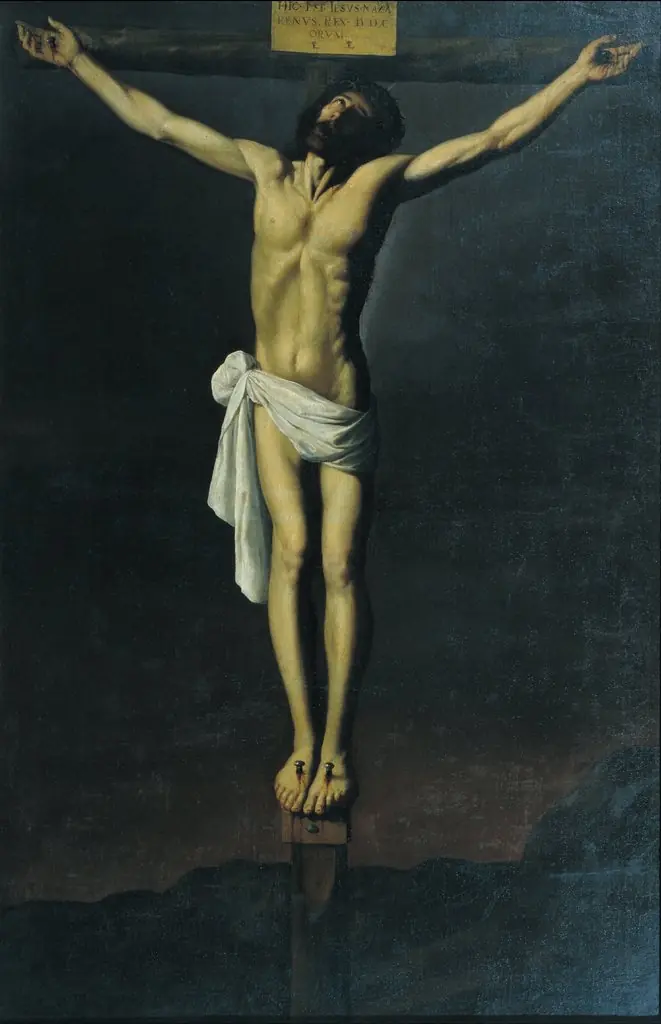
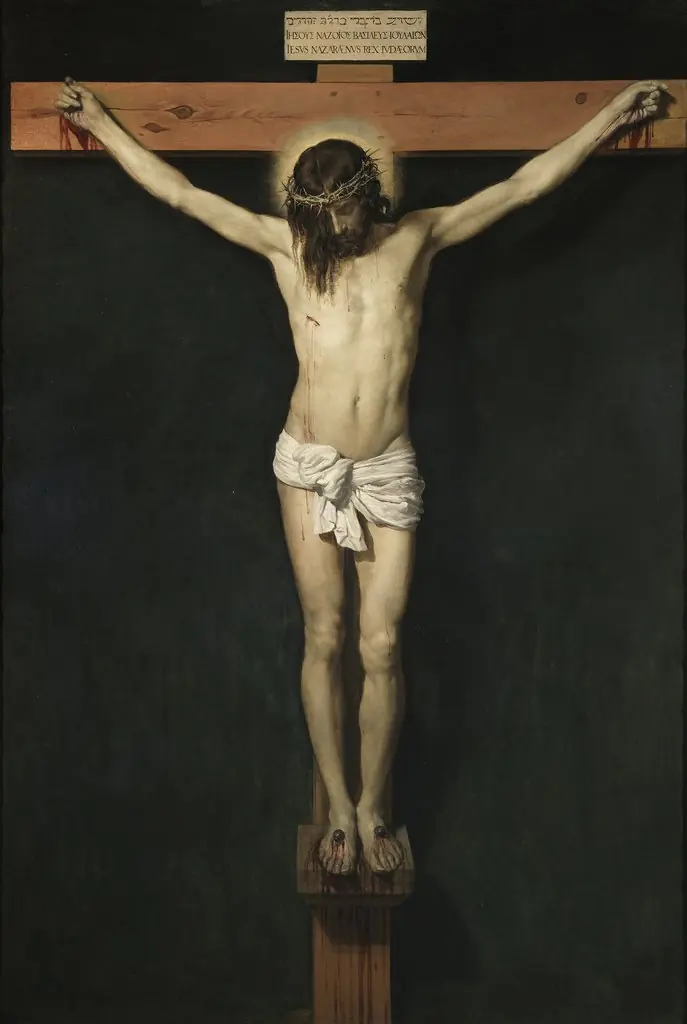
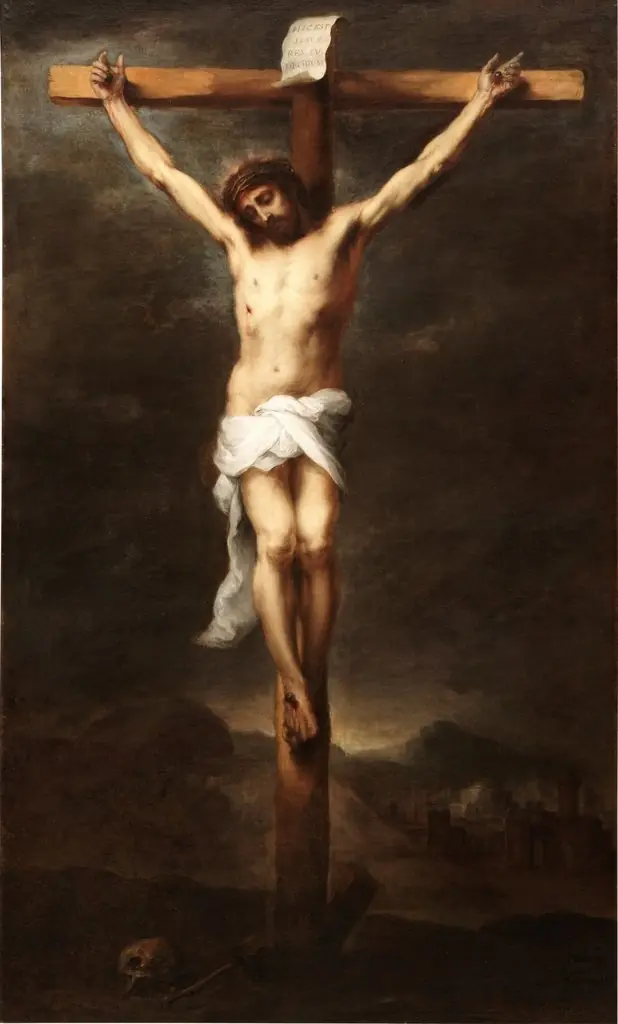
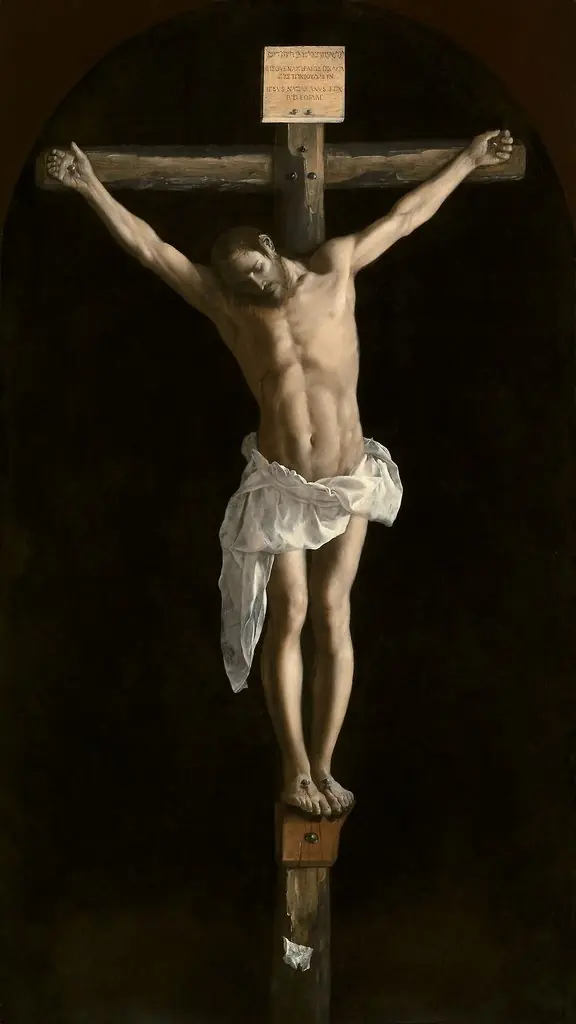
The painting depicts Jesus Christ on the cross as part of a crucifixion scene. This subject draws on traditional Christian iconography representing sacrifice and redemption. The work functions as a devotional object within the religious art genre, emphasizing themes of suffering and spiritual sacrifice.
Technique & Style
The painting measures 220 cm in height and 126 cm in width, dimensions consistent with its classification as a large-scale devotional work.
The work is an oil painting executed on canvas, reflecting the religious genre characteristic of early seventeenth-century Spanish art. Alonso Cano applied oil paint to create a composition that emphasizes the crucifixion of Jesus, a subject rendered with formal attention to compositional balance and chiaroscuro. The canvas support, typical of the period, contributes to the painting's structural integrity, while the handling of light and drapery demonstrates a stylized yet naturalistic approach to the figure of Christ.
The painting measures 220 cm in height and 126 cm in width, dimensions consistent with its classification as a large-scale devotional work.
History & Provenance
The work is held by the Museo del Prado, Madrid, where it is recorded as oil on canvas with dimensions of 220 × 126 cm.
It was included in the holdings of the Museo de la Trinidad before transfer to the Prado collection.
The painting has been exhibited at the Museo del Prado, Madrid, in the permanent display of Spanish Old Master paintings.
Context
Alonso Cano painted Christ Crucified in 1601, an early example of Spanish Baroque religious art. The work depicts Jesus Christ on the cross with dramatic chiaroscuro, reflecting Counter-Reformation emphasis on emotional piety. It belongs to Cano's mature period when he synthesized Italian compositional influences with Spanish mysticism.
The painting appears in major museum collections including the Museo del Prado, where it is studied as a key piece for understanding 17th-century Spanish devotional imagery. Scholars analyze its iconography as part of Cano's broader exploration of sacred subjects that blend naturalism with spiritual intensity.
Overview
Alonso Cano’s 1601 oil painting, titled Christ Crucified, presents a solitary figure of the crucified Jesus. Executed in the early seventeenth century, the work resides in Madrid’s Museo del Prado. Its composition centers on the cross, while the surrounding darkness emphasizes the solemnity of the scene.
Artist & collection