Artwork
The Evangelist Matthew
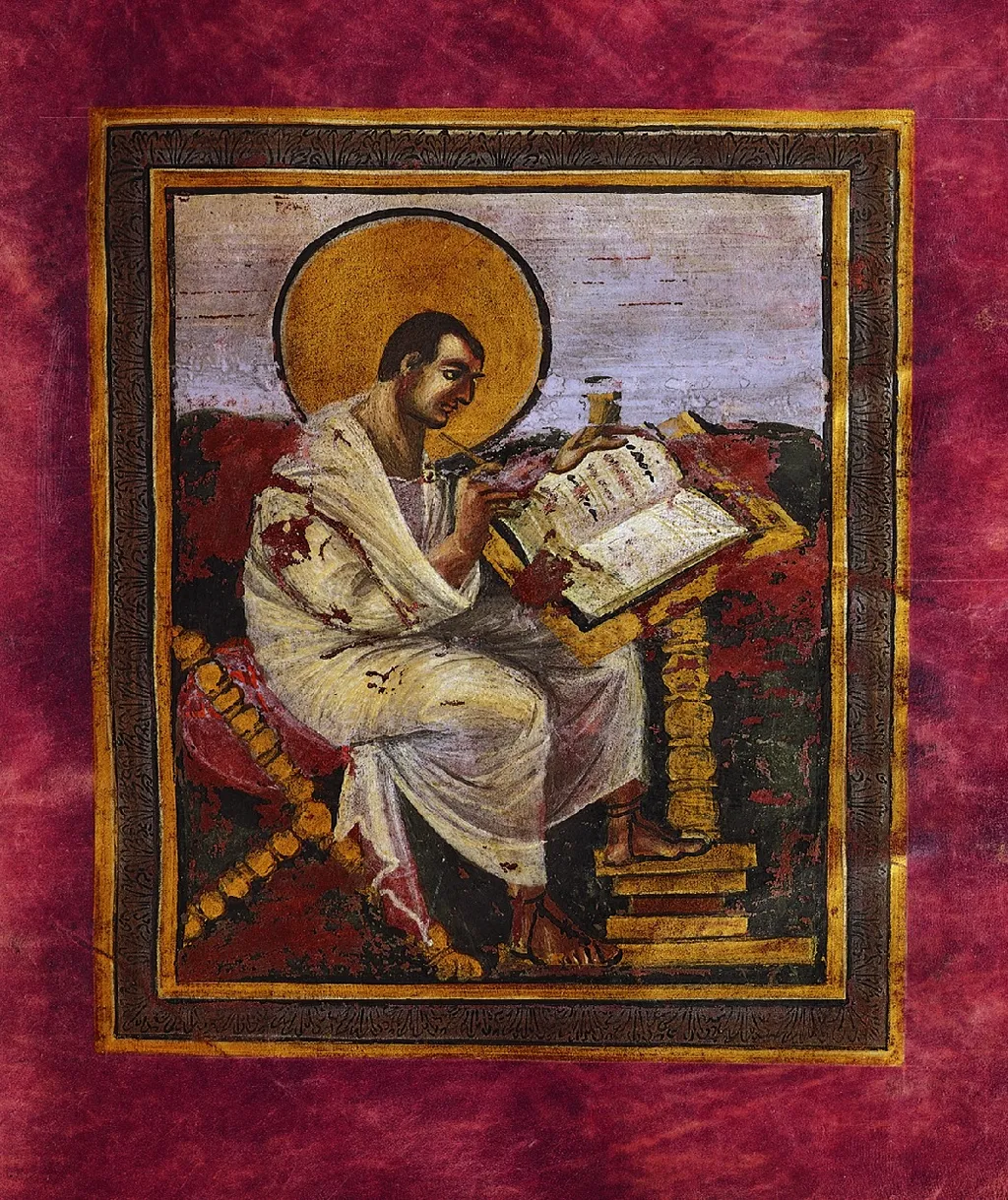
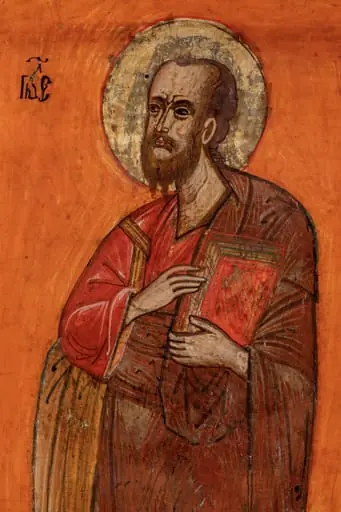
The Evangelist Matthew is an ink painting by the Byzantine icon painting artist Unknown. It dates from 800 and is held in the collection of the Kunsthistorisches Museum.
About this work
Overview
The Evangelist Matthew is an early medieval illumination depicting the apostle and evangelist Matthew, created around 800 CE.
The Evangelist Matthew is an early medieval illumination depicting the apostle and evangelist Matthew, created around 800 CE. The work is executed in ink and tempera on parchment, measuring 32.30 by 25.10 centimeters. It is currently held in the collection of the Kunsthistorisches Museum in Vienna. The painting belongs to the Vienna Coronation Gospels, one of the most significant illuminated manuscripts of the Carolingian period, and represents a foundational example of early medieval religious art in its depiction of one of the four evangelists.
Subject & Meaning
The painting depicts Matthew the Apostle, traditionally regarded as the author of the first canonical gospel and one of the twelve disciples of Jesus Christ. In Christian iconography, Matthew is symbolized by a winged man or angel, an attribute derived from the four living creatures described in Revelation 4:7, which Irenaeus associated with the humanity of Christ. The seated figure holds a writing instrument in his right hand while his left rests upon an open codex positioned on a sloped golden lectern, signifying his role as evangelist and recorder of the Gospel. A small object near the codex, possibly an inkwell, reinforces this scribal function. The large golden halo encircling his head proclaims his sanctity, while the hieratic and frontal presentation, despite the three-quarter turn of the body, conveys authoritative dignity rather than narrative action. The iconography thus unites Matthew's apostolic identity with his specific task of gospel composition, presenting him as both holy figure and active writer.
Technique & Style
The illumination employs a flat, minimally modeled technique characteristic of early medieval manuscript painting. Bold outlines define forms, with unblended color areas applied in a manner that prioritizes clarity and symbolic legibility over naturalistic illusion. The palette features white drapery with red markings, golden elements in the halo, lectern, and footrest, and a pale lavender-gray background with horizontal striations. The paint surface exhibits age-related deterioration, with flaking and wear particularly evident in the reds and whites. Light is rendered evenly without strong directional shadows, contributing to the work's abstracted, non-naturalistic quality. The figure sits on a cushioned seat with red and gold elements, his sandaled feet resting on a stepped golden footrest, all framed by ornate golden and dark borders against a deep magenta surround. This decorative richness and the hierarchical scale of the figure align the work with Carolingian court art and its revival of classical forms within a Christian framework.
History & Provenance
The work was created around 800 CE, a date that places it within the Carolingian Renaissance and its associated program of manuscript illumination. It forms part of the Vienna Coronation Gospels, a manuscript closely associated with imperial coronation ritual. The painting entered the collection of the Kunsthistorisches Museum in Vienna, where it remains today. Its accession details are not specified in the available sources, though its presence in this major Austrian museum reflects the historical concentration of Habsburg manuscript collections in Vienna. No exhibition history is recorded in the provided sources.
Legacy
The tradition of depicting Matthew as a writing evangelist, established in works such as this, exercised profound influence on subsequent European art. The iconographic formula of the seated, haloed scribe with his symbolic attribute, the winged man, persisted throughout the Middle Ages and beyond. This early medieval formulation provided the visual foundation that later artists would reinterpret across radically different stylistic systems. The contrast between this work's flat, hieratic presentation and the naturalistic treatments of the same subject by Caravaggio in his Contarelli Chapel cycle of 1602, for instance, illustrates both the longevity of the evangelist portrait tradition and the transformative possibilities of artistic renewal within it. Caravaggio's Matthew, shown in humble contemporary dress with bare feet and rough desk, deliberately subverted the elevated, golden world of the medieval prototype even while preserving its essential subject. The Vienna Coronation Gospels painting thus stands as a benchmark against which later reinterpretations of Matthew may be measured, its legacy residing in the enduring power of its iconographic clarity and its role in establishing one of Christian art's most persistent visual types.
Artist & collection