Artwork
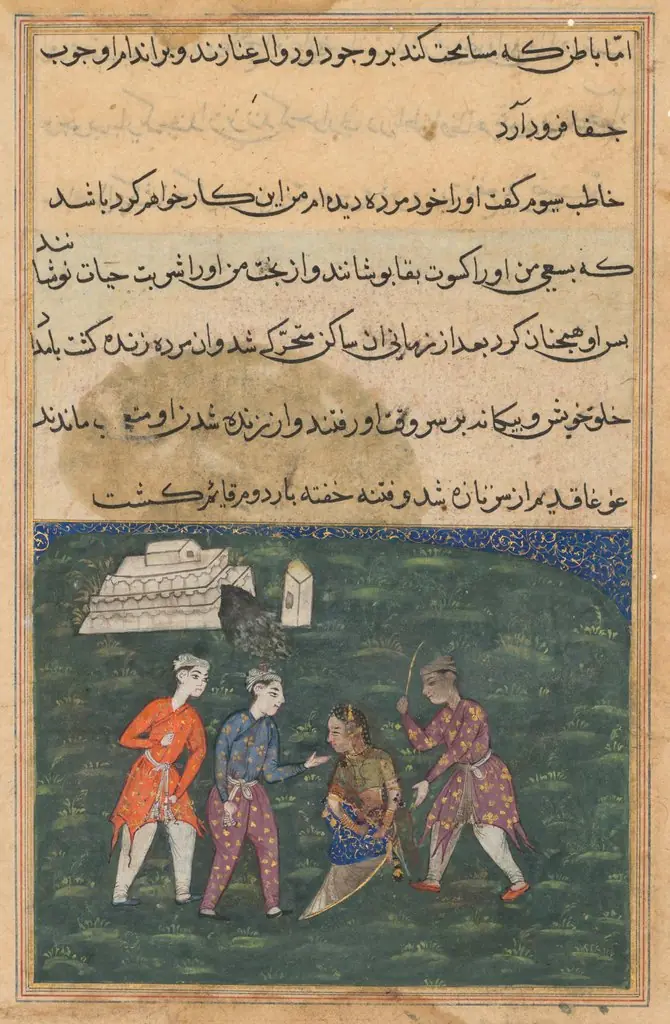
The forty wives and their secret paramours being punished by stoning to death, from a Tuti-nama (Tales of a Parrot): Twenty-third Night
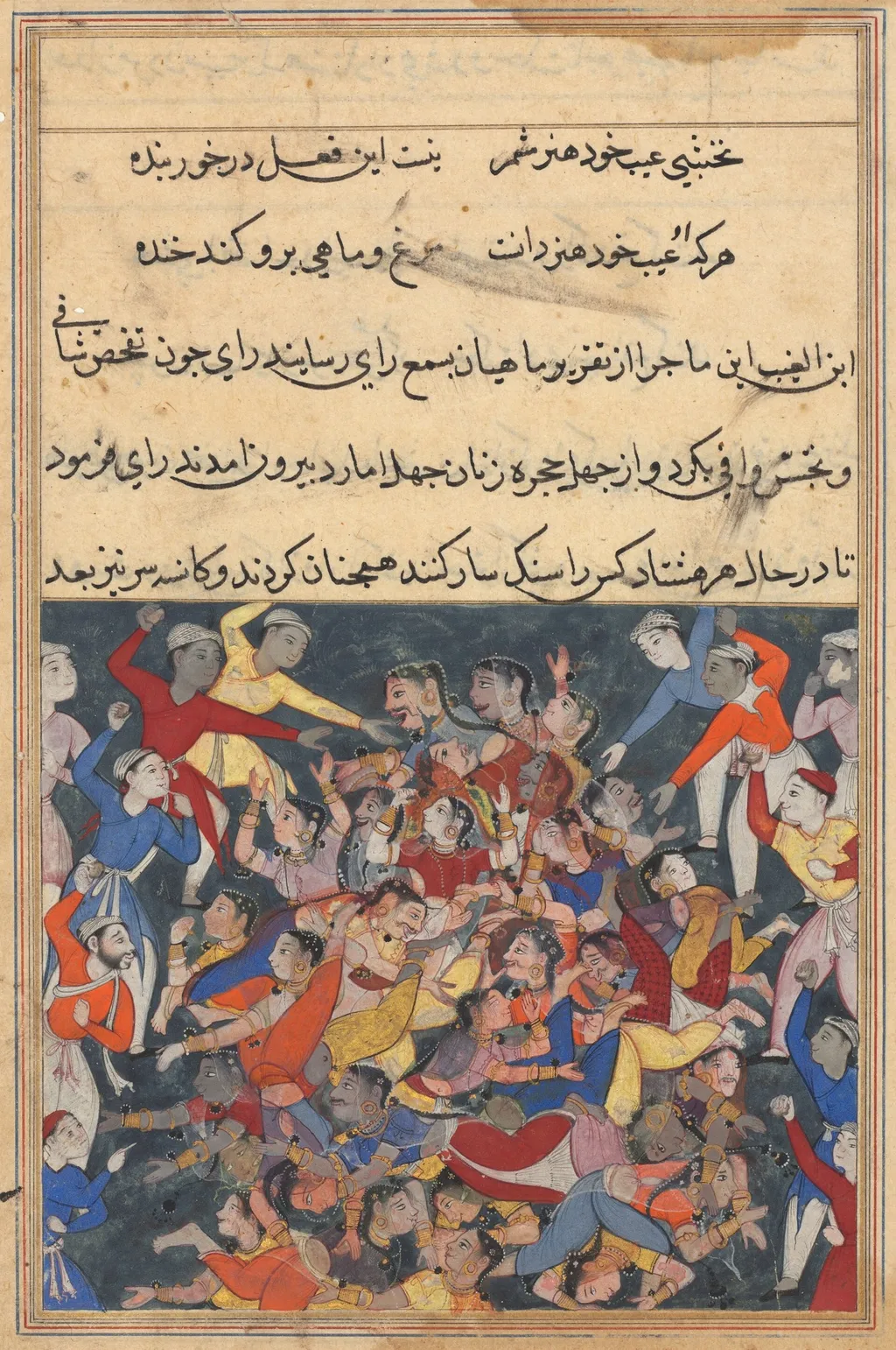
The forty wives and their secret paramours being punished by stoning to death, from a Tuti-nama (Tales of a Parrot): Twenty-third Night is an unspecified painting. It dates from 1560 and is held in the collection of the Cleveland Museum of Art. The work illustrates a tumultuous gathering of figures rendered in vivid hues of red, blue and gold, set beneath a foreboding dark sky.
About this work
History & Provenance
This scene from the Twenty-third Night of the Tuti-nama was produced around 1560 under Mughal patronage, part of a now-dispersed illustrated manuscript of the text - a Persian collection of moral tales translated and illustrated at the Mughal court, where manuscript painting flourished under Akbar. The Cleveland Museum of Art holds the folio, recorded as Tuti-nama, Twenty-third Night: The Forty Wives and Their Secret Paramours Being Punished by Stoning to Death, under accession number 1962.279.164.a, having acquired it in 1962. Earlier ownership is not detailed in the cited sources.
Legacy
The narrative scene depicting the punishment of forty wives and their secret paramours by stoning, originating from a 1560 Mughal miniature in the Tuti-nama, has influenced later Indian artistic traditions in its visual treatment of moral retribution. Its inclusion in collections such as the Cleveland Museum of Art has ensured continued scholarly attention to this episode within the broader context of Persianate manuscript illumination.
Overview
The work illustrates a tumultuous gathering of figures rendered in vivid hues of red, blue and gold, set beneath a foreboding dark sky. Arabic calligraphy crowns the composition, indicating its narrative source. The crowded composition, with gestures of reaching, shielding, and distress, conveys a moment of intense drama and collective suffering.
Subject & Meaning
The scene depicts the punishment of a group of women, forty wives and their secret lovers, who are being stoned to death, as recounted in the twenty‑third night of the Persian illustrated manuscript known as the Tuti‑nama, or Tales of a Parrot. The emphasis lies on the emotional intensity of the victims rather than the legal or moral context of the story.
Technique & Style
Executed in a miniature painting tradition, the artist employs bold, contrasting pigments that heighten the visual tension. Figures are stylized with exaggerated facial expressions and dynamic postures, while the dense crowd is organized through overlapping forms that create depth within a relatively flat pictorial space.
Context
The Tuti‑nama is a collection of moral tales and fables, often illustrated to accompany poetic verses. This particular episode reflects themes of secrecy, betrayal, and retributive justice common in Persian literary tradition, and the visual treatment aligns with the didactic purpose of the manuscript.
Artist & collection

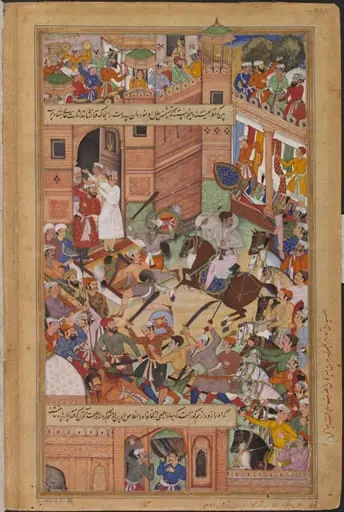
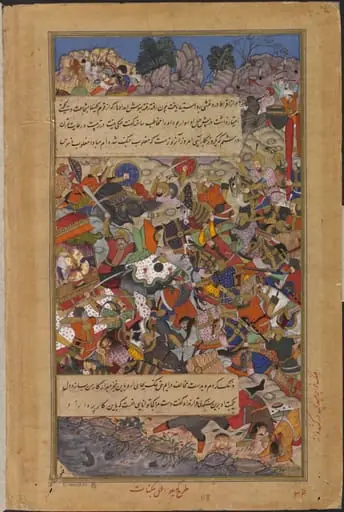
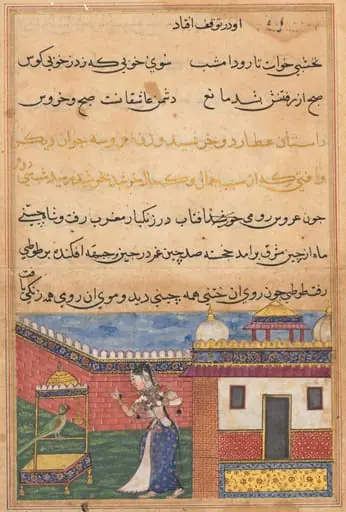
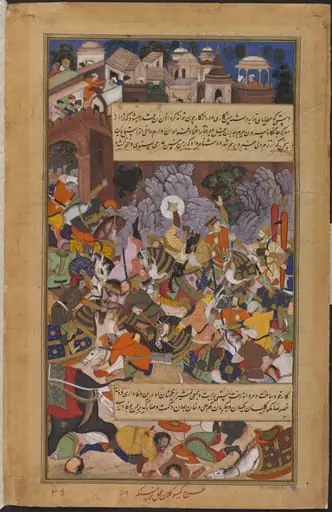
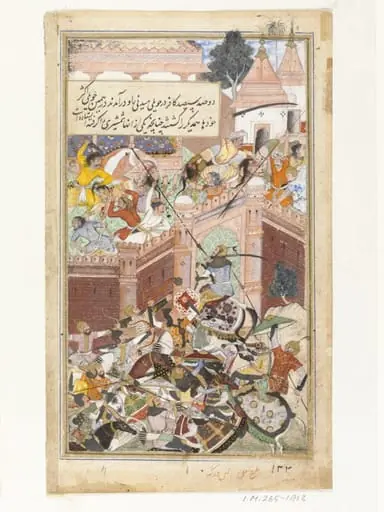
- The forty wives and their secret paramours being punished by stoning to death, from a Tuti-nama (Tales of a Parrot): Twenty-third Night
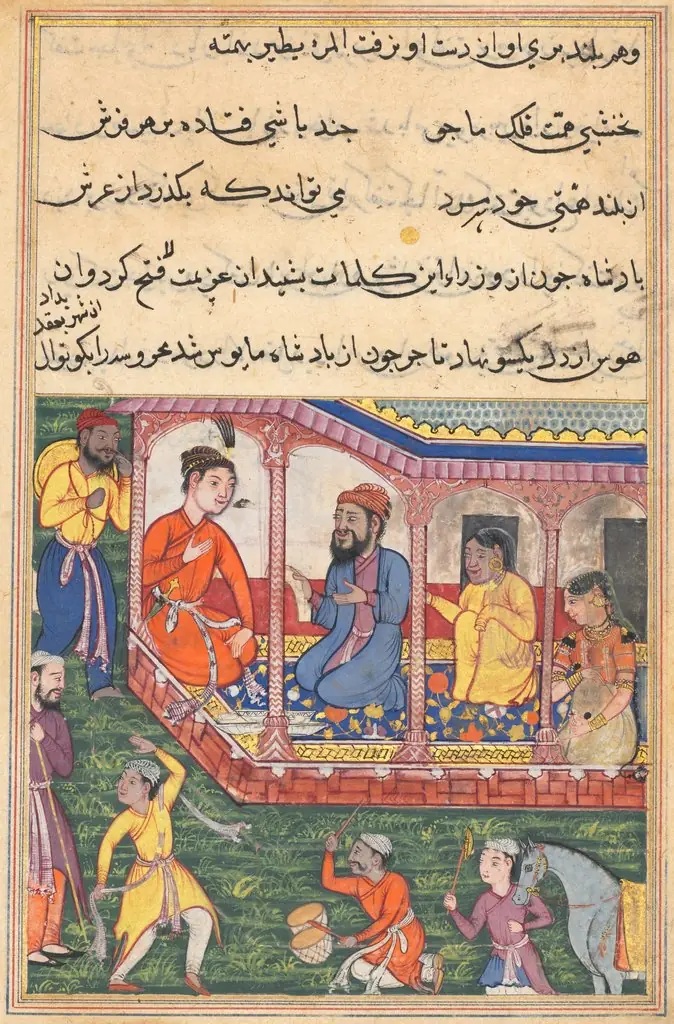
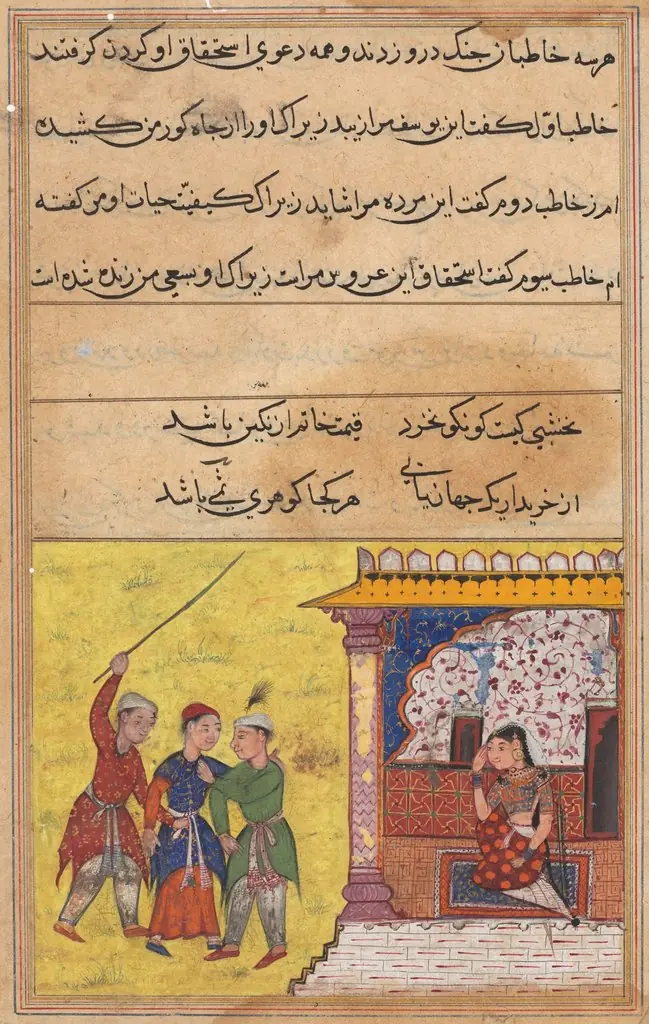 The three suitors again begin to quarrel among themselves for the hand of the devotee’s daughter, from a Tuti-nama (Tales of a Parrot): Twentieth Night
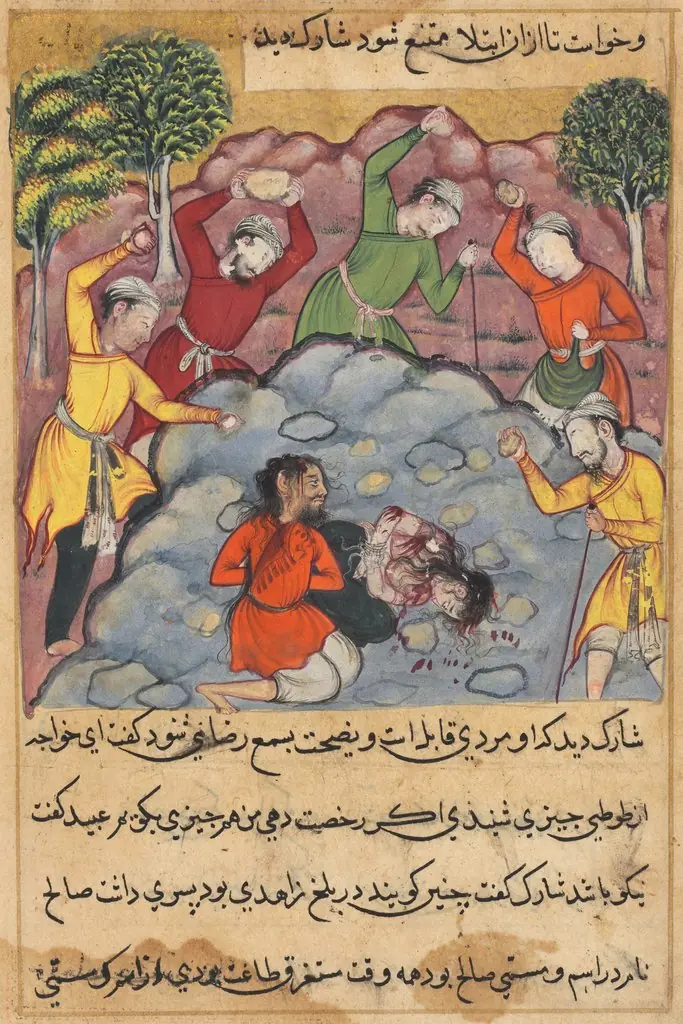 The Raja’s daughter and her lover stoned to death for adultery, from a Tuti-nama (Tales of a Parrot): Forty-Second Night
 The Raja’s daughter and her lover stoned to death for adultery, from a Tuti-nama (Tales of a Parrot): Forty-Second Night
 The third suitor strikes the devotee’s daughter and thus restores her to life, from a Tuti-nama (Tales of a Parrot): Twentieth Night