Artwork
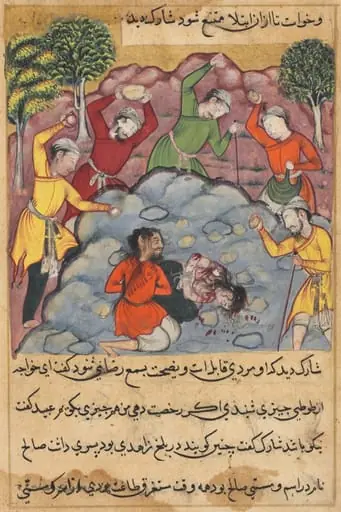
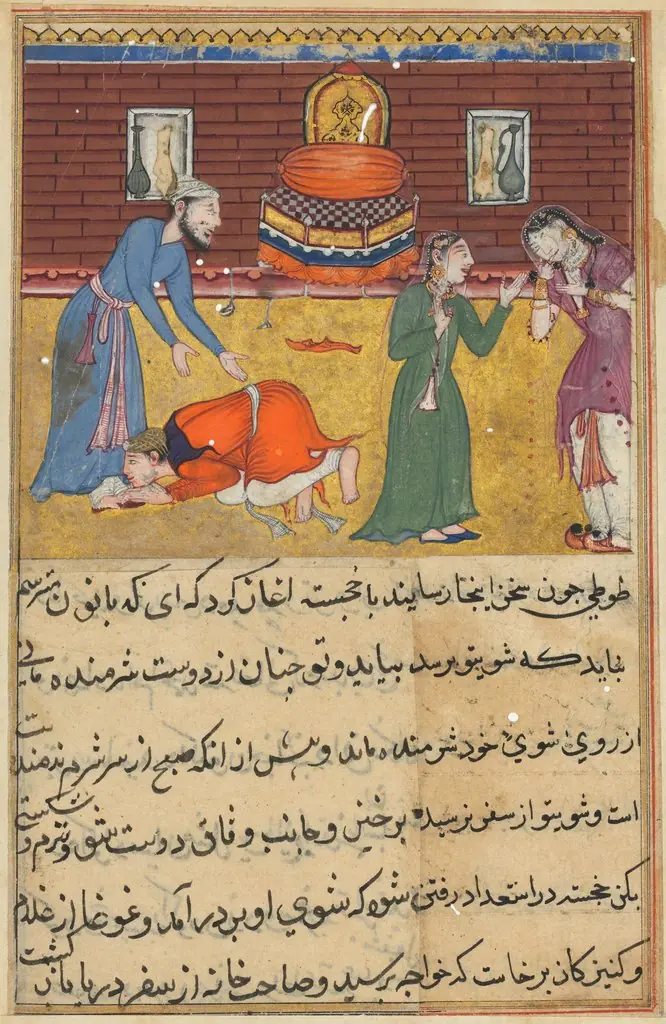
The Raja’s daughter and her lover stoned to death for adultery, from a Tuti-nama (Tales of a Parrot): Forty-Second Night
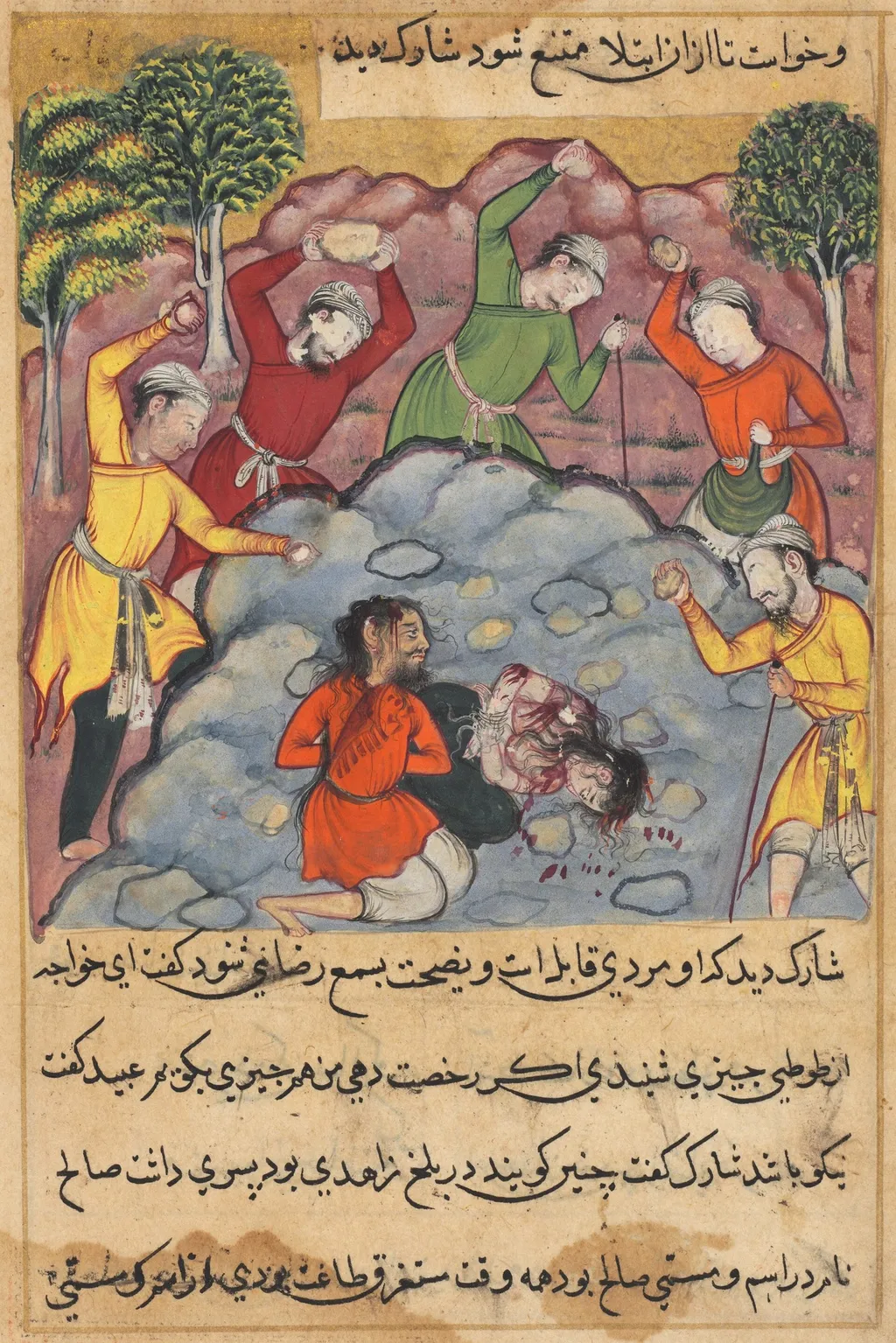
The Raja’s daughter and her lover stoned to death for adultery, from a Tuti-nama (Tales of a Parrot): Forty-Second Night is an unspecified painting. It dates from 1560 and is held in the collection of the Cleveland Museum of Art.
About this work
Subject & Meaning
The painting illustrates the narrative from the Forty-Second Night of the Tuti-nama (Tales of a Parrot), depicting the execution of a Raja's daughter and her lover for adultery. The scene visualizes the specific moment when the couple is stoned to death, serving as a dramatic illustration of the moral lessons contained within the Persian manuscript tradition. Created in the Mughal Empire around 1560, the work translates the literary text into a visual format that emphasizes the severity of the transgression and its fatal consequences.
As part of a larger cycle of tales, this image functions to warn against illicit relationships while adhering to the storytelling structure of the parrot's tales.
Technique & Style
The painting depicts the Raja’s daughter and her lover being stoned to death for adultery, rendered in the Mughal style of the mid-sixteenth century.
The painting depicts the Raja’s daughter and her lover being stoned to death for adultery, rendered in the Mughal style of the mid-sixteenth century. It is executed in tempera and ink on paper, forming part of a dispersed Tuti-nama manuscript. The composition employs flat planes of color, intricate patterning, and narrative clarity characteristic of Persianate illustration, with figures arranged in a shallow spatial setting and gestures emphasizing dramatic tension.
The work measures 27.9 cm × 19.1 cm and is housed on a single sheet of paper, its surface showing fine brushwork and delicate line detail. Condition is stable, though minor oxidation of pigments is noted in the red hues.
History & Provenance
Created in 1560 within the Mughal Empire, this painting illustrates the Forty-Second Night of the Tuti-nama (Tales of a Parrot). The work depicts the execution of the Raja's daughter and her lover for adultery. It was produced by an unknown artist during the mid-sixteenth century.
The piece eventually entered the collection of the Cleveland Museum of Art, where it is currently held under the accession number 1962.279.272.b.
Overview
The work illustrates a violent episode from the forty‑second night of the Persian illustrated manuscript known as the Tuti‑nama, or "Tales of a Parrot." The scene captures the moment of execution by stoning, with a kneeling figure cradling a blood‑spattered head while surrounding onlookers react in various gestures.
Context
As part of the Tuti‑nama, the painting contributes to a larger corpus of didactic literature that used vivid storytelling to convey ethical lessons. Its visual treatment of punishment reflects contemporary attitudes toward honor and law, offering modern viewers insight into the cultural values embedded in Persian courtly art.
Artist & collection

- The Raja’s daughter and her lover stoned to death for adultery, from a Tuti-nama (Tales of a Parrot): Forty-Second Night
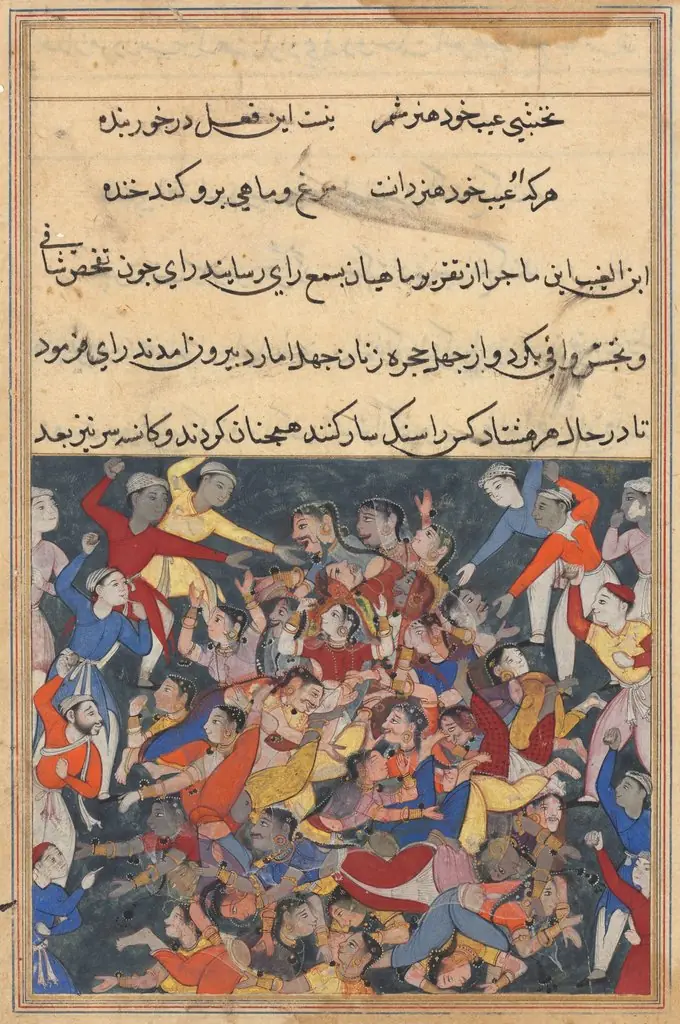 The forty wives and their secret paramours being punished by stoning to death, from a Tuti-nama (Tales of a Parrot): Twenty-third Night
 The forty wives and their secret paramours being punished by stoning to death, from a Tuti-nama (Tales of a Parrot): Twenty-third Night
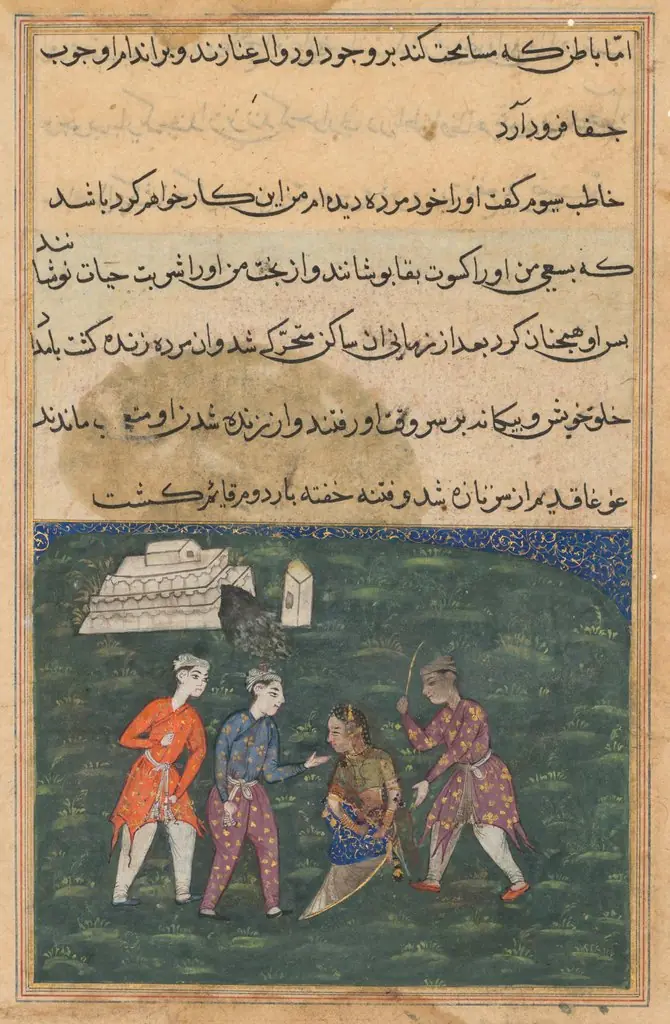 The third suitor strikes the devotee’s daughter and thus restores her to life, from a Tuti-nama (Tales of a Parrot): Twentieth Night
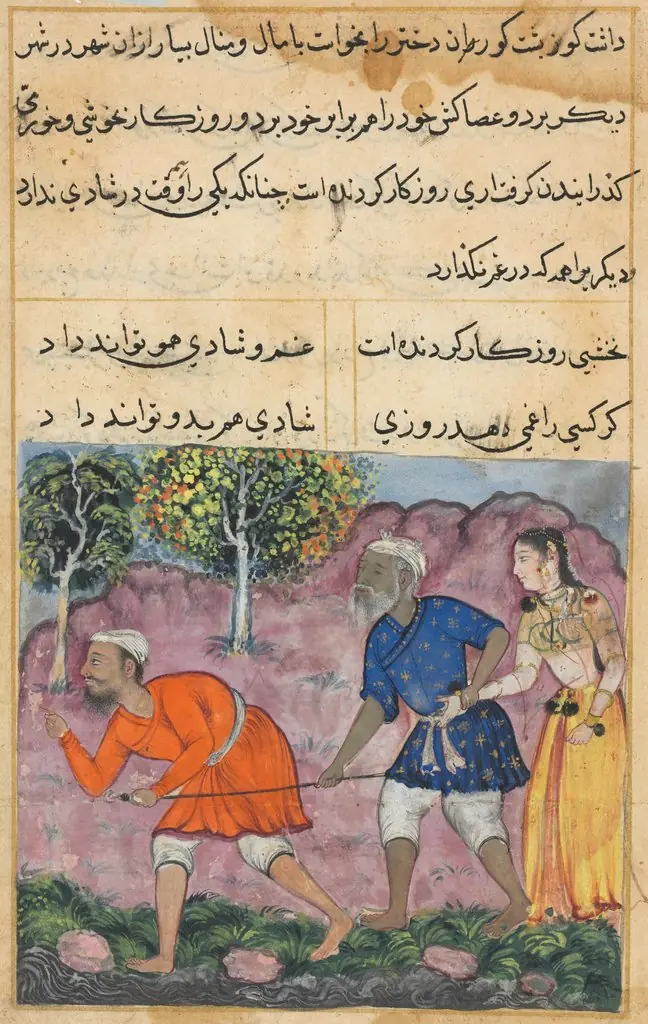 The Raja’s daughter, born with three breasts, accompanies her blind husband and his hunchback guide on a journey, from a Tuti-nama (Tales of a Parrot): Forty-second Night
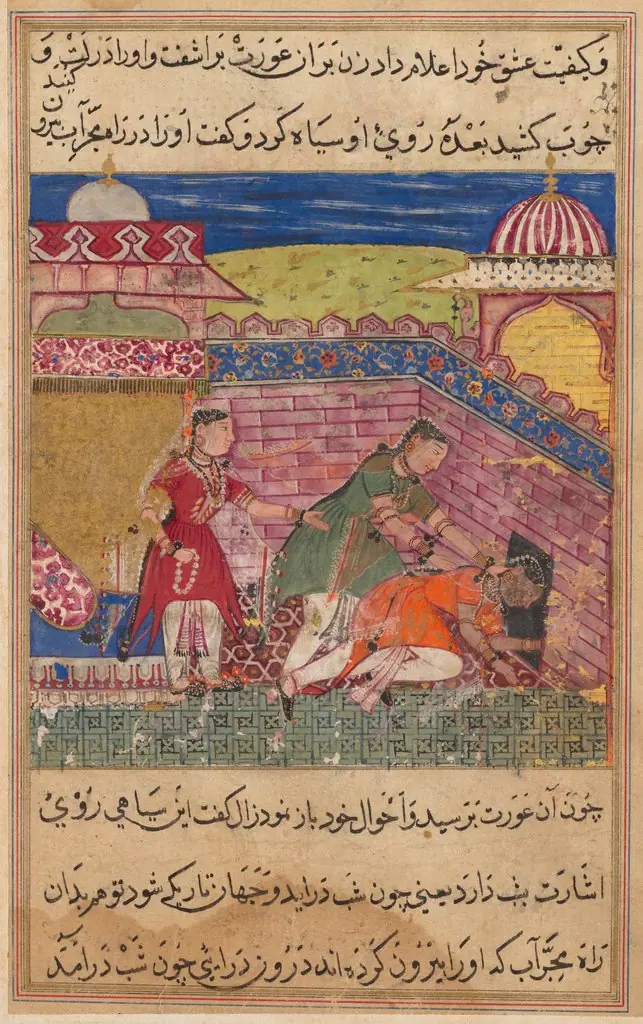 The deceitful wife ejects the procuress after blackening her face, from a Tuti-nama (Tales of a Parrot): Eighth Night
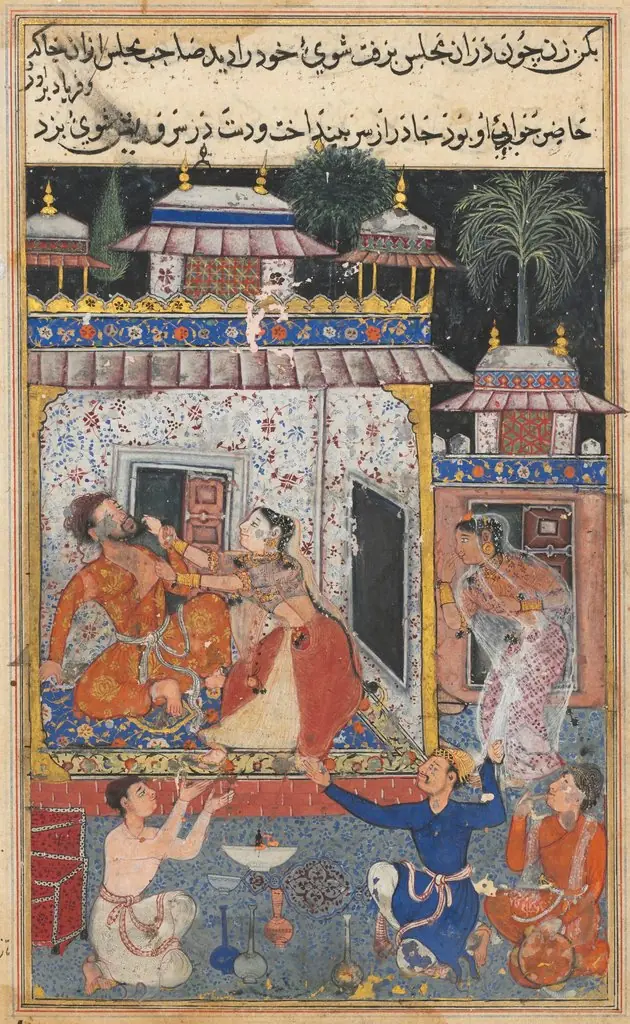 The deceitful wife assaults her erring husband, from a Tuti-nama (Tales of a Parrot): Eighth Night
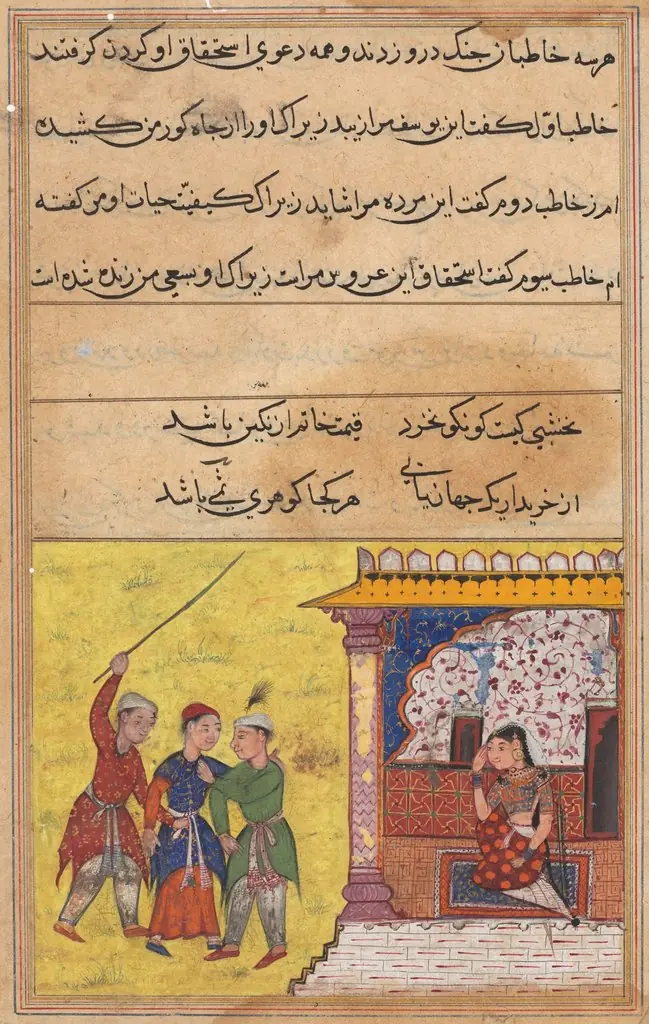 The three suitors again begin to quarrel among themselves for the hand of the devotee’s daughter, from a Tuti-nama (Tales of a Parrot): Twentieth Night
 The pious man’s son, now a king, reveals himself to his father; his nurse upbraids his unfaithful mother, from a Tuti-nama (Tales of a Parrot): Fifty-second Night