Artwork
The Four Seasons
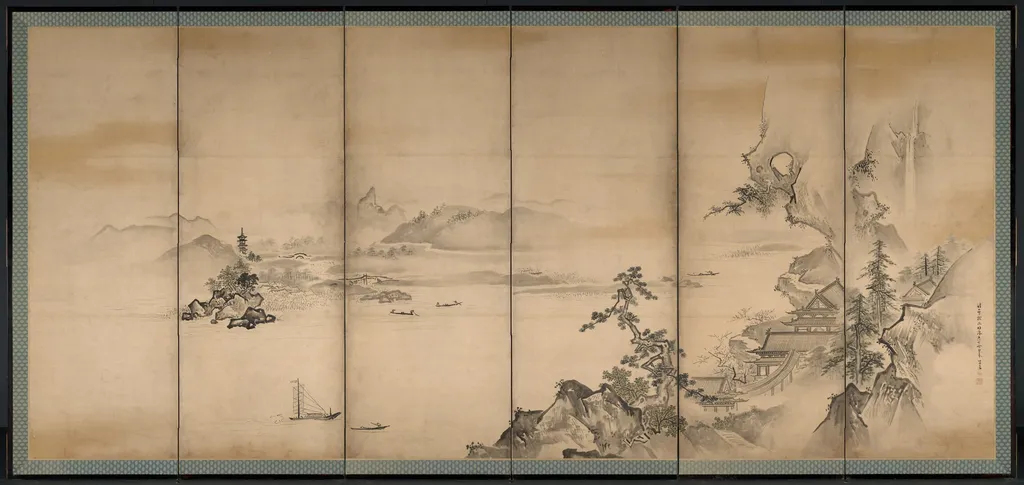
The Four Seasons is an unspecified painting. It dates from 1668 and is held in the collection of the Cleveland Museum of Art.
About this work
Subject & Meaning
Autumn features maple leaves and hunters returning with game, and winter depicts bare trees and people warming themselves near a brazier.
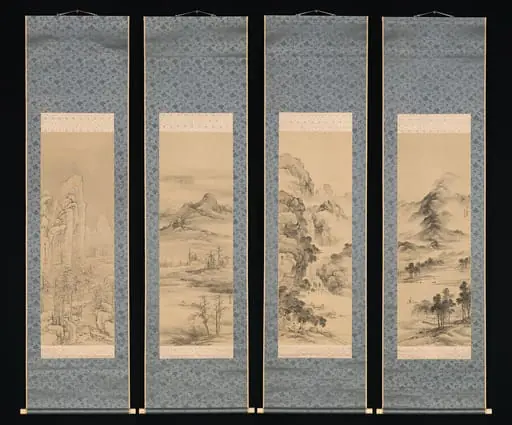
The painting depicts the four seasons, spring, summer, autumn, and winter, each represented by a scene of nature and human activity aligned in a single composition.
Spring shows blossoming cherry trees and a courtly gathering beneath a flowering branch, while summer presents lush greenery and figures cooling themselves by a stream. Autumn features maple leaves and hunters returning with game, and winter depicts bare trees and people warming themselves near a brazier.
These scenes follow a traditional East Asian iconographic convention that personifies the seasons through landscape and seasonal flora, reinforcing the cyclical passage of time and the harmony between humans and nature.
History & Provenance
The set of four paintings known as The Four Seasons was created in 1668 by the Japanese artist Kano Tan'yū. These works were produced in Japan during the Edo period. The specific dating of the series is established as January 1, 1668.
The Cleveland Museum of Art currently holds the collection, having accessioned the work with the catalog number 1992.394.1. The creation history places the origin of these paintings within the Japanese artistic tradition of the mid-seventeenth century.
The painting known as The Four Seasons, created in 1668 by the Japanese artist Kano Tan'yū, is held in the collection of the Cleveland Museum of Art. The institution identifies the work with the accession number 1992.394.1. While the piece was produced in Japan during the mid-seventeenth century, the available records confirm its current location within the museum's holdings in Cleveland.
Overview
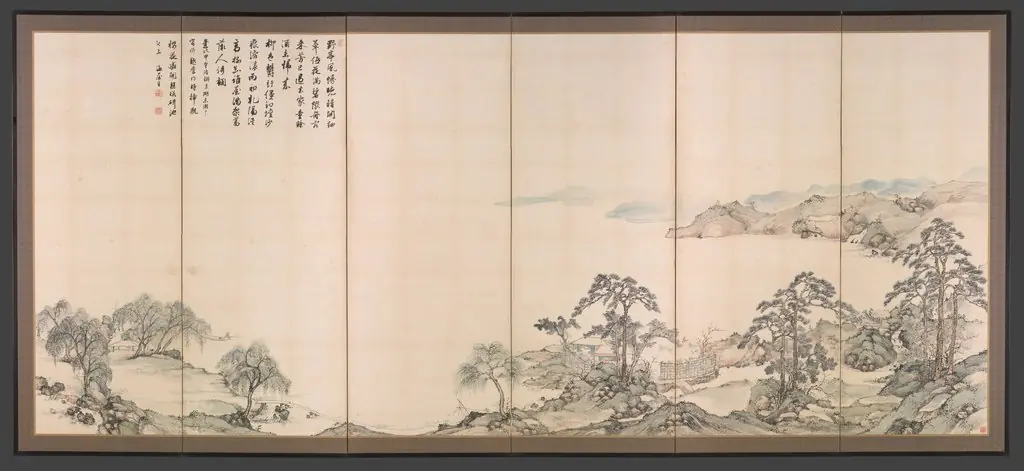
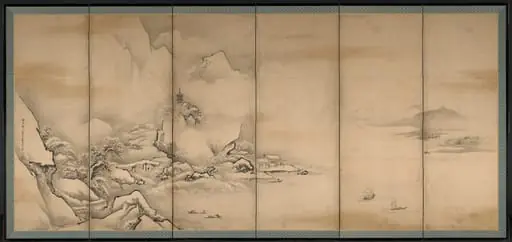
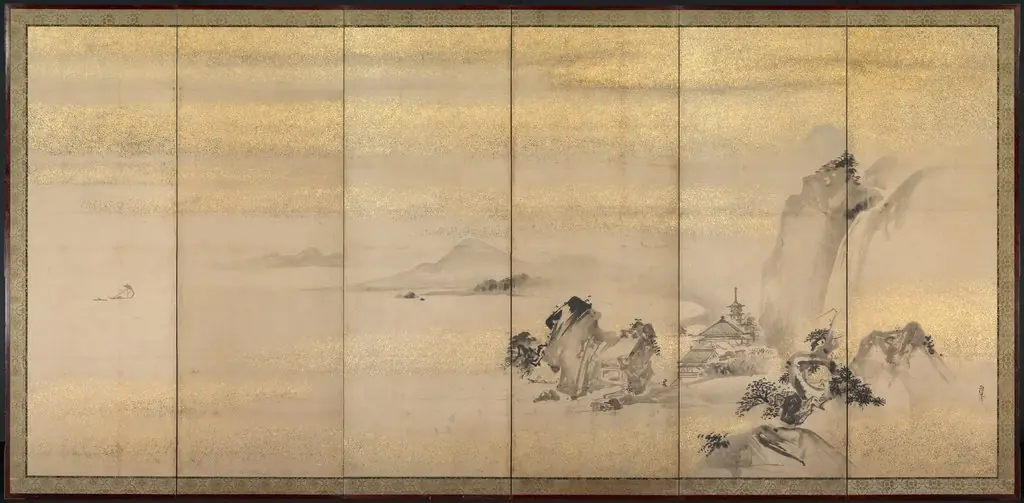
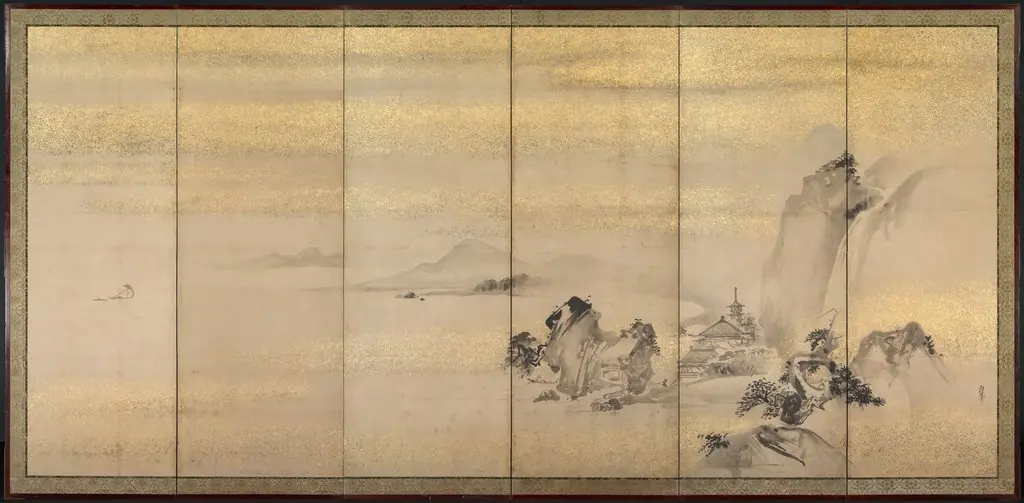
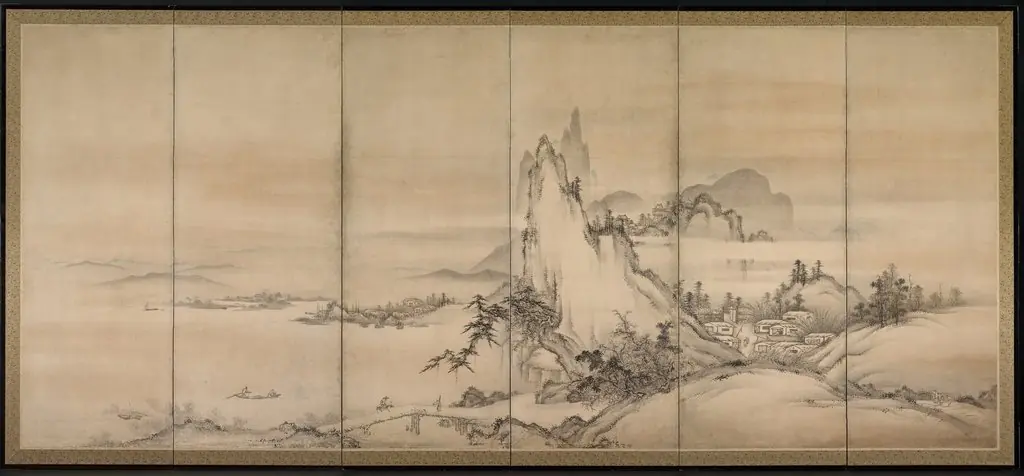
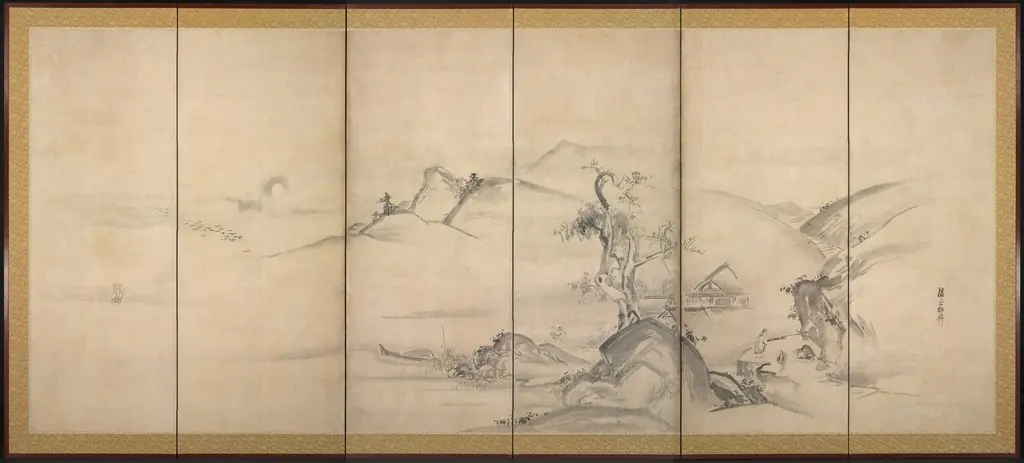
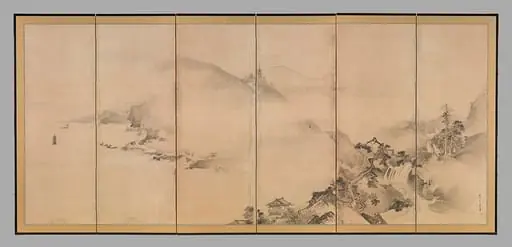
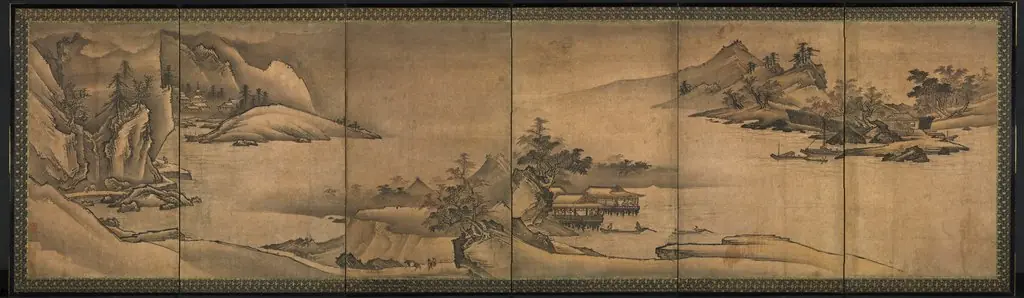
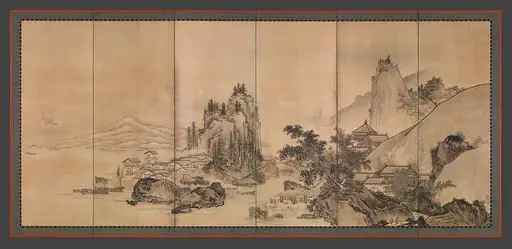
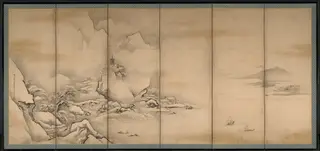
The work titled The Four Seasons is a six‑panel folding screen that presents a tranquil landscape across its breadth. The composition divides into a left segment dominated by a rocky promontory, scattered trees and a diminutive boat on water, while the right segment opens onto a mountainous vista with a building and additional foliage. The entire surface is executed in a restrained palette of grays, employing subtle tonal shifts to suggest spatial recession.
Technique & Style
The artist employs a monochromatic scheme, relying on variations of gray to model form and depth. Careful modulation of light and shadow creates a chiaroscuro effect, enhancing the illusion of three‑dimensional space without the use of color. Negative space is deliberately left unfilled, allowing the eye to rest and reinforcing the overall sense of calm. The brushwork is fine and controlled, producing delicate transitions between planes.
Context
Folding screens of this type were traditionally used as portable room dividers in East Asian interiors, often serving both functional and decorative purposes. The choice of a landscape theme aligns with a long‑standing artistic interest in representing nature as a source of philosophical contemplation. The work’s muted tonal approach reflects a period when ink‑based media were favored for their capacity to convey atmosphere through subtle gradations.
Artist & collection