Artwork
『大織冠』|The Great Woven Cap (Taishokkan)
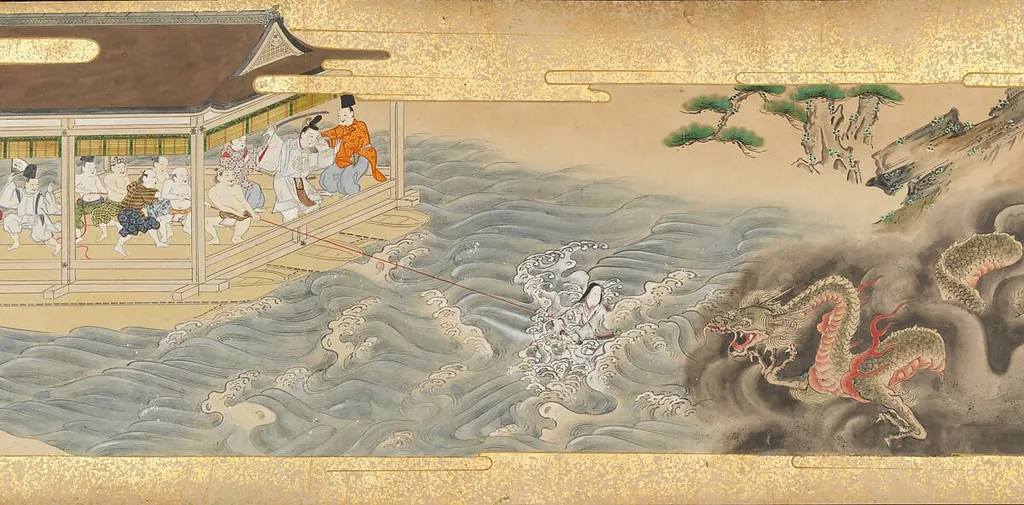
『大織冠』|The Great Woven Cap (Taishokkan) is an ink painting. It dates from 1649 and is held in the collection of the Metropolitan Museum of Art. The Great Woven Cap (Taishokkan) comprises three handscrolls, painted with ink, color, and gold on paper.
About this work
Three long paper scrolls unrolled side by side: armored warriors, ladies in silk, dragons curling through storm clouds, boats tossed on waves. Painted in 1649 to tell one continuous story with no words, like a comic strip. Each scene flows into the next, and gold leaf makes the clouds glow even in dim light. For more, search emakimono, Japanese picture scrolls.
Subject & Meaning
Created in 1649 by an anonymous Japanese artist, this three-handscroll work functions as a history painting depicting a dramatic battle scene.
Created in 1649 by an anonymous Japanese artist, this three-handscroll work functions as a history painting depicting a dramatic battle scene. The iconography features a complex array of figures and elements, including men and women engaged in conflict alongside horses and boats. A dragon also appears within the composition, suggesting a blend of historical narrative with mythological or supernatural symbolism.
While the specific historical event or allegorical meaning is not explicitly detailed in the available records, the presence of the dragon alongside martial imagery implies a representation of power, chaos, or divine intervention within the context of the depicted struggle. The work's classification as a history painting indicates its intent to narrate a significant, albeit unspecified, episode from the past or legend through these visual motifs.
Technique & Style
Created in 1649 by an anonymous Japanese artist, this work comprises three handscrolls executed in ink, mineral color, and gold on paper. The composition employs a continuous narrative format typical of history painting, depicting dynamic scenes of battle that feature horses, boats, and dragons alongside male and female figures. The application of gold suggests a decorative richness often associated with high-status commissions of the period.
As a multi-scroll set, the piece is designed for sequential viewing, where the narrative unfolds as the viewer unrolls the sections from right to left. The combination of ink outlines with vibrant colors and metallic leaf creates a visually striking contrast, emphasizing the dramatic action within the historical subject matter.
History & Provenance
Created in 1649 in Japan, 'The Great Woven Cap' (Taishokkan) is a set of three handscrolls executed in ink, color, and gold on paper. The work is attributed to an unknown or anonymous artist, with no specific individual identified in available records. The scrolls depict historical scenes involving battles, figures, and mythical creatures such as dragons.
Regarding its ownership history, the work is currently held in the collection of the Metropolitan Museum of Art, where it remains located. No further details regarding the original commission, intermediate owners, or the specific circumstances of its creation prior to its current museum residence are provided in the available sources.
Overview
The Great Woven Cap (Taishokkan) comprises three handscrolls, painted with ink, color, and gold on paper. These artworks visually narrate the life of Prince Shōtoku, a significant historical figure. The scrolls feature a diverse array of imagery, including armored warriors, elegantly robed ladies, mythical dragons swirling through storm clouds, and boats navigating turbulent seas, all contributing to a rich pictorial account.
Context
The Great Woven Cap belongs to the tradition of emakimono, a form of Japanese horizontal picture scrolls. These scrolls were historically used to illustrate a wide range of narratives, from religious texts to literary works and historical accounts. While many emakimono integrate both images and written text, this particular example distinguishes itself by conveying its entire story through its continuous visual imagery.
Artist & collection

 Genre Scenes
 Untitled
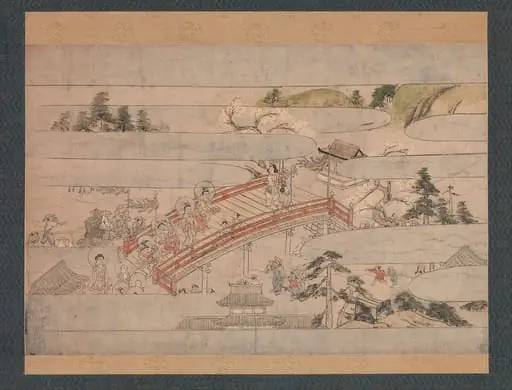 秋夜長物語絵巻断簡|The Final Scene from A Long Tale for an Autumn Night (Aki no yonaga monogatari)
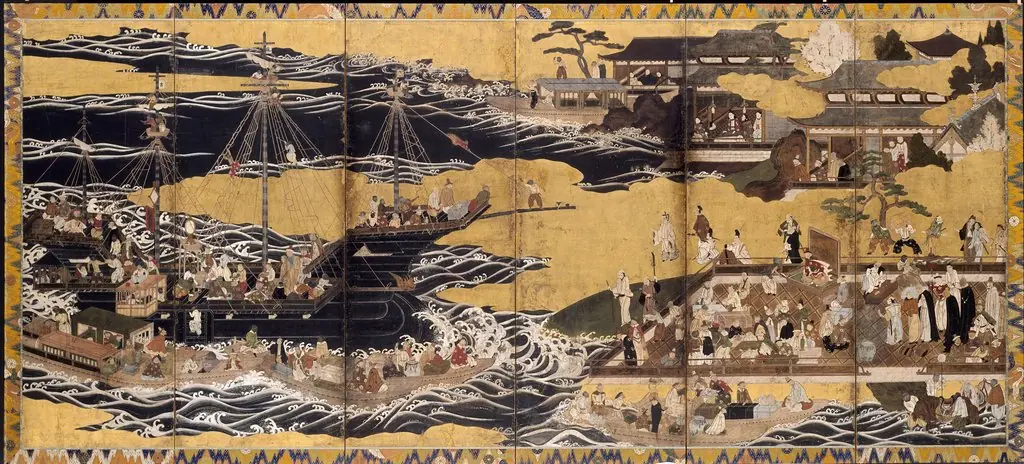 Arrival of the "Southern Barbarians"
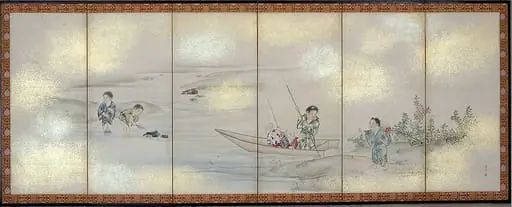 円山応震筆 子供遊び図屏風|Children Playing in Summer and Winter
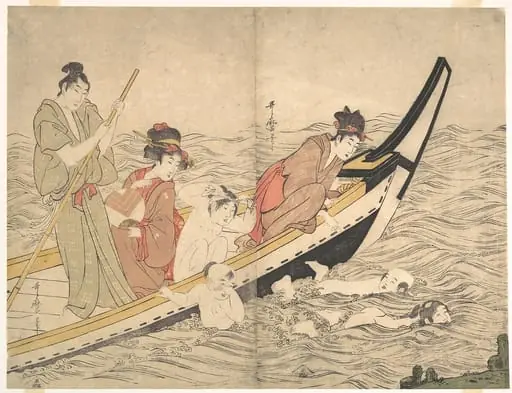 Untitled
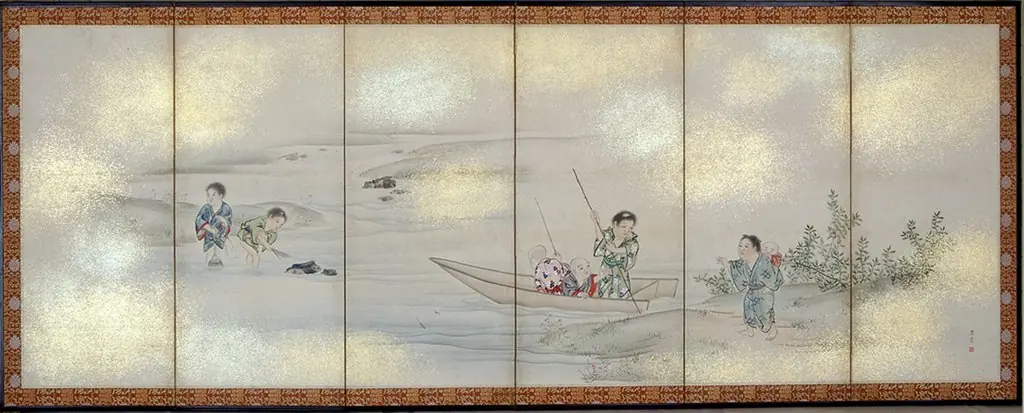 Children Playing in Summer and Winter
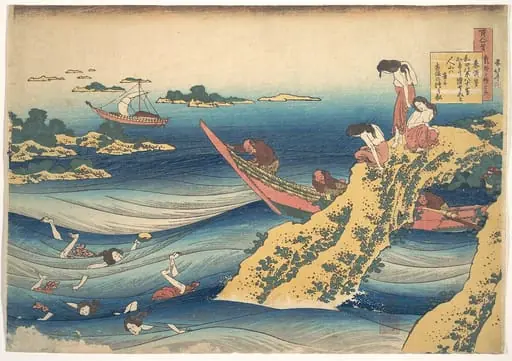 百人一首 乳母か絵とき 参議篁|Poem by Sangi no Takamura (Ono no Takamura), from the series One Hundred Poems Explained by the Nurse (Hyakunin isshu uba ga etoki)
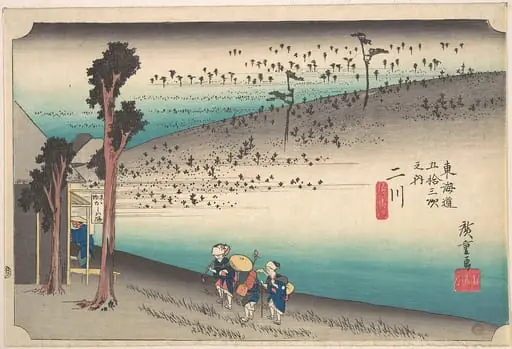 東海道五十三次之内 二川 猿ヶ馬場|Futagawa, Saru ga Baba
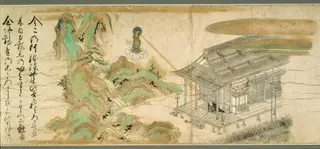 Legends of the Yuzu Nembutsu Sect