Artwork
Saints Peter, Martha, Mary Magdalen, and Leonard
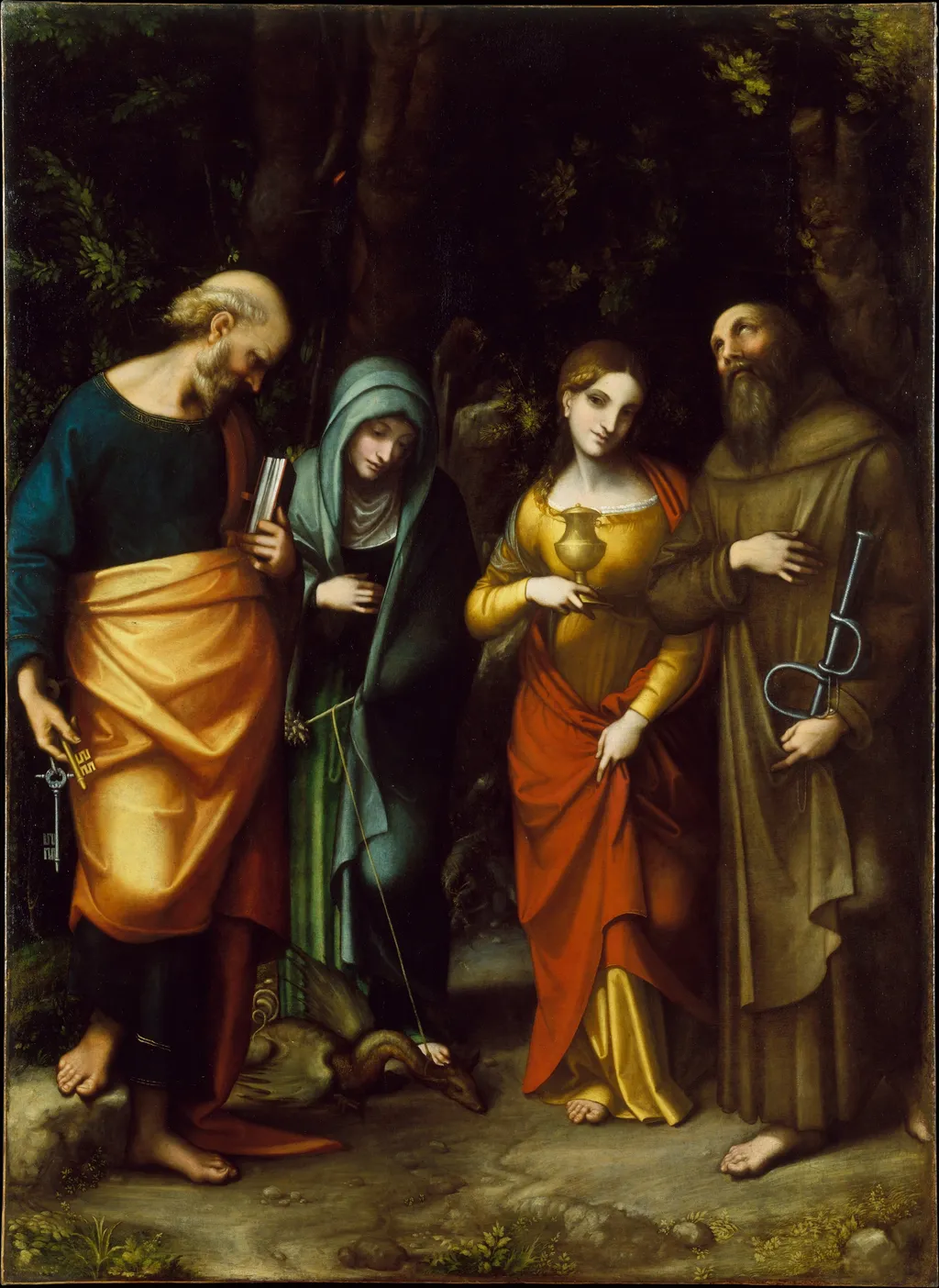
Saints Peter, Martha, Mary Magdalen, and Leonard is an oil painting by the High Renaissance artist Antonio da Correggio. It dates from 1515 and is held in the collection of the Metropolitan Museum of Art.
About this work
Subject & Meaning
The panel depicts four saints arranged in a semicircle, each distinguished by traditional attributes and gestures that convey distinct roles and virtues.
The panel depicts four saints arranged in a semicircle, each distinguished by traditional attributes and gestures that convey distinct roles and virtues. Saint Peter holds the keys to the Kingdom of Heaven, emblem of his apostolic authority. Saint Martha subdues a small dragon at her feet, recalling the legend of her victory over the Tarasque and symbolizing triumph over evil.
Mary Magdalene is shown with a vessel of ointments, her slight, enigmatic smile evoking Leonardo da Vinci’s influence and signifying penitence and sacred devotion. Saint Leonard, clad in monastic habit and holding manacles, faces heavenward, representing intercession for prisoners and the faithful. The dense woodland background creates a hushed, unsettling atmosphere, framing a rare sacra conversazione without the Virgin and Child, emphasizing the saints’ earthly witness and spiritual mediation.
Technique & Style
The painting is executed in oil on canvas, measuring approximately 221.6 × 161.9 cm. Correggio employs a compact, semicircular composition grouping the four saints, Peter, Martha, Mary Magdalene, and Leonard, beneath a dense, shadowy forest that creates a suspended, atmospheric effect. Stylistic features include the studied variation in poses and gazes: Peter and Martha look downward, Leonard upward, and Mary Magdalene toward the viewer, her slight smile echoing Leonardo da Vinci’s sfumato technique. The handling emphasizes luminous color harmonies and bold yet harmonious contrasts in drapery, with attributes such as Peter’s keys, Martha’s dragon leash, Mary’s ointment jar, and Leonard’s fetters rendered with clear iconographic precision.
The dense woodland backdrop and chiaroscuro modeling align with Emilian precedents, while the palette’s luminosity and daring juxtapositions signal Correggio’s emerging personal idiom.
History & Provenance
The painting was commissioned by the notary Melchiorre Fassi for an altar in the church of Santa Maria della Misericordia at Correggio (3,4,5,6). Executed in oil on canvas, it is dated to circa 1514–1515 (1,2,3,5). Documentary evidence ties the work to Fassi’s testament of 17 December 1517, which made the Church of San Quirino his heir on condition that a chapel with an altar to the four saints be built; the testament does not clarify whether the altarpiece already existed or was to be created (3,5,6).
A codicil of 29 August 1528 shifted the heir to San Domenico under the same condition, and a final codicil of 1 April 1538 restored Santa Maria della Misericordia as heir, noting that Fassi already possessed a chapel there with an altarpiece (3,5,6). After these ecclesiastical transitions the canvas entered the Metropolitan Museum of Art, where it has resided since 1912 (4).
The painting is currently held in the collection of the Metropolitan Museum of Art in New York City, having entered the museum's holdings in 1912. Originally created for the church of Santa Maria della Misericordia in Correggio, the work's early history is linked to the testamentary provisions of the notary Melchiorre Fassi between 1517 and 1538, though it remains uncertain whether the altarpiece predated these legal documents or was commissioned specifically for them. While the provided sources confirm its long-term residence in New York since the early twentieth century and its original ecclesiastical setting, they do not list specific temporary exhibitions or loan records beyond its permanent display status.
Overview
Antonio da Correggio completed Saints Peter, Martha, Mary Magdalen, and Leonard in 1514. This oil on canvas work, also known simply as Four Saints, functioned as an altarpiece. It depicts the four titular figures gathered within a natural setting, characteristic of the artist's early period. The painting is now housed in the Metropolitan Museum of Art in New York City.
Own this work as a print
Artist & collection
Artist
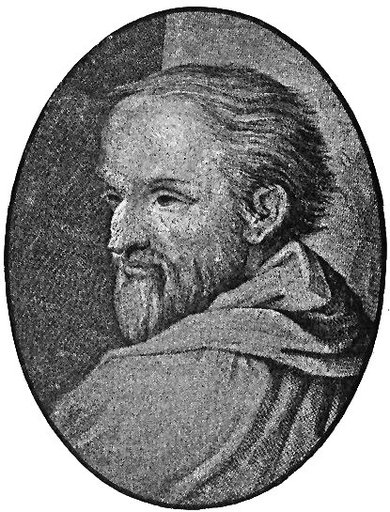
Antonio Allegri da Correggio, usually known as just Correggio, was an Italian Renaissance painter who was the foremost painter of the Parma school of the High Renaissance, who was responsible for some of the most…

 Rejection of Hagar
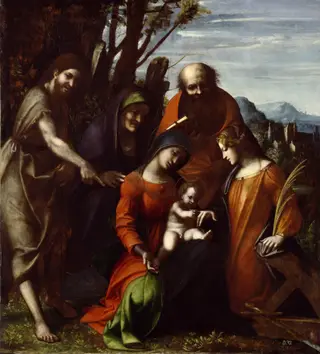 The Mystic Marriage of Saint Catherine
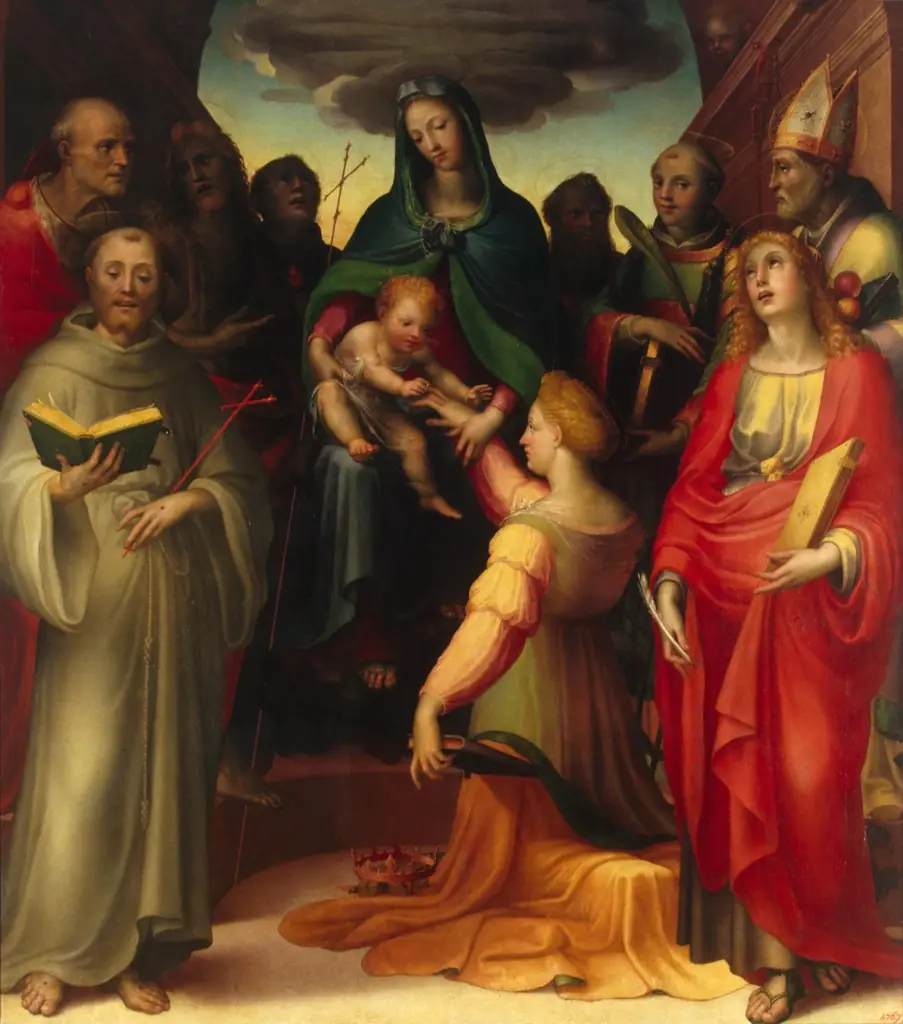 Mystic Marriage of St Catherine
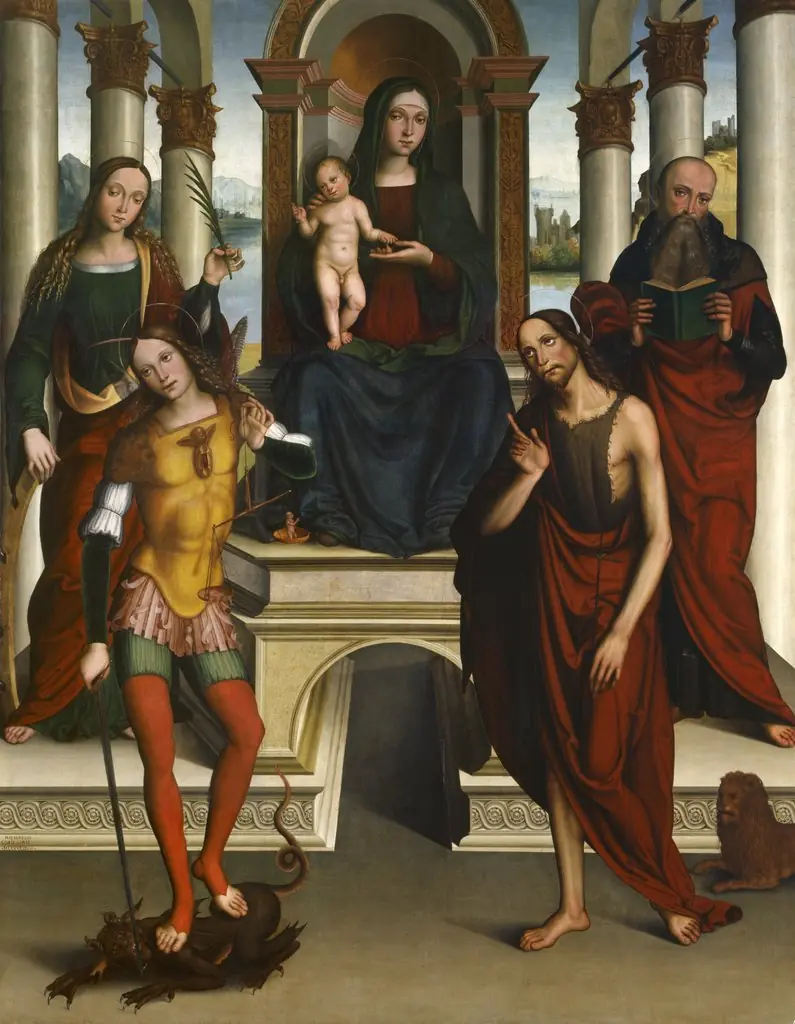 Madonna and Child Enthroned with Saints
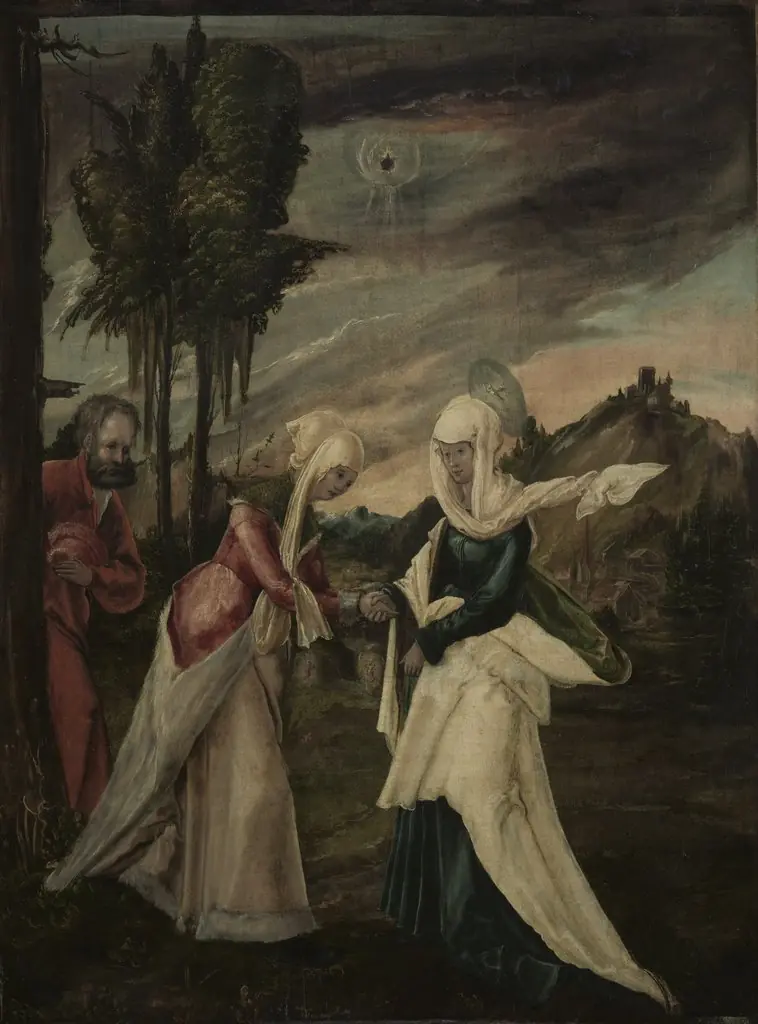 The Visitation
 Madonna and Child with Saints
 The Holy Family with St. John the Baptist
 Jakobus-Stephanus-Altar: Der Leichnam des Jakobus wird vor Königin Lupa gebracht
 The Vision of Saint Bernard
 Martyrdom of Saint Catherine