Artwork
The Old Oaken Bucket which Hung in the Well
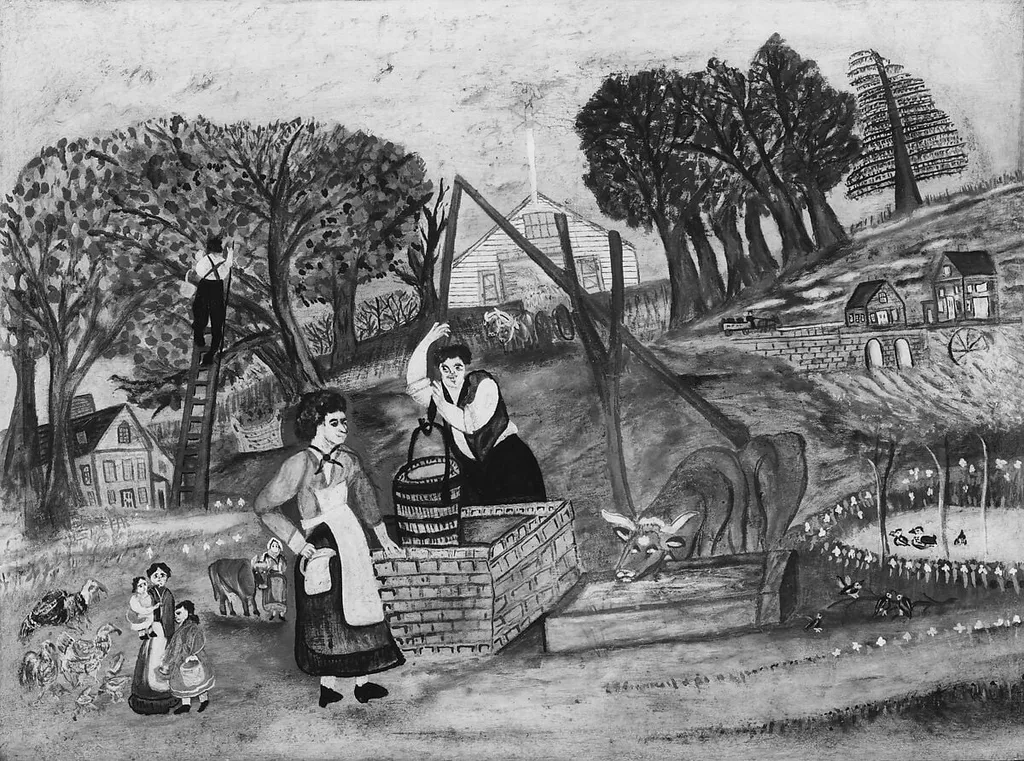
The Old Oaken Bucket which Hung in the Well is an oil painting. It dates from 1890 and is held in the collection of the Metropolitan Museum of Art.
About this work
Named for Samuel Woodworth's 1818 poem, this anonymous American painting dates to around 1890, a slice of Victorian rural nostalgia in oil mounted on masonite. It came to the Metropolitan Museum of Art in 1980 through the bequest of Edgar William and Bernice Chrysler Garbisch, whose collection shaped the museum's American holdings.
Overview
It depicts a scene inspired by Samuel Woodworth's popular 1818 poem, reflecting a widespread Victorian sentimentality for rural life.
This oil painting, titled "The Old Oaken Bucket which Hung in the Well," was created around 1890 by an anonymous American artist. It depicts a scene inspired by Samuel Woodworth's popular 1818 poem, reflecting a widespread Victorian sentimentality for rural life. The work is rendered in oil on canvas, later mounted on masonite, and measures 19 5/8 by 27 inches. It is housed in the American Wing of the Metropolitan Museum of Art, under object number 1980.360.8.
Subject & Meaning
The painting draws its name and thematic inspiration from Samuel Woodworth's 1818 poem, "The Old Oaken Bucket." This verse expressed a deep nostalgia for childhood and country living, resonating strongly with Victorian audiences. Its popularity surged after being set to music in 1870, cementing its place as a beloved parlor song and a touchstone for sentimental reflections on a simpler past, which this artwork visually embodies.
Technique & Style
Executed in oil on canvas, this painting exemplifies a common artistic practice of its era. The canvas was subsequently mounted on masonite, a conservation choice reflecting its journey through time. While the artist remains unknown, the work's subject matter and approximate date align it with the late-nineteenth-century American tradition of genre painting, characterized by narrative scenes often imbued with sentimental or moralistic undertones, appealing to popular tastes.
History & Provenance
This artwork entered the collection of the Metropolitan Museum of Art in 1980, part of a significant bequest from Edgar William and Bernice Chrysler Garbisch. The Garbisches were notable collectors whose contributions greatly enriched the museum's holdings, particularly in American folk and decorative arts. Their acquisition of "The Old Oaken Bucket which Hung in the Well" underscores its perceived value within the context of American cultural heritage.
Context
Created around 1890, this painting belongs to a wider nineteenth-century artistic movement that found inspiration in Woodworth's evocative poem. This tradition also included various lithographs, demonstrating the poem's pervasive influence across different visual media. The work reflects a late-nineteenth-century American cultural inclination towards sentimental genre scenes, often directly referencing popular literature to evoke feelings of nostalgia and idealized rural life among viewers.
Artist & collection

- Sequences from the Village Museum, Naive painting by Costache Agachi - The gossip (1988)
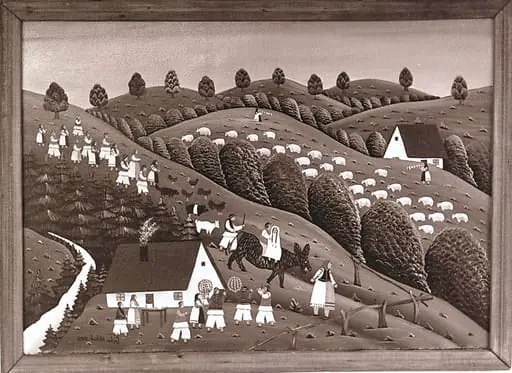 Sequences from the Village Museum, naive painting by Petru Mihuțe - The wedding of the poor boy (1988)
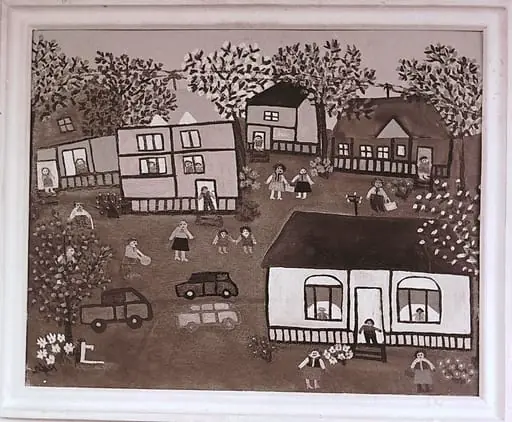 Sequences from the Village Museum, naive painting by Aurora Năfornițe - New houses (1988)
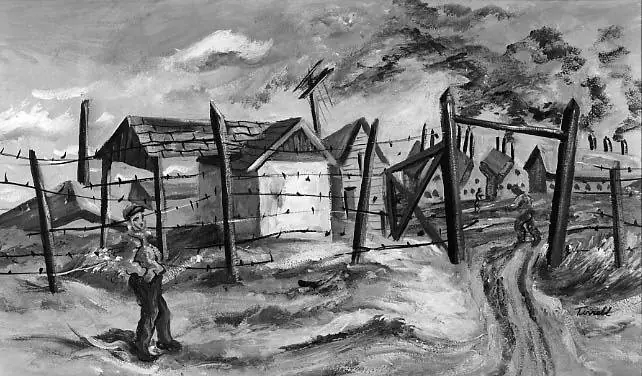 Industrial Landscape
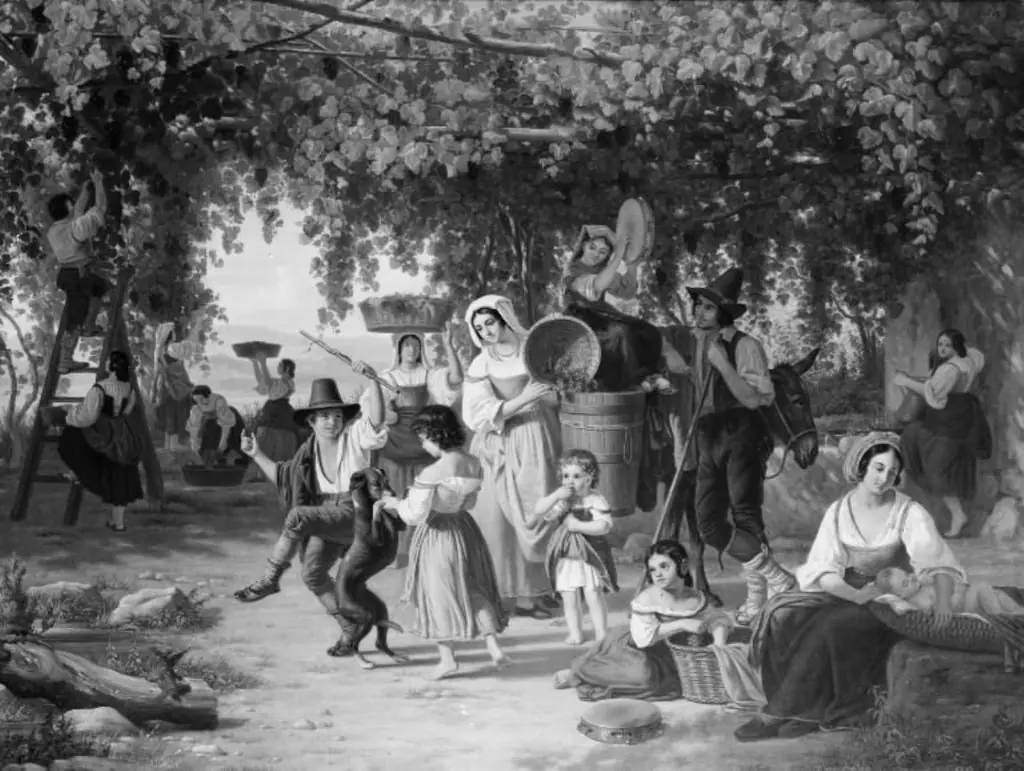 Vintage in Italy
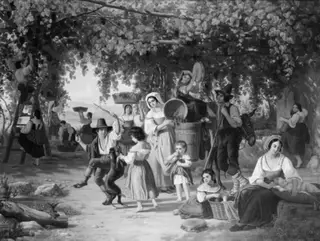 Vintage in Italy
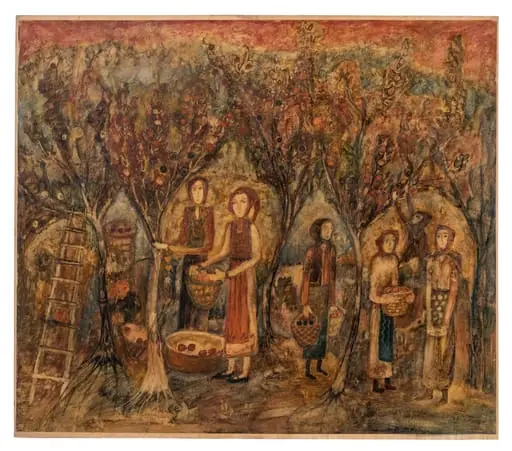 Cules de fructe
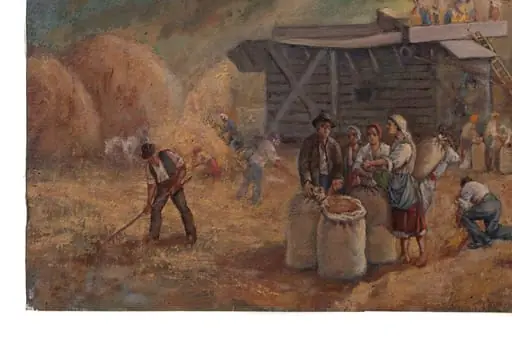 La treierat
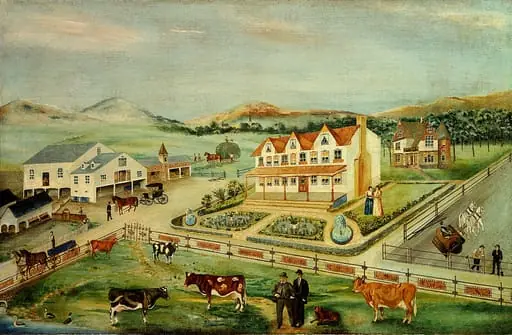 Bucks County Farm Outside Doylestown, Pennsylvania
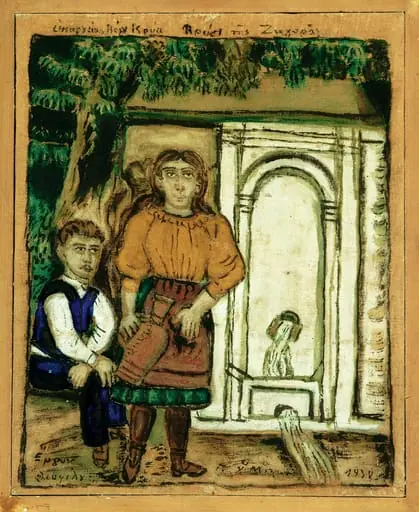 Ζευγάρι στην πηγή Ζαγοράς
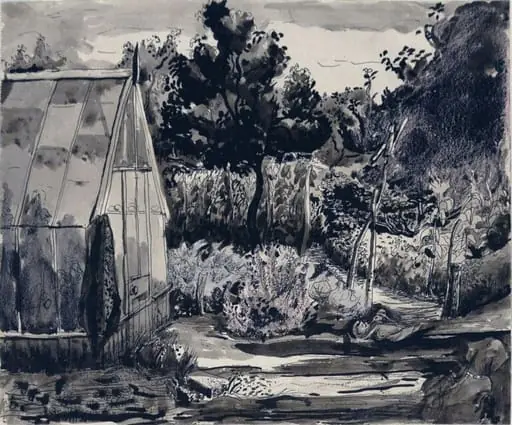 Chart Sutton
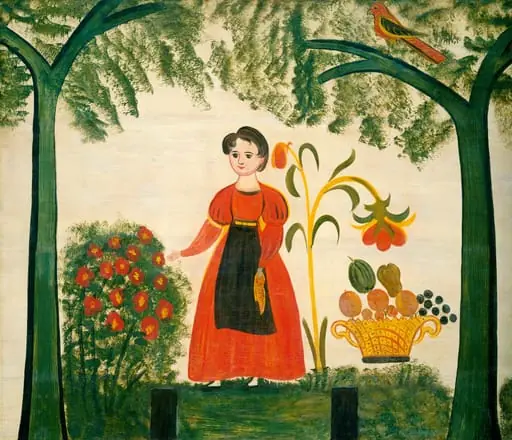 Girl in Red with Flowers and a Distelfink