Artwork
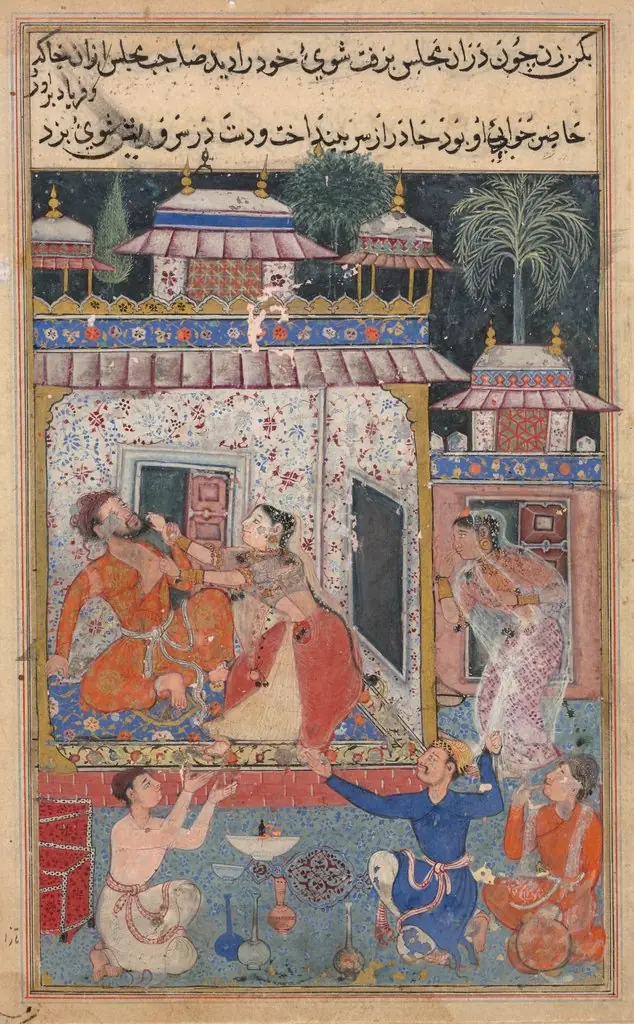
The deceitful wife assaults her erring husband, from a Tuti-nama (Tales of a Parrot): Eighth Night
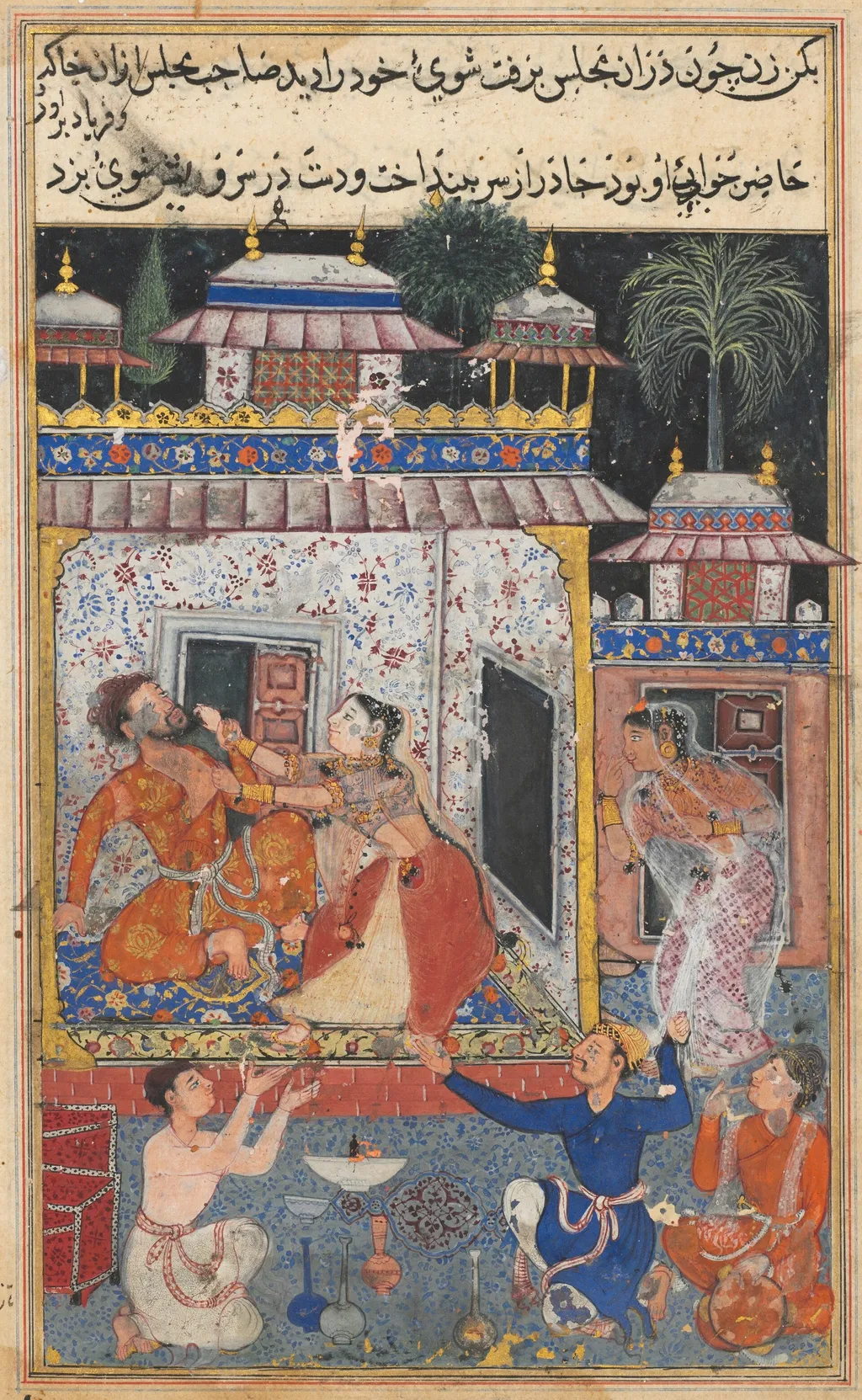
The deceitful wife assaults her erring husband, from a Tuti-nama (Tales of a Parrot): Eighth Night is an unspecified painting. It dates from 1560 and is held in the collection of the Cleveland Museum of Art. The work illustrates a lively interior tableau drawn from the eighth night of the Persian manuscript Tuti‑nama (Tales of a Parrot).
About this work
History & Provenance
The work forms part of a larger manuscript known as the Tuti-nama (Tales of a Parrot), specifically illustrating the narrative of the Eighth Night.
Created in 1560 within the Mughal Empire, this painting is attributed to the artist Tara 1, who was active during the 1550s and 1590s. The work forms part of a larger manuscript known as the Tuti-nama (Tales of a Parrot), specifically illustrating the narrative of the Eighth Night. It depicts the scene where a deceitful wife assaults her erring husband.
The painting currently resides in the collection of the Cleveland Museum of Art, where it is cataloged under the accession number 1962.279.60.b.
The painting is held in the collection of the Cleveland Museum of Art, catalogued under accession number 1962.279.60.b. It was created in 1560 within the Mughal Empire and has been displayed in exhibitions at the museum focusing on Indian miniature painting and Persian manuscript illumination.
Overview
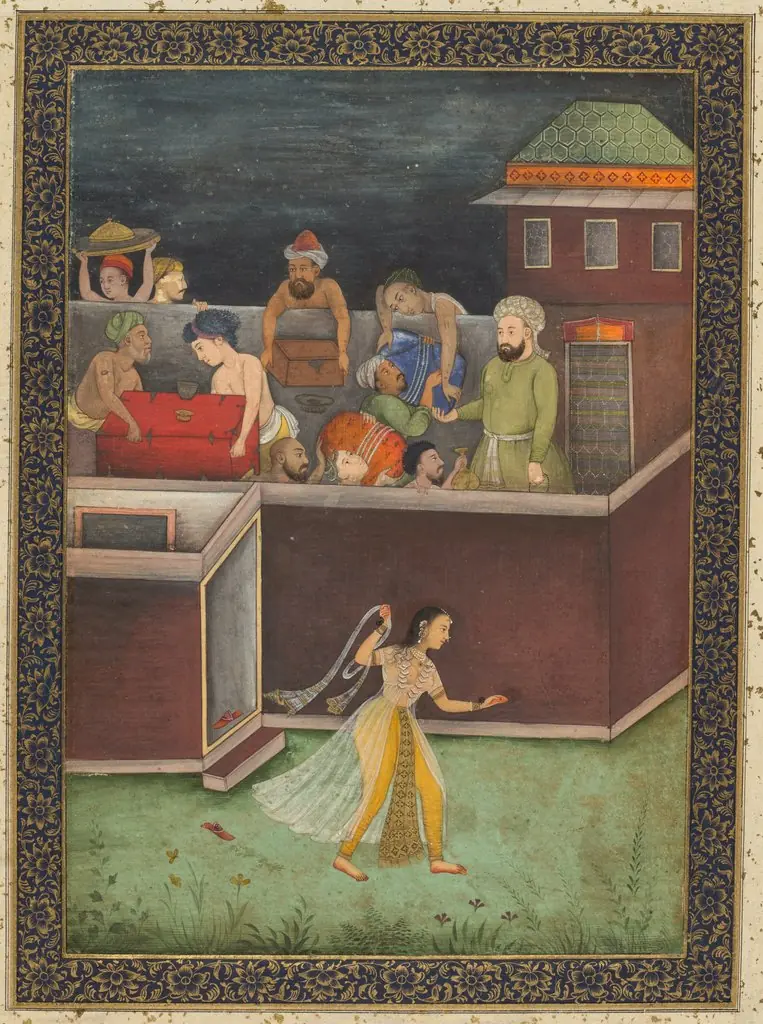
The work illustrates a lively interior tableau drawn from the eighth night of the Persian manuscript Tuti‑nama (Tales of a Parrot). Rendered in vivid hues, the scene captures a moment of domestic conflict, with a woman in a striking red garment confronting a seated man who appears startled.
Subject & Meaning
The narrative depicts a deceitful wife confronting her erring husband, a motif common in moralistic Persian storytelling. Supporting figures, one partially unclothed, another in blue, react with surprise or alarm, underscoring the tension and social commentary embedded in the tale.
Technique & Style
Executed in miniature painting tradition, the piece employs intricate decorative borders and a richly patterned wall surface. The artist uses bold coloration and fine line work to delineate figures, while a small balcony with a red‑and‑white canopy hints at an architectural depth beyond the immediate interior.
Context
Tuti‑nama served both entertainment and didactic purposes, presenting moral lessons through episodic stories narrated by a parrot. The eighth night’s episode, rendered here, reflects societal concerns about fidelity and the consequences of deception within the household.
Artist & collection

- The deceitful wife assaults her erring husband, from a Tuti-nama (Tales of a Parrot): Eighth Night
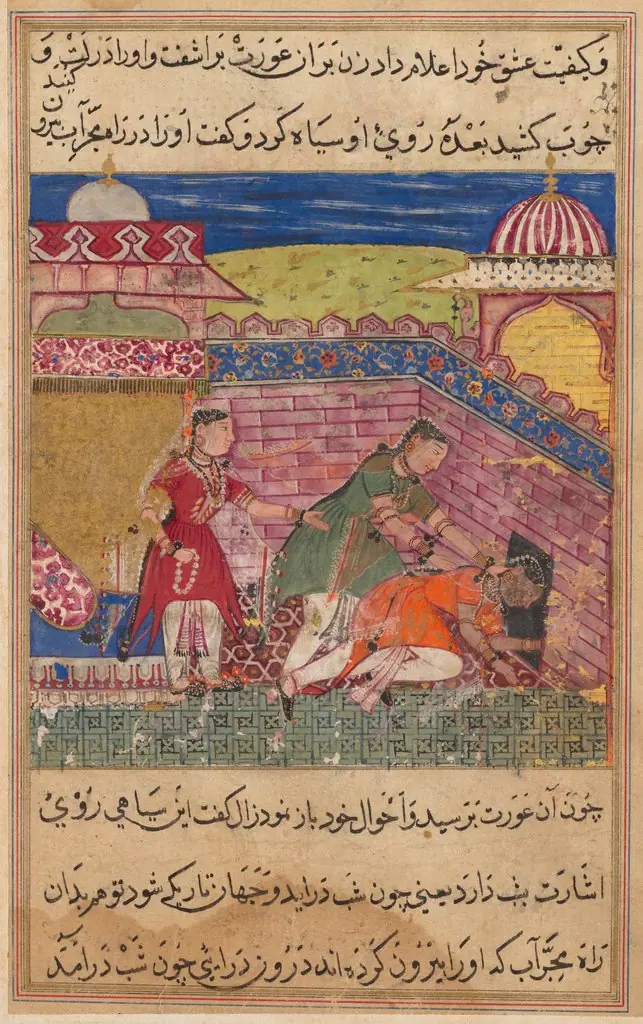 The deceitful wife ejects the procuress after blackening her face, from a Tuti-nama (Tales of a Parrot): Eighth Night
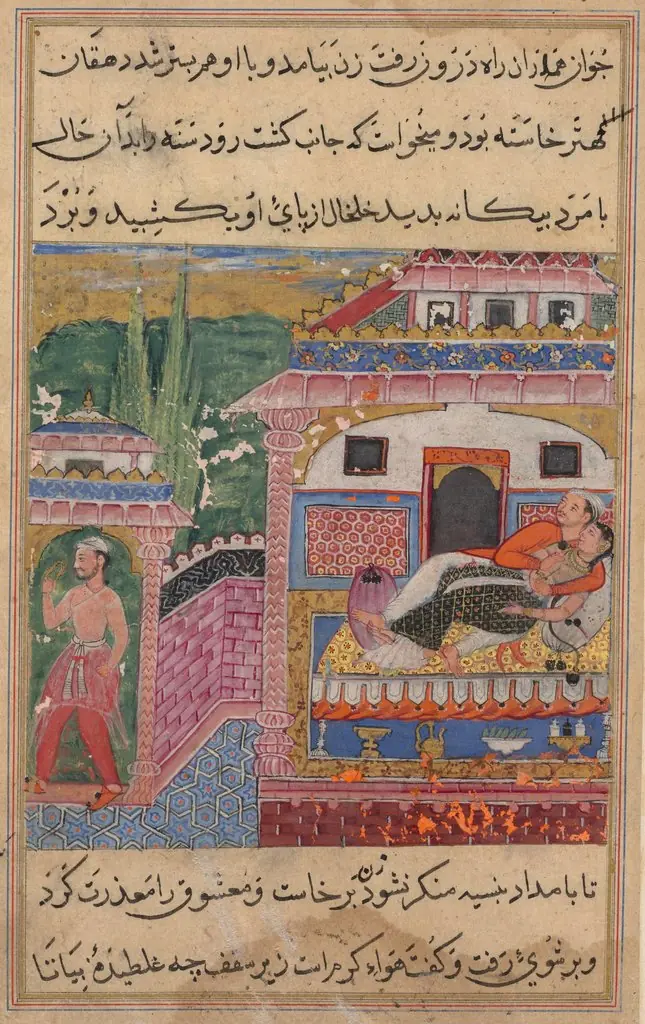 The deceitful wife persuades her husband to sleep in the same place where she had previously slept with her lover, from a Tuti-nama (Tales of a Parrot): Eighth Night
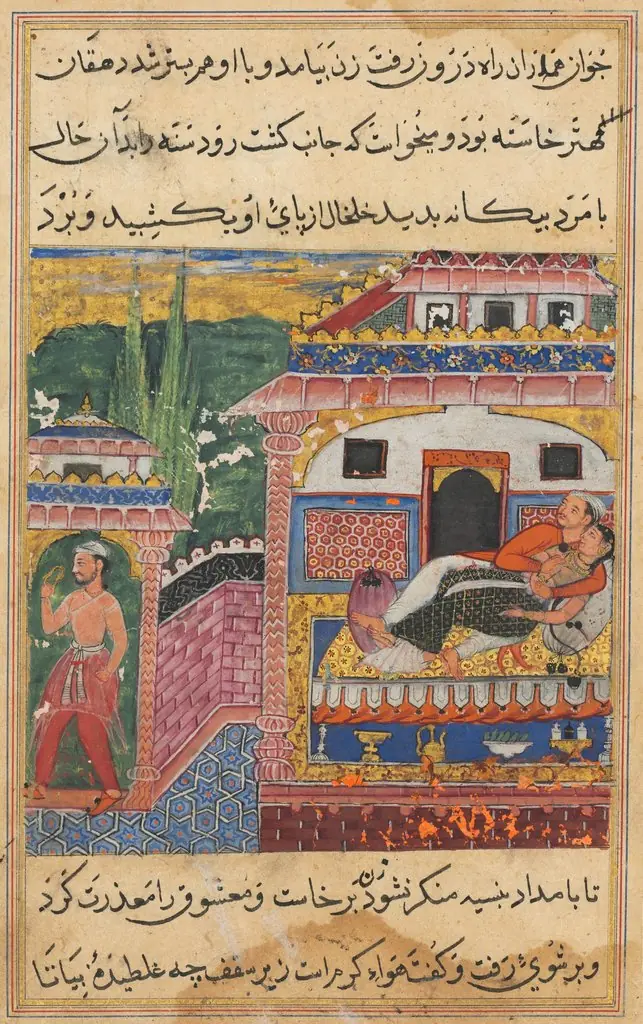 The farmer, father of the son with the deceitful wife, steals away with her anklet while she is in bed with her lover, from a Tuti-nama (Tales of a Parrot): Eighth Night
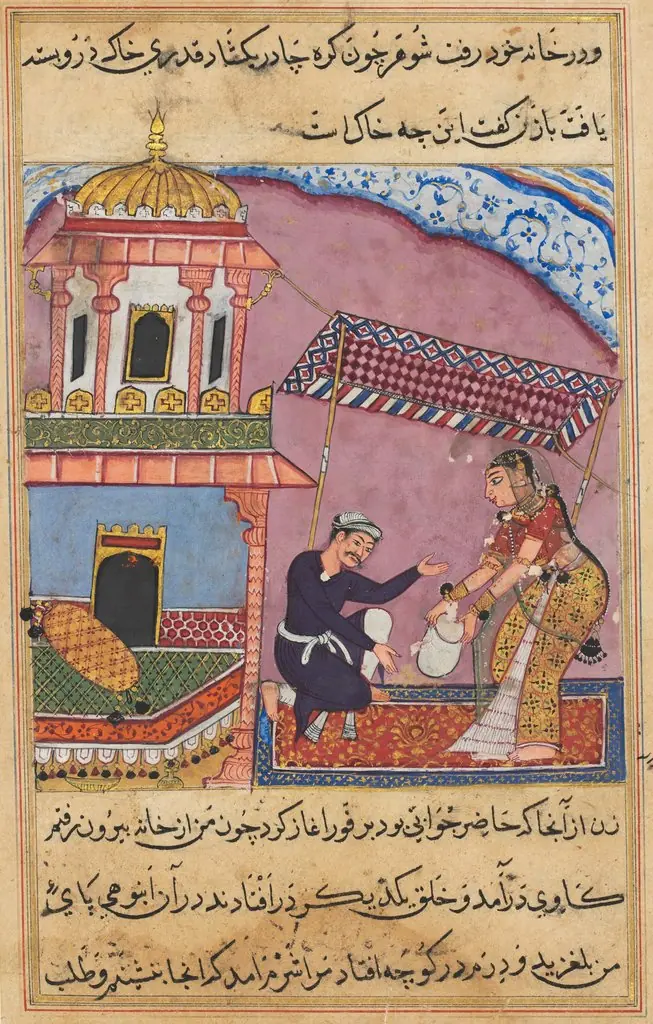 The husband berates his wife for purchasing gravel instead of sugar, from a Tuti-nama (Tales of a Parrot): Eighth Night
 The farmer, father of the son with the deceitful wife, steals away with her anklet while she is in bed with her lover, from a Tuti-nama (Tales of a Parrot): Eighth Night
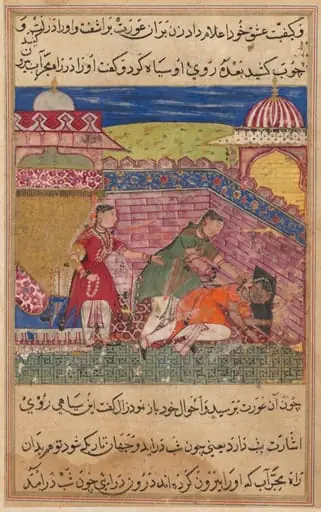 The deceitful wife ejects the procuress after blackening her face, from a Tuti-nama (Tales of a Parrot): Eighth Night
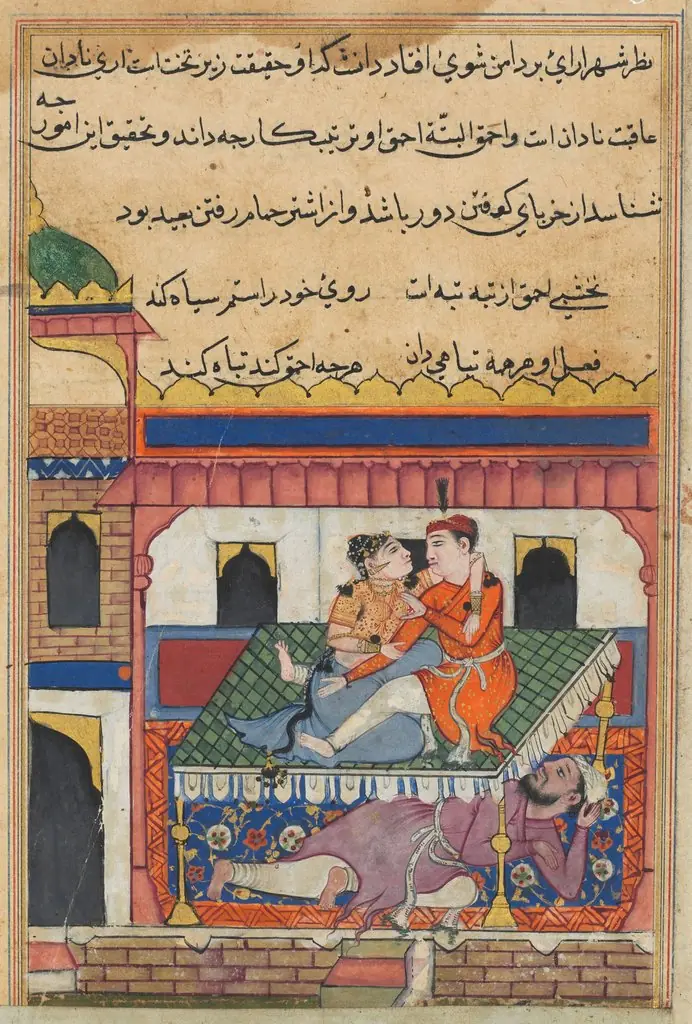 Shahr-Arai and her lover dallying on a bed beneath which is concealed her husband, from a Tuti-nama (Tales of a Parrot): Fortieth Night
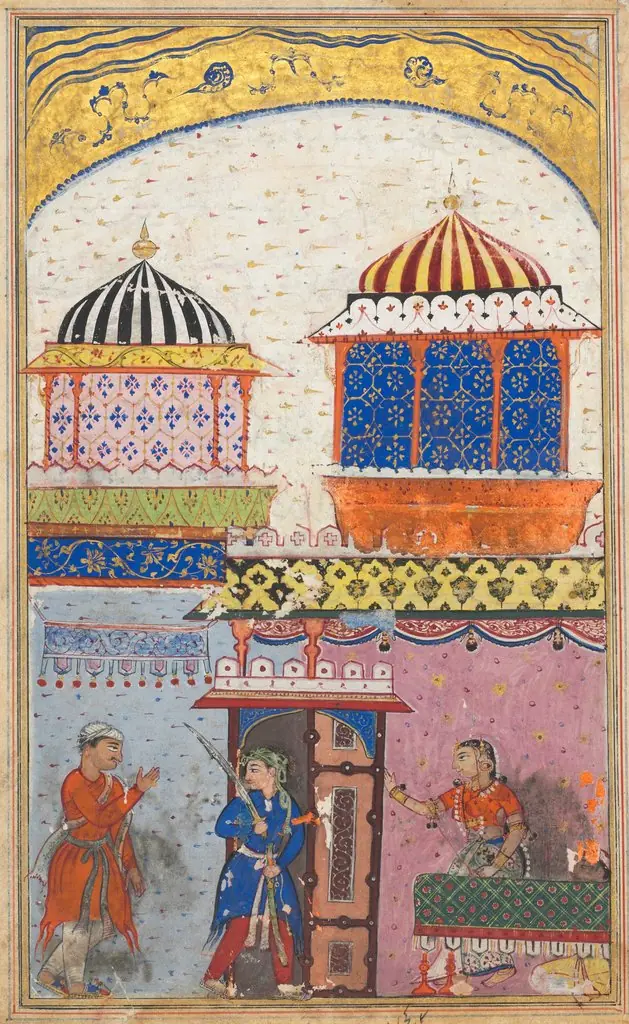 A woman asks her lover to leave her house, brandishing his sword and feigning rage in order to deceive her husband who has just arrived, from a Tuti-nama (Tales of a Parrot): Eighth Night
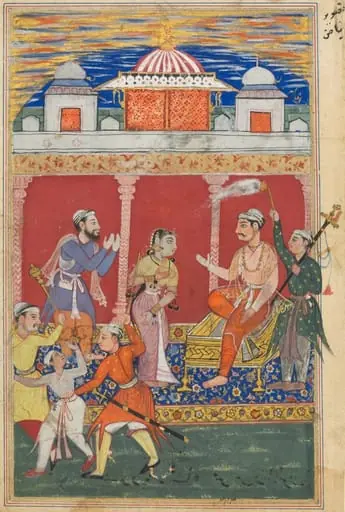 The prince’s ordeal continues, he is ordered away to be executed for the fifth time, from a Tuti-nama (Tales of a Parrot): Eighth Night
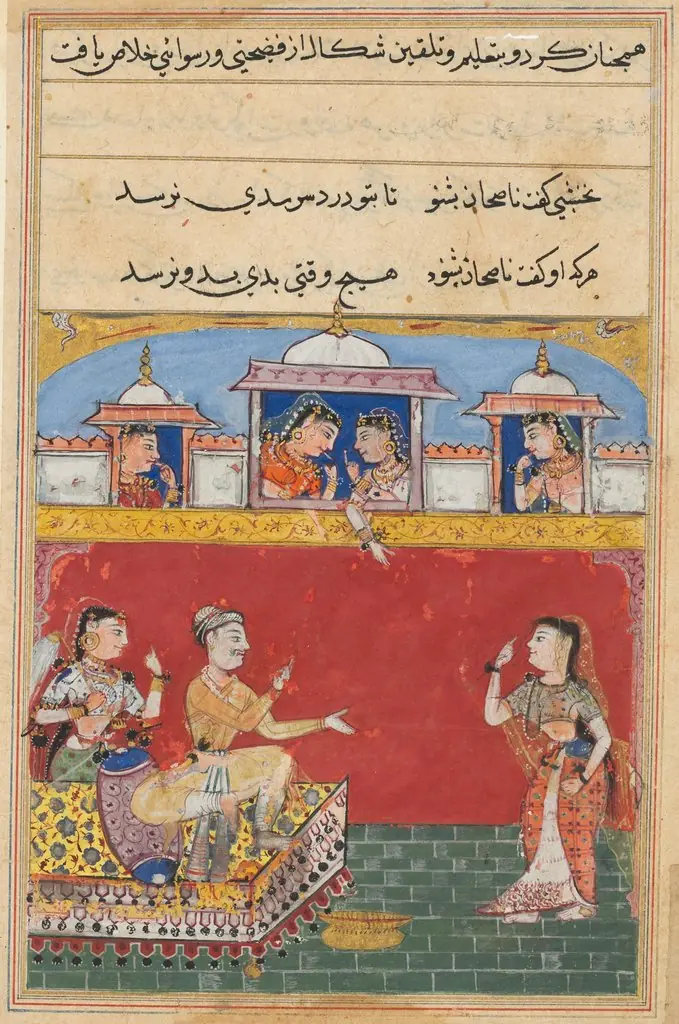 The daughter-in-law returns from her misadventure, feigning insanity, from a Tuti-nama (Tales of a Parrot): Sixteenth Night
 Page from Tales of a Parrot (Tuti-nama): text page
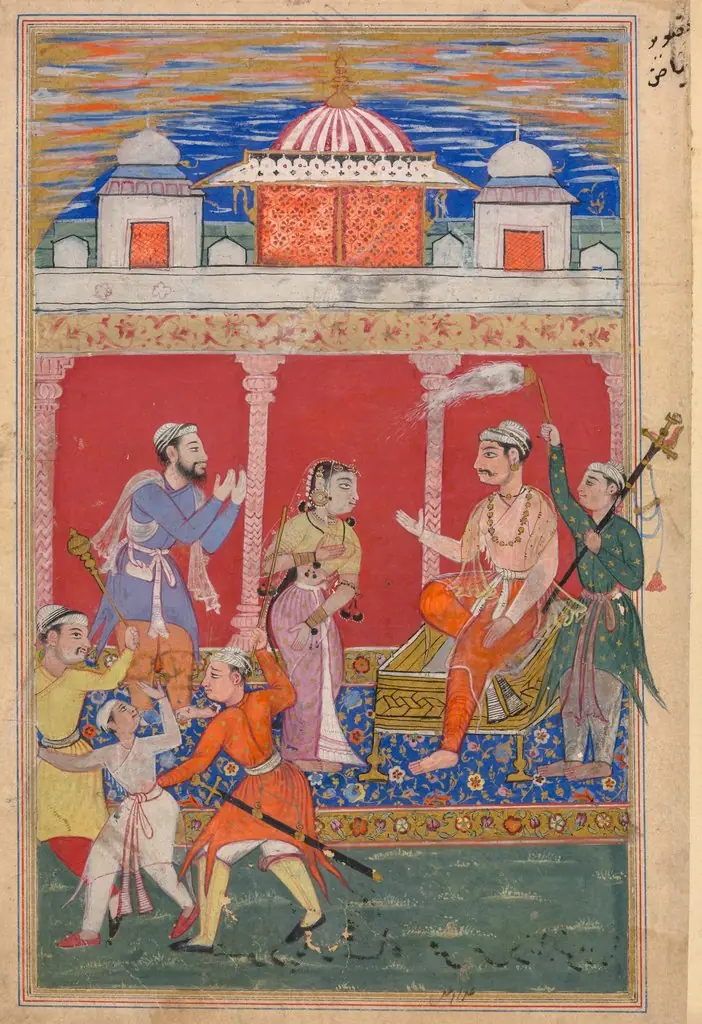 Page from Tales of a Parrot (Tuti-nama): text page
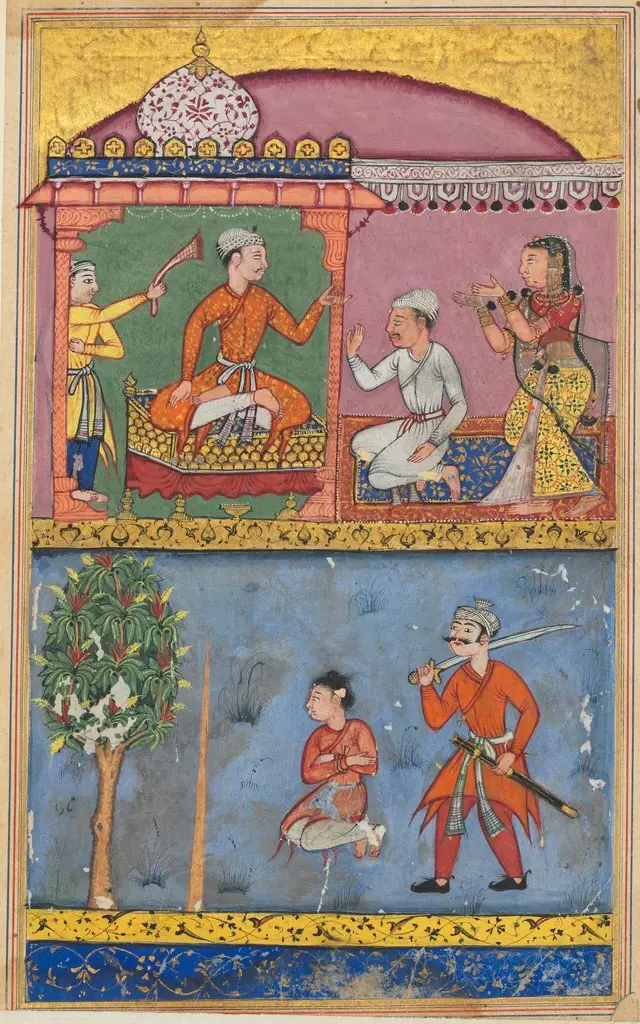 The handmaiden appeals for justice and the prince is taken to the execution site for the fourth time, from a Tuti-nama (Tales of a Parrot): Eighth Night
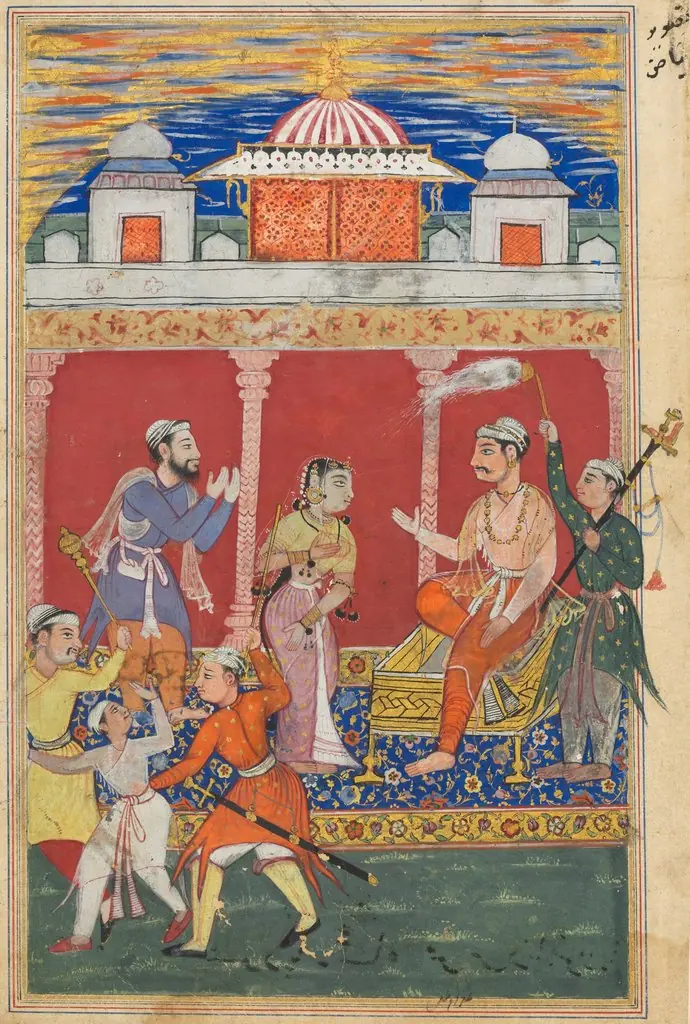 The prince’s ordeal continues, he is ordered away to be executed for the fifth time, from a Tuti-nama (Tales of a Parrot): Eighth Night
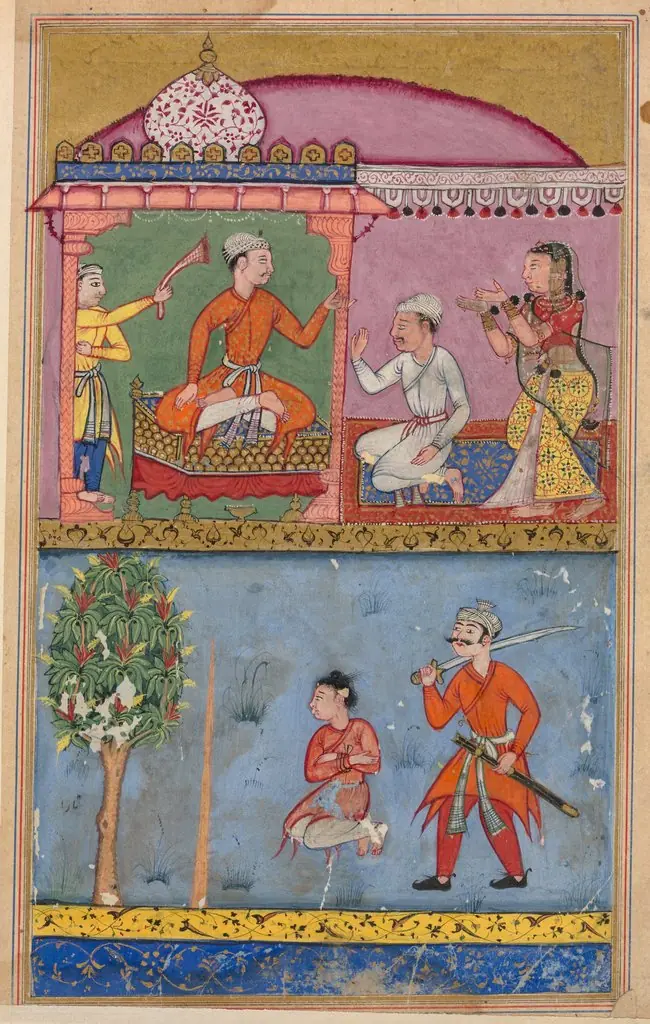 Page from Tales of a Parrot (Tuti-nama): text page
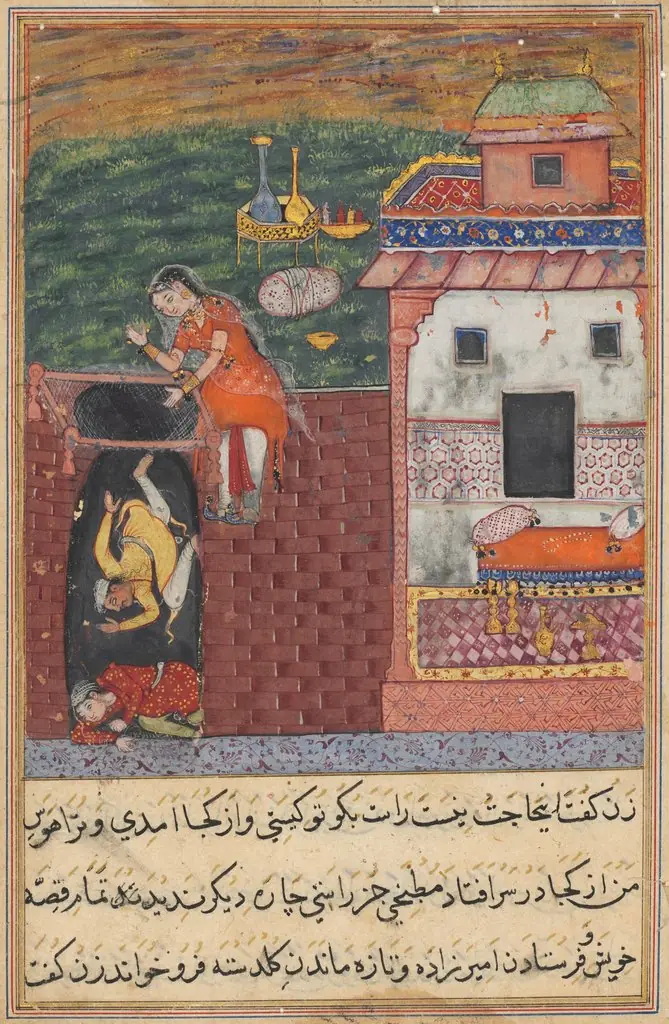 The two cooks, who attempt to seduce the warrior’s loyal wife, are trapped by her in a cellar, from a Tuti-nama (Tales of a Parrot): Fourth Night
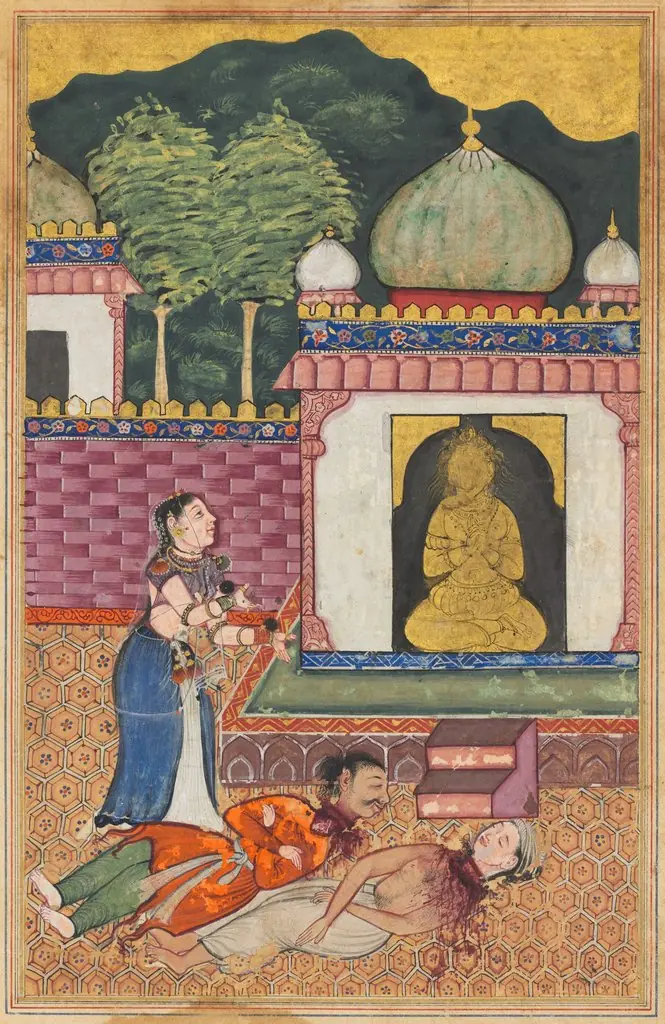 The princess discovers the dead bodies, with heads severed, of her husband and his Brahman friend, from a Tuti-nama (Tales of a Parrot): Thirty-fourth Night
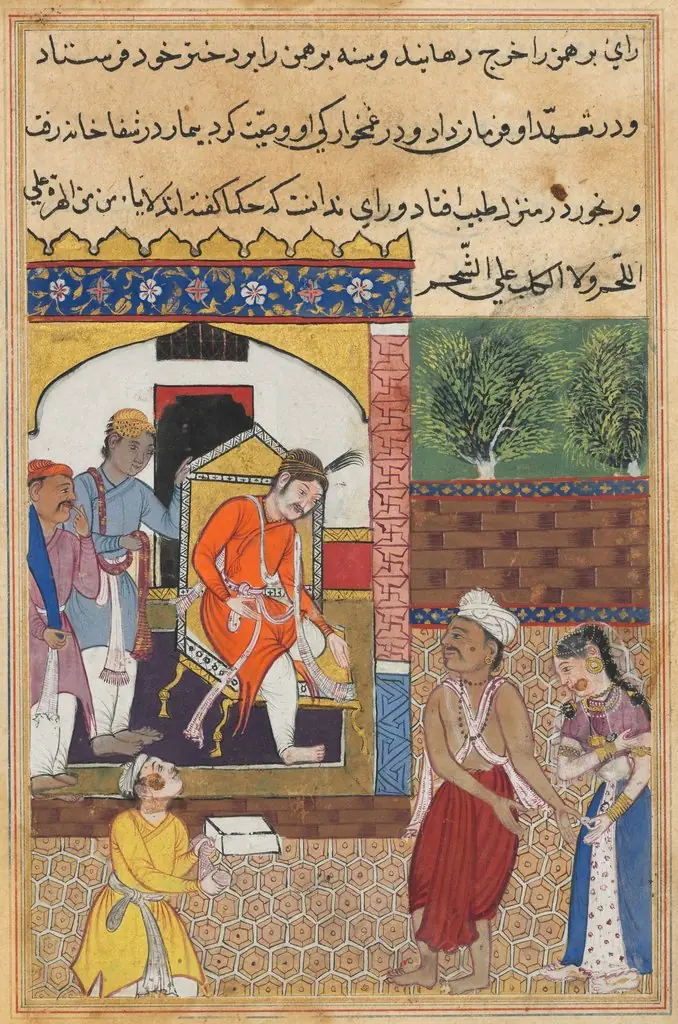 The magician, disguised as a Brahman, visits the king of Babylon, from a Tuti-nama (Tales of a Parrot): Thirty-fifth Night
 A House Burgled at Night