Artwork
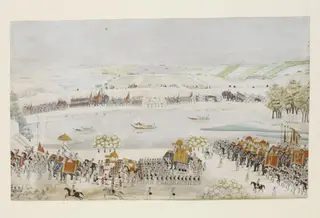
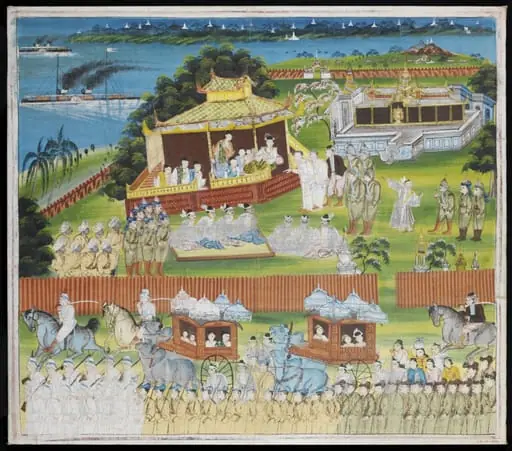
The royal procession of Shah Alam II proceeding to Delhi along the banks of the channels of the river Jumna and crossing a bridge of boats.
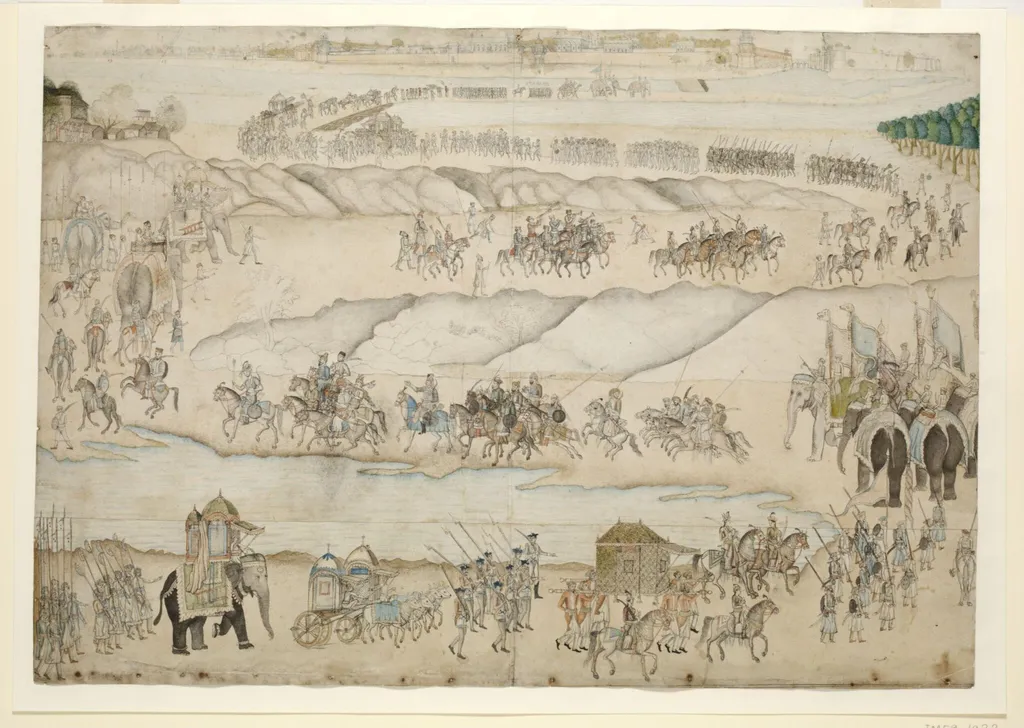
The royal procession of Shah Alam II proceeding to Delhi along the banks of the channels of the river Jumna and crossing a bridge of boats. is a paint painting by the Rococo painting artist Unknown. It dates from 1775 and is held in the collection of the Victoria and Albert Museum.
About this work
Overview
This painting depicts the royal procession of Mughal Emperor Shah Alam II returning to Delhi along the Jumna River, crossing a bridge of boats, after a 12-year absence.
Subject & Meaning
The scene captures the emperor's 1772 return to Delhi under protection, symbolizing the diminished Mughal Empire's power after the British East India Company's 1764 victory, which reduced the emperor's rule to nominal status.
Technique & Style
The work features intricate details, such as gold patterns on elephant cloths and shimmering river water with small boats, executed in a style comparable to the V&A's Gentil Album (IS.25-1980), characteristic of Faizabad's artistic tradition circa 1774.
History & Provenance
The painting commemorates a specific historical event: Shah Alam II's return to Delhi in 1772, following a 12-year exile in Allahabad imposed by the British East India Company after their 1764 military victory.
Context
Created in the late 18th century, the painting reflects the waning Mughal Empire's adaptability and the rising British influence in India, as well as the continued artistic flourishing of Mughal traditions despite political decline.
Legacy
While the painting's current legacy is not extensively detailed, its style and subject matter link it to notable collections like the Victoria and Albert Museum, suggesting its value in understanding the era's artistic and historical dynamics.
Artist & collection









![The Siege of Breda [plate 6 of 6], by Jacques Callot](https://artifactworldgallery.com/img/jacques-callot--the-siege-of-breda-plate-6-of-6--2a4732053c4510b6-w320.webp)