Artwork
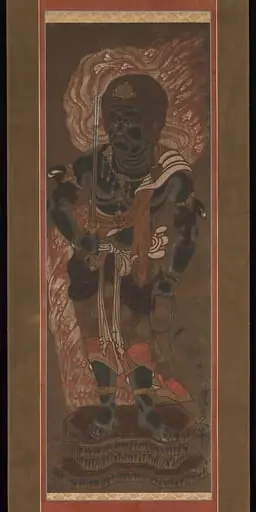
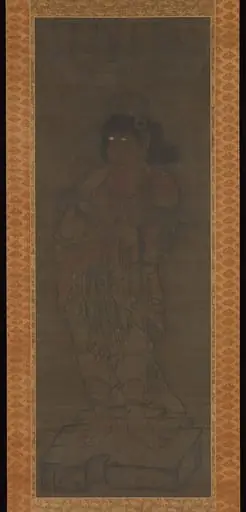
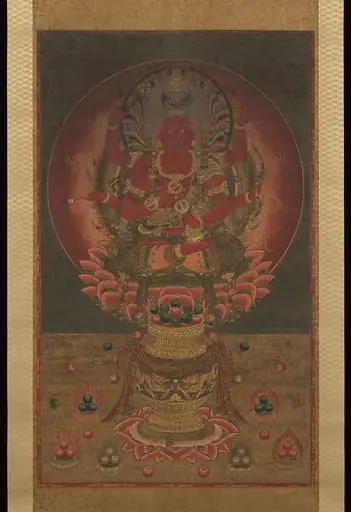
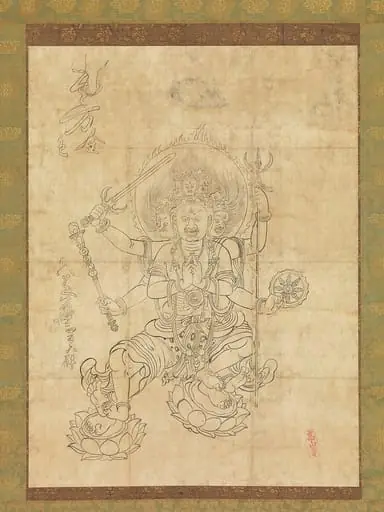
龍湫周沢写 不動明王二童子像|Fudō Myōō and Two Attendants
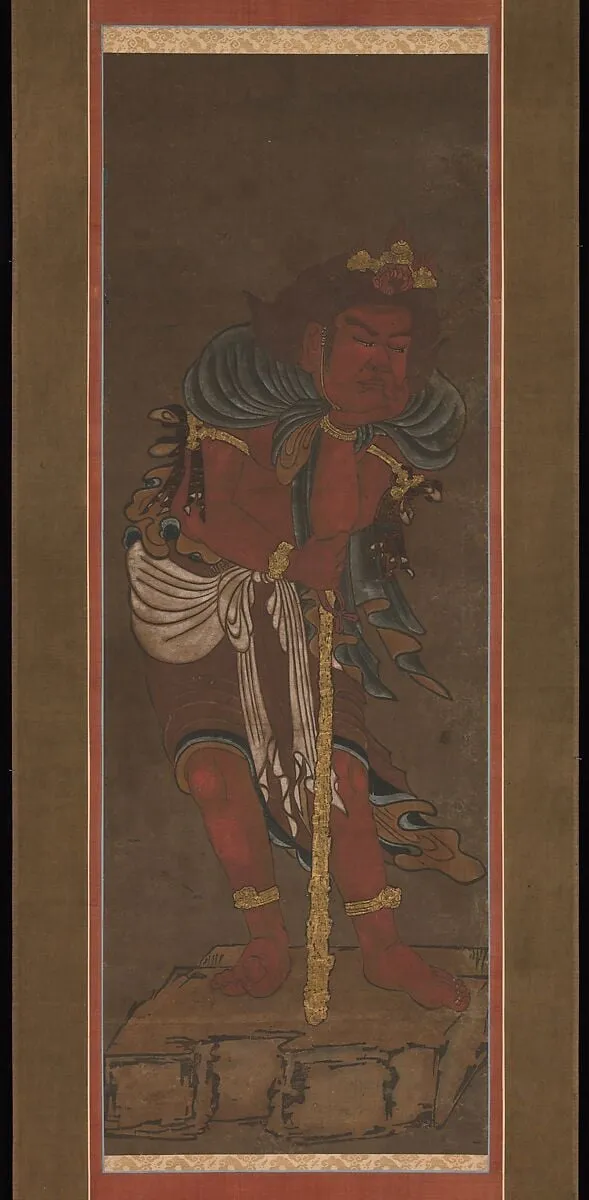
龍湫周沢写 不動明王二童子像|Fudō Myōō and Two Attendants is an ink painting by the Ukiyo-e artist Ryūshū Shūtaku. It dates from 1362 and is held in the collection of the Metropolitan Museum of Art.
About this work
Technique & Style
The application of color by hand over the printed lines distinguishes the medium from monochrome prints, adding visual detail to the religious subjects.
Created in 1362 by the artist Ryūshū Shūtaku, this work is a hand-colored woodblock print on paper. It functions as one panel within a triptych of hanging scrolls, a format typical for religious devotion. Stylistically, the piece depicts Buddhist iconography, featuring a central figure representing Fudō Myōō accompanied by two attendants.
The application of color by hand over the printed lines distinguishes the medium from monochrome prints, adding visual detail to the religious subjects. As a hanging scroll, the work was designed for vertical display, consistent with its intended use within a Buddhist context in Japan.
History & Provenance
The work titled 龍湫周沢写 不動明王二童子像 (Fudō Myōō and Two Attendants) was created in 1362 in Japan by the Buddhist artist Ryūshū Shūtaku, also known as Myōtaku. Executed as a hand-colored woodblock print on paper, it forms part of a triptych of hanging scrolls and belongs to the religious painting genre. The piece portrays the wrathful deity Fudō Myōō accompanied by two attendant figures.
It entered the Metropolitan Museum of Art collection under accession number 1975.268.26 and remains there. Its dating is firmly placed at 1362, within the Nanbokuchō period.
Overview
Fudō Myōō and Two Attendants is a hand-colored woodblock print created in 1362 by the artist Ryūshū Shūtaku. This artwork forms one part of a larger triptych, designed as a set of hanging scrolls. It represents a significant example of religious art from medieval Japan, combining printmaking techniques with manual coloring to depict a central figure from Buddhist iconography for devotional purposes.
Subject & Meaning
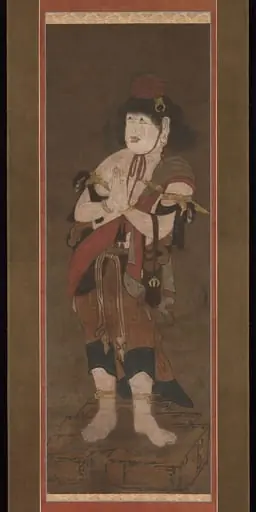
The print portrays Fudō Myōō, a formidable protector deity within Esoteric Buddhism, characterized by his fierce blue visage, a sword, and a rope. He is accompanied by two young attendants, clad in red and green robes, set against a backdrop of dynamic flames. This iconography symbolizes Fudō Myōō's power to transmute negative emotions, particularly anger, into a force of protection and salvation for adherents.
Context
As one element of a three-part composition, this print would have originally been displayed alongside two complementary scrolls, forming a complete devotional triptych. Such multi-panel sets were commonly utilized in Buddhist temples and private altars throughout Japan, serving as focal points for meditation and worship. Its creation in 1362 situates it within a rich period of Buddhist artistic production.
Artist & collection

Artist
Ryūshū Shūtaku, a Zen monk, walked Kyoto's backstreets in worn robes, sketching gods on scraps of paper between temple duties.