Artwork
Heavenly King Virudhaka
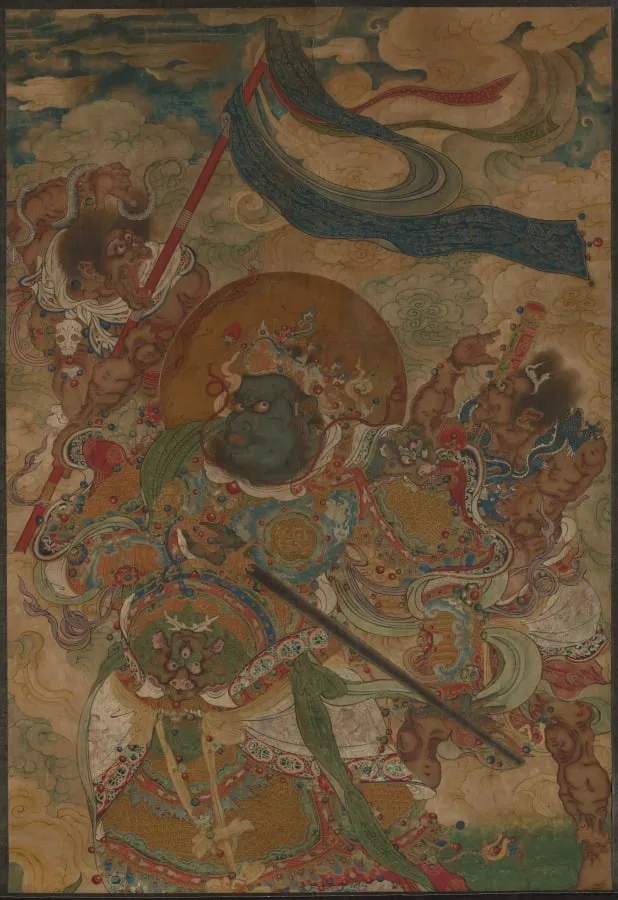
Heavenly King Virudhaka is an unspecified painting by the Ming dynasty painting artist Unknown. It dates from 1506 and is held in the collection of the Cleveland Museum of Art. This painting depicts Virudhaka, a Buddhist deity known as the Heavenly King of the South.
- Accession no.
- 1918.544
- Credit line
- Worcester R. Warner Collection
About this work
The painting was likely hung near an altar or doorway, part of a set of four heavenly kings, each watching over a different direction.
A fierce blue-faced warrior in golden armor stands with a sword, surrounded by snarling demons. One demon waves a snake like a whip; the other wears a dragon like a scarf.
These figures guarded Buddhist temples in China, warding off evil spirits. The painting was likely hung near an altar or doorway, part of a set of four heavenly kings, each watching over a different direction.
If you like this kind of protective deity art, look up more about china, ming dynasty (1368–1644).
Overview
This painting depicts Virudhaka, a Buddhist deity known as the Heavenly King of the South. He is one of four guardians typically placed at temple entrances or altars to ward off evil spirits.
Subject & Meaning
Virudhaka is shown as a blue-faced warrior in golden armor, wielding a sword and flanked by demons. The demons are depicted with menacing features, one with a snake and the other with a dragon, emphasizing their malevolent nature.
Technique & Style
The figure of Virudhaka and the surrounding demons are rendered in vivid detail, with a focus on conveying their fierce and protective qualities. The use of golden armor and dynamic poses adds to the overall sense of energy and guardianship.
Context
The painting was likely part of a set of four Heavenly Kings, each associated with a different direction, and was probably displayed near an altar or doorway in a Buddhist temple in China during the Ming dynasty.
Artist & collection









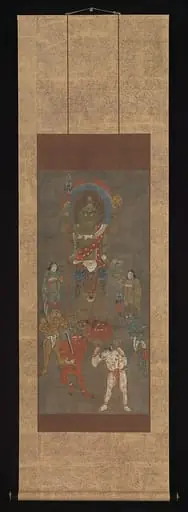 青面金剛夜叉図大津絵|Ōtsu-e of Shōmen Kongōyasha (Vajrayaksha)
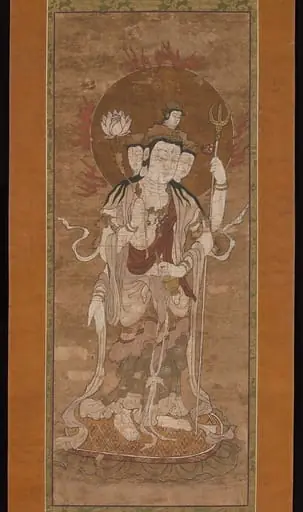 十二天像(梵天)|One of the Twelve Devas: Bonten
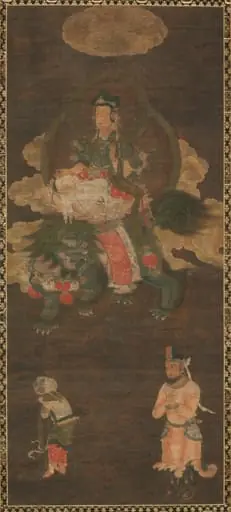 Shakyamuni Triad: Buddha Attended by Manjushri and Samantabhadra (Bodhisattva with Lion)
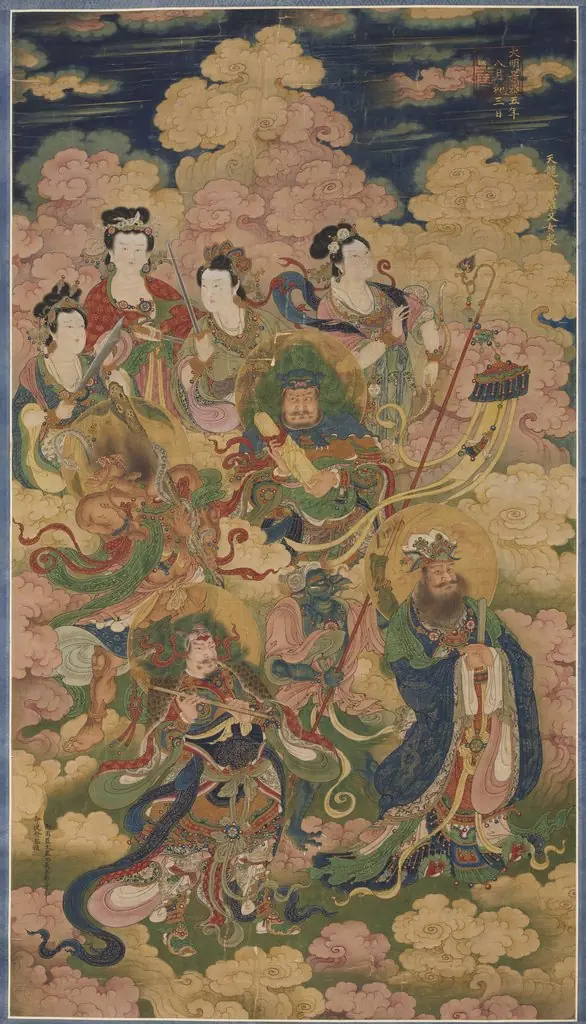 The Eight Hosts of Deva, Naga, and Yakshi
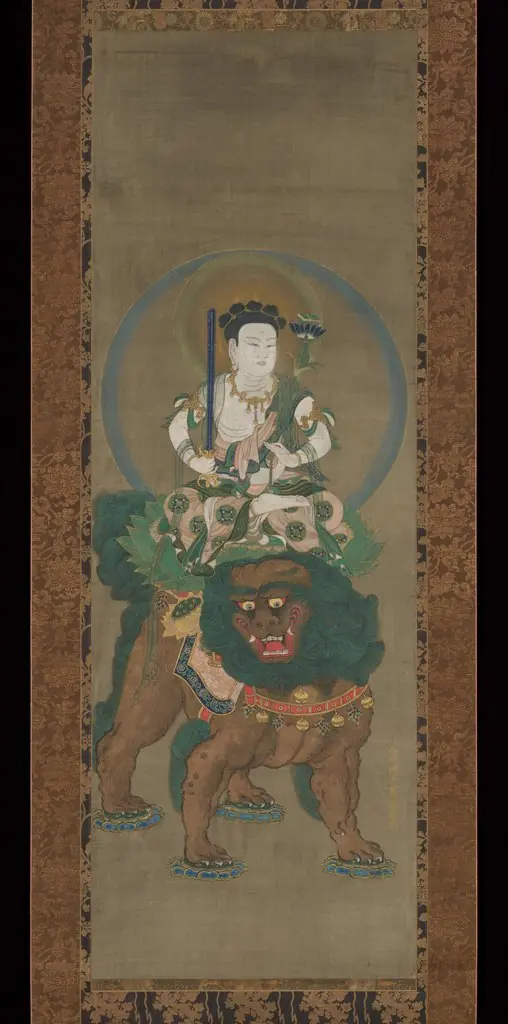 The Bodhisattva Five-Topknot Monju (Manjushri) (Gokei Monju Bosatsu zō)
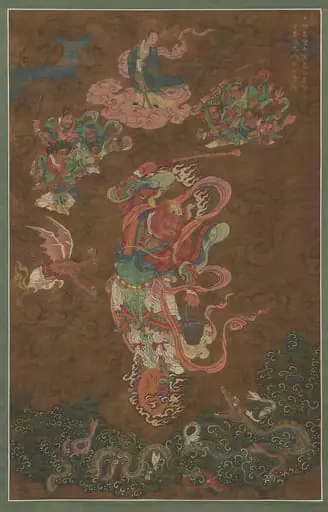 明嘉靖 佚名 王元帥圖 軸|Marshal Wang
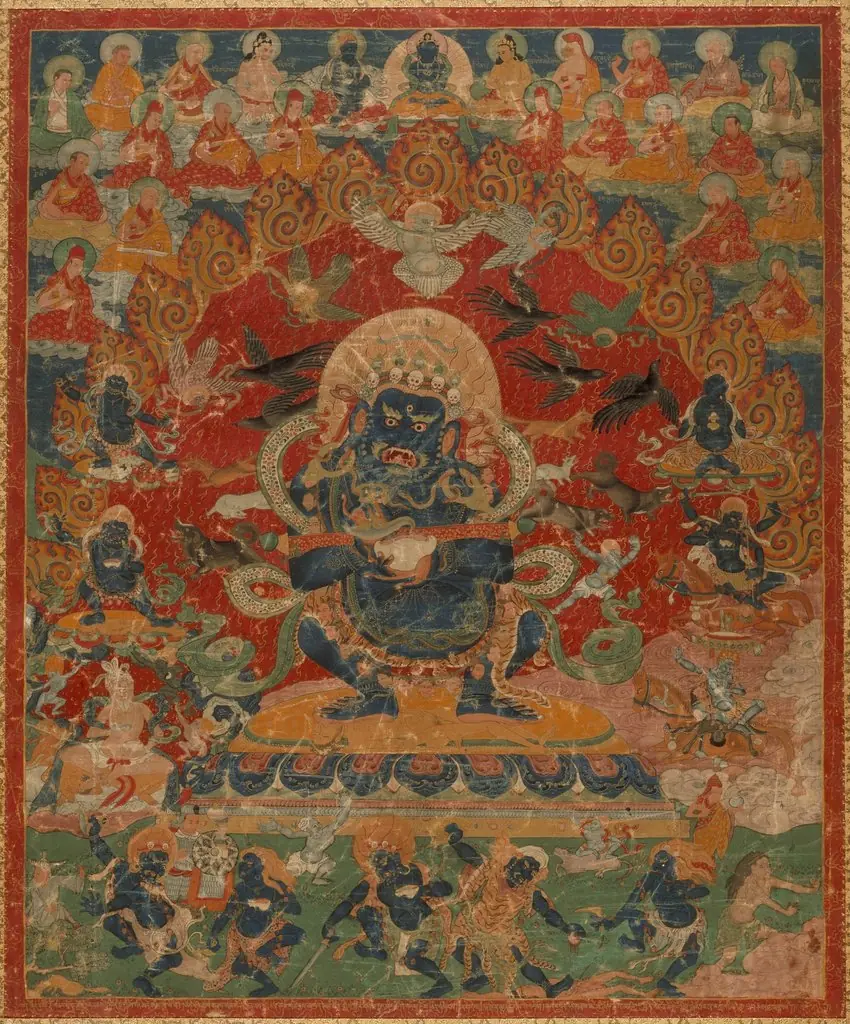 Mahakala Panjarnata (Lord of the Pavilion)