Artwork
Tuti-Nama (Tales of a Parrot)
Tuti-Nama (Tales of a Parrot) is an unspecified painting. It dates from 1560 and is held in the collection of the Cleveland Museum of Art. Tuti‑Nama, translated as “Tales of a Parrot,” is presented as a painted sheet rather than a conventional canvas work.
About this work
Technique & Style
The work is executed in the miniature painting technique characteristic of Mughal manuscript illumination, employing fine brushwork on paper supports.
The work is executed in the miniature painting technique characteristic of Mughal manuscript illumination, employing fine brushwork on paper supports. Pigments derived from mineral and organic sources create vivid colors, while the composition utilizes flattened perspective and intricate decorative borders typical of 16th-century Persianate illustration. The delicate handling of line and subtle gradation of tones reflect both Persian artistic traditions and local regional stylistic adaptations.
The painting's condition remains stable, with minimal craquelure confined to the margins and no evidence of restoration, preserving the integrity of the original surface treatment.
History & Provenance
The Tuti-Nama, a Mughal Empire painting dated to 1560, was created during the early years of the imperial workshop's production. This specific manuscript leaf, now identified as accession number 1962.279.197.b, was produced by an artist whose identity remains unrecorded in historical documentation. The work entered the collection of the Cleveland Museum of Art in 1962, where it is currently held.
While the broader Tuti-Nama project was commissioned by the Mughal emperor to illustrate the Persian tales of the parrot, the specific circumstances of this leaf's commission and its immediate ownership prior to the museum's acquisition are not detailed in the available records.
The miniature from the Tuti-Nama (Tales of a Parrot) is held in the collection of the Cleveland Museum of Art in Cleveland, Ohio. It was acquired by the museum in 1962 and is cataloged under the accession number 1962.279.197.b. The work has been part of the museum's exhibitions, including the 1962 exhibition "Indian Miniature Paintings," which highlighted early Indian works in the collection.
Context
The Tuti-Nama (Tales of a Parrot) is a 1560 Mughal painting held in the collection of the Cleveland Museum of Art, where it is catalogued as 1962.279.197.b. Its creation in the Mughal Empire reflects the patronage of Akbar's era and the synthesis of Persian narrative traditions with Indian artistic conventions. Scholarship emphasizes its role within the broader Tuti-Nama manuscript tradition, highlighting the anonymous artist's contribution to the evolution of courtly illustration in South Asia.
Overview
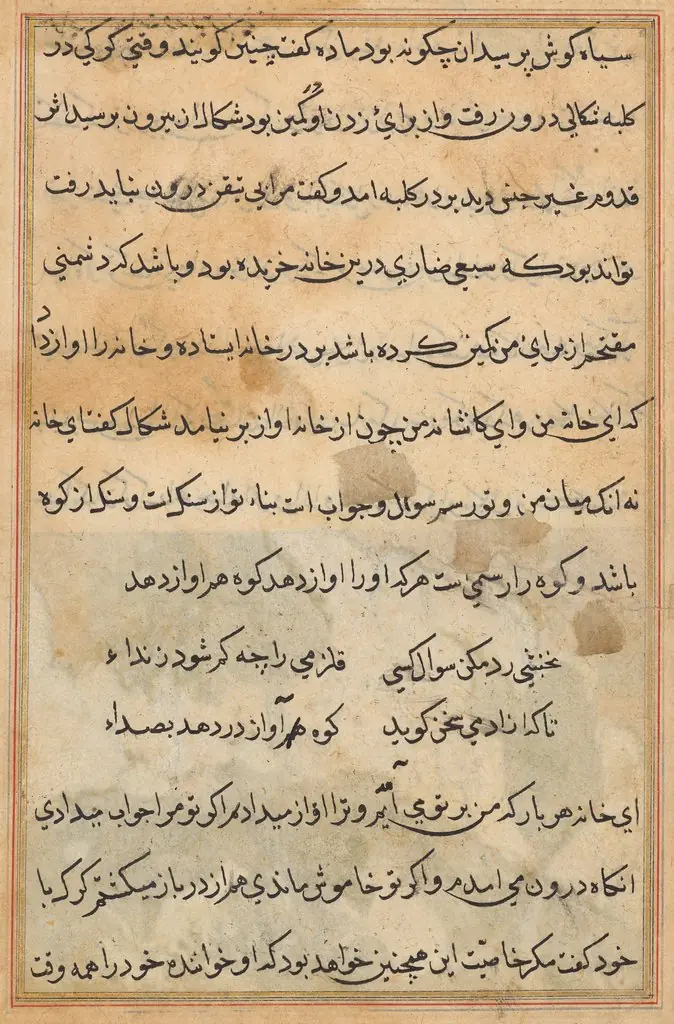
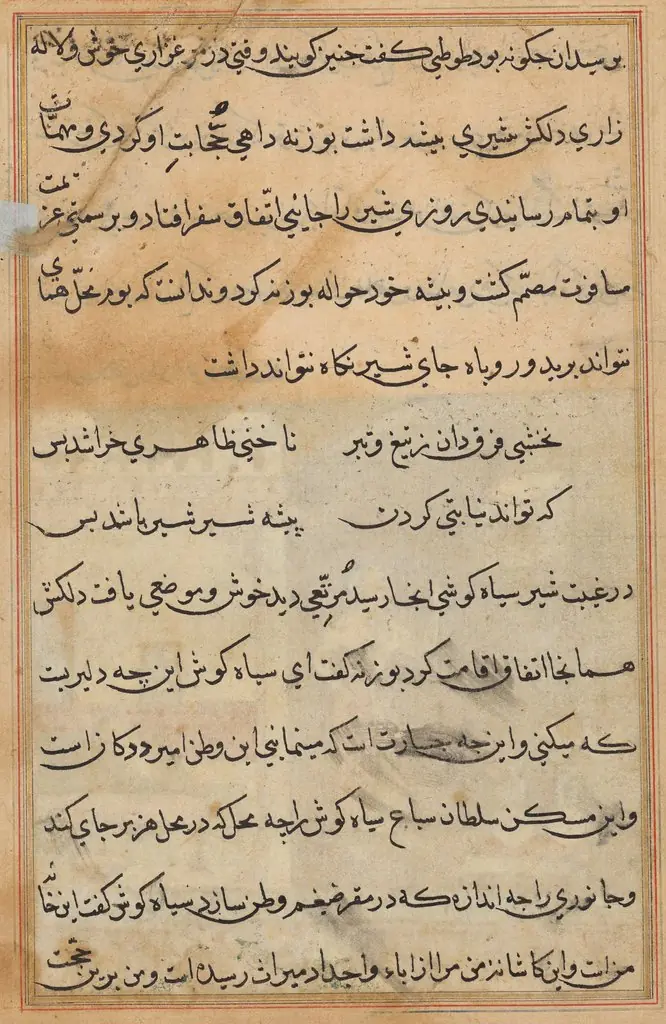
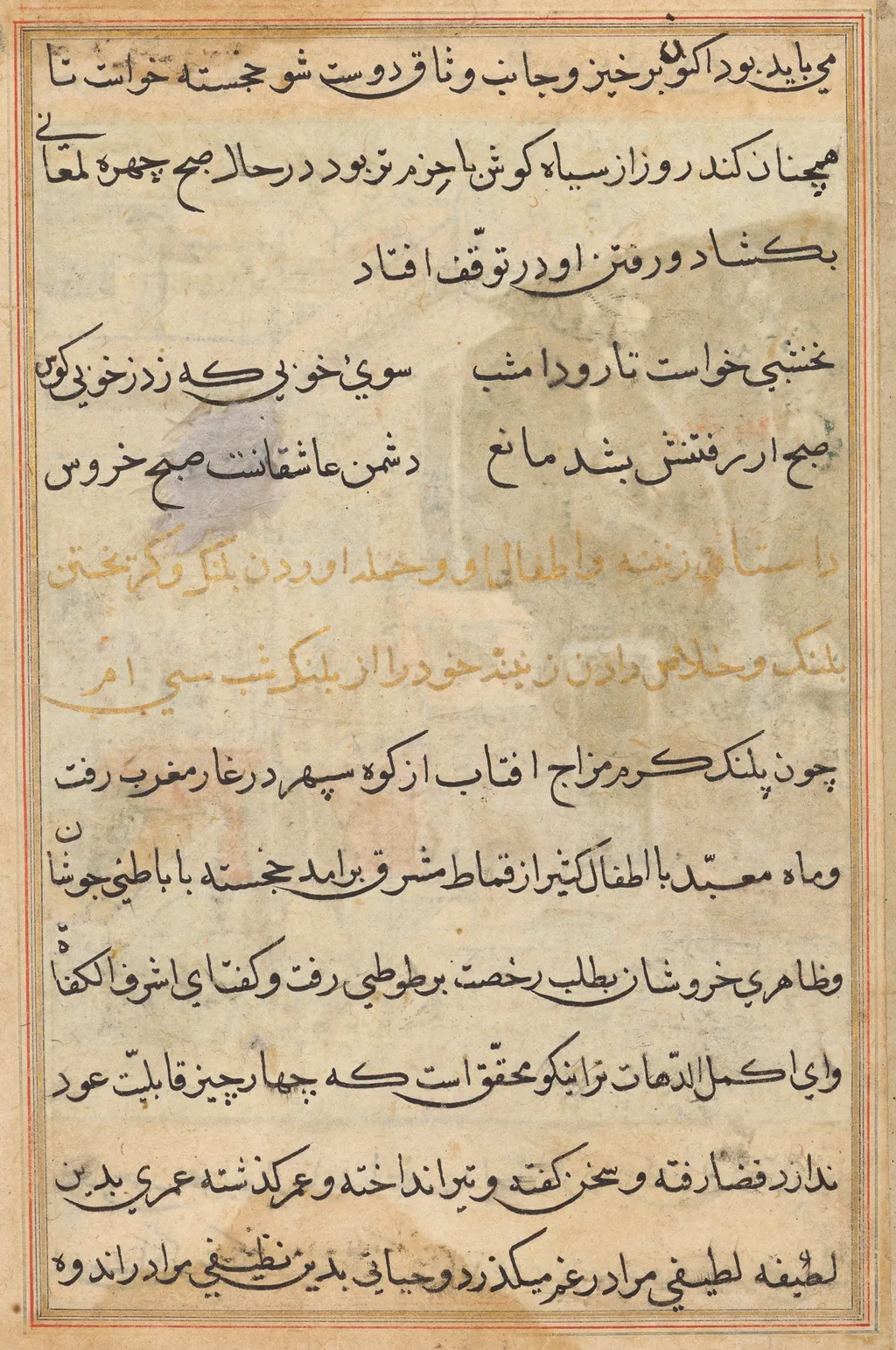
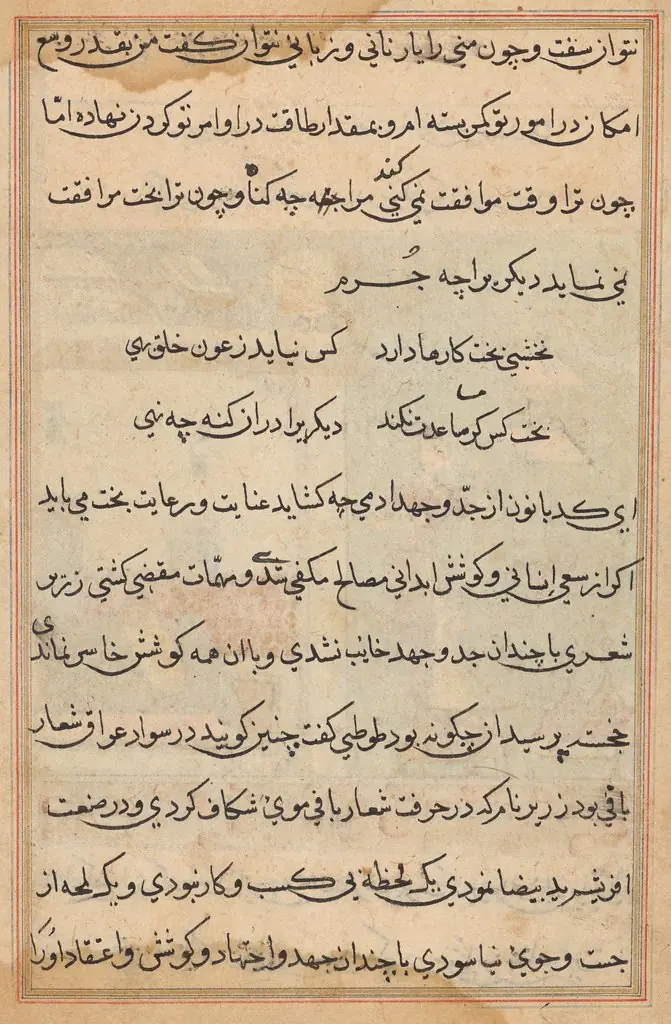
Tuti‑Nama, translated as “Tales of a Parrot,” is presented as a painted sheet rather than a conventional canvas work. The surface is a warm‑toned paper that shows signs of age, including small brown specks that suggest long exposure. A subtle red border outlines the perimeter, framing the dense arrangement of script that dominates the composition.
Subject & Meaning
The work consists entirely of tightly packed black calligraphy, forming a continuous narrative or collection of verses. While the exact content of the script is not specified, the title implies a literary theme centered on a parrot, a common motif in Persian and South Asian storytelling that often symbolizes speech and wisdom.
Artist & collection

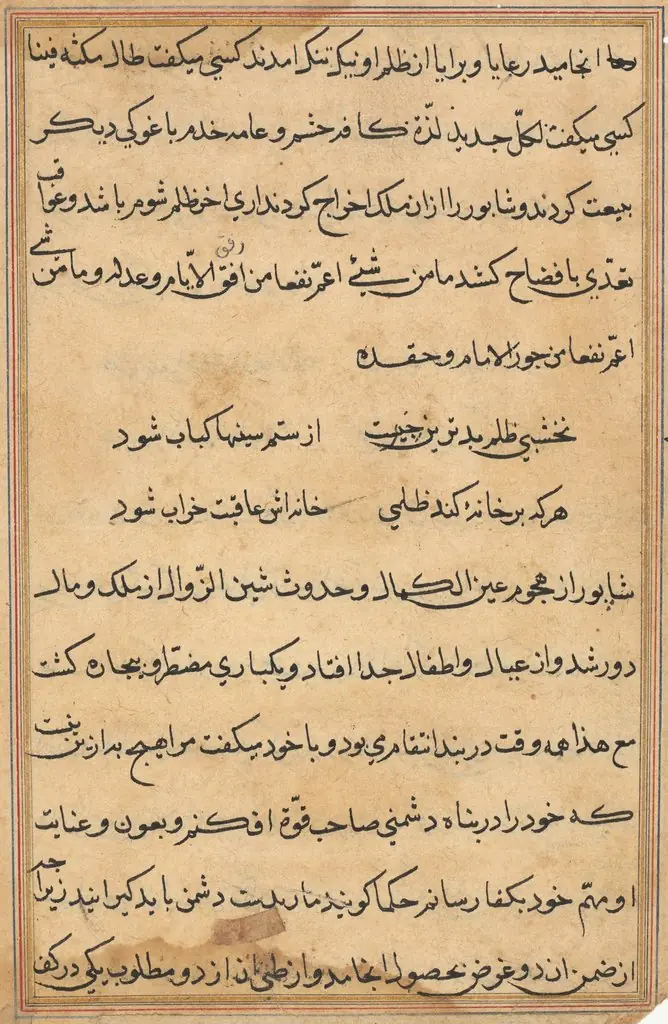 Page from Tales of a Parrot (Tuti-nama): text page
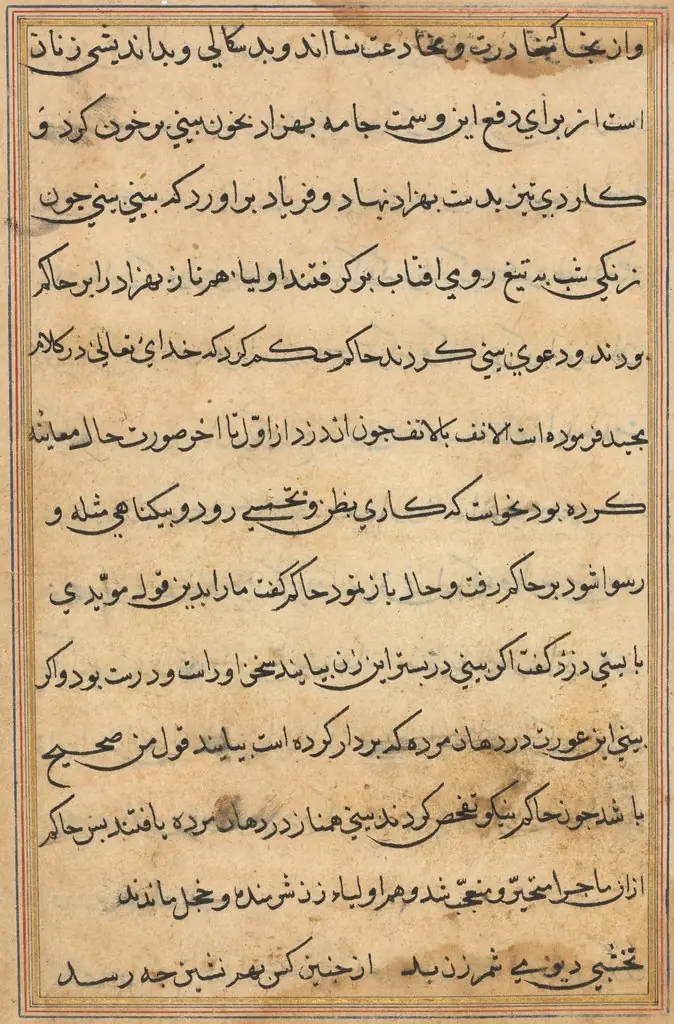 Page from Tales of a Parrot (Tuti-nama): text page
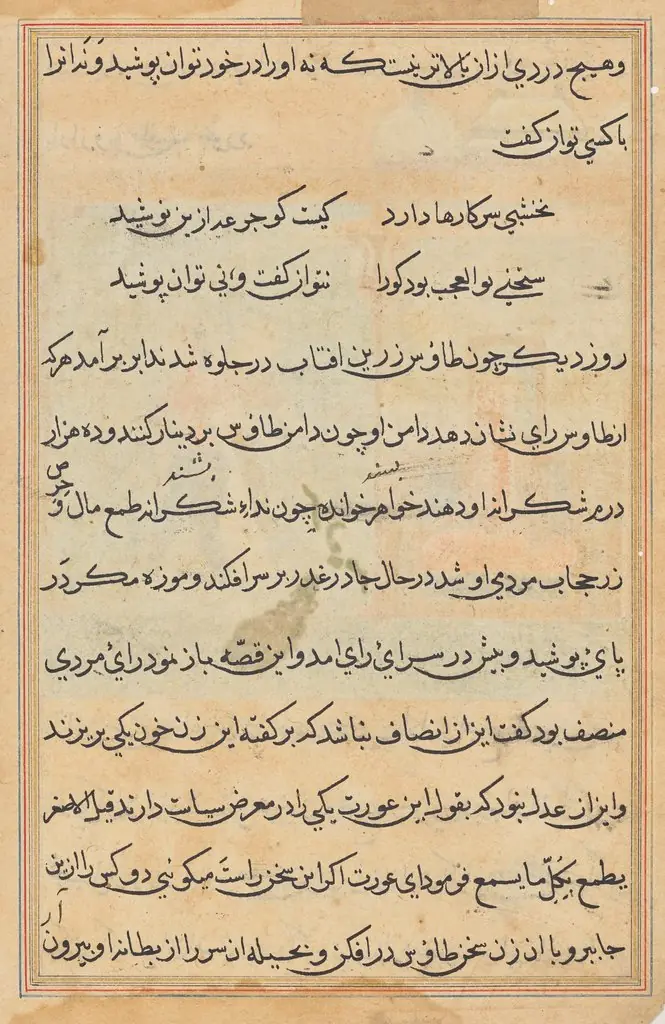 Page from Tales of a Parrot (Tuti-nama): text page
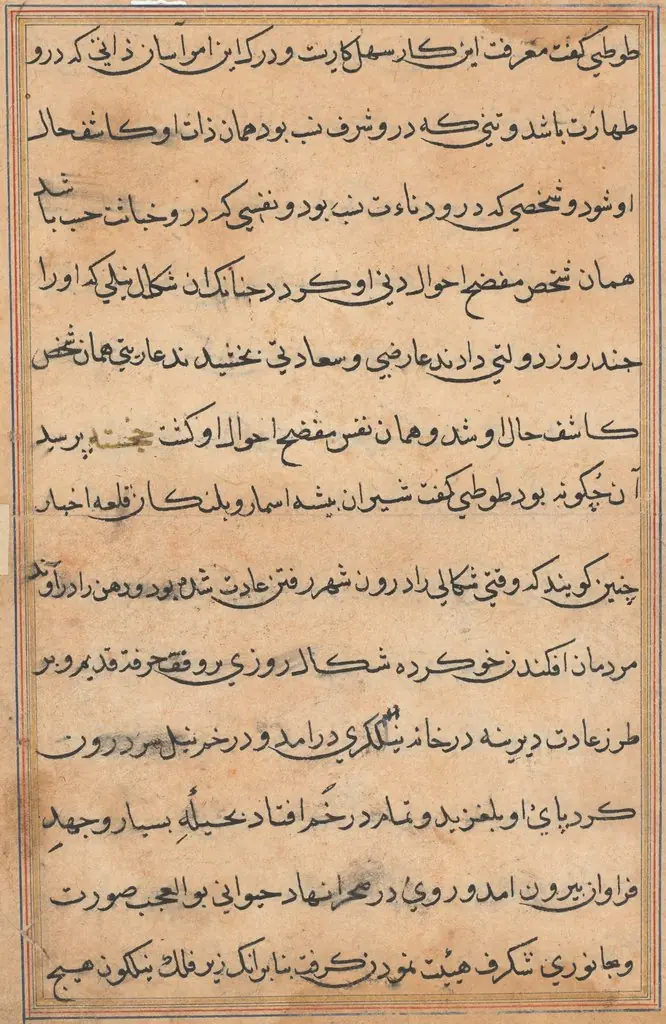 Page from Tales of a Parrot (Tuti-nama): text page
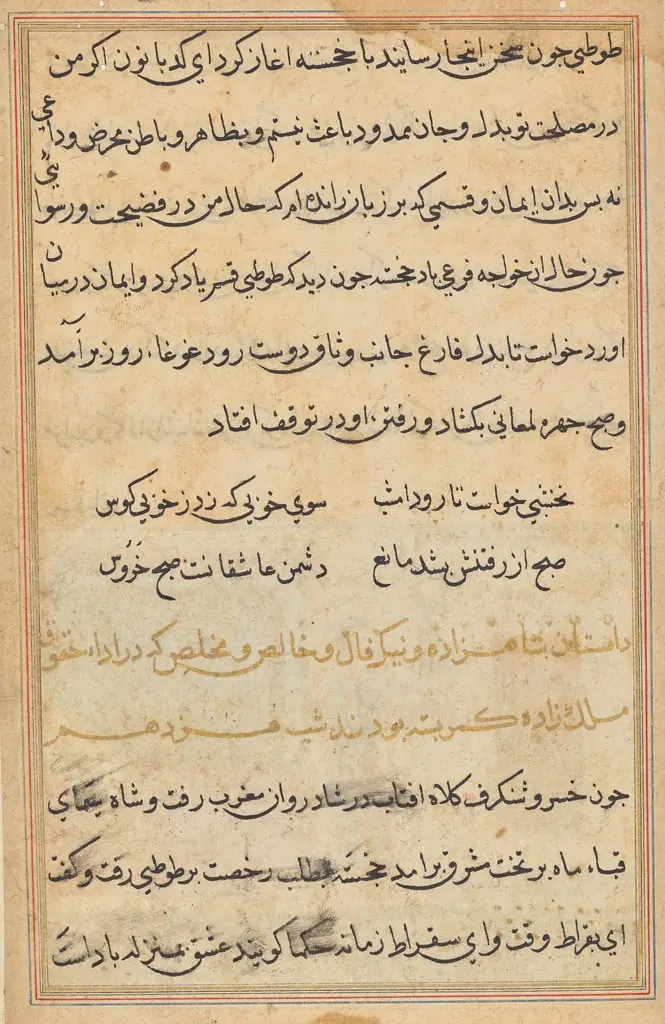 Page from Tales of a Parrot (Tuti-nama): text page
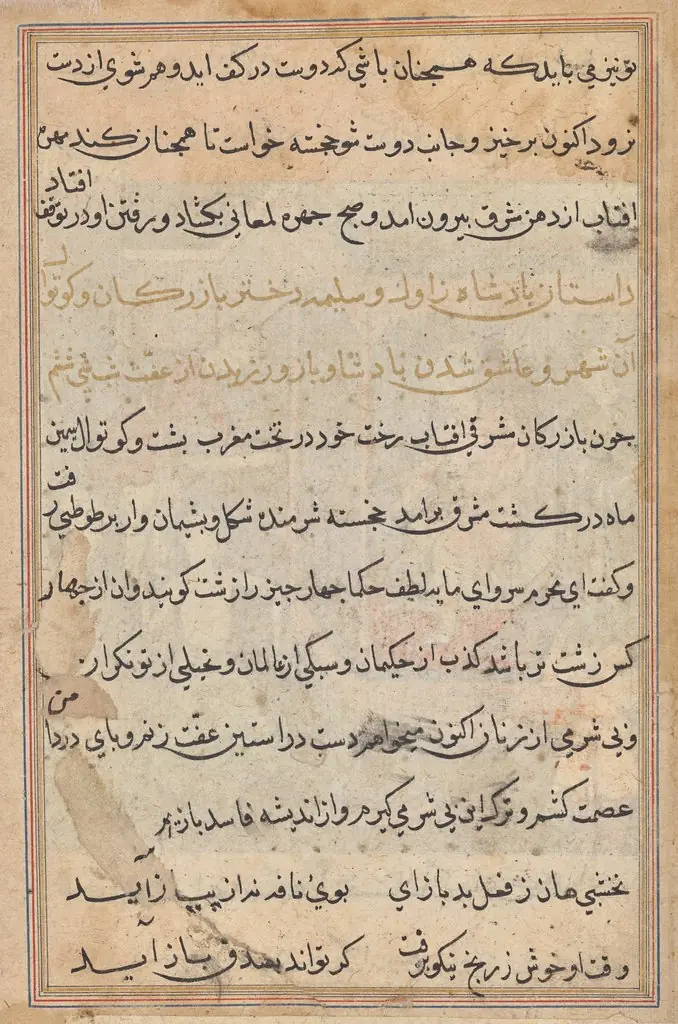 Page from Tales of a Parrot (Tuti-nama): text page
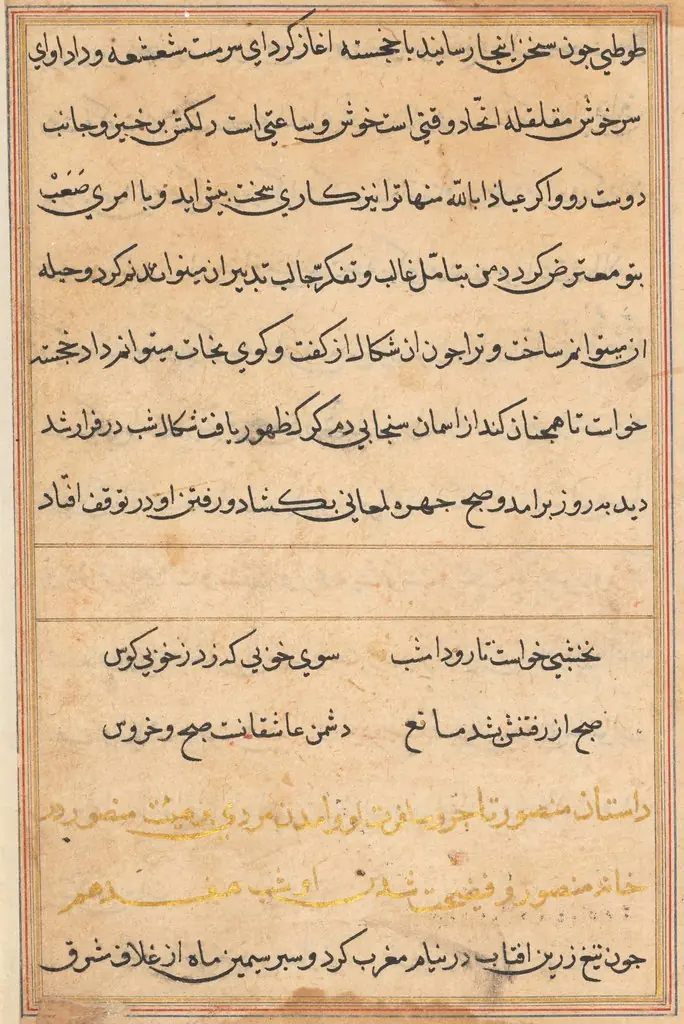 Page from Tales of a Parrot (Tuti-nama): text page
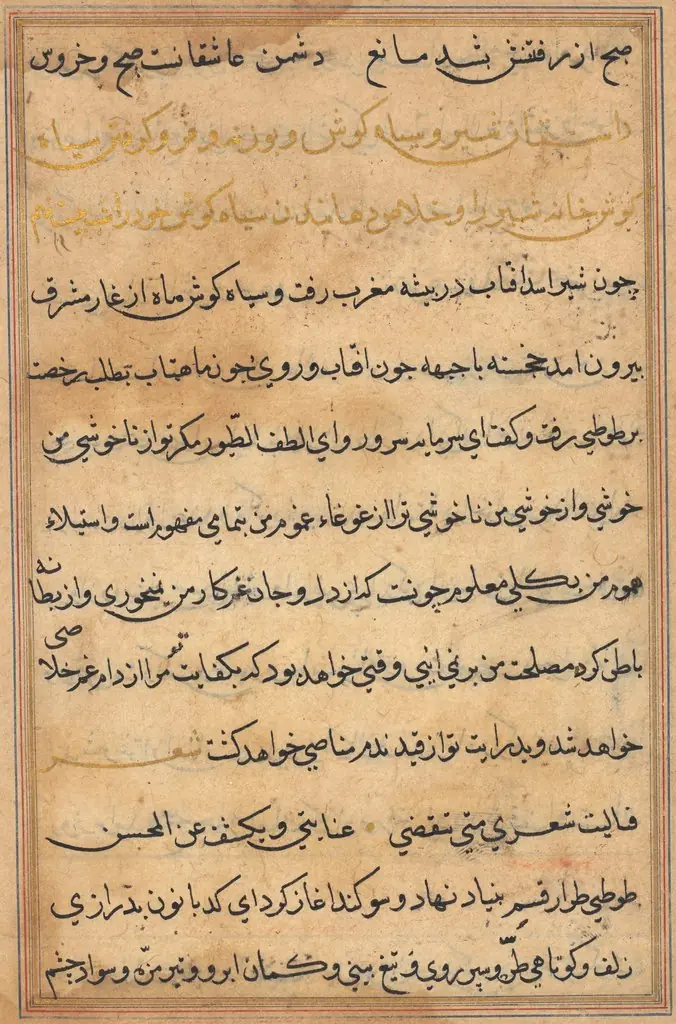 Page from Tales of a Parrot (Tuti-nama): text page
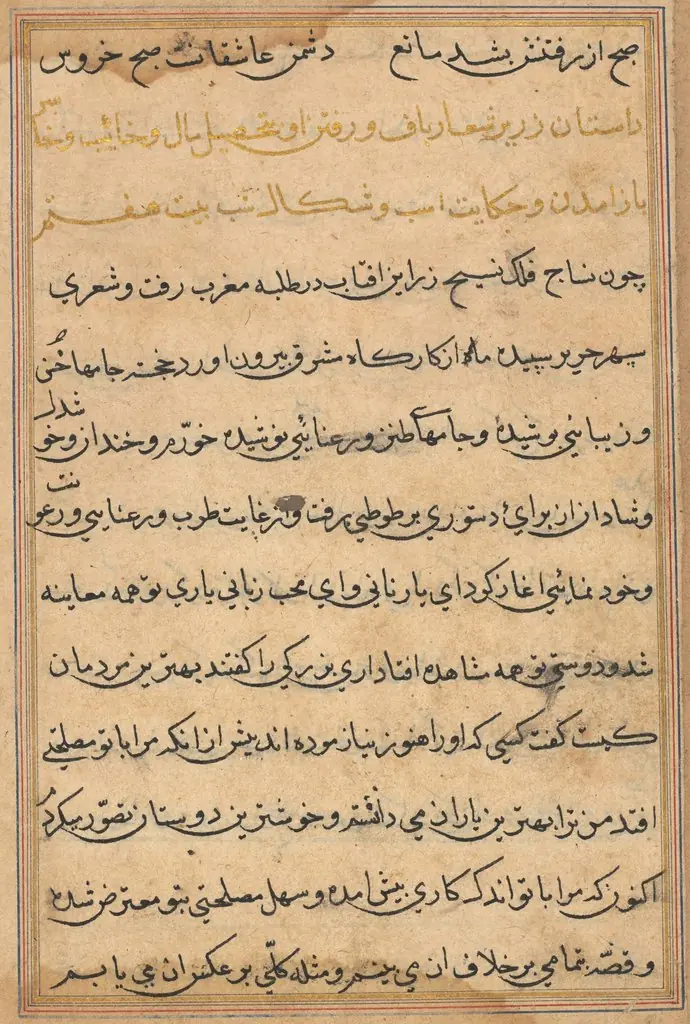 Page from Tales of a Parrot (Tuti-nama): text page