Artwork
Two Elephants in Combat
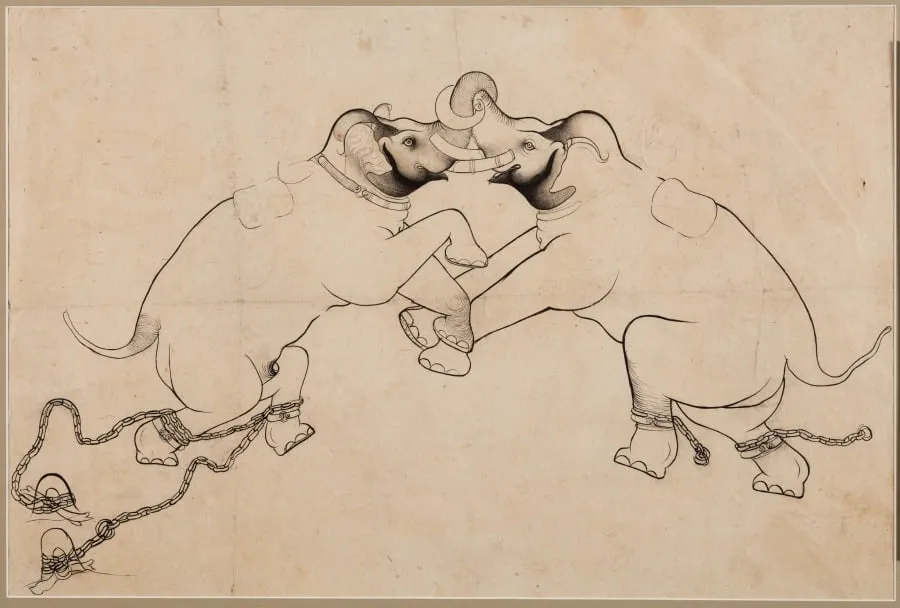
Two Elephants in Combat is an unspecified painting by the Baroque artist Unknown. It dates from 1712 and is held in the collection of the Cleveland Museum of Art. The work portrays a dramatic encounter between two elephants, their trunks entwined and tusks grazing, set within a dusty arena.
- Accession no.
- 2018.178
- Credit line
- Purchase and partial gift from the Catherine and Ralph Benkaim Collection; Severance and Greta Millikin Purchase Fund
About this work
Overview
The work portrays a dramatic encounter between two elephants, their trunks entwined and tusks grazing, set within a dusty arena. Both animals wear ornate silver howdahs, from which riders cling as the beasts prepare to clash. The scene captures a suspended moment of tension, emphasizing the power and spectacle of the confrontation.
Subject & Meaning
Elephants held dual significance for the Rajput rulers of Rajasthan: they were decisive assets in warfare and potent symbols of wealth. Their staged combats functioned as royal entertainment, reflecting the Maharajas’ desire to display both martial prowess and opulent patronage. The painting thus conveys status, control, and the cultivated ferocity of these trained animals.
Technique & Style
Rendered in ink or paint, the composition relies on bold line work to delineate the massive forms and the swirling dust. Attention to detail appears in the flared ears, the gleam of the silver howdahs, and the interlaced trunks, while the restrained palette accentuates the stark, almost documentary quality of the scene.
History & Provenance
The image originates from the Rajput kingdom of Kota, where rulers maintained specially trained elephants for ceremonial bouts. Such illustrations were likely produced to commemorate these events or to serve as visual records for courtly audiences. The work remains linked to the tradition of royal patronage in Rajasthan’s artistic heritage.
Context
During the period when Rajput maharajas ruled, elephant warfare remained a prestigious element of military strategy. Concurrently, the courts cultivated elaborate spectacles to reinforce their authority, with elephant fights becoming a favored pastime that blended martial training with public display.
Legacy
The depiction offers insight into the cultural practices of Rajasthan’s elite, illustrating how animal training and spectacle intersected with notions of power. It continues to inform contemporary understandings of Rajput court life and the symbolic role of elephants in South Asian history.
Artist & collection









- Two Elephants in Combat
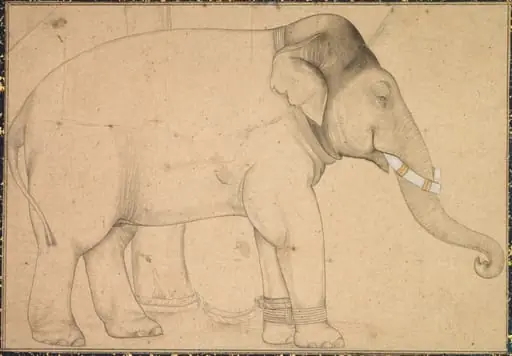 Drawing of an Elephant
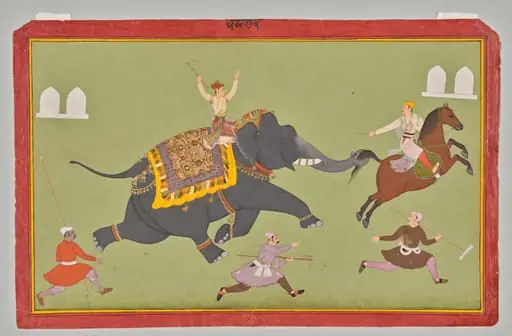 The Elephant of Maharana Jai Singh of Mewar (r. 1680–98) Catches a Horse by the Tail
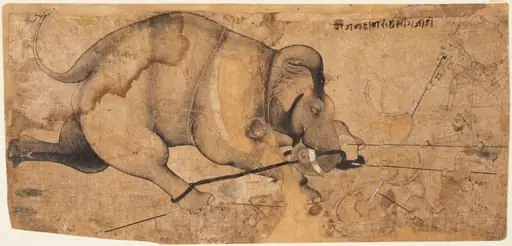 Rao Ram Singh I’s Elephant Gone Amok
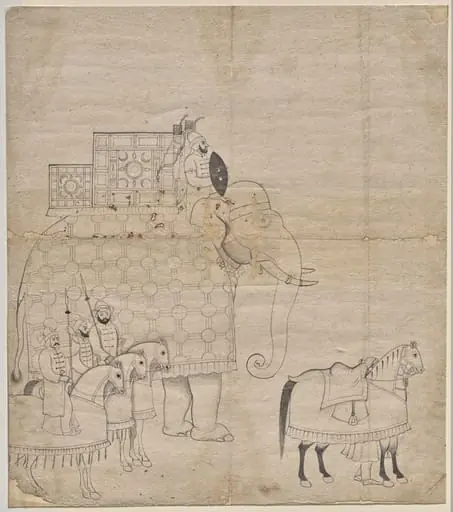 Caparisoned Elephant and Horses
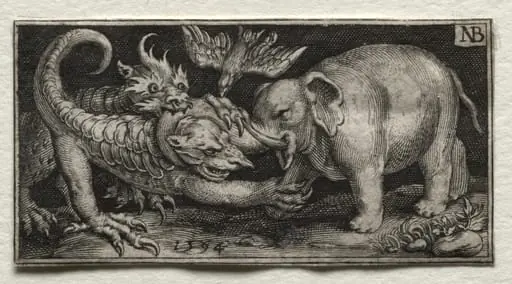 Elephant Fighting two Beasts
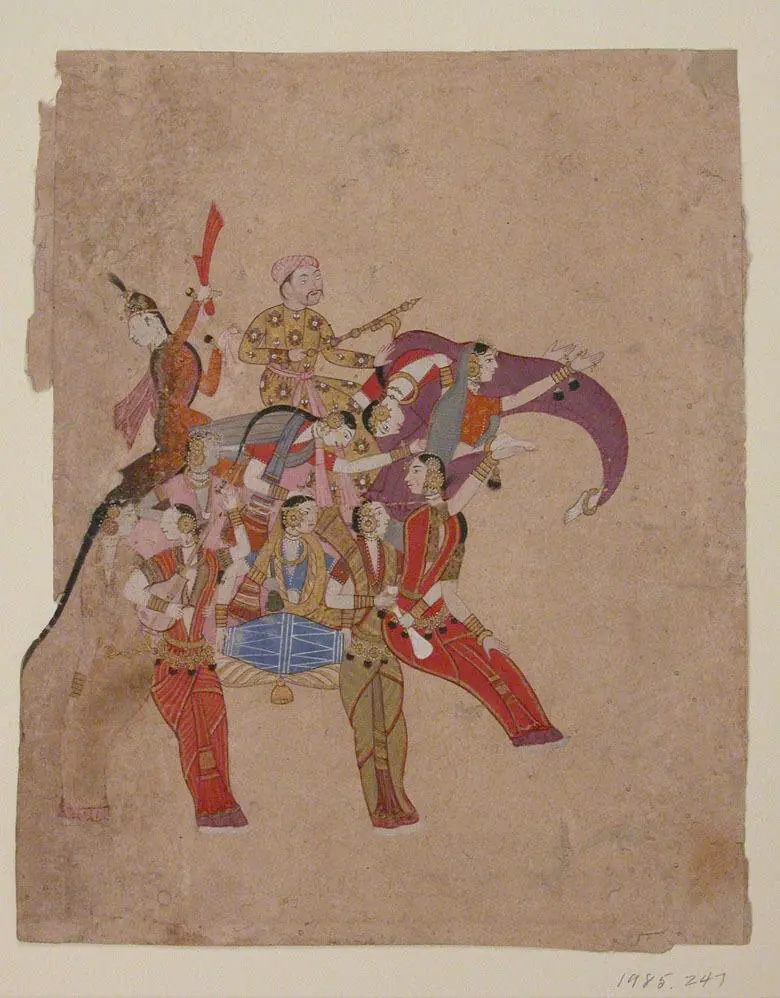 Composite Elephant - Deccan Painting Early 17th Century
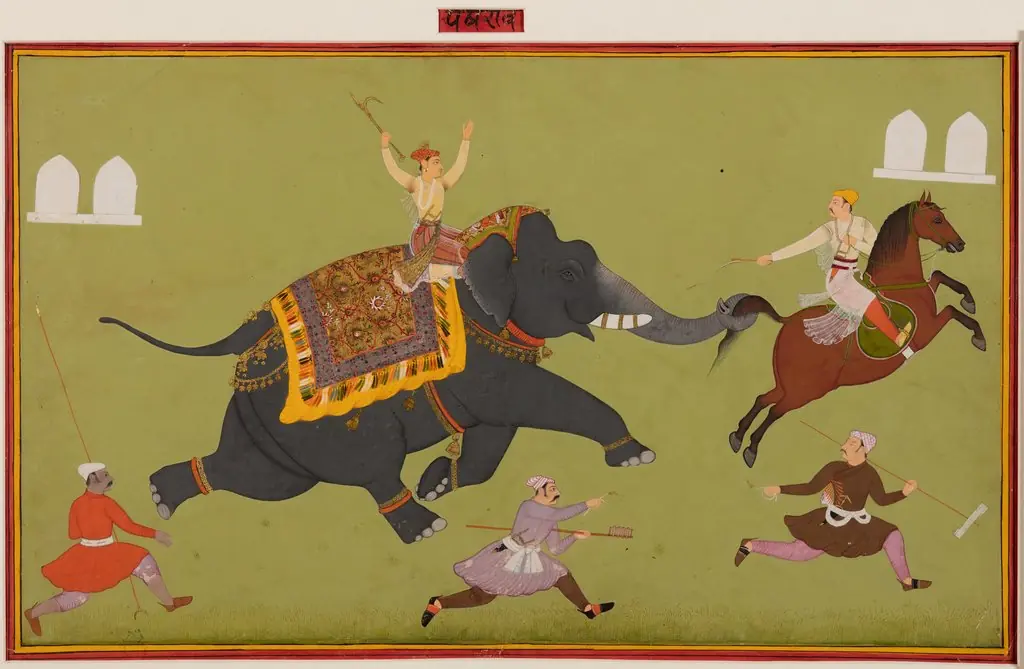 The Elephant of Maharana Jai Singh of Mewar (r. 1680–98) Catches a Horse by the Tail
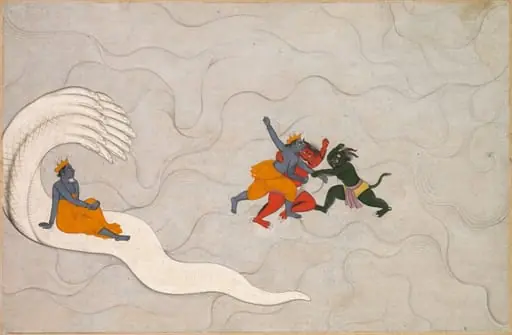 Vishnu Battles Madhu and Kaitabha, from a Markandeya Purana
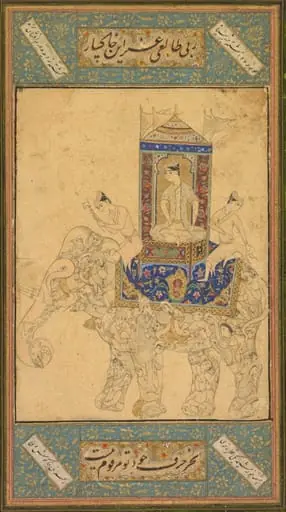 A prince riding a composite elephant
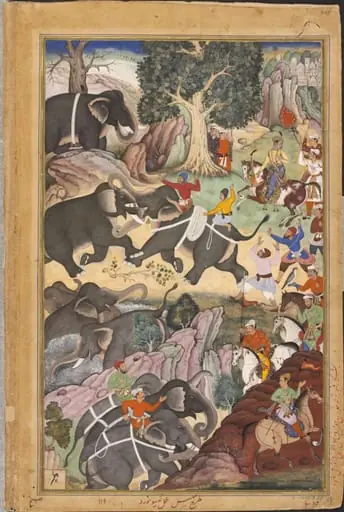 Akbar
Akbar