Artwork
Two shroffs or cash-keepers
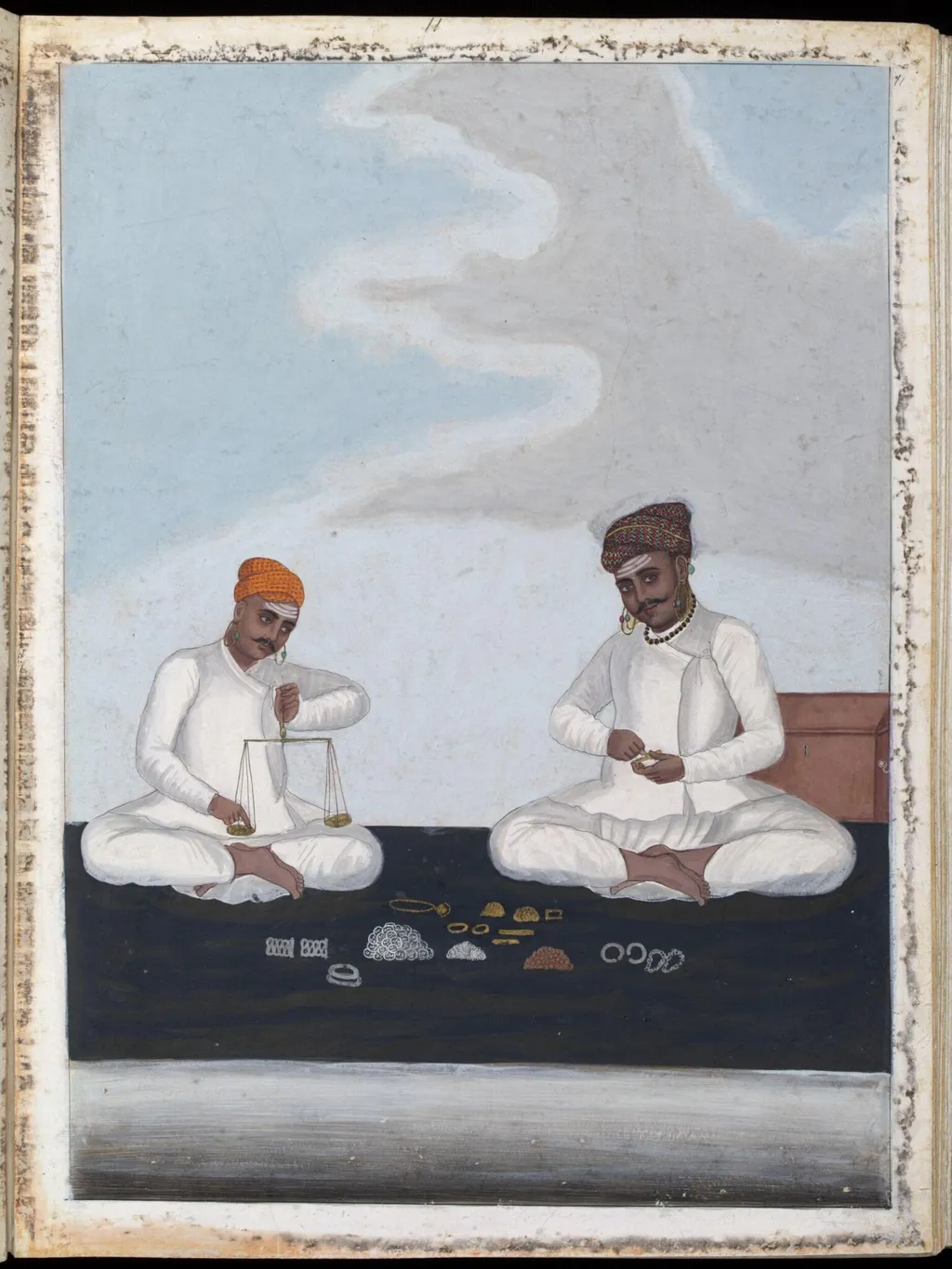
Two shroffs or cash-keepers is a paint painting by the Romanticist artist Unknown. It dates from 1805 and is held in the collection of the Victoria and Albert Museum. This painting is one of thirty-six in a series documenting occupational roles and attire in early modern India.
About this work
Overview
The figures are seated on a dark surface, surrounded by coins, jewelry, and a balance scale, suggesting a private, functional space such as a counting room.
This painting is one of thirty-six in a series documenting occupational roles and attire in early modern India. It portrays two shroffs, money changers or cash-keepers, engaged in the meticulous task of verifying currency and valuables. The setting is minimal, emphasizing their work rather than a specific location.
The figures are seated on a dark surface, surrounded by coins, jewelry, and a balance scale, suggesting a private, functional space such as a counting room.
Subject & Meaning
The shroffs represent trusted intermediaries in trade, responsible for authenticating and weighing precious metals and coins. Their focused interaction conveys diligence and expertise. The scattered ornaments and coins imply transactions in progress, while the absence of customers underscores the private, behind-the-scenes nature of their labor. The scene reflects the importance of financial integrity in commercial networks of the time.
Technique & Style
Rendered in fine brushwork, the figures wear vividly colored turbans and jewelry that contrast with their plain white garments and the dark floor. The background is a muted, uniform blue, with subtle hints of sky and a single wooden chest, directing attention to the central figures and their tools. The composition is balanced yet intimate, using spatial economy to highlight detail over narrative drama.
History & Provenance
The painting originates from a mid-18th-century album commissioned by a Mughal or regional court, likely to document the diversity of urban professions. Such albums were collected as ethnographic records and artistic curiosities. The work entered the Victoria and Albert Museum’s collection through colonial-era acquisitions, where it remains part of a broader archive of South Asian material culture.
Context
During the 18th century, as Mughal authority waned, regional courts and merchant communities increasingly supported visual documentation of daily life. Shroffs were essential in economies reliant on bullion and coinage, and their depiction in albums served both practical and symbolic purposes, recording economic roles while affirming social order through visual taxonomy.
Legacy
This painting contributes to a genre that preserved the visual vocabulary of pre-colonial Indian labor. Its quiet realism offers insight into the material culture of finance before industrialization. Though not widely known outside specialist circles, it remains a valuable reference for understanding the aesthetics and ethics of economic practice in early modern India.
Artist & collection









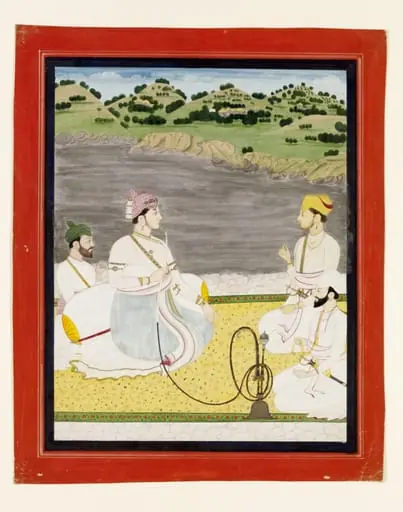 Raja Sansar Chand and Fateh Chand
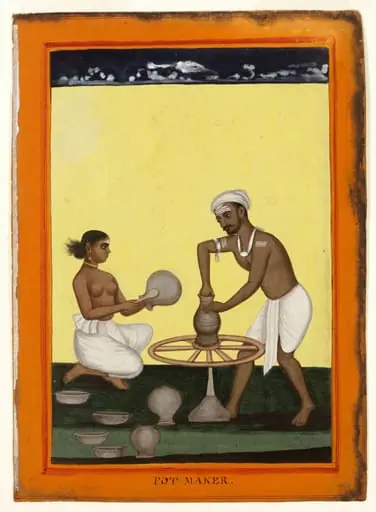 A potter and his wife
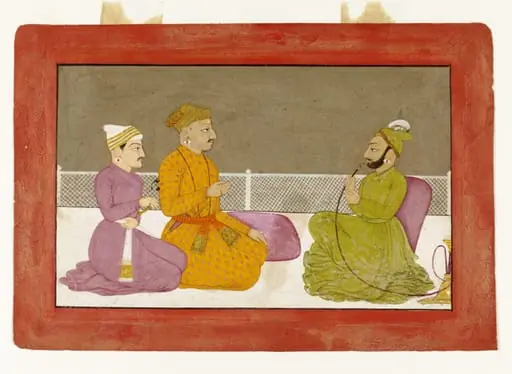 Raja Bhupal Dev of Jasrota, Raja Dalip Singh and Raja Daya Dhat
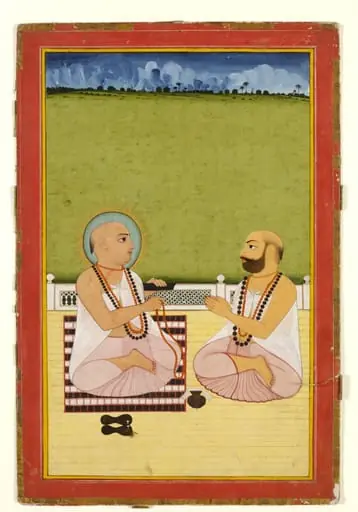 Holy man and pupil on a terrace
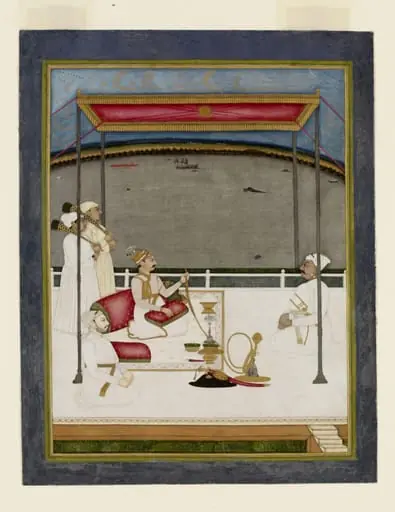 Nawab Mir Qasim
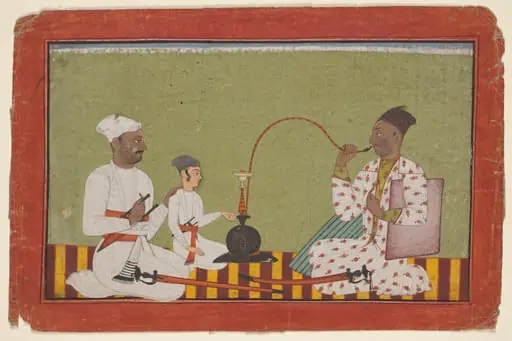 Posthumous portrait of Raja Chhatar Singh of Chamba smoking a hookah with his brother and son
 A goldsmith and his wife
 Two goldsmiths
 Untitled
 Maharaja Sovan Singh playing pachisi
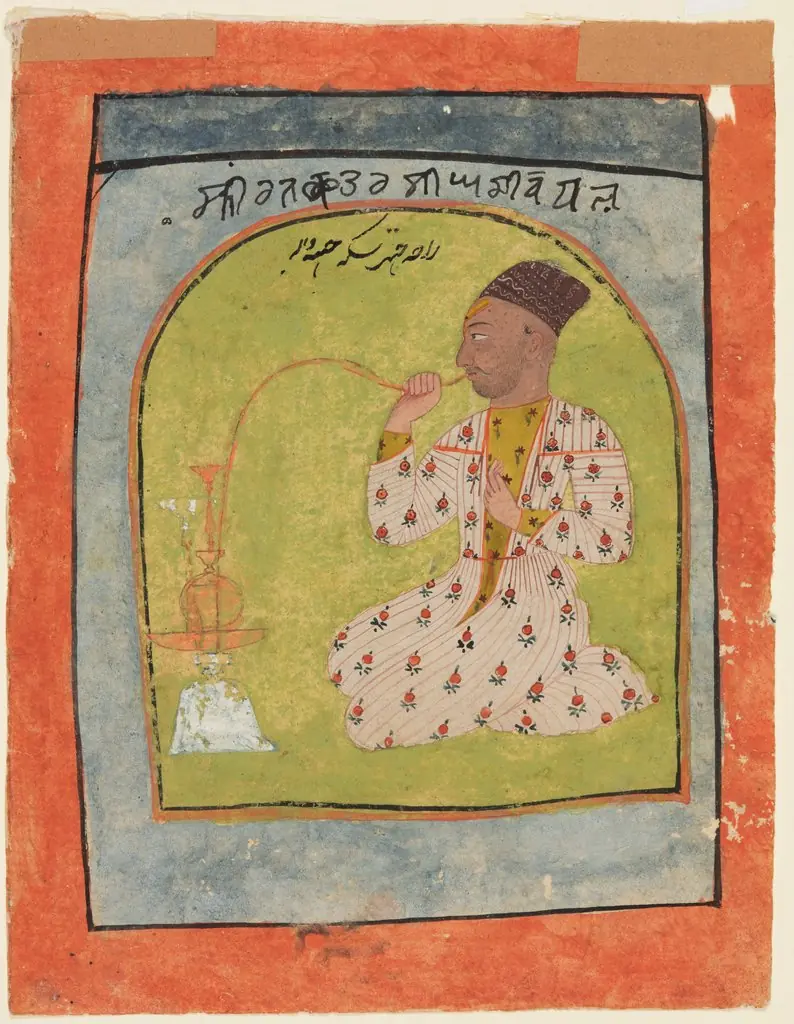 Raja Chattar Singh smoking
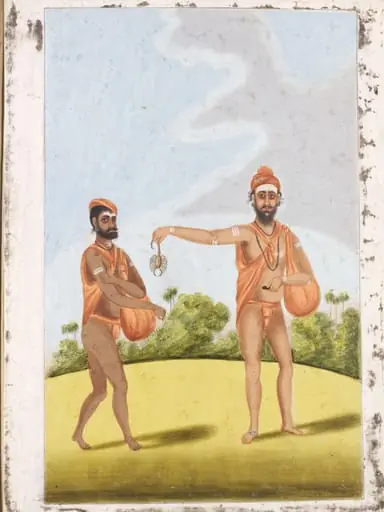
- Two ascetics