Artwork
Untitled
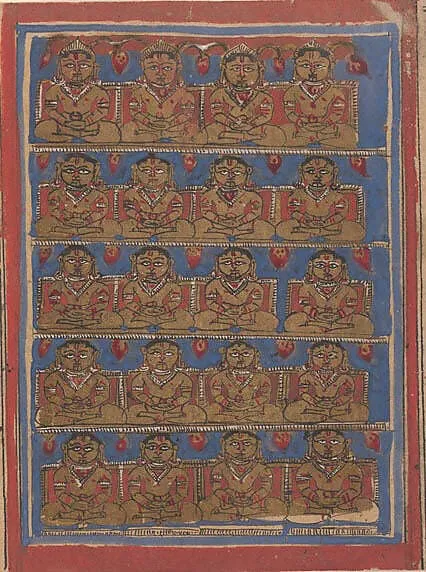
Untitled is a watercolor painting. It dates from 1449 and is held in the collection of the Metropolitan Museum of Art.
- Accession no.
- 55.121.38.22
- Credit line
- Rogers Fund, 1955
About this work
Technique & Style
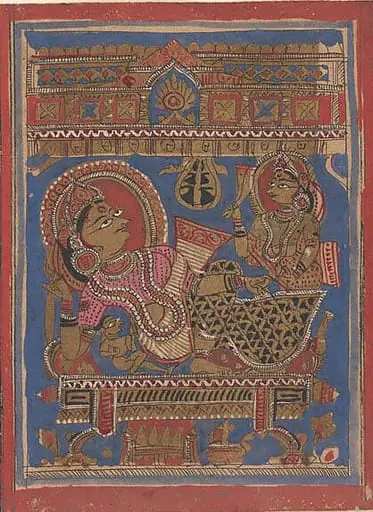
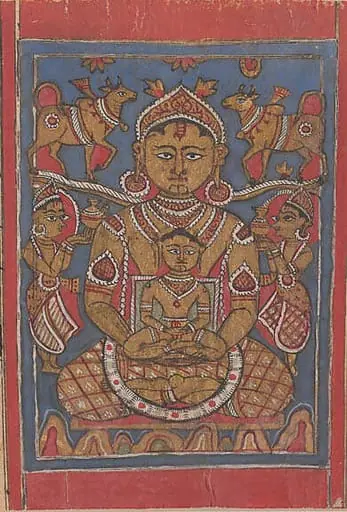
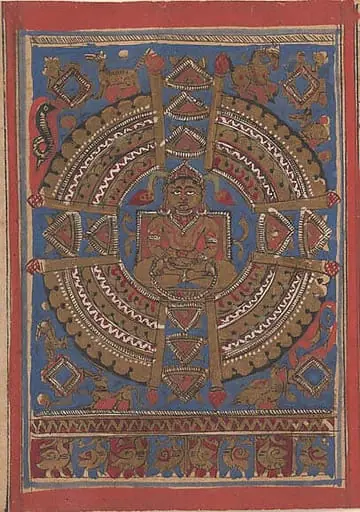
The work is executed in ink, opaque watercolor, and gold on paper, classified as a painting within the religious genre. It was created in India in 1449 and measures 11.1 cm in height by 27 cm in width. The piece is held in the collection of the Metropolitan Museum of Art.
History & Provenance
The painting entered the Metropolitan Museum of Art collection in 1919, though the exact acquisition details are not specified in the source documentation.
The work was created in 1449 in India as an ink, opaque watercolor, and gold on paper painting with religious subject matter. It is part of the Metropolitan Museum of Art collection and is classified as a painting by an anonymous painter.
The painting entered the Metropolitan Museum of Art collection in 1919, though the exact acquisition details are not specified in the source documentation. Its creation history is defined by its 1449 date and religious genre, reflecting artistic practices in India during that period.
Untitled is held in the collection of the Metropolitan Museum of Art, with the accession number 1983.581. The work was created in India in 1449 and is classified as a religious painting. It has been part of the museum's exhibitions focusing on religious art and paintings.
Context
The painting Untitled, attributed to an anonymous Indian artist, was created in 1449 using ink, opaque watercolor, and gold on paper. It belongs to the religious art genre and is housed in the collection of the Metropolitan Museum of Art in New York. Scholars have contextualized it within the broader tradition of Indian religious paintings from the 15th century, noting its stylistic connections to contemporary devotional works despite the artist's anonymity.
Its material composition and iconographic program reflect the devotional practices of the period, positioning it as a representative example of anonymous artistic production in early Indian painting traditions.
Legacy
The work's legacy centers on its role in shaping the visual language of early Indian religious painting, particularly within the devotional tradition of the 15th century. Its distinctive use of gold detailing and opaque watercolor techniques influenced subsequent regional schools, as evidenced by stylistic parallels in surviving devotional works from the same period. The painting's inclusion in the Metropolitan Museum of Art's collection has cemented its status as a key reference point for understanding pre-Mughal Indian artistic expression, though its anonymous authorship continues to prompt scholarly inquiry into artistic attribution practices.
Overview
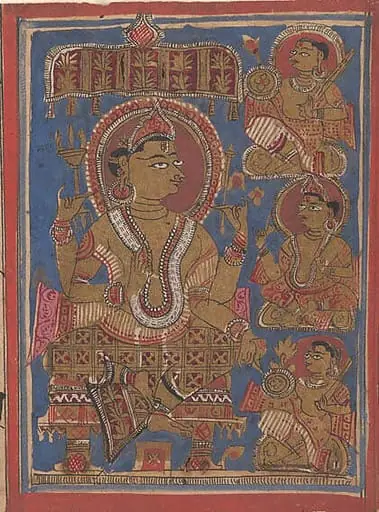
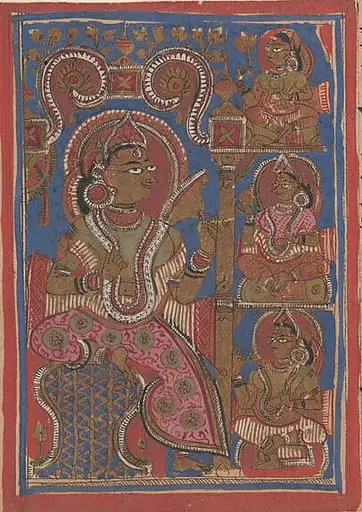
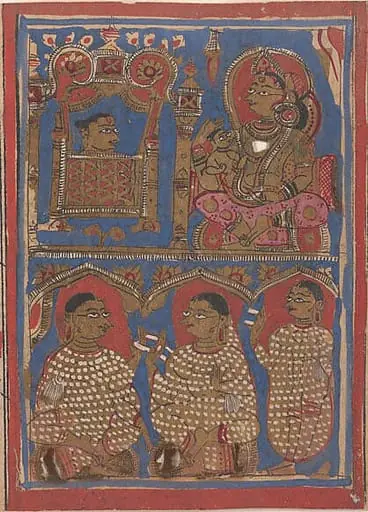
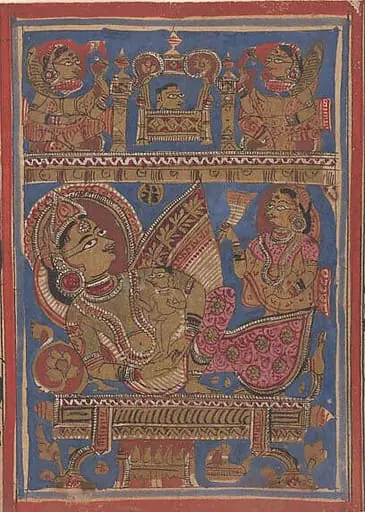
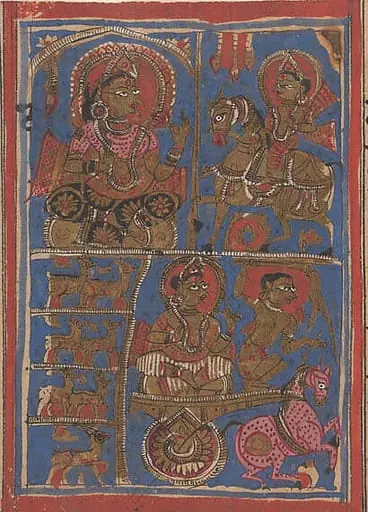
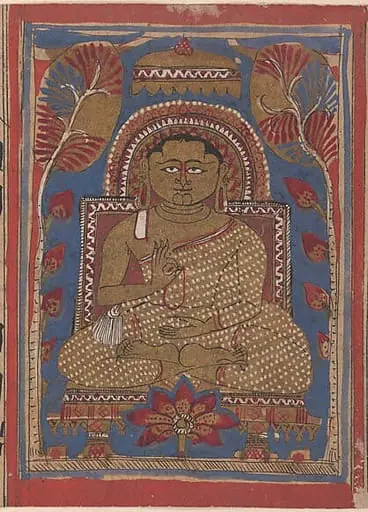
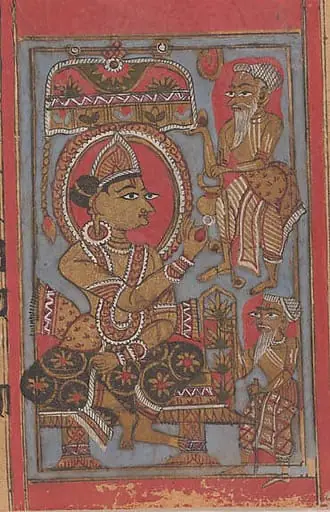
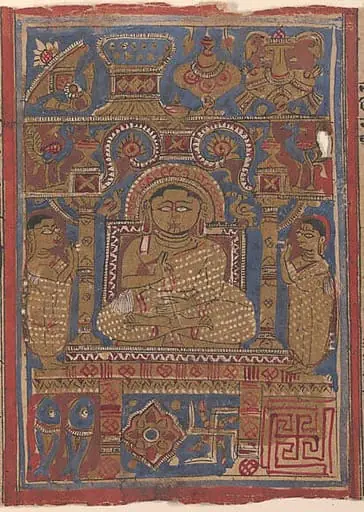
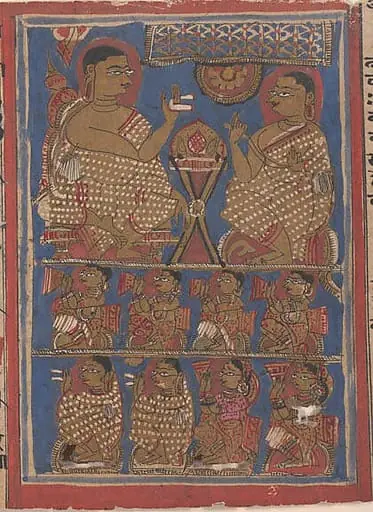
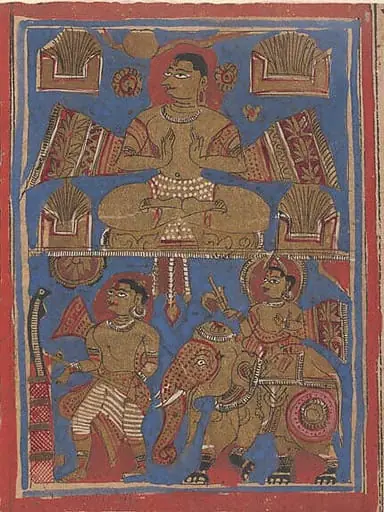
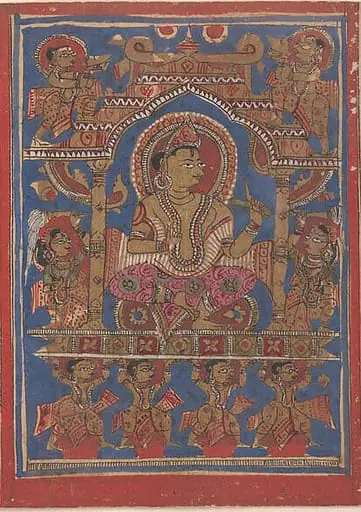
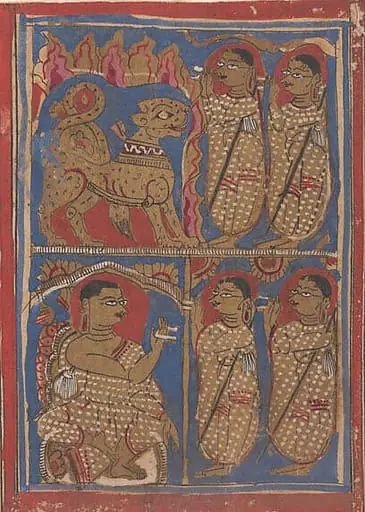
The work, titled Untitled, is executed on paper with ink, opaque watercolor, and gold leaf. It presents a repetitive arrangement of figures rendered in red and gold garments against a blue field accented by red motifs. The composition relies on uniformity of form and color to create a rhythmic visual field.
Subject & Meaning
Rows of identical seated figures dominate the surface, each sharing similar facial characteristics and attire. The uniformity suggests a collective identity or ritualistic gathering, while the contrasting palette of red, gold, and blue may hint at symbolic associations of vitality, wealth, and serenity.
Artist & collection