Artwork
Untitled
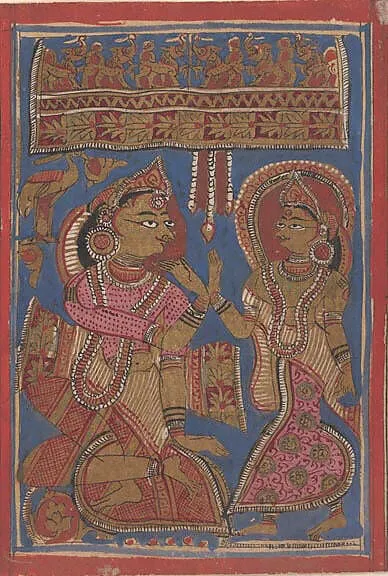
Untitled is a watercolor painting. It dates from 1449 and is held in the collection of the Metropolitan Museum of Art.
About this work
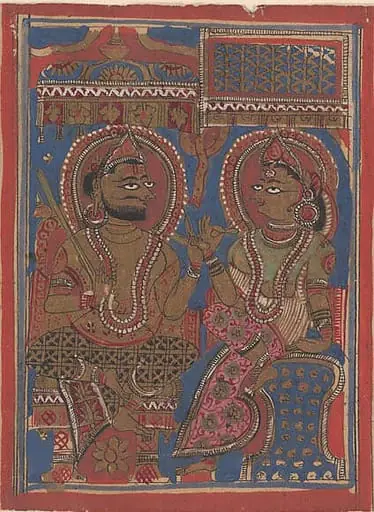
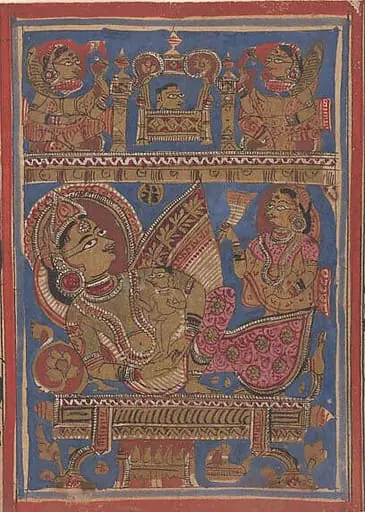
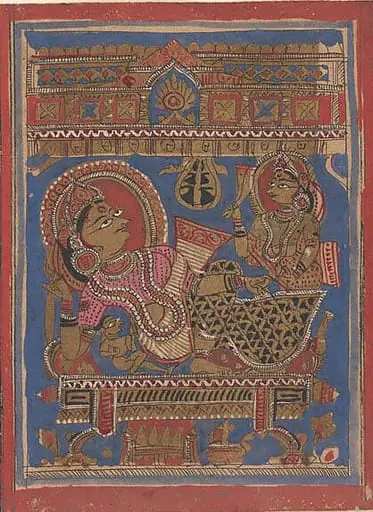
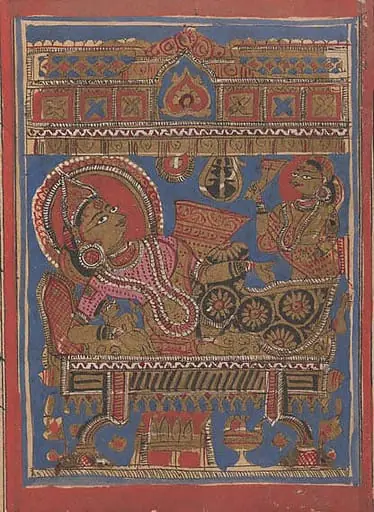
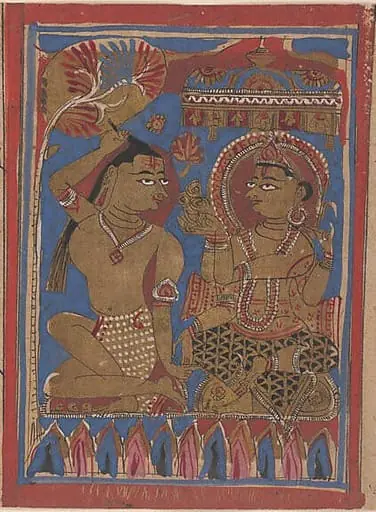
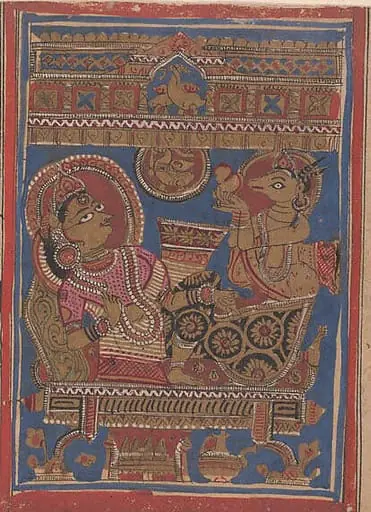
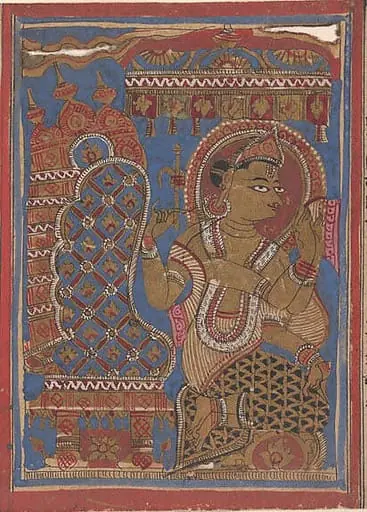
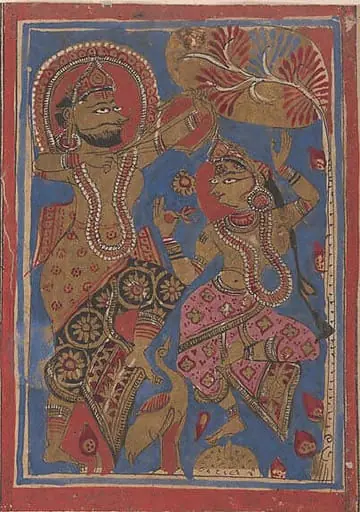
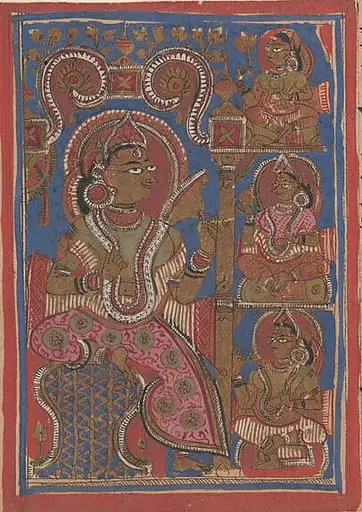
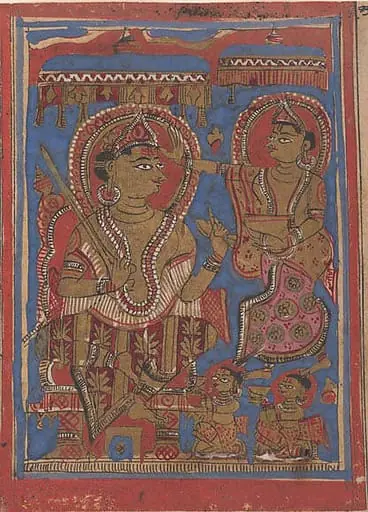
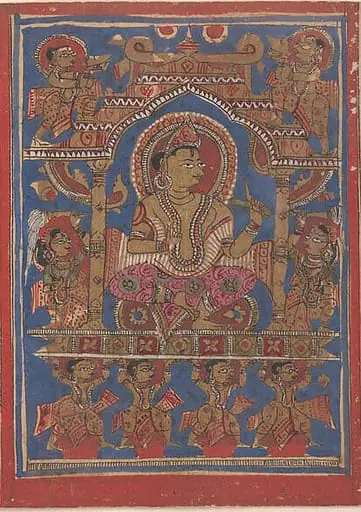
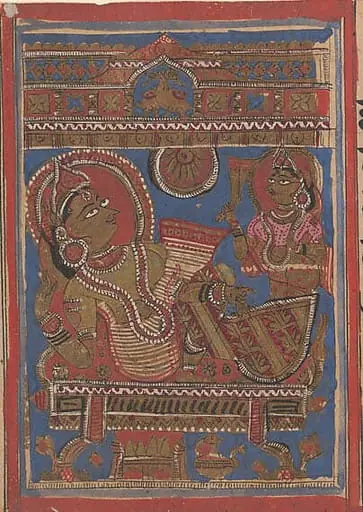
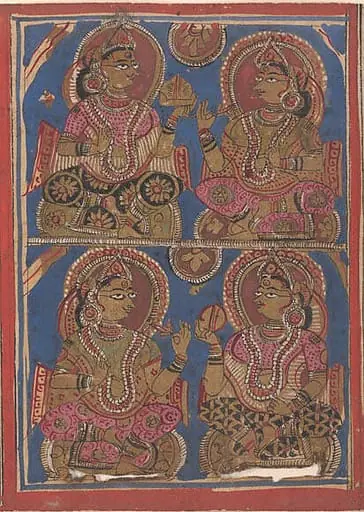
A woman in a tall red crown sits on a throne, a flower in one hand and a mirror in the other. Gold dots scatter across her robe and the dark ground, the lines as fine as thread. Made for a Jain queen in Gujarat around 1450, it uses ink and watercolor rather than animal parchment. The mirror stands for self-knowledge, a key Jain idea.
Subject & Meaning
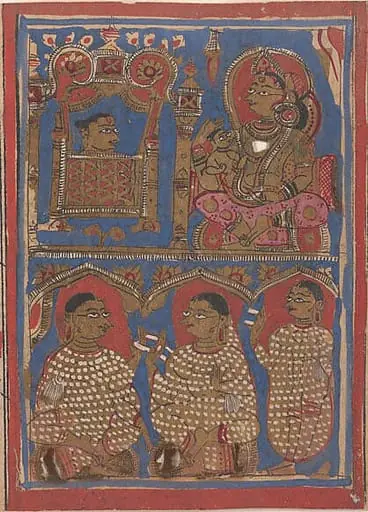
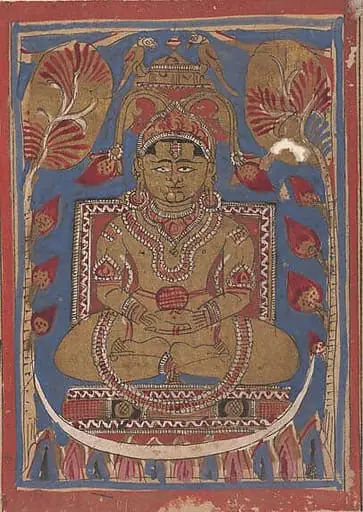
The painting depicts a queen within a Jain religious context, identifiable by the presence of Jain symbols and iconography.
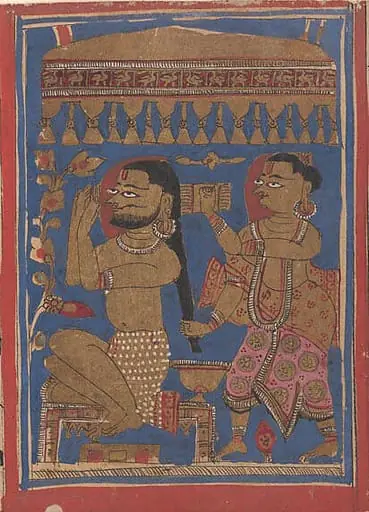
The painting depicts a queen within a Jain religious context, identifiable by the presence of Jain symbols and iconography. The subject’s attire and adornments align with depictions of Jain royalty or devotees from the 15th century, reinforcing the work’s religious and cultural significance. The small scale and refined technique suggest it may have served as a devotional object or manuscript illustration, emphasizing themes of piety and status within Jain tradition. The inclusion of gold and meticulous detailing further underscores the sacred and regal associations of the figure.
Technique & Style
Created in 1449 in India, this anonymous work is executed in ink, opaque watercolor, and gold applied to a paper support. The piece measures 11.1 cm in height and 27 cm in width, reflecting the compact format typical of the period's manuscript illumination. Stylistically, the painting employs a religious genre to depict a Jain queen, utilizing gold to enhance the sacred imagery.
The medium of opaque watercolor allows for solid, vibrant fields of color, while the addition of gold suggests a high level of craftsmanship intended for devotional use. The artwork is currently held in the collection of the Metropolitan Museum of Art, preserving the delicate condition of the paper and pigments from the mid-15th century.
History & Provenance
The work was created in 1449 in India, as indicated by its inclusion in the Metropolitan Museum of Art’s collection records. It is attributed to an anonymous painter and classified as a religious painting depicting Jain themes, specifically a queen. The painting’s medium consists of ink, opaque watercolor, and gold on paper, aligning with the stylistic conventions of 15th-century Indian Jain manuscript traditions.
The Met’s records place the work in its collection, though no documented commissioning history or early ownership chain is provided in the cited sources.
The painting Untitled, dated 1449, is housed in the collection of the Metropolitan Museum of Art in New York, where it is catalogued as part of the museum's Indian religious paintings. Its precise accession number is not publicly listed, but the work is recorded under the museum's inventory of medieval Indian art. The piece has been included in several museum exhibitions that focus on Jain visual culture and on the representation of queens within Jain narrative cycles.
Executed in ink, opaque watercolor, and gold on paper in India, the work portrays a queen within a Jain context.
Legacy
The untitled Jain manuscript painting, dated 1449 and housed in the Metropolitan Museum of Art, is attributed to an anonymous Indian painter. Its depiction of a queen within a Jain narrative has made it a reference point for studies of religious imagery in early Indian art, shaping scholarly understanding of anonymous artistic production in the 15th century. The work’s inclusion in a major museum collection has ensured its visibility in exhibitions on South Asian manuscripts, reinforcing its reputation as a key example of Jain illumination.
Researchers cite the piece when examining the stylistic conventions of Jain manuscript painting and the broader context of anonymous creators in medieval Indian art.
Overview
This untitled painting, created around 1450 in Gujarat, depicts a seated woman adorned with a distinctive red crown. Executed with ink, opaque watercolor, and gold on paper, it exemplifies the intricate miniature painting tradition. The work was commissioned for a Jain queen, reflecting the artistic patronage of the period and the cultural values of Jainism, particularly its emphasis on self-reflection and non-violence.
Context
This work is situated within the rich artistic tradition of Jainism, an ancient Indian religion emphasizing non-violence, asceticism, and spiritual liberation. Artworks like this often served to illustrate sacred texts, depict revered figures, or embody philosophical concepts for devotees. Further exploration of Jain art reveals a diverse range of visual expressions developed over centuries.
Artist & collection