Artwork
Untitled
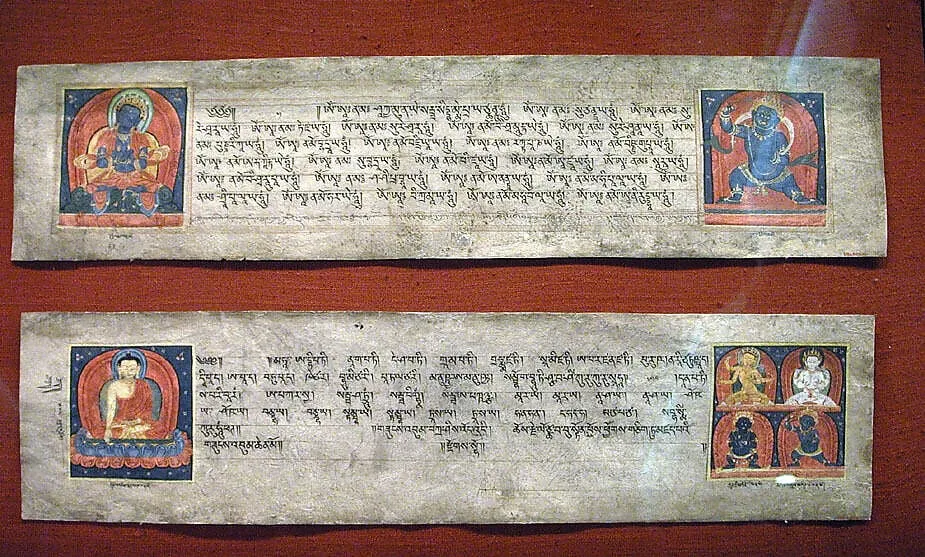
Untitled is an ink painting. It dates from 1399 and is held in the collection of the Metropolitan Museum of Art.
- Accession no.
- 1986.509.1a, b
- Credit line
- Anonymous Gift, 1986
About this work
A tall scroll holds two figures floating on clouds: the left many-armed and calm, the right fierce and gripping a lightning bolt. Painted in Tibet around 1300 to 1400. The calm figure is Avalokiteshvara, who delays nirvana to help others. The artist drew muscle and fold in thin ink lines, no shading, just careful strokes.
Subject & Meaning
The painting depicts Avalokiteśvara and Vajrapani, both identified as bodhisattvas. This indicates a Buddhist religious subject, with the figures representing enlightened beings central to Mahayana devotion. The work’s inclusion of these two bodhisattvas suggests a focus on the qualities they embody within the Buddhist tradition.
Technique & Style
While the sources do not detail the artist’s handling or the work’s current condition, they confirm its classification as a painting and its religious genre.
The work is an ink and color painting on paper, created circa 1399 by an anonymous artist, now in the Metropolitan Museum of Art. The medium consists of inks and pigments applied to a paper support, typical of religious painting of the era. Its formal qualities are defined by the depiction of Avalokiteśvara, Vajrapani, and a Bodhisattva, rendered in a devotional style characteristic of late‑14th‑century Buddhist art.
While the sources do not detail the artist’s handling or the work’s current condition, they confirm its classification as a painting and its religious genre.
History & Provenance
The painting is dated to 1399, a dating reflected in both the internal catalog record and the Wikidata entry, which records an inception date of 1 January 1399. It is attributed to an anonymous painter rather than a named artist. The work is held in the collection of the Metropolitan Museum of Art, where it is also located, according to the Wikidata record.
No information is provided regarding its commission, earlier ownership history, or chain of custody prior to its accession at the Metropolitan Museum of Art.
Overview
This untitled painting, created in Tibet between 1300 and 1400, depicts two prominent figures. Rendered with inks and color on paper, the artwork is presented as a tall scroll. The central focus is on these two celestial beings, who appear to float on clouds, embodying distinct characteristics and expressions within the composition.
Context
The figures depicted in this scroll are representative of bodhisattvas, enlightened beings who embody compassion and wisdom. These figures are central to Mahayana Buddhism, serving as models of altruism and spiritual aspiration. Their presence in art often facilitates meditation and veneration, connecting viewers to core tenets of Buddhist philosophy.
Artist & collection

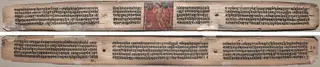
- Folio 37 from a Gandavyuha-sutra (Scripture of the Supreme Array): Sudhana and a pair of antelopes (recto); text (verso)
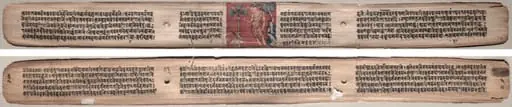 Folio 73 from a Gandavyuha-sutra (Scripture of the Supreme Array): Sudhana and an antelope (recto); text (verso)
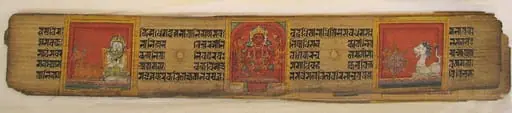 Untitled
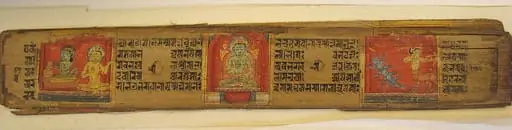 Untitled
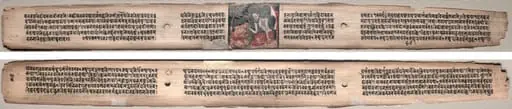 Folio 94 from a Gandavyuha-sutra (Scripture of the Supreme Array): Sudhana and the rishi Bhishmottaranirgosha (recto); text (verso)
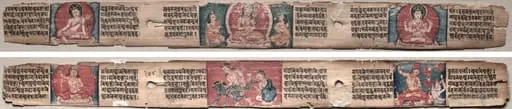 Folio 348 from a Gandavyuha-sutra (Scripture of the Supreme Array): Bodhisattva Manjushri with two forms of Avalokiteshvara (recto); Bodhisattva Samantabhadra purifies the path to enlightenment, with Manjushri (verso)
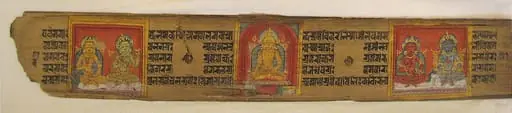 Untitled
 Text, folio 37 (verso) from a Gandavyuha-sutra (Scripture of the Supreme Array)
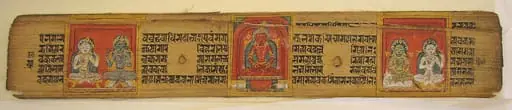 Untitled
 Text, folio 20 (verso) from a Gandavyuha-sutra (Scripture of the Supreme Array)
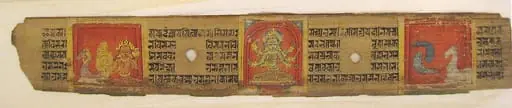 Untitled
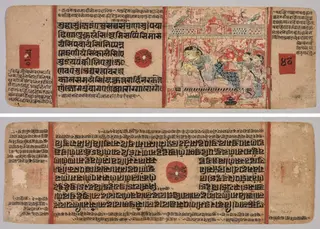 Folio 40 from a Kalpa-sutra: Text (recto); Birth of Mahavira (verso)