Artwork
Untitled
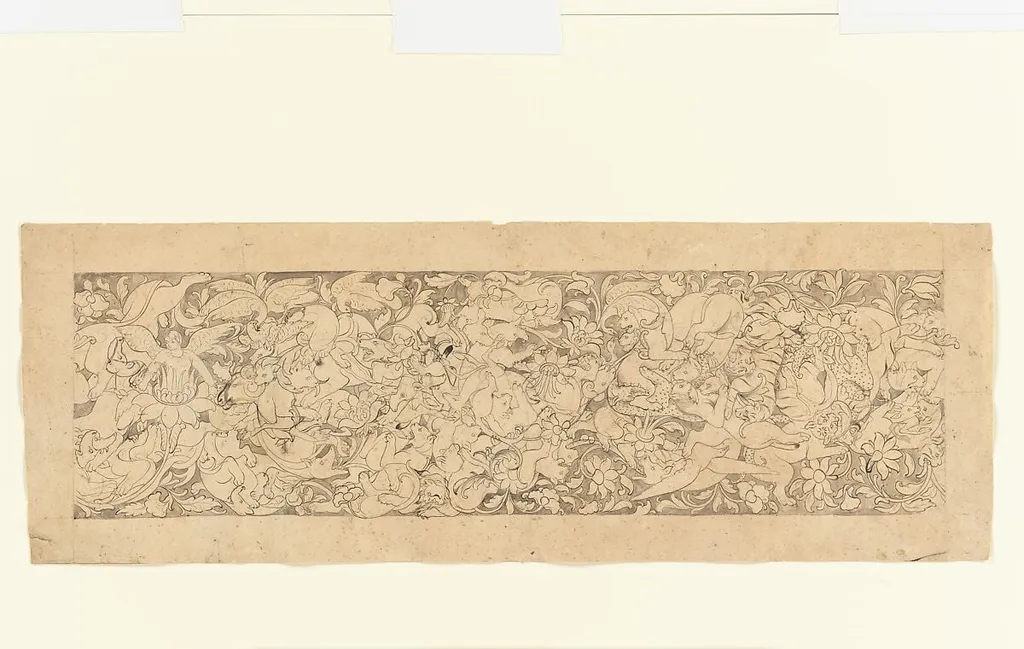
Untitled is a watercolor painting. It dates from 1799 and is held in the collection of the Metropolitan Museum of Art.
- Accession no.
- 2008.359.36
- Credit line
- Gift of Subhash Kapoor, in memory of his parents, Smt Shashi Kanta and Shree Parshotam Ram Kapoor, 2008
About this work
Subject & Meaning
The painting, dated 1799 and executed in ink, opaque and translucent watercolor on paper, portrays a landscape that includes both animal and plant motifs.
The painting, dated 1799 and executed in ink, opaque and translucent watercolor on paper, portrays a landscape that includes both animal and plant motifs. As a work of the landscape genre produced in Rajasthan, it reflects the regional emphasis on naturalistic representation of flora and fauna characteristic of late‑18th‑century Indian art. The anonymous artist’s composition integrates these biological elements within a cohesive scenic space, suggesting an idealized view of the environment rather than a specific narrative.
The piece is part of the Metropolitan Museum of Art collection, underscoring its significance as an example of Rajasthani painting within the broader corpus of Indian artistic production.
Technique & Style
The work is executed in ink combined with both opaque and translucent watercolor on paper, a layered technique characteristic of regional Indian painting traditions from Rajasthan. The horizontal format, measuring 22.9 cm in height by 64.8 cm in width, suggests a long, frieze-like composition suited to landscape subjects with animal and plant motifs. The mixed handling of opaque and transparent washes allowed the artist to modulate tonal depth while maintaining fine linear definition through ink, producing a balance between detailed drawing and atmospheric color.
History & Provenance
The artwork, titled Untitled, is an anonymous painting created in 1799 in Rajasthan. Executed in ink, opaque, and translucent watercolor on paper, the piece measures 22.9 by 64.8 centimeters. It depicts natural elements including animals and plants within a landscape genre.
The work is currently held in the collection of the Metropolitan Museum of Art. No specific commissioning details or intermediate ownership records are provided in the available documentation, which identifies the creator simply as an unknown painter. The creation date is recorded as January 1, 1799, marking its origin in the late 18th century.
Untitled (1799) is held in the collection of the Metropolitan Museum of Art in New York. The work is recorded as part of the museum’s holdings, though no specific accession or inventory number is disclosed in the available documentation. The painting was created in Rajasthan and measures 22.9 × 64.8 cm. The sources do not list any exhibition record for this piece, indicating that its public display history has not been documented in the references provided.
Legacy
The work's inclusion in the Metropolitan Museum of Art's collection has contributed to its sustained scholarly attention, positioning the anonymous 1799 Rajasthani painting as a reference point for studies of early modern Indian visual culture. Its depiction of animal and plant motifs, documented in both the museum's catalogue and earlier corpus records, illustrates a stylistic lineage that influenced later regional artists seeking to blend traditional iconography with European watercolor techniques. Consequently, the piece is frequently cited in exhibitions on South Asian painting, underscoring its enduring reputation as a seminal example of 18th‑century manuscript art.
Overview
This small, untitled painting from Rajasthan features a vibrant flowering bush, its branches hosting two perched birds. Executed with ink and a combination of opaque and translucent watercolors on paper, the artwork exemplifies the region's rich tradition of nature depictions. The delicate application of color creates a lively and detailed portrayal of botanical and avian life.
Context
Originating from the Rajasthan region of India, this painting reflects a common artistic practice where nature scenes were frequently commissioned. Royal patrons in Rajasthan often supported artists who specialized in capturing the beauty of the natural world. These works served to adorn palaces and personal collections, embodying a cultural appreciation for detailed botanical and zoological representations.
Artist & collection

- Marquetry Design
 Violets and bluebells
 Album of Daoist and Buddhist Themes: Search the Mountain: Leaf 47
 Design for ornament
 Dragon in foliage with lion and phoenix heads
 Untitled
 Relief panel of white marble with inlaid border of pietra-dura work on the inside of the entrance to the Taj Mahal, Agra.
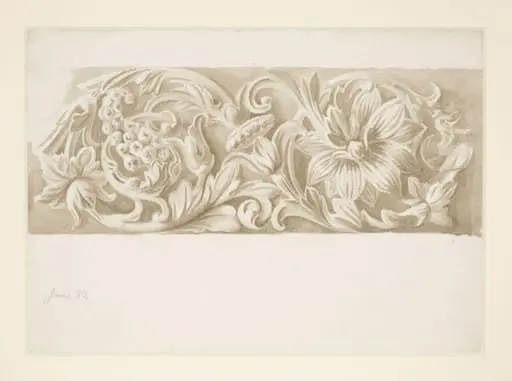 Drawing of part of a frieze
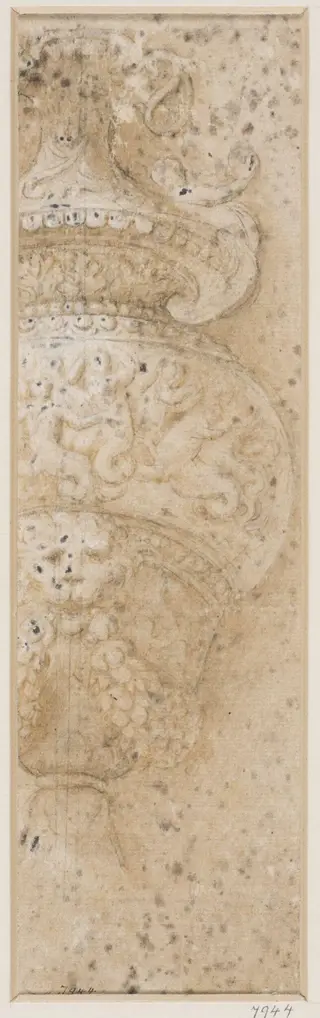 Vase
Vase Various Sketches of Figures and Plants (verso)
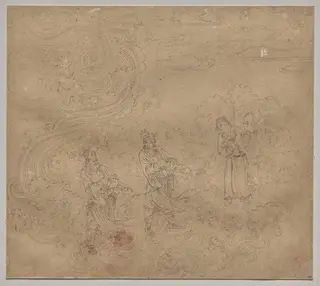 Album of Daoist and Buddhist Themes: Procession of Daoist Deities: Leaf 17
 Ornament print