Artwork
Untitled
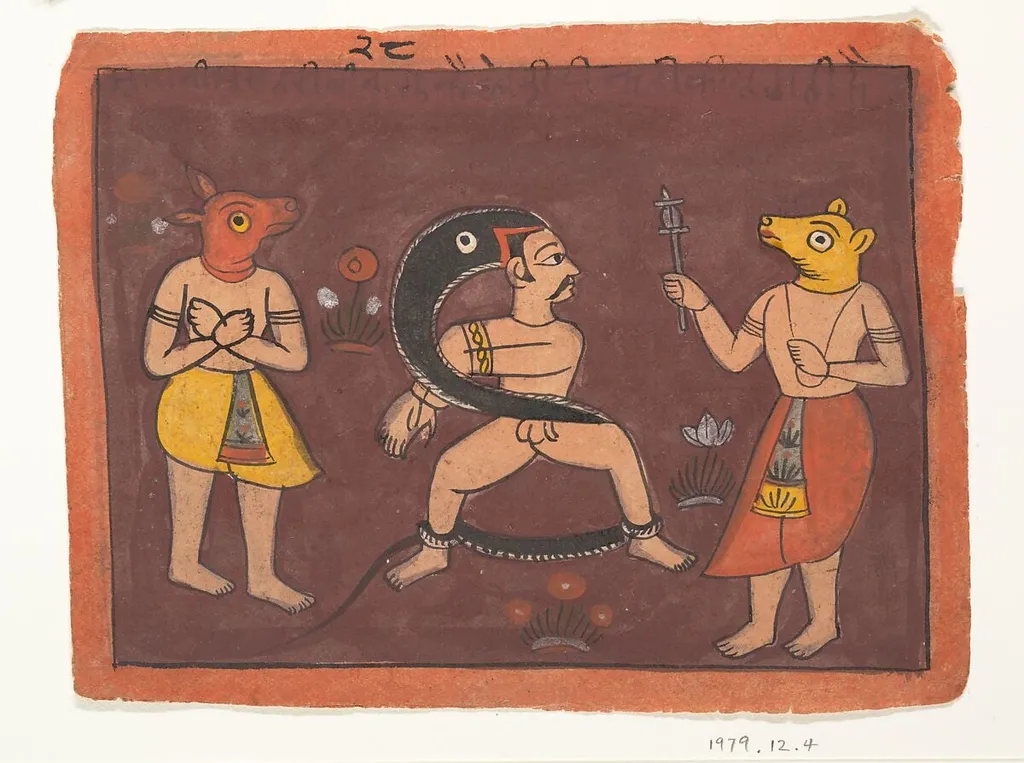
Untitled is a watercolor painting. It dates from 1725 and is held in the collection of the Metropolitan Museum of Art.
About this work
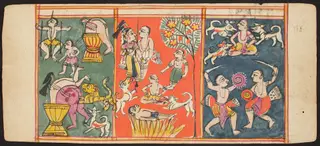
A man rides a blue creature with a lion's face and a peacock's tail, ink lines moving across old paper. Probably made in Rajasthan around 1725, and never signed, so the painter stays unknown. The bright colors come from opaque watercolor, pigment mixed with chalk so it sits on the paper like paste.
Subject & Meaning
The work, classified within the genre of mythology, depicts a man alongside a mythical creature, rendered in ink and opaque watercolor on paper.
The work, classified within the genre of mythology, depicts a man alongside a mythical creature, rendered in ink and opaque watercolor on paper. Produced in India in 1725, the painting belongs to a tradition of mythological imagery in which human figures interact with supernatural beings, suggesting a narrative drawn from religious or legendary lore. The pairing of a mortal subject with a fantastical creature points to themes common in South Asian mythological art, where such encounters often carry symbolic weight related to devotion, transformation, or the interplay between the earthly and divine realms.
Technique & Style
Executed in ink and opaque watercolor on paper, the work is a small-format painting measuring 14.5 cm in width by 19.4 cm in height. The combination of ink line work with opaque watercolor washes is characteristic of Indian painting traditions of the early eighteenth century, the period and place of its production in 1725. The composition depicts a man alongside a mythical creature, rendered through the layered handling typical of the medium, in which ink establishes contour and detail while opaque watercolor provides localized color and modeling. The support of paper, paired with this mixed ink-and-watercolor technique, supports fine draftsmanship and saturated pigment application.
History & Provenance
The work titled Untitled is an anonymous ink and opaque watercolor on paper painting dated to 1725, created in India as part of a mythological genre that portrays a man alongside a mythical creature. Its authorship is unknown, and no record of a specific commission survives. The piece entered the collection of the Metropolitan Museum of Art, where it remains on view, establishing its modern ownership chain from the time of its creation to the present.
Dating is confirmed by the inscription 1725‑01‑01 in the work’s metadata, while its dimensions (approximately 19.4 × 14.5 cm) are documented in the museum’s catalogue.
Overview
This small, untitled painting from Rajasthan, likely created around 1725, depicts a figure astride a fantastical beast. Executed with ink and opaque watercolor on paper, the work showcases vibrant hues and intricate linear details. Its anonymous creation reflects a common practice for many artworks of this period, where individual artists often remained uncredited.
Context
This painting belongs to a broader tradition of depicting mythical creatures prevalent in Indian art, particularly during the 18th century in regions like Rajasthan. Such fantastical beings, often combining elements of various animals, frequently appeared in manuscripts, court paintings, and decorative arts. They served to enrich narratives, symbolize power, or simply to delight the viewer with their imaginative forms.
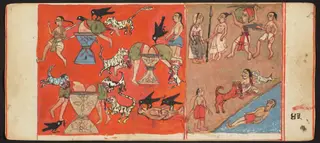
Artist & collection

- Tantric Manuscript, "Sangrahani Sutra"
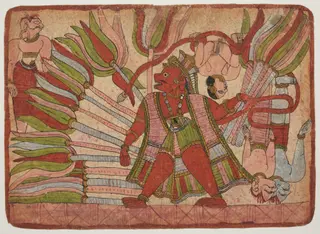 Scene from the Ramayana
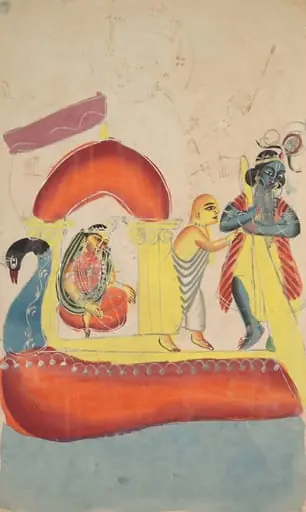 Krishna Ferrying Radha Across the Yamuna River (recto)
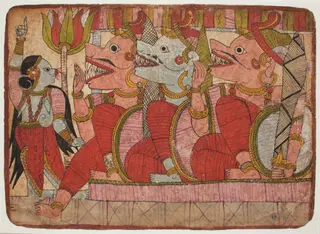 Scene from the Ramayana
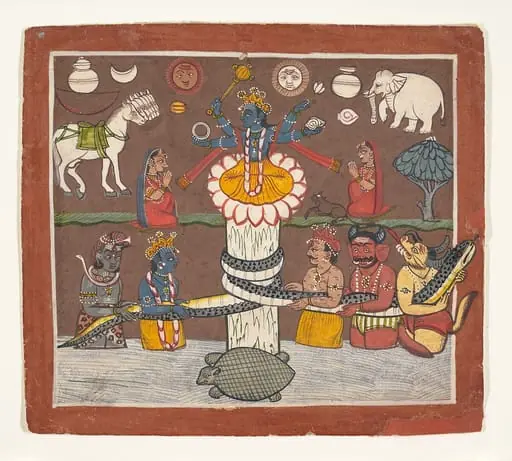 Untitled
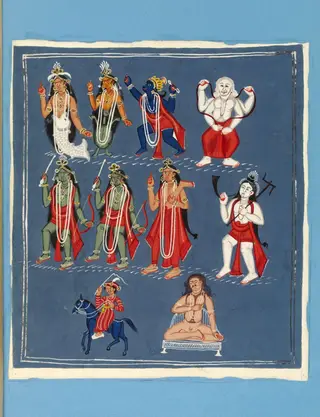 Ten avataras of Vishnu
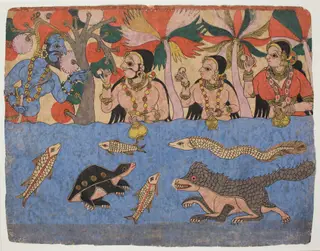 Scene from the Ramayana
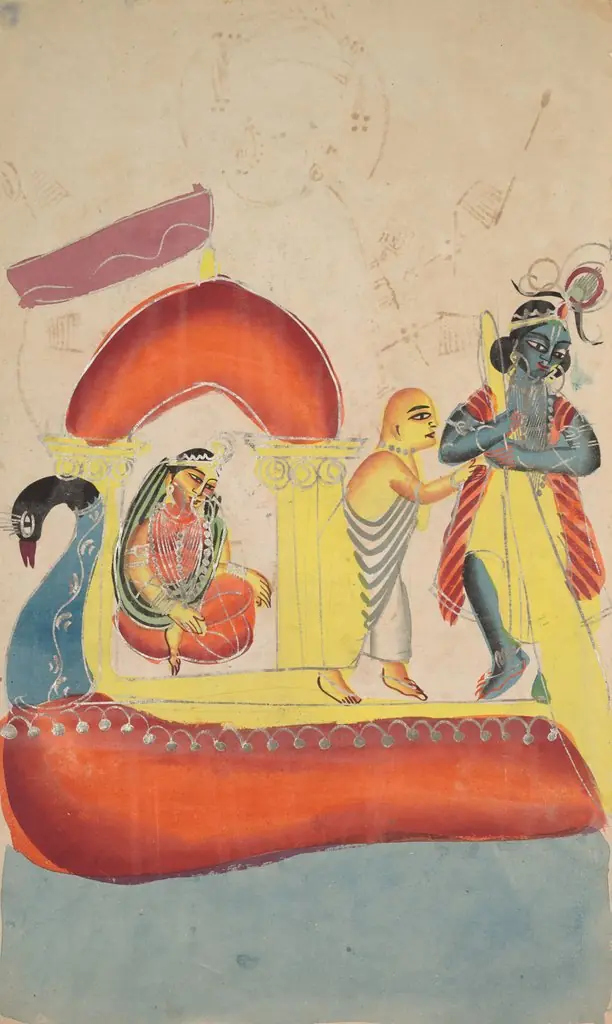 Krishna Ferrying Radha Across the Yamuna River (recto)
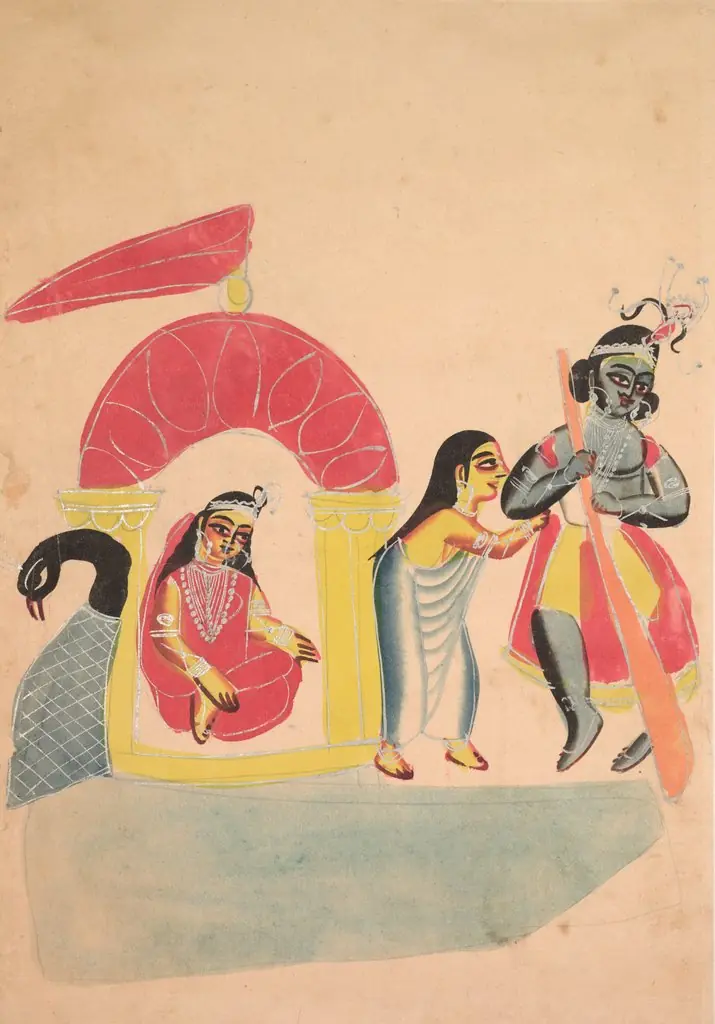 Krishna Ferrying Radha Across the Yamuna River
 Tantric Manuscript "Sangrahani Sutra"
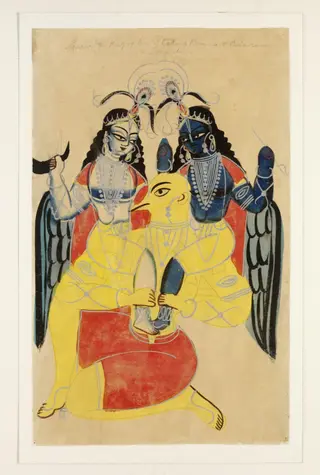 Balarama, Krishna and Garuda
 Tantric Manuscript "Sangrahani Sutra"